Citigroup plans to launch crypto custody services in 2026, after developing the offering for two to three years, according to global head of partnerships and innovation Biswarup Chatterjee, who told CNBC. The bank is exploring both in-house technology solutions and potential third-party partnerships, with Chatterjee stating “we’re hoping that in the next few quarters, we can come to market with a credible custody solution” for asset managers and other clients. Wall Street Coming to Crypto? Citi Said Yes The upcoming service would involve Citi holding native cryptocurrencies on behalf of clients. Chatterjee said the bank may deploy entirely in-house designed solutions for certain assets and client segments, while using third-party lightweight solutions for other asset types. The bank is “not currently ruling out anything” regarding its custody strategy. Citi’s move contrasts with JPMorgan’s stance, which is that while its bank will allow clients to buy cryptocurrencies, it will not yet hold custody of the assets. However, JPMorgan has also expressed interest in changing that next year. The custody plans build on Citi’s broader digital asset ambitions announced throughout 2025. CEO Jane Fraser confirmed in July that Citi is “looking at the issuance of a Citi stablecoin” while developing tokenized deposit services for corporate clients seeking 24/7 settlement capabilities. The bank already offers blockchain-based dollar transfers between New York, London, and Hong Kong offices, operating around the clock. Chatterjee said discussions with clients are underway to identify use cases for sending stablecoins between accounts or instantly converting them into dollars for payments. Wall Street Consortium Eyes G7 Stablecoin as Competition Intensifies Earlier this month, nine global banking giants, including Goldman Sachs, Deutsche Bank, Bank of America, Banco Santander, BNP Paribas, Citigroup, MUFG Bank, TD Bank Group, and UBS, announced plans to develop a jointly backed stablecoin focused on G7 currencies. The consortium will explore issuing reserve-backed digital payment assets available on public blockchains, with each unit pegged one-to-one against traditional fiat currency. The coalition confirmed it is already in contact with regulators across relevant markets. Notably, earlier this year, JPMorgan, Bank of America, Citigroup, and Wells Fargo reportedly held exploratory discussions about this shared stablecoin venture. However, those talks remained conceptual until the confirmation this month. The banking giants are rushing in as the business model is proving extraordinarily lucrative for existing issuers who earn substantial yields on Treasury securities and cash equivalents backing their tokens. Given this adoption trajectory, Bloomberg Intelligence projects stablecoins could process more than $50 trillion in annual payments by 2030. However, while banks seem geared towards adoption, it might also be out of, as Standard Chartered warned earlier this month that stablecoin adoption could drain more than $1 trillion from emerging market banks by 2028. The threat prompted the Bank of England to initially propose ownership caps between £10,000 and £20,000 for retail customers. However, following criticism, regulators are now preparing to allow exemptions for firms like crypto exchanges, which require large holdings for liquidity and settlement purposes. Citi Balances Stablecoin Opportunities Against Deposit Flight Fears Citi’s aggressive digital asset expansion comes despite warnings from its own analyst Ronit Ghose, who cautioned in August that stablecoin interest payments could trigger 1980s-style deposit flight from traditional banks. Ghose drew parallels to when money market funds skyrocketed from $4 billion to $235 billion in seven years, draining deposits from banks whose rates were tightly regulated. Between 1981 and 1982, withdrawals exceeded new deposits by $32 billion as consumers chased higher returns. Major U.S. banking groups, including the American Bankers Association and the Bank Policy Institute, urged Congress to close what they called a “loophole” in the GENIUS Act, which allows crypto exchanges and affiliated businesses to offer yields on third-party stablecoins. The groups cited Treasury estimates that yield-bearing stablecoins could trigger up to $6.6 trillion in deposit outflows, fundamentally changing how banks fund loans and manage liquidity. However, crypto industry groups pushed back, with Coinbase Chief Legal Officer Paul Grewal dismissing the banking lobby’s efforts as an “unrestrained effort to avoid competition.“ Coinbase Research particularly released a dedicated report to the “banking threat” narrative, claiming it found no meaningful correlation between stablecoin adoption and deposit flight for community banks over the past five years. For Citit, Fraser framed their approach as responding to client needs and the broader shift toward always-on instant settlement, stating that “digital assets are the next evolution in the broader digitization of payments, financing, and liquidity.” With $2.57 trillion in assets under custody, Citi’s 2026 launch may be the beginning of a strategic adoption of crypto on Wall StreetCitigroup plans to launch crypto custody services in 2026, after developing the offering for two to three years, according to global head of partnerships and innovation Biswarup Chatterjee, who told CNBC. The bank is exploring both in-house technology solutions and potential third-party partnerships, with Chatterjee stating “we’re hoping that in the next few quarters, we can come to market with a credible custody solution” for asset managers and other clients. Wall Street Coming to Crypto? Citi Said Yes The upcoming service would involve Citi holding native cryptocurrencies on behalf of clients. Chatterjee said the bank may deploy entirely in-house designed solutions for certain assets and client segments, while using third-party lightweight solutions for other asset types. The bank is “not currently ruling out anything” regarding its custody strategy. Citi’s move contrasts with JPMorgan’s stance, which is that while its bank will allow clients to buy cryptocurrencies, it will not yet hold custody of the assets. However, JPMorgan has also expressed interest in changing that next year. The custody plans build on Citi’s broader digital asset ambitions announced throughout 2025. CEO Jane Fraser confirmed in July that Citi is “looking at the issuance of a Citi stablecoin” while developing tokenized deposit services for corporate clients seeking 24/7 settlement capabilities. The bank already offers blockchain-based dollar transfers between New York, London, and Hong Kong offices, operating around the clock. Chatterjee said discussions with clients are underway to identify use cases for sending stablecoins between accounts or instantly converting them into dollars for payments. Wall Street Consortium Eyes G7 Stablecoin as Competition Intensifies Earlier this month, nine global banking giants, including Goldman Sachs, Deutsche Bank, Bank of America, Banco Santander, BNP Paribas, Citigroup, MUFG Bank, TD Bank Group, and UBS, announced plans to develop a jointly backed stablecoin focused on G7 currencies. The consortium will explore issuing reserve-backed digital payment assets available on public blockchains, with each unit pegged one-to-one against traditional fiat currency. The coalition confirmed it is already in contact with regulators across relevant markets. Notably, earlier this year, JPMorgan, Bank of America, Citigroup, and Wells Fargo reportedly held exploratory discussions about this shared stablecoin venture. However, those talks remained conceptual until the confirmation this month. The banking giants are rushing in as the business model is proving extraordinarily lucrative for existing issuers who earn substantial yields on Treasury securities and cash equivalents backing their tokens. Given this adoption trajectory, Bloomberg Intelligence projects stablecoins could process more than $50 trillion in annual payments by 2030. However, while banks seem geared towards adoption, it might also be out of, as Standard Chartered warned earlier this month that stablecoin adoption could drain more than $1 trillion from emerging market banks by 2028. The threat prompted the Bank of England to initially propose ownership caps between £10,000 and £20,000 for retail customers. However, following criticism, regulators are now preparing to allow exemptions for firms like crypto exchanges, which require large holdings for liquidity and settlement purposes. Citi Balances Stablecoin Opportunities Against Deposit Flight Fears Citi’s aggressive digital asset expansion comes despite warnings from its own analyst Ronit Ghose, who cautioned in August that stablecoin interest payments could trigger 1980s-style deposit flight from traditional banks. Ghose drew parallels to when money market funds skyrocketed from $4 billion to $235 billion in seven years, draining deposits from banks whose rates were tightly regulated. Between 1981 and 1982, withdrawals exceeded new deposits by $32 billion as consumers chased higher returns. Major U.S. banking groups, including the American Bankers Association and the Bank Policy Institute, urged Congress to close what they called a “loophole” in the GENIUS Act, which allows crypto exchanges and affiliated businesses to offer yields on third-party stablecoins. The groups cited Treasury estimates that yield-bearing stablecoins could trigger up to $6.6 trillion in deposit outflows, fundamentally changing how banks fund loans and manage liquidity. However, crypto industry groups pushed back, with Coinbase Chief Legal Officer Paul Grewal dismissing the banking lobby’s efforts as an “unrestrained effort to avoid competition.“ Coinbase Research particularly released a dedicated report to the “banking threat” narrative, claiming it found no meaningful correlation between stablecoin adoption and deposit flight for community banks over the past five years. For Citit, Fraser framed their approach as responding to client needs and the broader shift toward always-on instant settlement, stating that “digital assets are the next evolution in the broader digitization of payments, financing, and liquidity.” With $2.57 trillion in assets under custody, Citi’s 2026 launch may be the beginning of a strategic adoption of crypto on Wall Street

Citibank to Launch Crypto Custody Services in 2026 After 3 Years of Preparation

Citigroup plans to launch crypto custody services in 2026, after developing the offering for two to three years, according to global head of partnerships and innovation Biswarup Chatterjee, who told CNBC.

The bank is exploring both in-house technology solutions and potential third-party partnerships, with Chatterjee stating “we’re hoping that in the next few quarters, we can come to market with a credible custody solution” for asset managers and other clients.

Wall Street Coming to Crypto? Citi Said Yes

The upcoming service would involve Citi holding native cryptocurrencies on behalf of clients.

Chatterjee said the bank may deploy entirely in-house designed solutions for certain assets and client segments, while using third-party lightweight solutions for other asset types.

The bank is “not currently ruling out anything” regarding its custody strategy.

Citi’s move contrasts with JPMorgan’s stance, which is that while its bank will allow clients to buy cryptocurrencies, it will not yet hold custody of the assets.

However, JPMorgan has also expressed interest in changing that next year.

The custody plans build on Citi’s broader digital asset ambitions announced throughout 2025.

CEO Jane Fraser confirmed in July that Citi is “looking at the issuance of a Citi stablecoin” while developing tokenized deposit services for corporate clients seeking 24/7 settlement capabilities.

The bank already offers blockchain-based dollar transfers between New York, London, and Hong Kong offices, operating around the clock.

Chatterjee said discussions with clients are underway to identify use cases for sending stablecoins between accounts or instantly converting them into dollars for payments.

Wall Street Consortium Eyes G7 Stablecoin as Competition Intensifies

Earlier this month, nine global banking giants, including Goldman Sachs, Deutsche Bank, Bank of America, Banco Santander, BNP Paribas, Citigroup, MUFG Bank, TD Bank Group, and UBS, announced plans to develop a jointly backed stablecoin focused on G7 currencies.

The consortium will explore issuing reserve-backed digital payment assets available on public blockchains, with each unit pegged one-to-one against traditional fiat currency.

The coalition confirmed it is already in contact with regulators across relevant markets.

Notably, earlier this year, JPMorgan, Bank of America, Citigroup, and Wells Fargo reportedly held exploratory discussions about this shared stablecoin venture. However, those talks remained conceptual until the confirmation this month.

The banking giants are rushing in as the business model is proving extraordinarily lucrative for existing issuers who earn substantial yields on Treasury securities and cash equivalents backing their tokens.

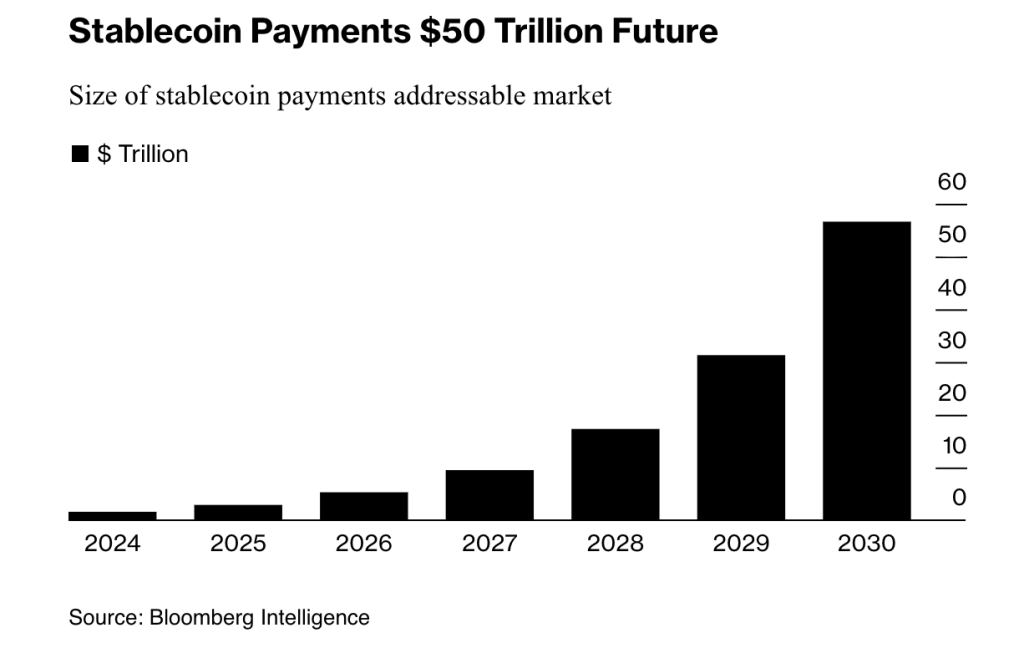
Given this adoption trajectory, Bloomberg Intelligence projects stablecoins could process more than $50 trillion in annual payments by 2030.
Citibank to Launch Crypto Custody Services in 2026 After 3 Years of Preparation

However, while banks seem geared towards adoption, it might also be out of, as Standard Chartered warned earlier this month that stablecoin adoption could drain more than $1 trillion from emerging market banks by 2028.

The threat prompted the Bank of England to initially propose ownership caps between £10,000 and £20,000 for retail customers.

However, following criticism, regulators are now preparing to allow exemptions for firms like crypto exchanges, which require large holdings for liquidity and settlement purposes.

Citi Balances Stablecoin Opportunities Against Deposit Flight Fears

Citi’s aggressive digital asset expansion comes despite warnings from its own analyst Ronit Ghose, who cautioned in August that stablecoin interest payments could trigger 1980s-style deposit flight from traditional banks.

Ghose drew parallels to when money market funds skyrocketed from $4 billion to $235 billion in seven years, draining deposits from banks whose rates were tightly regulated.

Between 1981 and 1982, withdrawals exceeded new deposits by $32 billion as consumers chased higher returns.

Major U.S. banking groups, including the American Bankers Association and the Bank Policy Institute, urged Congress to close what they called a “loophole” in the GENIUS Act, which allows crypto exchanges and affiliated businesses to offer yields on third-party stablecoins.

The groups cited Treasury estimates that yield-bearing stablecoins could trigger up to $6.6 trillion in deposit outflows, fundamentally changing how banks fund loans and manage liquidity.

However, crypto industry groups pushed back, with Coinbase Chief Legal Officer Paul Grewal dismissing the banking lobby’s efforts as an “unrestrained effort to avoid competition.

Coinbase Research particularly released a dedicated report to the “banking threat” narrative, claiming it found no meaningful correlation between stablecoin adoption and deposit flight for community banks over the past five years.

For Citit, Fraser framed their approach as responding to client needs and the broader shift toward always-on instant settlement, stating that “digital assets are the next evolution in the broader digitization of payments, financing, and liquidity.

With $2.57 trillion in assets under custody, Citi’s 2026 launch may be the beginning of a strategic adoption of crypto on Wall Street.

Disclaimer: The articles reposted on this site are sourced from public platforms and are provided for informational purposes only. They do not necessarily reflect the views of MEXC. All rights remain with the original authors. If you believe any content infringes on third-party rights, please contact service@support.mexc.com for removal. MEXC makes no guarantees regarding the accuracy, completeness, or timeliness of the content and is not responsible for any actions taken based on the information provided. The content does not constitute financial, legal, or other professional advice, nor should it be considered a recommendation or endorsement by MEXC.

You May Also Like

Washington Faces New Dilemma Over Venezuela’s Alleged BTC Reserves

Washington Faces New Dilemma Over Venezuela’s Alleged BTC Reserves

The issue surfaced after the dramatic removal of Venezuela’s longtime leader, Nicolás Maduro, who was captured by U.S. forces and […] The post Washington Faces
Share
Coindoo2026/01/13 10:14
We’re not being as forward-looking as normal

We’re not being as forward-looking as normal

The post We’re not being as forward-looking as normal appeared on BitcoinEthereumNews.com. Bank of Canada (BoC) Governor Tiff Macklem addressed reporters’ questions, offering insights into the central bank’s monetary policy outlook. His remarks came after the BoC lowered its interest rate by 25 basis points to 2.50%, a move that markets had broadly anticipated. BoC press conference key highlights Wage growth continued to ease. The preferred core inflation measures have been around 3.0%. Underlying inflation is running around 2.5%. Consensus to cut rates was clear. Attention now shifts to how exports perform. There are still some mixed signals on inflation. The Inflation picture hasn’t changed much since January. We’re not being as forward-looking as normal. The Bank of Canada considered holding the overnight rate steady. I have more comfort looking at the upward pressure on CPI. We will be assessing the impact of government announcements on targeted support and support for big projects. Inflationary pressures look somewhat more contained. If risks tilt further we are prepared to take more action. Will take it one meeting at a time. This section below was published at 13:45 GMT to cover the Bank of Canada’s policy announcements and the initial market reaction. In line with market analysts’ expectations, the Bank of Canada (BoC) trimmed its policy rate by 25 basis points, taking it to 2.50% on Wednesday. Investors’ attention will now shift to the usual press conference by Governor Tiff Macklem at 14:30 GMT. BoC policy statement key highlights Rate cut was appropriate given the weaker economy and less upside risk to inflation. On a monthly basis, upward momentum in core inflation seen earlier this year has dissipated. Disruption linked to trade shifts will continue to add costs even as they weigh on economic uncertainties. BoC says it will continue to support economic growth while ensuring inflation remains well controlled. Ottawa’s decision to scrap tariffs…
Share
BitcoinEthereumNews2025/09/18 05:17
US Senate Prepares For Crypto Market Structure Bill Markup This Week — Here’s What to Expect

US Senate Prepares For Crypto Market Structure Bill Markup This Week — Here’s What to Expect

After months of intense negotiations involving both political parties, as well as representatives from the crypto industry and traditional banking sectors, the
Share
Bitcoinist2026/01/13 10:00