BitcoinWorld Crypto Fear & Greed Index: Decoding the Market’s Anxious Dip to 43 The Crypto Fear & Greed Index is more than just a number; it’s a vital pulse check for the volatile cryptocurrency market. When this index dips, it often signals a significant shift in investor sentiment, moving from optimism towards caution. Currently, the market finds itself firmly planted in the ‘fear’ zone, prompting many to wonder what lies ahead for their investments. What Does the Current Crypto Fear & Greed Index Reading Tell Us? According to data from provider Alternative, the Crypto Fear & Greed Index recently slipped two points, landing at 43. This value keeps us squarely in the ‘fear’ category, a state where investors tend to be more hesitant and risk-averse. For context, an index value of zero represents ‘extreme fear,’ while 100 signifies ‘extreme greed.’ This numerical barometer helps us gauge the overall mood of the market, offering a glimpse into the collective psyche of crypto investors. A reading of 43 suggests that while extreme panic might not be widespread, a significant portion of the market is feeling cautious, possibly due to recent price movements or broader economic concerns. It’s a signal that the market’s confidence is wavering. Unpacking the Components: How is the Crypto Fear & Greed Index Calculated? It’s not just a random figure. This index is a sophisticated blend of several key market indicators, each contributing to its final score. Understanding these components helps demystify how this crucial sentiment gauge is formed and why its movements matter so much to your investment decisions. The index is a carefully weighted average of six distinct factors: Market Volatility (25%): This measures how much Bitcoin’s price fluctuates. High volatility often indicates a nervous market, pushing the index towards fear. Trading Volume (25%): Strong buying volume usually correlates with greed, while low volume can signal fear or indifference. Social Media Mentions (15%): Analyzing keywords and sentiment across various social platforms provides a real-time snapshot of public perception. A surge in negative sentiment can drive the index down. Surveys (15%): While currently paused, these polls directly ask investors about their market outlook, offering direct insights into sentiment. Bitcoin’s Market Dominance (10%): An increasing dominance often points to investors seeking safer havens in Bitcoin, suggesting fear in the altcoin market. Conversely, decreasing dominance can signal greed for altcoin opportunities. Google Search Volume (10%): Tracking searches for terms like ‘Bitcoin price manipulation’ or ‘Bitcoin crash’ can reveal underlying anxieties, contributing to the fear score. Navigating the ‘Fear Zone’: Actionable Insights for Investors When the Crypto Fear & Greed Index is Low When the Crypto Fear & Greed Index resides in the fear zone, it often presents a dual-edged sword for investors. On one hand, widespread fear can lead to panic selling, driving prices lower and creating potential opportunities for those with a long-term perspective. As the old adage goes, "Be fearful when others are greedy, and greedy when others are fearful." However, it also signals a period of heightened uncertainty and potential downside risk. It’s a time for careful consideration, not impulsive reactions. Here are some actionable insights to consider when the Crypto Fear & Greed Index is low: Stay Informed: Don’t let emotion dictate your moves. Understand the underlying reasons for the market’s fear, whether it’s macroeconomic news, regulatory changes, or specific project developments. Re-evaluate Your Portfolio: This might be a good time to assess your risk tolerance and ensure your investments align with your financial goals. Consider if your asset allocation is still appropriate for current market conditions. Dollar-Cost Averaging (DCA): Consider consistently investing a fixed amount over time, regardless of market fluctuations. This strategy can mitigate risk during volatile periods and average out your purchase price. Avoid Impulse Decisions: Panic selling can lock in losses. Instead, take a step back, conduct thorough research, and make informed choices based on your investment strategy. Beyond the Number: Why Market Sentiment, as Reflected by the Crypto Fear & Greed Index, Truly Matters Market sentiment, as reflected by the Crypto Fear & Greed Index, plays a significant role in price movements. When fear grips the market, investors often sell off assets, leading to price declines. Conversely, excessive greed can inflate asset prices beyond their intrinsic value, potentially setting the stage for corrections. Understanding this psychological aspect of the market is crucial for any investor. It’s important to remember that the index is a sentiment indicator, not a direct buy or sell signal. It provides a valuable context for market conditions, helping you understand the prevailing emotional state. Savvy investors use this information to inform their broader strategy, rather than blindly following its every dip or surge. It’s a tool for better decision-making, not a crystal ball. The recent dip in the Crypto Fear & Greed Index to 43 serves as a timely reminder of the ever-present emotional swings in the crypto market. While fear can feel unsettling, it also offers a chance for rational evaluation and strategic planning. By understanding how the index works and what its current reading signifies, investors can navigate these turbulent waters with greater confidence and make decisions that align with their long-term objectives. Stay informed, stay calm, and make calculated moves. Frequently Asked Questions (FAQs) What is the Crypto Fear & Greed Index? The Crypto Fear & Greed Index is a tool that measures the prevailing emotional state of the cryptocurrency market. It ranges from 0 (extreme fear) to 100 (extreme greed), helping investors gauge market sentiment. What does a low score (like 43) on the index mean? A low score, such as 43, indicates that the market is in a ‘fear’ zone. This means investors are generally cautious, hesitant, and may be selling assets, which can lead to lower prices. How should investors react to the index being in the ‘fear’ zone? In the ‘fear’ zone, investors are advised to stay informed, re-evaluate their portfolios, consider dollar-cost averaging, and avoid making impulsive decisions based solely on emotion. It can present opportunities for long-term investors. Is the Crypto Fear & Greed Index a buy/sell signal? No, the Crypto Fear & Greed Index is not a direct buy or sell signal. It is a sentiment indicator that provides context about the market’s emotional state. Investors should use it as one tool among many to inform their broader investment strategy. What factors influence the index’s score? The index is calculated based on market volatility, trading volume, social media mentions, surveys (when active), Bitcoin’s market dominance, and Google search volume. If you found this article insightful, consider sharing it with your friends and fellow crypto enthusiasts on social media! Your shares help us reach more people who can benefit from understanding market sentiment. To learn more about the latest crypto market trends, explore our article on key developments shaping Bitcoin price action. This post Crypto Fear & Greed Index: Decoding the Market’s Anxious Dip to 43 first appeared on BitcoinWorld.BitcoinWorld Crypto Fear & Greed Index: Decoding the Market’s Anxious Dip to 43 The Crypto Fear & Greed Index is more than just a number; it’s a vital pulse check for the volatile cryptocurrency market. When this index dips, it often signals a significant shift in investor sentiment, moving from optimism towards caution. Currently, the market finds itself firmly planted in the ‘fear’ zone, prompting many to wonder what lies ahead for their investments. What Does the Current Crypto Fear & Greed Index Reading Tell Us? According to data from provider Alternative, the Crypto Fear & Greed Index recently slipped two points, landing at 43. This value keeps us squarely in the ‘fear’ category, a state where investors tend to be more hesitant and risk-averse. For context, an index value of zero represents ‘extreme fear,’ while 100 signifies ‘extreme greed.’ This numerical barometer helps us gauge the overall mood of the market, offering a glimpse into the collective psyche of crypto investors. A reading of 43 suggests that while extreme panic might not be widespread, a significant portion of the market is feeling cautious, possibly due to recent price movements or broader economic concerns. It’s a signal that the market’s confidence is wavering. Unpacking the Components: How is the Crypto Fear & Greed Index Calculated? It’s not just a random figure. This index is a sophisticated blend of several key market indicators, each contributing to its final score. Understanding these components helps demystify how this crucial sentiment gauge is formed and why its movements matter so much to your investment decisions. The index is a carefully weighted average of six distinct factors: Market Volatility (25%): This measures how much Bitcoin’s price fluctuates. High volatility often indicates a nervous market, pushing the index towards fear. Trading Volume (25%): Strong buying volume usually correlates with greed, while low volume can signal fear or indifference. Social Media Mentions (15%): Analyzing keywords and sentiment across various social platforms provides a real-time snapshot of public perception. A surge in negative sentiment can drive the index down. Surveys (15%): While currently paused, these polls directly ask investors about their market outlook, offering direct insights into sentiment. Bitcoin’s Market Dominance (10%): An increasing dominance often points to investors seeking safer havens in Bitcoin, suggesting fear in the altcoin market. Conversely, decreasing dominance can signal greed for altcoin opportunities. Google Search Volume (10%): Tracking searches for terms like ‘Bitcoin price manipulation’ or ‘Bitcoin crash’ can reveal underlying anxieties, contributing to the fear score. Navigating the ‘Fear Zone’: Actionable Insights for Investors When the Crypto Fear & Greed Index is Low When the Crypto Fear & Greed Index resides in the fear zone, it often presents a dual-edged sword for investors. On one hand, widespread fear can lead to panic selling, driving prices lower and creating potential opportunities for those with a long-term perspective. As the old adage goes, "Be fearful when others are greedy, and greedy when others are fearful." However, it also signals a period of heightened uncertainty and potential downside risk. It’s a time for careful consideration, not impulsive reactions. Here are some actionable insights to consider when the Crypto Fear & Greed Index is low: Stay Informed: Don’t let emotion dictate your moves. Understand the underlying reasons for the market’s fear, whether it’s macroeconomic news, regulatory changes, or specific project developments. Re-evaluate Your Portfolio: This might be a good time to assess your risk tolerance and ensure your investments align with your financial goals. Consider if your asset allocation is still appropriate for current market conditions. Dollar-Cost Averaging (DCA): Consider consistently investing a fixed amount over time, regardless of market fluctuations. This strategy can mitigate risk during volatile periods and average out your purchase price. Avoid Impulse Decisions: Panic selling can lock in losses. Instead, take a step back, conduct thorough research, and make informed choices based on your investment strategy. Beyond the Number: Why Market Sentiment, as Reflected by the Crypto Fear & Greed Index, Truly Matters Market sentiment, as reflected by the Crypto Fear & Greed Index, plays a significant role in price movements. When fear grips the market, investors often sell off assets, leading to price declines. Conversely, excessive greed can inflate asset prices beyond their intrinsic value, potentially setting the stage for corrections. Understanding this psychological aspect of the market is crucial for any investor. It’s important to remember that the index is a sentiment indicator, not a direct buy or sell signal. It provides a valuable context for market conditions, helping you understand the prevailing emotional state. Savvy investors use this information to inform their broader strategy, rather than blindly following its every dip or surge. It’s a tool for better decision-making, not a crystal ball. The recent dip in the Crypto Fear & Greed Index to 43 serves as a timely reminder of the ever-present emotional swings in the crypto market. While fear can feel unsettling, it also offers a chance for rational evaluation and strategic planning. By understanding how the index works and what its current reading signifies, investors can navigate these turbulent waters with greater confidence and make decisions that align with their long-term objectives. Stay informed, stay calm, and make calculated moves. Frequently Asked Questions (FAQs) What is the Crypto Fear & Greed Index? The Crypto Fear & Greed Index is a tool that measures the prevailing emotional state of the cryptocurrency market. It ranges from 0 (extreme fear) to 100 (extreme greed), helping investors gauge market sentiment. What does a low score (like 43) on the index mean? A low score, such as 43, indicates that the market is in a ‘fear’ zone. This means investors are generally cautious, hesitant, and may be selling assets, which can lead to lower prices. How should investors react to the index being in the ‘fear’ zone? In the ‘fear’ zone, investors are advised to stay informed, re-evaluate their portfolios, consider dollar-cost averaging, and avoid making impulsive decisions based solely on emotion. It can present opportunities for long-term investors. Is the Crypto Fear & Greed Index a buy/sell signal? No, the Crypto Fear & Greed Index is not a direct buy or sell signal. It is a sentiment indicator that provides context about the market’s emotional state. Investors should use it as one tool among many to inform their broader investment strategy. What factors influence the index’s score? The index is calculated based on market volatility, trading volume, social media mentions, surveys (when active), Bitcoin’s market dominance, and Google search volume. If you found this article insightful, consider sharing it with your friends and fellow crypto enthusiasts on social media! Your shares help us reach more people who can benefit from understanding market sentiment. To learn more about the latest crypto market trends, explore our article on key developments shaping Bitcoin price action. This post Crypto Fear & Greed Index: Decoding the Market’s Anxious Dip to 43 first appeared on BitcoinWorld.

Crypto Fear & Greed Index: Decoding the Market’s Anxious Dip to 43

BitcoinWorld
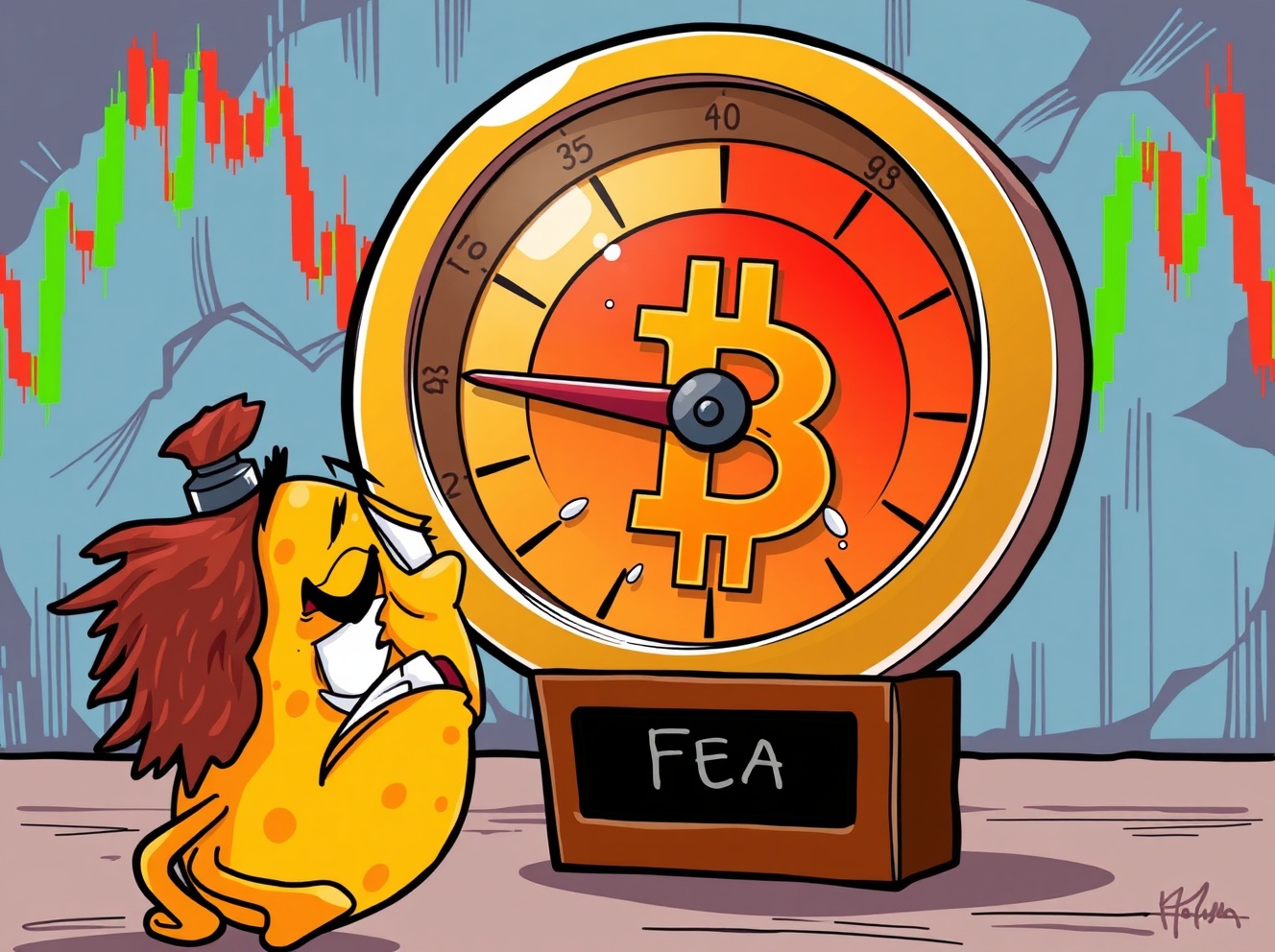
Crypto Fear & Greed Index: Decoding the Market’s Anxious Dip to 43

The Crypto Fear & Greed Index is more than just a number; it’s a vital pulse check for the volatile cryptocurrency market. When this index dips, it often signals a significant shift in investor sentiment, moving from optimism towards caution. Currently, the market finds itself firmly planted in the ‘fear’ zone, prompting many to wonder what lies ahead for their investments.

What Does the Current Crypto Fear & Greed Index Reading Tell Us?

According to data from provider Alternative, the Crypto Fear & Greed Index recently slipped two points, landing at 43. This value keeps us squarely in the ‘fear’ category, a state where investors tend to be more hesitant and risk-averse. For context, an index value of zero represents ‘extreme fear,’ while 100 signifies ‘extreme greed.’

This numerical barometer helps us gauge the overall mood of the market, offering a glimpse into the collective psyche of crypto investors. A reading of 43 suggests that while extreme panic might not be widespread, a significant portion of the market is feeling cautious, possibly due to recent price movements or broader economic concerns. It’s a signal that the market’s confidence is wavering.

Unpacking the Components: How is the Crypto Fear & Greed Index Calculated?

It’s not just a random figure. This index is a sophisticated blend of several key market indicators, each contributing to its final score. Understanding these components helps demystify how this crucial sentiment gauge is formed and why its movements matter so much to your investment decisions. The index is a carefully weighted average of six distinct factors:

  • Market Volatility (25%): This measures how much Bitcoin’s price fluctuates. High volatility often indicates a nervous market, pushing the index towards fear.
  • Trading Volume (25%): Strong buying volume usually correlates with greed, while low volume can signal fear or indifference.
  • Social Media Mentions (15%): Analyzing keywords and sentiment across various social platforms provides a real-time snapshot of public perception. A surge in negative sentiment can drive the index down.
  • Surveys (15%): While currently paused, these polls directly ask investors about their market outlook, offering direct insights into sentiment.
  • Bitcoin’s Market Dominance (10%): An increasing dominance often points to investors seeking safer havens in Bitcoin, suggesting fear in the altcoin market. Conversely, decreasing dominance can signal greed for altcoin opportunities.
  • Google Search Volume (10%): Tracking searches for terms like ‘Bitcoin price manipulation’ or ‘Bitcoin crash’ can reveal underlying anxieties, contributing to the fear score.

When the Crypto Fear & Greed Index resides in the fear zone, it often presents a dual-edged sword for investors. On one hand, widespread fear can lead to panic selling, driving prices lower and creating potential opportunities for those with a long-term perspective. As the old adage goes, "Be fearful when others are greedy, and greedy when others are fearful."

However, it also signals a period of heightened uncertainty and potential downside risk. It’s a time for careful consideration, not impulsive reactions. Here are some actionable insights to consider when the Crypto Fear & Greed Index is low:

  • Stay Informed: Don’t let emotion dictate your moves. Understand the underlying reasons for the market’s fear, whether it’s macroeconomic news, regulatory changes, or specific project developments.
  • Re-evaluate Your Portfolio: This might be a good time to assess your risk tolerance and ensure your investments align with your financial goals. Consider if your asset allocation is still appropriate for current market conditions.
  • Dollar-Cost Averaging (DCA): Consider consistently investing a fixed amount over time, regardless of market fluctuations. This strategy can mitigate risk during volatile periods and average out your purchase price.
  • Avoid Impulse Decisions: Panic selling can lock in losses. Instead, take a step back, conduct thorough research, and make informed choices based on your investment strategy.

Beyond the Number: Why Market Sentiment, as Reflected by the Crypto Fear & Greed Index, Truly Matters

Market sentiment, as reflected by the Crypto Fear & Greed Index, plays a significant role in price movements. When fear grips the market, investors often sell off assets, leading to price declines. Conversely, excessive greed can inflate asset prices beyond their intrinsic value, potentially setting the stage for corrections. Understanding this psychological aspect of the market is crucial for any investor.

It’s important to remember that the index is a sentiment indicator, not a direct buy or sell signal. It provides a valuable context for market conditions, helping you understand the prevailing emotional state. Savvy investors use this information to inform their broader strategy, rather than blindly following its every dip or surge. It’s a tool for better decision-making, not a crystal ball.

The recent dip in the Crypto Fear & Greed Index to 43 serves as a timely reminder of the ever-present emotional swings in the crypto market. While fear can feel unsettling, it also offers a chance for rational evaluation and strategic planning. By understanding how the index works and what its current reading signifies, investors can navigate these turbulent waters with greater confidence and make decisions that align with their long-term objectives. Stay informed, stay calm, and make calculated moves.

Frequently Asked Questions (FAQs)

What is the Crypto Fear & Greed Index?

The Crypto Fear & Greed Index is a tool that measures the prevailing emotional state of the cryptocurrency market. It ranges from 0 (extreme fear) to 100 (extreme greed), helping investors gauge market sentiment.

What does a low score (like 43) on the index mean?

A low score, such as 43, indicates that the market is in a ‘fear’ zone. This means investors are generally cautious, hesitant, and may be selling assets, which can lead to lower prices.

How should investors react to the index being in the ‘fear’ zone?

In the ‘fear’ zone, investors are advised to stay informed, re-evaluate their portfolios, consider dollar-cost averaging, and avoid making impulsive decisions based solely on emotion. It can present opportunities for long-term investors.

Is the Crypto Fear & Greed Index a buy/sell signal?

No, the Crypto Fear & Greed Index is not a direct buy or sell signal. It is a sentiment indicator that provides context about the market’s emotional state. Investors should use it as one tool among many to inform their broader investment strategy.

What factors influence the index’s score?

The index is calculated based on market volatility, trading volume, social media mentions, surveys (when active), Bitcoin’s market dominance, and Google search volume.

If you found this article insightful, consider sharing it with your friends and fellow crypto enthusiasts on social media! Your shares help us reach more people who can benefit from understanding market sentiment.

To learn more about the latest crypto market trends, explore our article on key developments shaping Bitcoin price action.

This post Crypto Fear & Greed Index: Decoding the Market’s Anxious Dip to 43 first appeared on BitcoinWorld.

Market Opportunity
Threshold Logo
Threshold Price(T)
$0,00878
$0,00878$0,00878
-6,29%
USD
Threshold (T) Live Price Chart
Disclaimer: The articles reposted on this site are sourced from public platforms and are provided for informational purposes only. They do not necessarily reflect the views of MEXC. All rights remain with the original authors. If you believe any content infringes on third-party rights, please contact service@support.mexc.com for removal. MEXC makes no guarantees regarding the accuracy, completeness, or timeliness of the content and is not responsible for any actions taken based on the information provided. The content does not constitute financial, legal, or other professional advice, nor should it be considered a recommendation or endorsement by MEXC.

You May Also Like

Let insiders trade – Blockworks

Let insiders trade – Blockworks

The post Let insiders trade – Blockworks appeared on BitcoinEthereumNews.com. This is a segment from The Breakdown newsletter. To read more editions, subscribe ​​“The most valuable commodity I know of is information.” — Gordon Gekko, Wall Street Ten months ago, FBI agents raided Shayne Coplan’s Manhattan apartment, ostensibly in search of evidence that the prediction market he founded, Polymarket, had illegally allowed US residents to place bets on the US election. Two weeks ago, the CFTC gave Polymarket the green light to allow those very same US residents to place bets on whatever they like. This is quite the turn of events — and it’s not just about elections or politics. With its US government seal of approval in hand, Polymarket is reportedly raising capital at a valuation of $9 billion — a reflection of the growing belief that prediction markets will be used for much more than betting on elections once every four years. Instead, proponents say prediction markets can provide a real service to the world by providing it with better information about nearly everything. I think they might, too — but only if insiders are free to participate. Yesterday, for example, Polymarket announced new betting markets on company earnings reports, with a promise that it would improve the information that investors have to work with.  Instead of waiting three months to find out how a company is faring, investors could simply watch the odds on Polymarket.  If the probability of an earnings beat is rising, for example, investors would know at a glance that things are going well. But that will only happen if enough of the people betting actually know how things are going. Relying on the wisdom of crowds to magically discern how a business is doing won’t add much incremental knowledge to the world; everyone’s guesses are unlikely to average out to the truth. If…
Share
BitcoinEthereumNews2025/09/18 05:16
Franklin Templeton CEO Dismisses 50bps Rate Cut Ahead FOMC

Franklin Templeton CEO Dismisses 50bps Rate Cut Ahead FOMC

The post Franklin Templeton CEO Dismisses 50bps Rate Cut Ahead FOMC appeared on BitcoinEthereumNews.com. Franklin Templeton CEO Jenny Johnson has weighed in on whether the Federal Reserve should make a 25 basis points (bps) Fed rate cut or 50 bps cut. This comes ahead of the Fed decision today at today’s FOMC meeting, with the market pricing in a 25 bps cut. Bitcoin and the broader crypto market are currently trading flat ahead of the rate cut decision. Franklin Templeton CEO Weighs In On Potential FOMC Decision In a CNBC interview, Jenny Johnson said that she expects the Fed to make a 25 bps cut today instead of a 50 bps cut. She acknowledged the jobs data, which suggested that the labor market is weakening. However, she noted that this data is backward-looking, indicating that it doesn’t show the current state of the economy. She alluded to the wage growth, which she remarked is an indication of a robust labor market. She added that retail sales are up and that consumers are still spending, despite inflation being sticky at 3%, which makes a case for why the FOMC should opt against a 50-basis-point Fed rate cut. In line with this, the Franklin Templeton CEO said that she would go with a 25 bps rate cut if she were Jerome Powell. She remarked that the Fed still has the October and December FOMC meetings to make further cuts if the incoming data warrants it. Johnson also asserted that the data show a robust economy. However, she noted that there can’t be an argument for no Fed rate cut since Powell already signaled at Jackson Hole that they were likely to lower interest rates at this meeting due to concerns over a weakening labor market. Notably, her comment comes as experts argue for both sides on why the Fed should make a 25 bps cut or…
Share
BitcoinEthereumNews2025/09/18 00:36
USD/INR opens flat on hopes of RBI’s follow-through intervention

USD/INR opens flat on hopes of RBI’s follow-through intervention

The post USD/INR opens flat on hopes of RBI’s follow-through intervention appeared on BitcoinEthereumNews.com. The Indian Rupee (INR) opens on a flat note against
Share
BitcoinEthereumNews2025/12/18 13:33