A recent slashing of Ethereum from different validators has reignited the debate around staking models, with many pointing to Cardano’s more resilient structure as a key differentiator. While Ethereum’s system penalizes validators for downtime or misbehavior, Cardano’s staking approach avoids such risks, offering delegators security without the fear of losing funds.  Why Simplicity And Resilience Are Cardano’s Key Advantages On September 10, a slashing of 11.7 ETH from 39 Ethereum validators highlights the advantages of Cardano’s staking structure. Crypto analyst Dori has highlighted on X the fundamental differences in staking requirements and risks between the two networks. On Ethereum, it is structurally impossible to stake 0.1 ETH directly on ETH, but an individual must stake a minimum of 32 ETH and operate a validator node themselves.  Related Reading: Ethereum Investors Double Down As Staking Activity Spikes Sharply – Here’s How Much However, platforms have been built on Ethereum to allow staking with as little as 0.1 ETH, and liquid tokens are issued. The critical difference is that, due to the slashing mechanism, Ethereum’s structure carries the risk of a cascading collapse. This has given rise to platforms like Ankr and Lido Finance, which pool ETH from many users, run validators, and issue liquid staking tokens such as ankrETH and stETH to solve the problem of locked-up funds. In this incident, an operational mistake by the operators of 39 validators led to a slashing penalty of 11.7 ETH, which is worth approximately $52,000. If a larger slashing event were to occur, it could lead to the de-pegging of the liquid staking tokens, potentially triggering a cascading collapse as DeFi ecosystem protocols built upon them. On Ethereum, iquid staking platforms were developed to remove obstacles to staking, and liquid tokens were distributed to address the issue of lock-ups. In contrast, Cardana’s staking model allows anyone to stake as little as 10 ADA in a stake pool without worrying about slashing. There are no lock-up periods, and a user’s staked funds are never at risk of being lost, even if their chosen stake pool misbehaves. Fundamentally Different Approaches To Staking Cardanians (CRDN) also stated that a critical flaw in Ethereum’s staking model has been exposed, highlighting the fundamental advantages of Cardano’s design. The data shows that the Ethereum staking exit queue has hit an all-time high, forcing users who unstake their ETH to wait an estimated 46 days to get their funds back. Related Reading: Cardano Secures The Crown: Now The Most Decentralized Blockchain On Earth – Here’s How However, Cardano’s ADA staking model offers a fundamentally different experience, with liquid staking and no entry or exit queues. When a user stakes their ADA, the funds remain in their wallet and are always available for use or transfer, and earn rewards without being locked up. “The design is fundamentally better,” the expert noted. Featured image from Adobe Stock, chart from Tradingview.comA recent slashing of Ethereum from different validators has reignited the debate around staking models, with many pointing to Cardano’s more resilient structure as a key differentiator. While Ethereum’s system penalizes validators for downtime or misbehavior, Cardano’s staking approach avoids such risks, offering delegators security without the fear of losing funds.  Why Simplicity And Resilience Are Cardano’s Key Advantages On September 10, a slashing of 11.7 ETH from 39 Ethereum validators highlights the advantages of Cardano’s staking structure. Crypto analyst Dori has highlighted on X the fundamental differences in staking requirements and risks between the two networks. On Ethereum, it is structurally impossible to stake 0.1 ETH directly on ETH, but an individual must stake a minimum of 32 ETH and operate a validator node themselves.  Related Reading: Ethereum Investors Double Down As Staking Activity Spikes Sharply – Here’s How Much However, platforms have been built on Ethereum to allow staking with as little as 0.1 ETH, and liquid tokens are issued. The critical difference is that, due to the slashing mechanism, Ethereum’s structure carries the risk of a cascading collapse. This has given rise to platforms like Ankr and Lido Finance, which pool ETH from many users, run validators, and issue liquid staking tokens such as ankrETH and stETH to solve the problem of locked-up funds. In this incident, an operational mistake by the operators of 39 validators led to a slashing penalty of 11.7 ETH, which is worth approximately $52,000. If a larger slashing event were to occur, it could lead to the de-pegging of the liquid staking tokens, potentially triggering a cascading collapse as DeFi ecosystem protocols built upon them. On Ethereum, iquid staking platforms were developed to remove obstacles to staking, and liquid tokens were distributed to address the issue of lock-ups. In contrast, Cardana’s staking model allows anyone to stake as little as 10 ADA in a stake pool without worrying about slashing. There are no lock-up periods, and a user’s staked funds are never at risk of being lost, even if their chosen stake pool misbehaves. Fundamentally Different Approaches To Staking Cardanians (CRDN) also stated that a critical flaw in Ethereum’s staking model has been exposed, highlighting the fundamental advantages of Cardano’s design. The data shows that the Ethereum staking exit queue has hit an all-time high, forcing users who unstake their ETH to wait an estimated 46 days to get their funds back. Related Reading: Cardano Secures The Crown: Now The Most Decentralized Blockchain On Earth – Here’s How However, Cardano’s ADA staking model offers a fundamentally different experience, with liquid staking and no entry or exit queues. When a user stakes their ADA, the funds remain in their wallet and are always available for use or transfer, and earn rewards without being locked up. “The design is fundamentally better,” the expert noted. Featured image from Adobe Stock, chart from Tradingview.com

Ethereum Validator Slashing Puts Cardano’s Resilience In Focus – Here’s Why

2025/09/13 09:00

A recent slashing of Ethereum from different validators has reignited the debate around staking models, with many pointing to Cardano’s more resilient structure as a key differentiator. While Ethereum’s system penalizes validators for downtime or misbehavior, Cardano’s staking approach avoids such risks, offering delegators security without the fear of losing funds. 

Why Simplicity And Resilience Are Cardano’s Key Advantages

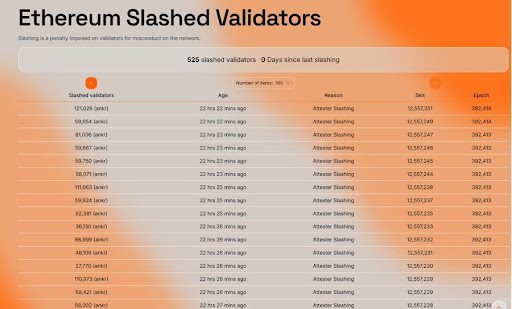
On September 10, a slashing of 11.7 ETH from 39 Ethereum validators highlights the advantages of Cardano’s staking structure. Crypto analyst Dori has highlighted on X the fundamental differences in staking requirements and risks between the two networks. On Ethereum, it is structurally impossible to stake 0.1 ETH directly on ETH, but an individual must stake a minimum of 32 ETH and operate a validator node themselves. 

However, platforms have been built on Ethereum to allow staking with as little as 0.1 ETH, and liquid tokens are issued. The critical difference is that, due to the slashing mechanism, Ethereum’s structure carries the risk of a cascading collapse. This has given rise to platforms like Ankr and Lido Finance, which pool ETH from many users, run validators, and issue liquid staking tokens such as ankrETH and stETH to solve the problem of locked-up funds.
Ethereum

In this incident, an operational mistake by the operators of 39 validators led to a slashing penalty of 11.7 ETH, which is worth approximately $52,000. If a larger slashing event were to occur, it could lead to the de-pegging of the liquid staking tokens, potentially triggering a cascading collapse as DeFi ecosystem protocols built upon them.

On Ethereum, iquid staking platforms were developed to remove obstacles to staking, and liquid tokens were distributed to address the issue of lock-ups. In contrast, Cardana’s staking model allows anyone to stake as little as 10 ADA in a stake pool without worrying about slashing. There are no lock-up periods, and a user’s staked funds are never at risk of being lost, even if their chosen stake pool misbehaves.

Fundamentally Different Approaches To Staking

Cardanians (CRDN) also stated that a critical flaw in Ethereum’s staking model has been exposed, highlighting the fundamental advantages of Cardano’s design. The data shows that the Ethereum staking exit queue has hit an all-time high, forcing users who unstake their ETH to wait an estimated 46 days to get their funds back.

However, Cardano’s ADA staking model offers a fundamentally different experience, with liquid staking and no entry or exit queues. When a user stakes their ADA, the funds remain in their wallet and are always available for use or transfer, and earn rewards without being locked up. “The design is fundamentally better,” the expert noted.

Ethereum
Market Opportunity
RISE Logo
RISE Price(RISE)
$0.006183
$0.006183$0.006183
+3.06%
USD
RISE (RISE) Live Price Chart
Disclaimer: The articles reposted on this site are sourced from public platforms and are provided for informational purposes only. They do not necessarily reflect the views of MEXC. All rights remain with the original authors. If you believe any content infringes on third-party rights, please contact service@support.mexc.com for removal. MEXC makes no guarantees regarding the accuracy, completeness, or timeliness of the content and is not responsible for any actions taken based on the information provided. The content does not constitute financial, legal, or other professional advice, nor should it be considered a recommendation or endorsement by MEXC.

You May Also Like

CME Group to Launch Solana and XRP Futures Options

CME Group to Launch Solana and XRP Futures Options

The post CME Group to Launch Solana and XRP Futures Options appeared on BitcoinEthereumNews.com. An announcement was made by CME Group, the largest derivatives exchanger worldwide, revealed that it would introduce options for Solana and XRP futures. It is the latest addition to CME crypto derivatives as institutions and retail investors increase their demand for Solana and XRP. CME Expands Crypto Offerings With Solana and XRP Options Launch According to a press release, the launch is scheduled for October 13, 2025, pending regulatory approval. The new products will allow traders to access options on Solana, Micro Solana, XRP, and Micro XRP futures. Expiries will be offered on business days on a monthly, and quarterly basis to provide more flexibility to market players. CME Group said the contracts are designed to meet demand from institutions, hedge funds, and active retail traders. According to Giovanni Vicioso, the launch reflects high liquidity in Solana and XRP futures. Vicioso is the Global Head of Cryptocurrency Products for the CME Group. He noted that the new contracts will provide additional tools for risk management and exposure strategies. Recently, CME XRP futures registered record open interest amid ETF approval optimism, reinforcing confidence in contract demand. Cumberland, one of the leading liquidity providers, welcomed the development and said it highlights the shift beyond Bitcoin and Ethereum. FalconX, another trading firm, added that rising digital asset treasuries are increasing the need for hedging tools on alternative tokens like Solana and XRP. High Record Trading Volumes Demand Solana and XRP Futures Solana futures and XRP continue to gain popularity since their launch earlier this year. According to CME official records, many have bought and sold more than 540,000 Solana futures contracts since March. A value that amounts to over $22 billion dollars. Solana contracts hit a record 9,000 contracts in August, worth $437 million. Open interest also set a record at 12,500 contracts.…
Share
BitcoinEthereumNews2025/09/18 01:39
Vitalik Buterin Warns Crypto Lost Its Way, But Ethereum Is Ready to Fix It
Vitalik Buterin Warns Crypto Lost Its Way, But Ethereum Is Ready to Fix It

The post Vitalik Buterin Warns Crypto Lost Its Way, But Ethereum Is Ready to Fix It appeared first on Coinpedia Fintech News Ethereum co-founder Vitalik Buterin
Share
CoinPedia2026/01/14 18:13
Top 3 Reasons Why XRP Price Is Surging Today

Top 3 Reasons Why XRP Price Is Surging Today

The post Top 3 Reasons Why XRP Price Is Surging Today appeared on BitcoinEthereumNews.com. The XRP price is back in the spotlight today, becoming one of the top
Share
BitcoinEthereumNews2026/01/14 17:55
