TLDR: Over half of global institutions expect 10–24% of their assets to be tokenized by 2030, led by private markets. Around 60% plan to increase digital asset allocations within a year, showing confidence in blockchain’s scalability. Forty percent of institutions already operate dedicated digital asset teams, with more preparing to follow. Transparency and faster trading [...] The post State Street Says Institutions to Double Digital Asset Exposure by 2028 appeared first on Blockonomi.TLDR: Over half of global institutions expect 10–24% of their assets to be tokenized by 2030, led by private markets. Around 60% plan to increase digital asset allocations within a year, showing confidence in blockchain’s scalability. Forty percent of institutions already operate dedicated digital asset teams, with more preparing to follow. Transparency and faster trading [...] The post State Street Says Institutions to Double Digital Asset Exposure by 2028 appeared first on Blockonomi.

State Street Says Institutions to Double Digital Asset Exposure by 2028

2025/10/11 02:40
3 min read

TLDR:

  • Over half of global institutions expect 10–24% of their assets to be tokenized by 2030, led by private markets.
  • Around 60% plan to increase digital asset allocations within a year, showing confidence in blockchain’s scalability.
  • Forty percent of institutions already operate dedicated digital asset teams, with more preparing to follow.
  • Transparency and faster trading are cited as top benefits, with cost savings projected at more than 40%.

Institutional investors are ramping up their commitment to blockchain and tokenized assets. A new global study from State Street shows that most major institutions plan to double their exposure to digital assets within three years. 

The research points to a broader structural shift in global finance, as tokenization moves from experimentation to strategy. The findings suggest that private markets may become the first frontier for large-scale blockchain adoption. The data comes from the bank’s 2025 Digital Assets Outlook, released this week.

Private Markets Lead the Tokenization Charge

According to the report, private equity and private fixed income are the first asset classes likely to be tokenized. Institutional investors appear focused on unlocking liquidity and reducing inefficiencies across traditionally illiquid markets. 

By 2030, over half expect between 10% and 24% of their total investments to exist as tokenized assets.

State Street’s research also found that nearly 60% of surveyed investors plan to raise their digital asset allocation within the next year. The shift reflects growing confidence in blockchain-based instruments as tools for efficiency and long-term growth.

Crypto news account Wu Blockchain summarized the data, highlighting that institutions now view tokenization as an operational priority, not just a speculative play. The report described the convergence of AI, blockchain, and quantum computing as a major catalyst for innovation in traditional finance.

Joerg Ambrosius, president of Investment Services at State Street, said the move toward digital assets represents a “strategic lever” for growth. His comments align with growing interest among asset managers in tokenized bonds, equities, and stablecoin-linked instruments.

Dedicated Teams Are Driving Institutional Blockchain Adoption

The survey showed that around 40% of institutional investors already have digital asset teams. Another 20% plan to establish dedicated blockchain divisions soon. These specialized groups are shaping operational models around tokenization, on-chain finance, and compliance automation.

Donna Milrod, State Street’s chief product officer, said clients are “rewiring” their operations to integrate digital asset frameworks. She pointed to tokenized bonds, CBDCs, and on-chain cash instruments as growing areas of focus.

Transparency, speed, and cost savings are driving adoption. Over half of respondents cited increased visibility as the biggest benefit, while others pointed to faster settlement times and reduced compliance costs. Some firms expect up to 40% cost savings from transparency-driven efficiencies alone.

The full 2025 Digital Assets Outlook by State Street paints a clear picture: tokenization is no longer a test case. It’s becoming the foundation for how institutions manage, trade, and store value in the next decade.

The post State Street Says Institutions to Double Digital Asset Exposure by 2028 appeared first on Blockonomi.

Market Opportunity
Moonveil Logo
Moonveil Price(MORE)
$0.0006558
$0.0006558$0.0006558
-0.34%
USD
Moonveil (MORE) Live Price Chart
Disclaimer: The articles reposted on this site are sourced from public platforms and are provided for informational purposes only. They do not necessarily reflect the views of MEXC. All rights remain with the original authors. If you believe any content infringes on third-party rights, please contact service@support.mexc.com for removal. MEXC makes no guarantees regarding the accuracy, completeness, or timeliness of the content and is not responsible for any actions taken based on the information provided. The content does not constitute financial, legal, or other professional advice, nor should it be considered a recommendation or endorsement by MEXC.

You May Also Like

Pippin (PIPPIN) Price Prediction 2026–2030: Can PIPPIN Hit $0.70 Soon?

Pippin (PIPPIN) Price Prediction 2026–2030: Can PIPPIN Hit $0.70 Soon?

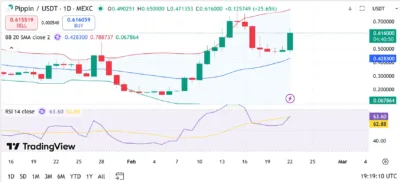
PIPPIN has surged sharply on the daily timeframe, printing a powerful bullish candle with over 25% gains. RSI is holding above 60, signaling strengthening momentum
Share
Coinstats2026/02/23 04:29
Will Cardano Reach $10 by 2030? Analysts Break Down ADA’s Growth Cycles

Will Cardano Reach $10 by 2030? Analysts Break Down ADA’s Growth Cycles

The post Will Cardano Reach $10 by 2030? Analysts Break Down ADA’s Growth Cycles appeared first on Coinpedia Fintech News Cardano (ADA) is trading at $0.9024 with a market cap of $32.91 billion. Experts say ADA has the potential to climb much higher, with some placing long-term targets as high as $10. The token continues to benefit from stronger visibility, rising liquidity, and increasing inflows from both institutional and retail markets. Can Cardano Hit $10 …
Share
CoinPedia2025/09/18 17:19
Crypto whale loses $6M to sneaky phishing scheme targeting staked Ethereum

Crypto whale loses $6M to sneaky phishing scheme targeting staked Ethereum

The post Crypto whale loses $6M to sneaky phishing scheme targeting staked Ethereum appeared on BitcoinEthereumNews.com. A crypto whale lost more than $6 million in staked Ethereum (stETH) and Aave-wrapped Bitcoin (aEthWBTC) after approving malicious signatures in a phishing scheme on Sept. 18, according to blockchain security firm Scam Sniffer. According to the firm, the attackers disguised their move as a routine wallet confirmation through “Permit” signatures, which tricked the victim into authorizing fund transfers without triggering obvious red flags. Yu Xian, founder of blockchain security company SlowMist, noted that the victim did not recognize the danger because the transaction required no gas fees. He wrote: “From the victim’s perspective, he just clicked a few times to confirm the wallet’s pop-up signature requests, didn’t spend a single penny of gas, and $6.28 million was gone.” How Permit exploits work Permit approvals were originally designed to simplify token transfers. Instead of submitting an on-chain approval and paying fees, a user can sign an off-chain message authorizing a spender. That efficiency, however, has created a new attack surface for malicious players. Once a user signs such a permit, attackers can combine two functions—Permit and TransferFrom—to drain assets directly. Because the authorization takes place off-chain, wallet dashboards show no unusual activity until the funds move. As a result, the assets are gone when the approval executes on-chain, and tokens are redirected to the attacker’s wallet. This loophole has made permit exploits increasingly attractive for malicious actors, who can siphon millions without needing complex hacks or high-cost gas wars. Phishing losses The latest theft highlights a wider trend of escalating phishing campaigns. Scam Sniffer reported that in August alone, attackers stole $12.17 million from more than 15,200 victims. That figure represented a 72% jump in losses compared with July. According to the firm, the most significant share of August’s damages came from three large accounts that accounted for nearly half…
Share
BitcoinEthereumNews2025/09/19 02:31