Walmart (WMT) stock: Slips 1.24% as Retail Giant Moves to Remove Dyes and 30 Additives From Store Brands
TLDR
- Walmart cuts synthetic dyes & additives from 1,000 private-label foods.
- Reformulated Walmart foods target transparency, full rollout by 2027.
- Walmart bans 30+ additives, aiming for cleaner Great Value & Bettergoods.
- Customers drive Walmart’s push for dye-free, simpler food ingredients.
- Walmart’s additive-free shift sparks supply chain, cost considerations.
Walmart Inc. (WMT) saw its stock price fall by 1.24% on October 1st, closing at $101.79 by 3:34 PM EDT.
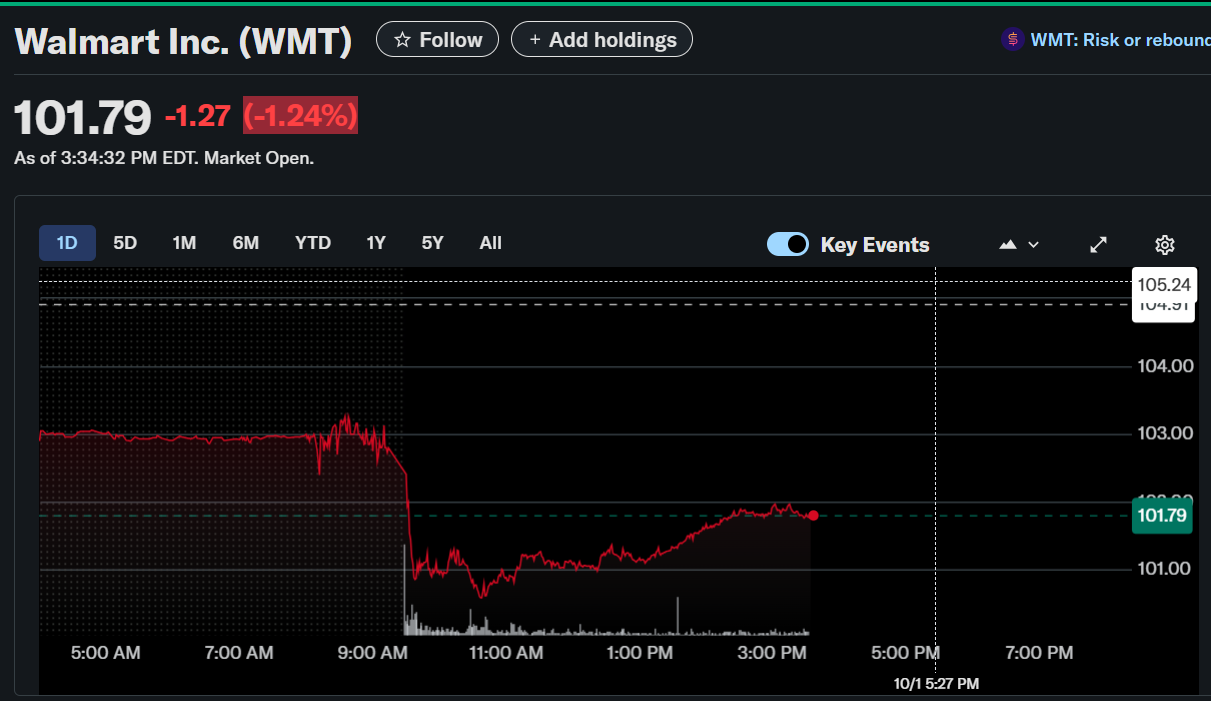
Walmart Inc. (WMT)
This decline followed the company’s major announcement regarding changes to its private-label food products. Investors reacted with caution to the news, as the move could impact operational costs in the near term.
The company declared it would eliminate synthetic dyes and over 30 additional additives from its private brand food items. The transition will affect about 1,000 products including snacks, drinks, baked goods, and condiments. Reformulated items will gradually appear on shelves over the coming months, with the full rollout expected by January 2027.
While this initiative supports evolving customer demands, it also brings immediate logistical and supply chain considerations. Walmart plans to maintain product taste consistency while sourcing alternative ingredients. As the leading U.S. grocer, the company’s decisions often influence wider retail and consumer trends.
Reformulation Targets Transparency and Quality
Walmart is advancing its private brand strategy by targeting simpler and more familiar ingredients in its food portfolio. This initiative covers all major private labels such as Great Value, Marketside, Freshness Guaranteed, and Bettergoods. The goal is to align product content with increasing customer interest in ingredient transparency.
Currently, 90% of Walmart’s private brand products are free from synthetic dyes. The company aims to extend this standard across its entire food range. Ingredients like potassium nitrate, potassium bisulfite, and phthalates are among those being removed from items like meats and beverages.
Customer research guided the decision, with 62% seeking more transparency and 54% actively checking ingredient labels. These insights reinforced Walmart’s commitment to improving product integrity. The Bettergoods brand, launched earlier, already emphasizes plant-based and “made without” options under $5.
Industry and Regulatory Context Supports the Shift
Walmart’s announcement follows increasing regulatory pressure and industry shifts regarding artificial additives in food products. The Department of Health and Human Services recently urged companies to phase out remaining synthetic dyes. The FDA has also begun working with manufacturers to reduce such ingredients.
Other food companies, including Kraft Heinz and General Mills, have also started removing synthetic dyes from their products. Walmart’s scale means its reformulation strategy could influence industry norms and consumer expectations. Food policy advocates recognize the retailer’s move as a market-leading step.
Walmart began promoting healthier choices as early as 2012 with its “Great For You” labeling initiative. The current reformulation builds on that legacy, reinforcing Walmart’s market position. While short-term costs may rise, the company aims to strengthen brand trust and long-term customer loyalty.
The post Walmart (WMT) stock: Slips 1.24% as Retail Giant Moves to Remove Dyes and 30 Additives From Store Brands appeared first on CoinCentral.
You May Also Like

Vanguard’s $505mln MSTR bet – Is the Bitcoin blockade officially over?

Cardano Whales Accumulate 200M Tokens During Dip, Fueling Bullish Hopes