Certainly. Here’s the rewritten article with the specified enhancements and structure, including an added introductory paragraph to provide context: — Cryptocurrency markets continue to grapple with a complex mix of macroeconomic signals, regulatory uncertainties, and investor sentiment shifts. Despite anticipation of a post-options expiry rally, Bitcoin has struggled to regain critical levels amid rising traditional [...]Certainly. Here’s the rewritten article with the specified enhancements and structure, including an added introductory paragraph to provide context: — Cryptocurrency markets continue to grapple with a complex mix of macroeconomic signals, regulatory uncertainties, and investor sentiment shifts. Despite anticipation of a post-options expiry rally, Bitcoin has struggled to regain critical levels amid rising traditional [...]

Why Bitcoin Dropped Below $110K — The Surprising Reasons Revealed
Why Bitcoin Dropped Below $110k — The Surprising Reasons Revealed

Certainly. Here’s the rewritten article with the specified enhancements and structure, including an added introductory paragraph to provide context:

Cryptocurrency markets continue to grapple with a complex mix of macroeconomic signals, regulatory uncertainties, and investor sentiment shifts. Despite anticipation of a post-options expiry rally, Bitcoin has struggled to regain critical levels amid rising traditional safe-haven assets and cautious Federal Reserve outlooks. Meanwhile, regulatory scrutiny on crypto treasury holdings adds further uncertainty to an already volatile environment.

  • Strong U.S. economic data and rising gold prices divert investor attention from Bitcoin’s upside potential.
  • Regulatory investigations and unclear plans for a U.S. Strategic Bitcoin Reserve suppress Bitcoin’s market performance.
  • Bitcoin fails to hold its target levels despite favorable macro trends, weighed down by regulatory and policy uncertainties.

Bitcoin (BTC) failed to reclaim the $110,000 mark on Friday, despite growing expectations among traders following the monthly BTC options expiry. The anticipated post-expiry rally faded as bearish momentum persisted, driven by robust macroeconomic data and looming regulatory concerns targeting key crypto treasury companies.

The U.S. Commerce Department reported Friday that the Personal Consumption Expenditures (PCE) price index increased by 2.7% in August compared to the previous year, aligning with economists’ projections. Persistent inflationary pressures continue to prompt the Federal Reserve to maintain a cautious stance regarding interest rate cuts.

Bitcoin struggles amid rising gold and positive economic indicators

Market participants have tempered their expectations for a reduction in interest rates to 3.75% or lower later this year, according to futures markets. The CME FedWatch tool indicates a 67% implied probability of two 0.25% rate cuts before year-end, down from 79% a week prior. As gold prices surged to $3,770 on Friday—just half a percent shy of its record high—investors turned attention toward traditional assets seen as safe havens amid rising macroeconomic uncertainty.

Implied odds for Dec. 10 US Fed meeting. Source: CME FedWatch

The S&P 500 experienced gains on Friday after reports showed U.S. consumer spending grew by 0.6% for August. Economists had anticipated a slowdown in spending due to rising prices and concerns over an weakening labor market, according to Yahoo Finance.
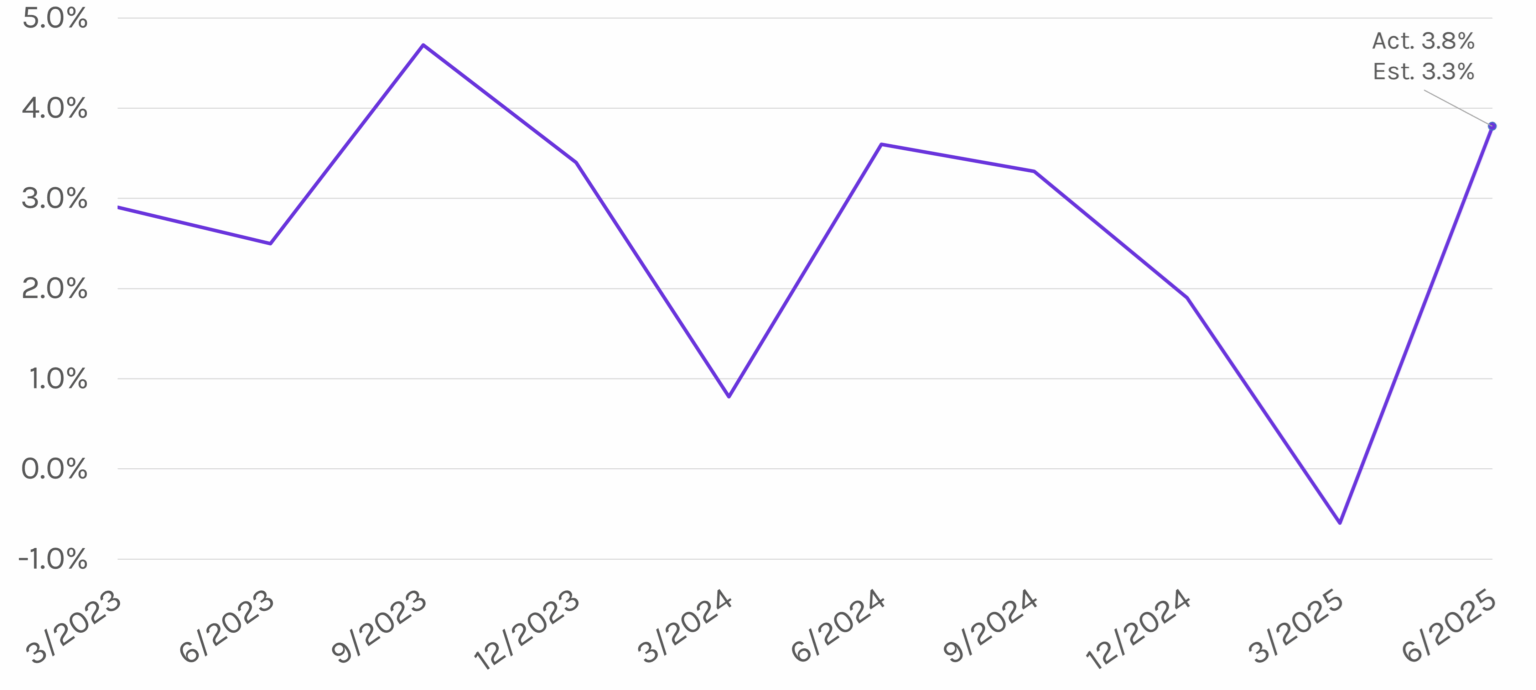
US annualized gross domestic product (GDP) growth. Source: DerivativePath

Such resilient economic growth tends to bolster stock markets by supporting corporate earnings and reducing perceived risk, even as trade tensions escalate with new tariffs, including a 100% duty on certain pharmaceuticals introduced by the U.S. government.

Regulatory headwinds and lack of transparency disrupt Bitcoin’s momentum
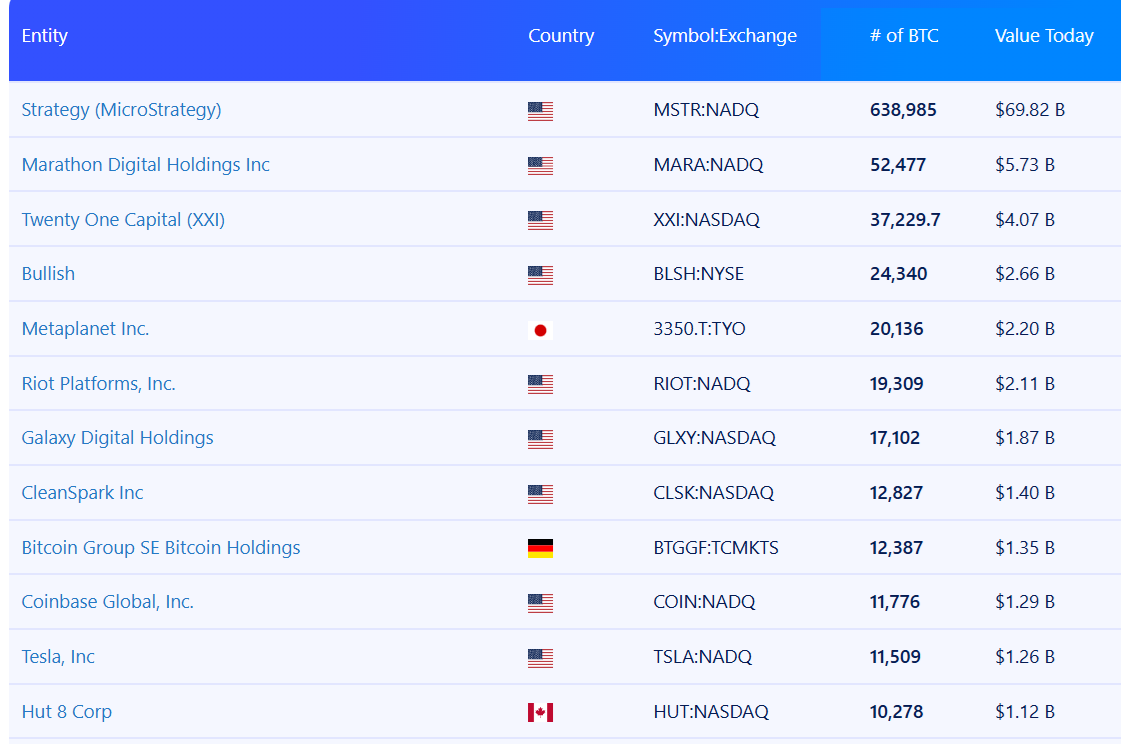
Largest Bitcoin holdings by public companies. Source: Bitbo.io

Increasing regulatory scrutiny adds further pressure on Bitcoin’s price. A recent Wall Street Journal report revealed that several crypto treasury firms have been contacted by U.S. regulators regarding unusual trading activity preceding corporate disclosures. Concerns over compliance with securities laws and the prohibition against disclosing material nonpublic information have sparked speculation about potential investigations.

Former SEC enforcement attorney David Chase noted, “It’s typically the first step in an investigation. Whether it leads to a full inquiry, nobody knows.” Meanwhile, traders remain frustrated by the lack of concrete steps regarding the U.S. Strategic Bitcoin Reserve, first announced in March but yet to see any actionable progress or audits of the government’s holdings.

In conclusion, Bitcoin’s recent price action is being shaped by macroeconomic tailwinds supporting equities, coupled with mounting regulatory uncertainties and an opaque stance on U.S. crypto reserves. These factors collectively dampen investor enthusiasm, keeping the world’s leading cryptocurrency under pressure despite favorable underlying macro trends.

This article is for general information purposes and is not intended to be and should not be taken as legal or investment advice. The views, thoughts, and opinions expressed here are the author’s alone and do not necessarily reflect or represent the views and opinions of any organization or publication.

If you need further modifications or focus areas, please let me know.

This article was originally published as Why Bitcoin Dropped Below $110K — The Surprising Reasons Revealed on Crypto Breaking News – your trusted source for crypto news, Bitcoin news, and blockchain updates.

Market Opportunity
WHY Logo
WHY Price(WHY)
$0.00000001311
$0.00000001311$0.00000001311
0.00%
USD
WHY (WHY) Live Price Chart
Disclaimer: The articles reposted on this site are sourced from public platforms and are provided for informational purposes only. They do not necessarily reflect the views of MEXC. All rights remain with the original authors. If you believe any content infringes on third-party rights, please contact service@support.mexc.com for removal. MEXC makes no guarantees regarding the accuracy, completeness, or timeliness of the content and is not responsible for any actions taken based on the information provided. The content does not constitute financial, legal, or other professional advice, nor should it be considered a recommendation or endorsement by MEXC.

You May Also Like

The Channel Factories We’ve Been Waiting For

The Channel Factories We’ve Been Waiting For

The post The Channel Factories We’ve Been Waiting For appeared on BitcoinEthereumNews.com. Visions of future technology are often prescient about the broad strokes while flubbing the details. The tablets in “2001: A Space Odyssey” do indeed look like iPads, but you never see the astronauts paying for subscriptions or wasting hours on Candy Crush.  Channel factories are one vision that arose early in the history of the Lightning Network to address some challenges that Lightning has faced from the beginning. Despite having grown to become Bitcoin’s most successful layer-2 scaling solution, with instant and low-fee payments, Lightning’s scale is limited by its reliance on payment channels. Although Lightning shifts most transactions off-chain, each payment channel still requires an on-chain transaction to open and (usually) another to close. As adoption grows, pressure on the blockchain grows with it. The need for a more scalable approach to managing channels is clear. Channel factories were supposed to meet this need, but where are they? In 2025, subnetworks are emerging that revive the impetus of channel factories with some new details that vastly increase their potential. They are natively interoperable with Lightning and achieve greater scale by allowing a group of participants to open a shared multisig UTXO and create multiple bilateral channels, which reduces the number of on-chain transactions and improves capital efficiency. Achieving greater scale by reducing complexity, Ark and Spark perform the same function as traditional channel factories with new designs and additional capabilities based on shared UTXOs.  Channel Factories 101 Channel factories have been around since the inception of Lightning. A factory is a multiparty contract where multiple users (not just two, as in a Dryja-Poon channel) cooperatively lock funds in a single multisig UTXO. They can open, close and update channels off-chain without updating the blockchain for each operation. Only when participants leave or the factory dissolves is an on-chain transaction…
Share
BitcoinEthereumNews2025/09/18 00:09
Successful Medical Writing from Protocol to CTD Training Course: Understand International Guidelines and Standards (Mar 23rd – Mar 24th, 2026) – ResearchAndMarkets.com

Successful Medical Writing from Protocol to CTD Training Course: Understand International Guidelines and Standards (Mar 23rd – Mar 24th, 2026) – ResearchAndMarkets.com

DUBLIN–(BUSINESS WIRE)–The “Successful Medical Writing – from Protocol to CTD Training Course (Mar 23rd – Mar 24th, 2026)” training has been added to ResearchAndMarkets
Share
AI Journal2026/01/03 01:15
Italy passes law on AI outlining privacy and child access

Italy passes law on AI outlining privacy and child access

The post Italy passes law on AI outlining privacy and child access appeared on BitcoinEthereumNews.com. Italy has formally passed a sweeping new law to regulate artificial intelligence, becoming the first member of the European Union to roll out comprehensive legislation in step with the bloc’s landmark AI Act. The Italian Senate granted final approval after a year of debate, concluding what Prime Minister Giorgia Meloni’s government described as a decisive step in shaping how new technologies are deployed across the country. Italy sets tough penalties for offenders The legislation, ministers argue, lays out the boundaries for human-centric, transparent, and safe use of AI while balancing the need to foster innovation, cybersecurity, and economic growth. The law casts its net widely, and it stretches into healthcare, schools, the justice system, workplaces, sport, and the public sector. AI access for children under 14 has also been tightened, and it now requires parental consent. “This law brings innovation back within the perimeter of the public interest, steering AI toward growth, rights and full protection of citizens.” Alessio Butti, the undersecretary for digital transformation. Lawmakers also opted for a hard line on abuses. A new offence has been added to the criminal code covering the unlawful spread of AI-generated or manipulated content, such as deepfakes. Anyone found guilty faces between one and five years in prison if their actions cause harm. Using AI to commit fraud, identity theft, market manipulation, or money laundering will now be treated as an aggravating circumstance, raising potential sentences by a third. Judges remain the sole authority in legal rulings, though courts are empowered to demand rapid takedowns of illicit material. Government agencies to oversee its implementation Responsibility for enforcing the regime lies with the Agency for Digital Italy and the National Cybersecurity Agency, though existing financial watchdogs such as the Bank of Italy and Consob retain powers in their own spheres. The Department…
Share
BitcoinEthereumNews2025/09/18 06:05