

[NEIGHBORS] ‘Kumusta ka na?’ — the question we all need to hear
A few days ago, I received an email with the subject, “Kumusta ka na (How are you)?” There was something comforting about the question. Yes, even journalists, who are presumed to be tough, would welcome people who truly care asking us how we’re holding up.
I just had an extended Labor Day lunch with editor friends from other news outlets, and we acknowledged how journos seem to be in a perpetual state of PTSD.
Because we tag along on raids, we rush to crime scenes, we witness families wailing over loved ones who died waiting for free medical care or those who got buried in landfill landslides. We feel helpless hearing what farmers, fisherfolk, jeepney drivers, TNVS riders, vendors, restaurant employees, teachers, and contractual workers go through to survive every single day.
We get verbally abused by irate officials, harassed with libel cases, and hit on by perverts in places of authority. We feel sick going over documents detailing corruption, discovering forms of insatiable greed, and hearing about the debauchery of those in power.
It’s a good thing that in recent years a few organizations have started giving free debriefings with professionals for journalists who have absorbed the trauma of difficult coverages. Noong kabataan natin (Back in our day), my editor friends said, walang ganyan-ganyan (we didn’t have that) — we dealt with these things by ourselves.
Which brings me back to the kumusta email. It actually came from a mental wellness clinic. While it was a mass-sent newsletter, it still felt personal because it’s from a partner clinic that Rappler’s human resources department had carefully chosen, based on their thoughtful conversations with employees.
I’ve always been grateful — and proud — about how our newsroom is mindful of our well-being. For example, we have a number of free consultations with psychiatrists, psychologists, or life coaches, or we can reimburse consultations with our preferred doctors. We are entitled to a free neuropathy assessment. We get deeply discounted flu and pneumonia vaccines.
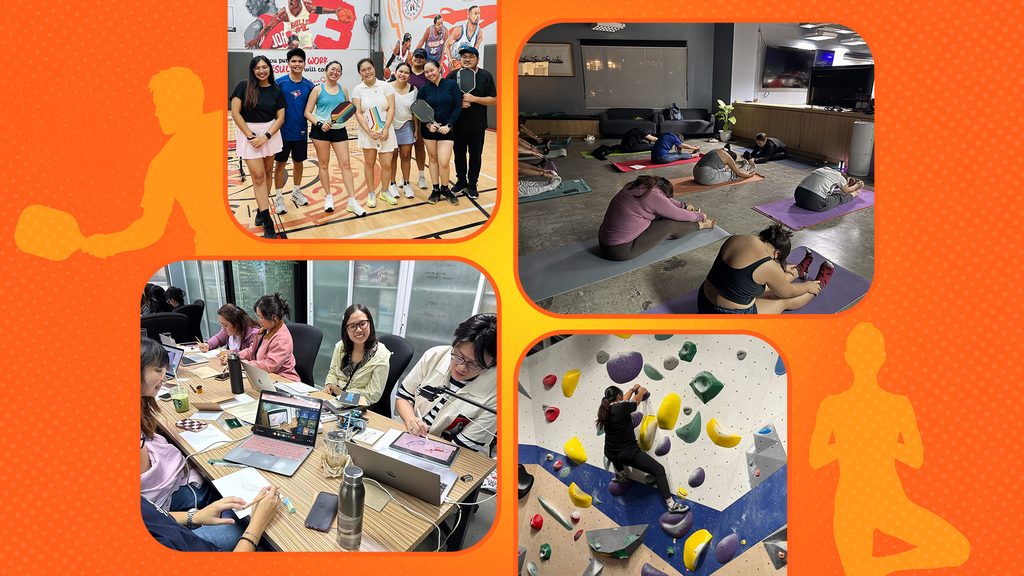
Once a month, the office pays for sports activity fees or provides food for our various fitness clubs. (In other weeks, the participants divide the costs among ourselves.) So, we run at PhilSports Complex, do bouldering in various gyms, play pickleball in a mall, or sweat it out in yoga sessions in a dark corner of the newsroom. We will soon have a hiking club!
We recently started our “back to analog” series of activities with a notebook painting/designing workshop. We held a street dance lesson once. On a post-Valentine day, we had a potluck, where various units shared home-cooked dishes and favorite delights. We had color-coded heart stickers that we gave to co-workers we wanted to thank and affirm. We have a kudos board, where you can just write a message of appreciation for anyone.
Little things. And, admittedly, privileges. Out there, many in this profession remain overworked, underpaid, and enjoy little or no benefits.
The International Labour Organization gives a more disheartening picture about workers in general: “Psychosocial risks are linked to more than 840,000 deaths globally each year and millions of lost years of healthy life…. Workplace safety is not only about physical hazards. Increasingly, the more serious risks are those we do not see: stress, long working hours, job insecurity, isolation, and exposure to violence or coercion.”
Whether you’re a fellow journalist, a supportive reader, or a content consumer who just chanced upon this piece, I want to ask you, kumusta ka na? And I hope you know I say that in earnest.
Our senior editor, Gani de Castro, wrote in a previous newsletter about how we can all still create a ripple of hope amid the current oil crisis. Allow me to add another way — by just asking our neighbors, the people next to us, “Kumusta ka na?“
Especially during these challenging times, it is the question we all need to hear. – Rappler.com


Ayrıca Şunları da Beğenebilirsiniz

Bitcoin, Altcoins Breakout With Strength: Are New Highs Next?

Riot Platforms Q1: Data Center Revenue 33.2M$


