

The artificial intelligence (AI) investment boom received a powerful new boost on June 24, 2026, when semiconductor giants Qualcomm and Micron Technology delivered forecasts that reignited investor enThe artificial intelligence (AI) investment boom received a powerful new boost on June 24, 2026, when semiconductor giants Qualcomm and Micron Technology delivered forecasts that reignited investor en

The artificial intelligence (AI) investment boom received a powerful new boost on June 24, 2026, when semiconductor giants Qualcomm and Micron Technology delivered forecasts that reignited investor enthusiasm across the technology sector. Within hours, AI-related chip stocks collectively added more than $400 billion in market value, reversing concerns that had recently emerged about the sustainability of the AI rally. The surge highlighted a simple but powerful message: demand for AI infrastructure remains far stronger than many investors had anticipated.
1.The Catalyst Behind the Rally
The rally was driven by two major announcements that reinforced confidence in the future of AI spending.
Micron Technology, one of the world’s leading memory-chip manufacturers, reported earnings and guidance that significantly exceeded Wall Street expectations. The company forecast quarterly earnings and revenue well above analyst estimates and projected continued strength in demand for AI-related memory products. Investors interpreted the outlook as evidence that spending on AI data centers remains robust despite concerns about stretched valuations and the long timeline required to generate returns from AI investments.
At the same time, Qualcomm unveiled ambitious plans for its AI future during its Investor Day presentation. The company stated that it expects its data-center business to generate more than $15 billion in annual revenue by fiscal 2029. Qualcomm also raised its broader non-handset revenue target to $40 billion by 2029, underscoring its determination to diversify beyond smartphones and become a major player in AI infrastructure.
Together, these announcements provided a strong vote of confidence for the broader semiconductor industry and the AI ecosystem that depends on it.
2.Micron’s Blowout Numbers
Micron’s results were particularly significant because memory chips have become one of the most critical components in AI systems. Advanced AI models require enormous amounts of memory to process and store data efficiently.
For its fiscal third quarter ended May 28, 2026, Micron reported revenue of $41.46 billion, far above analyst expectations. Adjusted earnings reached $25.11 per share, while revenue increased more than 340% compared with the same quarter a year earlier. The company also reported record profitability, reflecting extraordinary demand for AI-related memory products.
The company projected fourth-quarter revenue between $49 billion and $51 billion, significantly above Wall Street forecasts. Management attributed the strength to explosive demand for high-bandwidth memory (HBM), a specialized memory technology used in advanced AI accelerators and data-center hardware.
Micron also revealed that it has secured approximately $22 billion in long-term customer commitments through 16 strategic agreements that include pricing protections, take-or-pay provisions, cash deposits, and guaranteed purchases. These agreements provide greater visibility into future revenue streams and reinforce confidence in sustained AI-driven demand.
3.Why AI Needs Micron
The AI revolution is not powered by processors alone. Every advanced AI accelerator requires vast amounts of memory to train and run increasingly sophisticated AI models.
As technology companies race to build larger AI data centers, demand for high-bandwidth memory has exploded. Industry supply remains tight, and Micron’s management has indicated that shortages are expected to persist through at least 2027. Much of the company’s HBM production capacity is already committed through long-term agreements with customers eager to secure future supply.
This supply-demand imbalance has given Micron substantial pricing power, helping lift profit margins and earnings to record levels. Investors increasingly view the company as one of the clearest indicators of the health of the AI infrastructure market.
4.Qualcomm’s AI Transformation
While Micron’s success reflects current AI demand, Qualcomm’s announcement focused on future growth opportunities.
Historically known for its dominance in smartphone processors, Qualcomm is aggressively repositioning itself to benefit from the AI era. The company expects more than $15 billion in data-center revenue by fiscal 2029 and forecasts $5 billion from the segment by fiscal 2027. Qualcomm’s strategy includes AI CPUs, inference accelerators, custom silicon solutions, and a new category of products called High Bandwidth Compute (HBC). The company has also introduced the Dragonfly C1000 processor for AI data centers.
Major technology companies including Microsoft and Meta have already shown interest in Qualcomm’s AI offerings. The company is also expanding through acquisitions, including its planned $4 billion purchase of AI software startup Modular, a move aimed at strengthening its software ecosystem and competing more effectively against Nvidia’s dominant CUDA platform.
5.Winners Across the Semiconductor Industry
The optimism generated by Micron and Qualcomm quickly spread throughout the market.
Shares of Western Digital, Sandisk, and Seagate Technology climbed more than 8%. Arm Holdings gained approximately 6%, while Marvell Technology rose nearly 4%. Broadcom advanced around 2%. Equipment suppliers Applied Materials and ASML also posted gains exceeding 4%. The broad-based nature of the rally underscored how deeply AI spending now influences the semiconductor industry.
6.Risks Investors Should Watch
Despite the enthusiasm, risks remain. Some investors worry that AI-related valuations have become stretched after years of gains. Others question whether the hundreds of billions of dollars being invested in AI data centers will generate returns quickly enough to justify current spending levels.
Micron also faces the possibility that future increases in memory supply could reduce pricing power, while Qualcomm must compete against established AI leaders such as Nvidia, cloud providers developing custom chips, and other semiconductor rivals entering the AI market.
7.What It Means for Investors
The $400 billion surge arrived at a crucial moment. Earlier in the week, semiconductor stocks had sold off sharply amid concerns that AI-related valuations had become excessive and that massive investments in data centers might take years to generate meaningful returns.
Micron’s results and Qualcomm’s projections directly challenged that narrative. Their announcements suggested that demand remains strong, customer spending continues to accelerate, and the AI infrastructure cycle still has significant momentum. Even after recent volatility, the PHLX Semiconductor Index remains up approximately 90% in 2026, while Micron’s stock has gained more than 260% year-to-date.
8.Conclusion
The $400 billion AI stock surge sparked by Qualcomm and Micron was more than a one-day market reaction. It served as a powerful reminder that the AI revolution remains firmly in its expansion phase. Micron’s exceptional earnings demonstrated that demand for AI memory remains insatiable, while Qualcomm’s long-term ambitions highlighted the vast opportunities still emerging within AI infrastructure.
For investors, the message was clear: despite periodic doubts, market pullbacks, and growing competition, the AI investment cycle remains one of the most influential forces driving global technology markets in 2026. The latest results from Micron and Qualcomm suggest that the race to build the future of artificial intelligence is still accelerating.
Disclaimer:This content is for educational and reference purposes only and does not constitute any investment advice. Digital asset investments carry high risk. Please evaluate carefully and assume full responsibility for your own decisions.
市場機遇
Gensyn實時價格 (AI)
--
----
USD
Gensyn (AI) 實時價格圖表
本頁面分享的文章均源自公開平台,僅供參考。該內容不代表 MEXC 的立場或觀點。所有版權歸 Mubashir 所有。如果您認為任何內容侵犯了第三方的權益,請聯絡 service@support.mexc.com 以便及時刪除。 MEXC 不保證任何內容的準確性、完整性或及時性,且不對基於所提供信息而採取的任何行動負責。本內容不構成財務、法律或其他專業建議,亦不應被解釋為 MEXC 的推薦或認可。如需專家見解和深入分析,請造訪 MEXC 學院。
學習更多 Gensyn 知識
查看更多
Claude API 費用多少?各款 Claude 模型每百萬 token 定價一覽
您手上有一個需要 AI 模型支援的功能,大致知道它要處理多少文字,卻完全算不出帳單會長什麼樣子。 Claude API 以每百萬 token 為計價單位,截至 2026 年 9 月,輸入端的價格依您選擇的模型而定,介於 1 美元至 10 美元之間。 以下整理完整定價表,並釐清使用者搜尋「Claude token 價格」時,實際上想問的三件事。 Key Takeaways 截至 2026 年 9 月
2026/09/16
還能提前布局嗎?SpaceX、OpenAI、Anthropic 與 Databricks 的 2026 IPO 計畫
標題提到的四家公司中,有三家目前仍是未上市公司。 第四家已在 6 月於那斯達克掛牌,而它掛牌後的股價走勢,正是下一家公司上市前最值得研究的資料。 本頁整理每一家公司真正的進度:哪些事情已經寫在申報文件裡,哪些仍然只是媒體報導。 Key Takeaways SpaceX 以每股 135 美元定價,6 月以代號 SPCX 在那斯達克掛牌,募得約 750 億美元,創下史上最大規模 IPO。 Anthro
2026/09/16

美股週報 9月4日–9月11日 | AAPL 摺疊機首秀、油價破$100,資金大舉換邊的這一週你站對邊了嗎?
上週就業走軟,加息預期退燒,風險資產全線反攻。這周劇本被完整倒放了一遍。 推手是能源。8月 PPI 同比上漲5.4%,高於市場預期0.1個百分點,其中能源分項單月上漲4.2%,柴油更是暴漲24.1%;布倫特原油突破$100,創下本輪新高。這類成本會沿着運輸與製造一路往下游傳導,不是一兩個月能消化的。加息預期因此快速回升——9月15至16日 FOMC 會議上加息25個基點的概率升至七成以上,三大指數
2026/09/15
Gensyn 最新動態
查看更多
MEXC 鏈上日報:隨著歐洲合規監管趨嚴,Revolut 將於八月底前下架 USDT
加密市場持續發展,伴隨監管動態、AI基礎設施擴張及機構參與度不斷提升。英國推出全新加密監管框架,穩定幣驅動的跨境支付獲得更廣泛應用,以AI為核心的區塊鏈生態系統加速轉型,同時市場關注點轉向宏觀經濟事件以及數位資產各板塊間不斷變化的資金流向。
2026/07/06
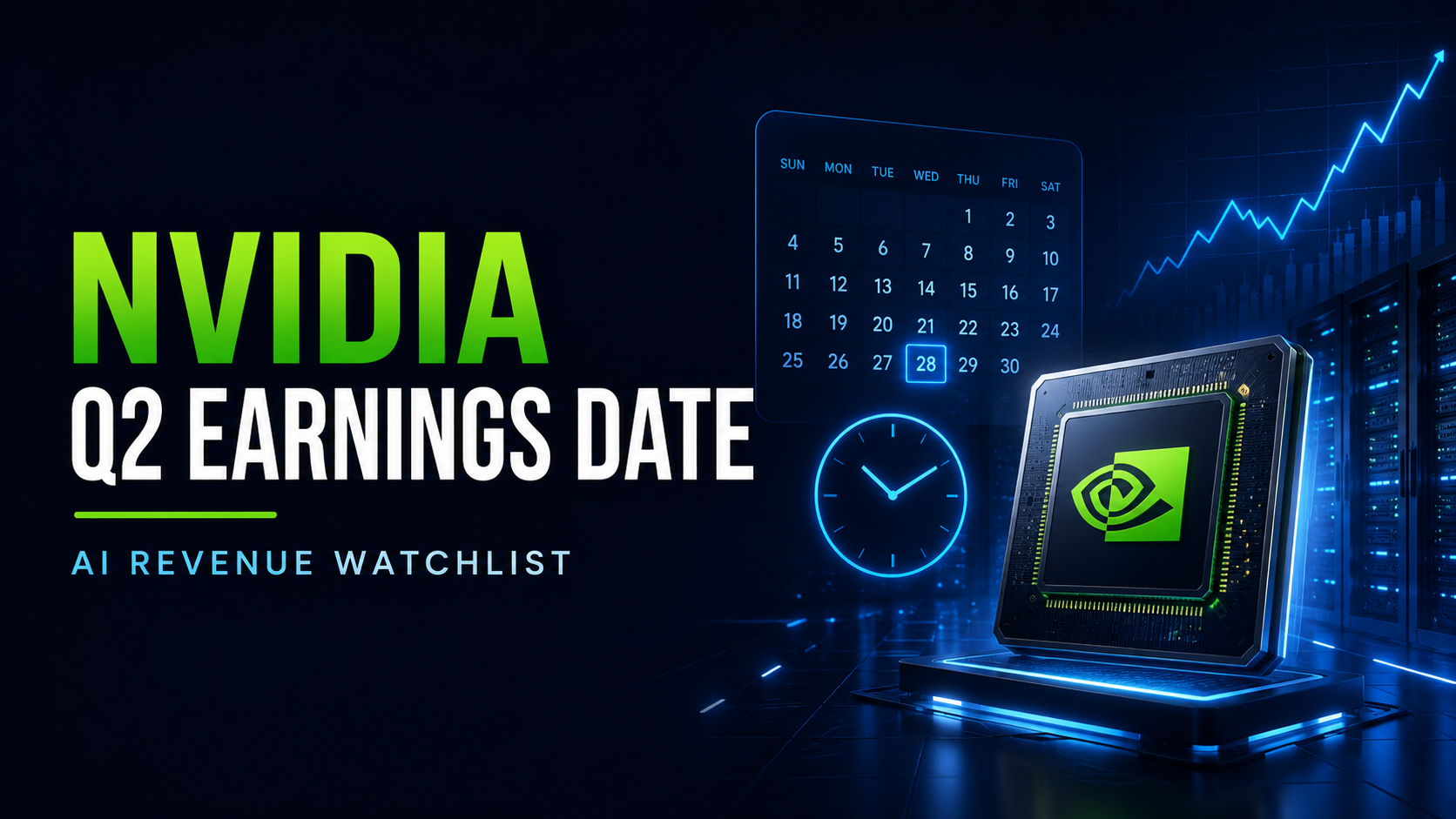
輝達2027財年第二季財報發布日期:預期發布時間、財報電話會議及AI營收觀察名單
Nvidia 2027 財年第 2 季財報預計將成為夏季最重要的 AI 市場事件之一。Wall Street Horizon 顯示,Nvidia 2027 財年第 2 季的下次財報發布日期為 2026 年 8 月 26 日星期三,於市場收盤後公布。
這絕非一次普通的財報發布。Nvidia 自身對 2027 財年第 1 季的展望設下了極高的標準:該公司預估第 2 季營收將達 910 億美元,誤差範圍為正負 2%,且 Non-GAAP 毛利率預計約為 75.0%。Nvidia 亦明確指出,其展望假設不計入來自中國的資料中心運算營收,這使得即將發布的財報能更純粹地檢驗中國以外的 AI 基礎設施需求。
對交易員而言,關鍵問題已不再只是 Nvidia 能否超越市場預期。更重要的問題在於,該公司能否持續將 AI 需求轉化為營收成長與利潤韌性,並提出足夠強勁的前瞻指引,以捍衛市場對 AI 基礎設施的溢價估值。
2026/07/06
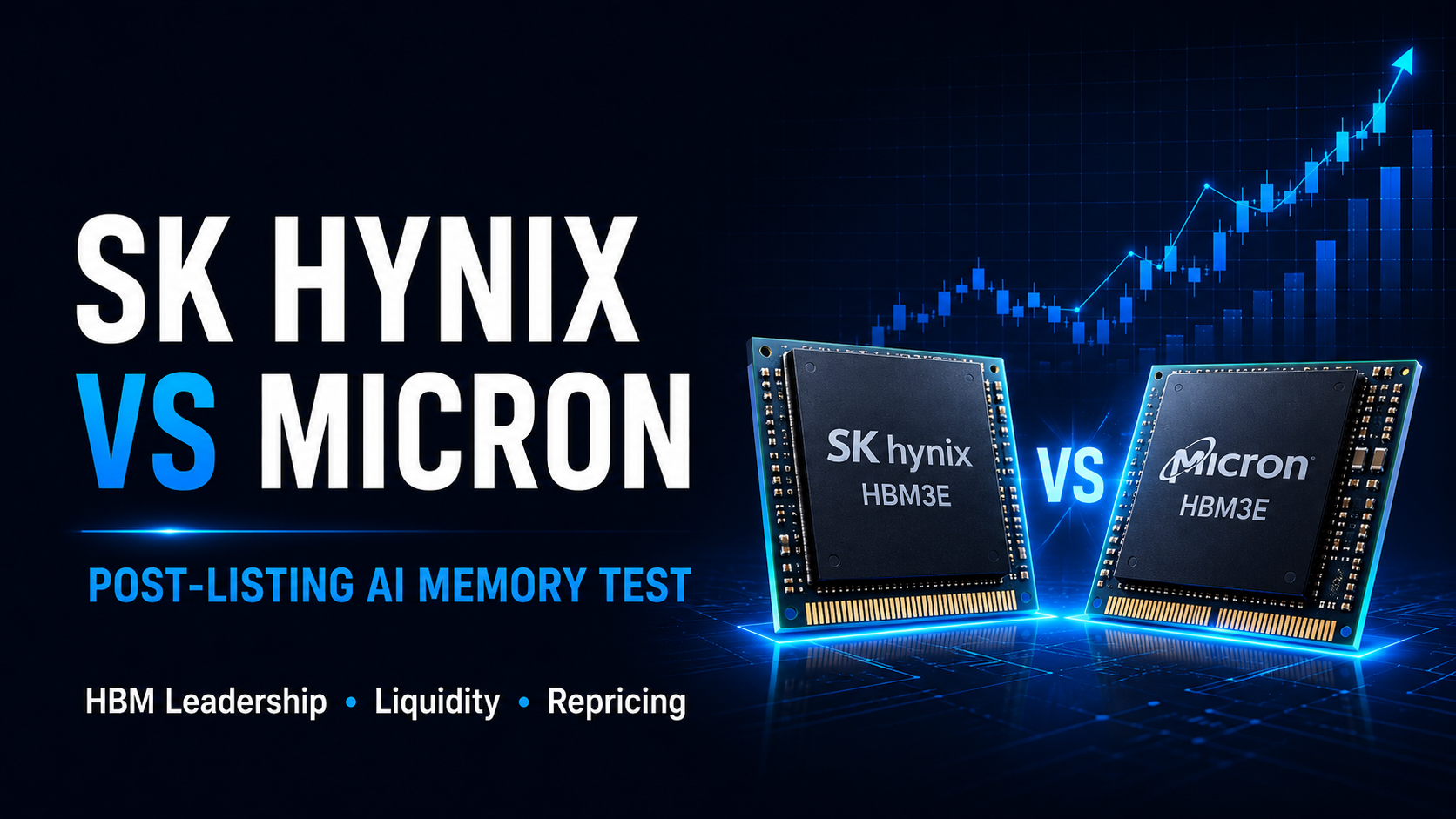
SK海力士對決美光:即將到來的SKHY上市如何重新定價AI記憶體與HBM領導地位
SK海力士備受矚目的納斯達克上市(股票代碼:SKHY)勢必將改變美國投資者評估AI記憶體股的方式。多年來,美光科技(MU)一直是交易DRAM、NAND以及由AI推動的資料中心需求時,首選的美國上市代理標的。與此同時,SK海力士鞏固了其作為高頻寬記憶體(HBM)主導力量的聲譽,儘管其主要在韓國上市,使得海外投資者更難參與投資。
隨著SKHY美國存託憑證(ADR)的推出,這種可及性差距正在迅速縮小。這不僅僅是一個早期成長故事進入市場——SK海力士是在AI大幅漲勢之後登場,並帶著其在HBM領域的主導地位敘事。對交易者而言,真正的問題不在於哪家公司「更好」。相反,關鍵在於識別更優的交易佈局:市場會因為SK海力士在HBM的主導地位和新獲得的流動性而給予獎勵,還是繼續堅持選擇美光科技經證實的美國市場通路和創紀錄的獲利?
2026/07/08


熱門
目前熱門備受市場關注的加密貨幣
加密貨幣價格
按交易量計算交易量最大的加密貨幣