

The private market for SpaceX shares has become one of the most remarkable wealth-creation stories in modern investing. Over the past several months, demand for SpaceX stock in secondary markets has sThe private market for SpaceX shares has become one of the most remarkable wealth-creation stories in modern investing. Over the past several months, demand for SpaceX stock in secondary markets has s
SpaceX Secondary Shares Jump 50% as Private Market Demand Surges — Early Sellers Regret Exit Timing

The private market for SpaceX shares has become one of the most remarkable wealth-creation stories in modern investing. Over the past several months, demand for SpaceX stock in secondary markets has surged dramatically, pushing the company's valuation far beyond previous estimates and leaving many early sellers wondering whether they exited too soon.
SpaceX, the aerospace and satellite communications company founded by Elon Musk in 2002, has long been regarded as one of the world’s most valuable private companies. However, recent developments in the private-share market have elevated the company to an entirely new level, highlighting the growing importance of secondary markets as an alternative investment avenue.
1.What Happened?
Reports from late 2025 suggested that SpaceX was exploring a secondary share sale that would value the company at approximately $800 billion. At the time, that figure was already considered extraordinary and would have made SpaceX America's most valuable private company. Yet demand continued to intensify as investors sought exposure to the company before any potential public offering.
By the first half of 2026, private-market platforms and investors were trading SpaceX shares at valuations ranging from roughly $1.3 trillion to $1.5 trillion, representing an increase of around 50% from the previously reported $800 billion valuation. Some market estimates even implied values approaching $1.8 trillion.
This sharp rise has created enormous gains for investors who held onto their shares while generating regret among those who sold earlier for liquidity or risk-management reasons.
2.Understanding Secondary Markets
Unlike publicly listed companies, private firms such as SpaceX do not trade on stock exchanges. Instead, investors buy and sell shares through secondary markets, where existing shareholders—including employees, early investors, and venture capital firms—can sell their stakes to interested bMarket
Secondary markets have grown significantly in recent years as successful technology companies remain private for longer periods. According to research cited by PitchBook, the U.S. venture-capital secondary market reached an annualized value exceeding $112 billion during the first quarter of 2026, demonstrating the increasing importance of private-share transactions.
For companies like SpaceX, these markets provide liquidity without the regulatory burdens associated with a public listing.
3.Why Investors Are Rushing Into SpaceX
Several factors are driving investor enthusiasm.
First, SpaceX dominates the global commercial launch industry. The company conducts frequent rocket launches, serves government and commercial customers, and continues to develop its ambitious Starship program.
Second, its satellite internet division, Starlink, has become a major growth engine. The service has expanded rapidly across multiple countries and is increasingly viewed as a stable, recurring-revenue business that complements SpaceX's launch operations.
Third, investors see SpaceX as a rare opportunity to gain exposure to a company operating at the intersection of space technology, telecommunications, defense, and infrastructure. Such businesses are difficult to replicate and often command premium valuations.
The result has been intense competition among investors seeking access to limited shares, driving prices steadily higher.
4.The Sellers Who Left Too Early
The recent surge has created a common problem for early shareholders: seller’s remorse.
Many employees, early investors, and shareholders sold portions of their holdings when valuations appeared attractive. At the time, locking in profits seemed like a sensible decision. However, as private-market prices continued to climb, those same sellers watched the value of their former shares increase substantially.
The phenomenon is not unique to SpaceX. In rapidly appreciating private companies, shareholders often face difficult decisions between securing immediate gains and remaining invested for potential future growth. SpaceX's dramatic valuation increase has simply magnified that dilemma.
5.Risks Behind the Excitement
Despite the enthusiasm, experts caution that investing in private markets carries significant risks.
Unlike public stocks, private-company shares can be difficult to value accurately. Prices are often based on limited transactions rather than continuous market activity. As a result, valuations may fluctuate considerably depending on investor sentiment and demand.
There are also concerns about transparency. Some secondary-market transactions involve complex investment structures known as Special Purpose Vehicles (SPVs), which can make ownership arrangements difficult to verify. Industry observers have warned that investors should carefully understand what they are purchasing before committing capital.
Furthermore, future market conditions, economic uncertainty, or changes in SpaceX's business performance could affect valuations.
6.A Sign of a Changing Investment Landscape
The SpaceX story reflects a broader shift occurring across global financial markets. High-growth technology companies are remaining private for longer periods, while secondary markets are increasingly serving as the bridge between venture-capital funding and eventual public listings.
As private-company valuations continue to rise, investors are becoming more willing to pay premium prices for access to promising businesses before they reach stock exchanges. SpaceX has become the clearest example of this trend.
7.Conclusion
SpaceX's approximately 50% jump in secondary-market valuation has highlighted both the opportunities and challenges of investing in private companies. Strong demand, confidence in the company’s future, and limited share availability have combined to push valuations to unprecedented levels. While long-term holders have benefited enormously, many early sellers are now questioning whether they exited too soon.
Whether SpaceX ultimately justifies these lofty valuations remains to be seen. What is certain, however, is that the company's rise has reshaped perceptions of private-market investing and demonstrated the extraordinary appetite investors have for one of the world’s most influential technology companies.
Disclaimer:This content is for educational and reference purposes only and does not constitute any investment advice. Digital asset investments carry high risk. Please evaluate carefully and assume full responsibility for your own decisions.
市場機遇
4實時價格 (4)
--
----
USD
4 (4) 實時價格圖表
本頁面分享的文章均源自公開平台,僅供參考。該內容不代表 MEXC 的立場或觀點。所有版權歸 Mubashir 所有。如果您認為任何內容侵犯了第三方的權益,請聯絡 service@support.mexc.com 以便及時刪除。 MEXC 不保證任何內容的準確性、完整性或及時性,且不對基於所提供信息而採取的任何行動負責。本內容不構成財務、法律或其他專業建議,亦不應被解釋為 MEXC 的推薦或認可。如需專家見解和深入分析,請造訪 MEXC 學院。
學習更多 4 知識
查看更多
Anthropic IPO 最新消息 2026:上市計畫、申報進度與市場傳聞總整理
如果您是來找 Anthropic IPO 最新消息的,這裡先給您最誠實的版本。 Anthropic 目前仍是未上市的私人公司,而它自己唯一確認過的 IPO 進度,就是 2026 年 6 月 1 日向美國證券交易委員會(SEC)以機密方式提交的 S-1 草案。 上市日期、掛牌交易所、股票代號、發行價格,目前全都還不是官方資訊。 本頁會在每項進展出現時即時記錄,並逐一標註消息性質,讓您分得清哪些是事實
2026/09/16
24小時及延長交易時段的股票曝險:流動性、價差與風險
在美國常規權益交易時段之外進行交易,可能會改變流動性、價差、可用訂單類型、價格發現和執行品質。常規時段通常為美東時間上午9:30至下午4:00,而盤前、盤後及隔夜交易的可及性則取決於交易所、經紀商和交易場所。因此,同一證券在不同時間可能於截然不同的市場條件下進行交易。延長交易時段應被理解為一種不同的流動性環境,而非僅是常規時段的延長。 重點摘要 延長交易時段的流動性可能低於常規交易時段,因此相同訂
2026/09/16
Claude Max 值得每月 200 美元嗎?Claude Max 價格、用量限制與誰真的需要 20x
您正專注處理一個專案,Claude 卻突然告訴您已達使用上限,請幾小時後再試。 就在那一刻,Claude Max 的價格開始變得吸引人。 本文將說明 Claude Max 方案的費用、用量限制實際的運作方式,以及一個誠實的判斷標準:從 Pro 升級上去,對您來說是否值得。 Key Takeaways 截至 2026 年 9 月,Claude Max 的 5x 方案為每月 100 美元,20x 方案
2026/09/16
4 最新動態
查看更多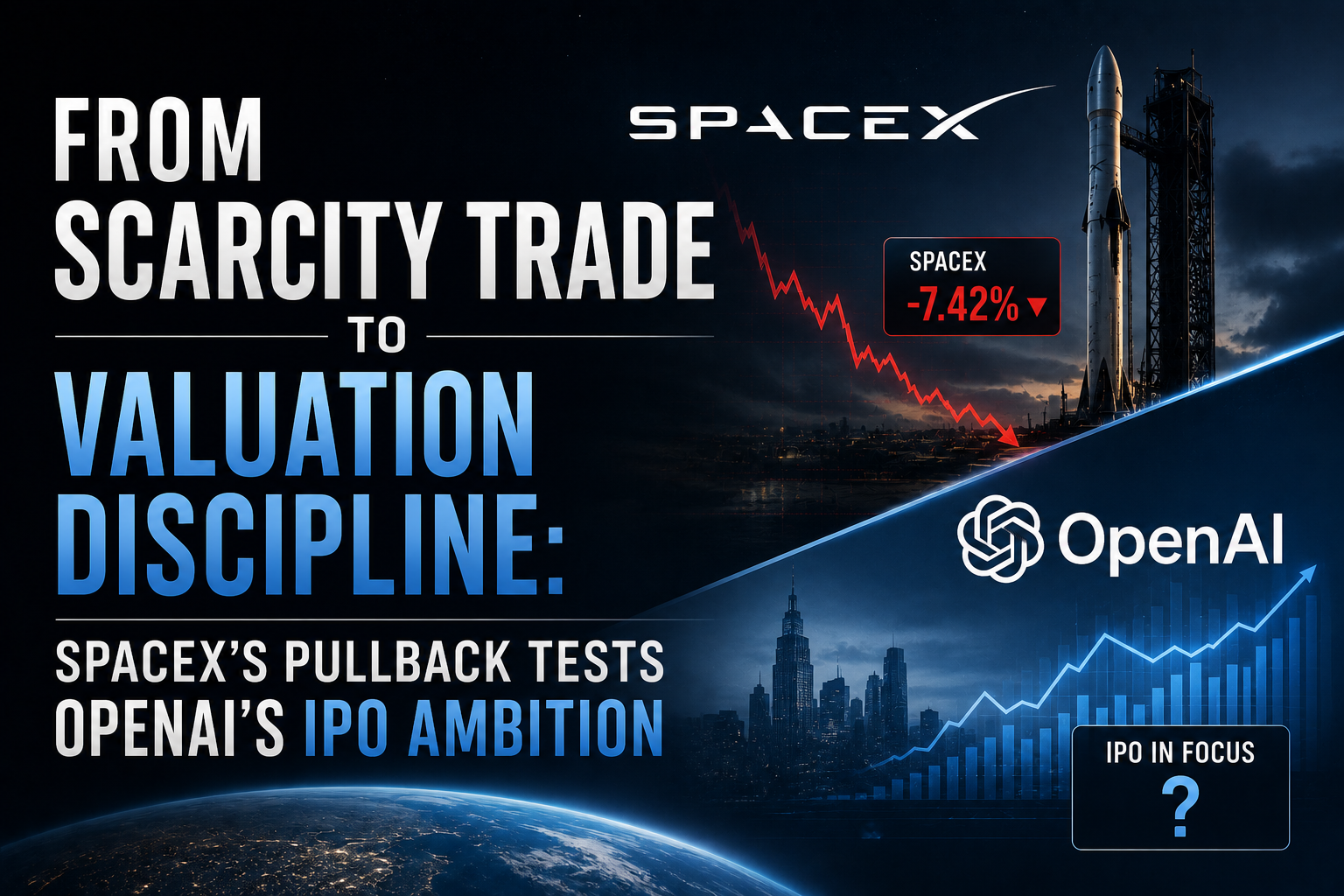
從稀缺交易到估值紀律:SpaceX的回調考驗OpenAI的IPO野心
據報導,OpenAI 傾向將其 IPO 推遲至 2027 年,但更強烈的市場訊號來自 SpaceX。SpaceX 於 6 月 22 日收盤下跌了 16.4%,收於 154.60 美元,較盤中高點 225.64 美元降低了 31.5%,但仍較其 135 美元的 IPO 價格高出 14.5%。這一走勢使 SpaceX 從一個由稀缺性驅動的 IPO 成功案例,轉變為 AI 相關超大型上市週期中首個重大公開市場壓力測試。
OpenAI 的問題不在於需求,而在於估值。路透社引用《紐約時報》的報導指出,OpenAI 正考慮等待至 2027 年,以維持高達 1 兆美元的估值目標,而顧問將此選擇定調為:要麼等待達到該估值,要麼以較低目標提前上市。
預測市場已開始反映這種謹慎態度。Polymarket 的 OpenAI IPO 市場近期顯示,OpenAI 在 2026 年 12 月 31 日前完成 IPO 的機率約為四分之一,這表明交易者不再將近期上市視為明確的基本情境。對於加密貨幣交易者而言,這使得 AI 上市前的曝險從單向的稀缺性交易,轉變為與公開市場基準掛鉤的估值紀律交易。
2026/06/29

Coldcard Mk3 警告隨 $38M Bitcoin 掃蕩而來,但原因仍未確認
比特幣硬體錢包製造商 Coinkite 已警告用戶,Coldcard 裝置存在種子生成問題,影響範圍涵蓋所有 4.0.1 及更高版本的 Mk3 韌體。此警告是在安全研究人員調查一宗涉及 594.48 BTC(價值約 3,800 萬美元)的協調性盜取事件時出現的。然而,目前尚無公開的技術證據證實 Coldcard 的問題導致了這些轉帳。
2026/07/31

Mastercard 完成對 BVNK 的收購,金額高達 18 億美元——穩定幣進入全球支付核心
Mastercard 於三月宣布該交易後,已於 2026 年 8 月 3 日(UTC +8)完成對穩定幣基礎設施供應商 BVNK 的收購。
2026/08/04


熱門
目前熱門備受市場關注的加密貨幣
加密貨幣價格
按交易量計算交易量最大的加密貨幣