Weekly Crypto Regulation Roundup: SEC Clears Solana’s Fuse Token and Trump Eyes Crypto-Friendly Fed Chair
It’s been another consequential week in Washington and beyond, with U.S. regulators sending mixed but meaningful signs across crypto, AI, and financial policy. From the SEC greenlighting a Solana-based token to the prospect of a crypto-friendly Federal Reserve chair, the regulatory climate is shifting fast—particularly as policymakers grapple with emerging technologies that are outpacing existing frameworks.
SEC Grants Fuse a Rare No-Action Letter
The big headline came from the U.S. Securities and Exchange Commission, which issued a no-action letter to Solana-based DePIN project Fuse—an unusual step for a blockchain project looking for clarity around token sales.
Fuse asked the SEC’s Division of Corporation Finance on Nov. 19 to confirm it would not recommend enforcement action over the offer and sale of its FUSE token. The project emphasized that FUSE isn’t pitched as a speculative asset: it’s strictly a network participation token, distributed as a reward to users who maintain the protocol’s decentralized infrastructure. The SEC agreed.
In a letter signed by deputy chief counsel Jonathan Ingram, the regulator stated it would not pursue enforcement “based on the facts presented” if Fuse adheres to the guardrails it outlined.
Additionally, the token can only be redeemed through third-party venues at market rates, showing the SEC’s focus on removing any investment-like characteristics.
This marks the second DePIN-related no-action letter in recent months. While not precedent-setting, the decision is a useful datapoint: when tokens are tightly scoped to utility and distribution is controlled, the SEC appears more open to relief. For projects building real-world infrastructure on-chain, it’s one of the clearest regulatory signs we’ve seen in months.
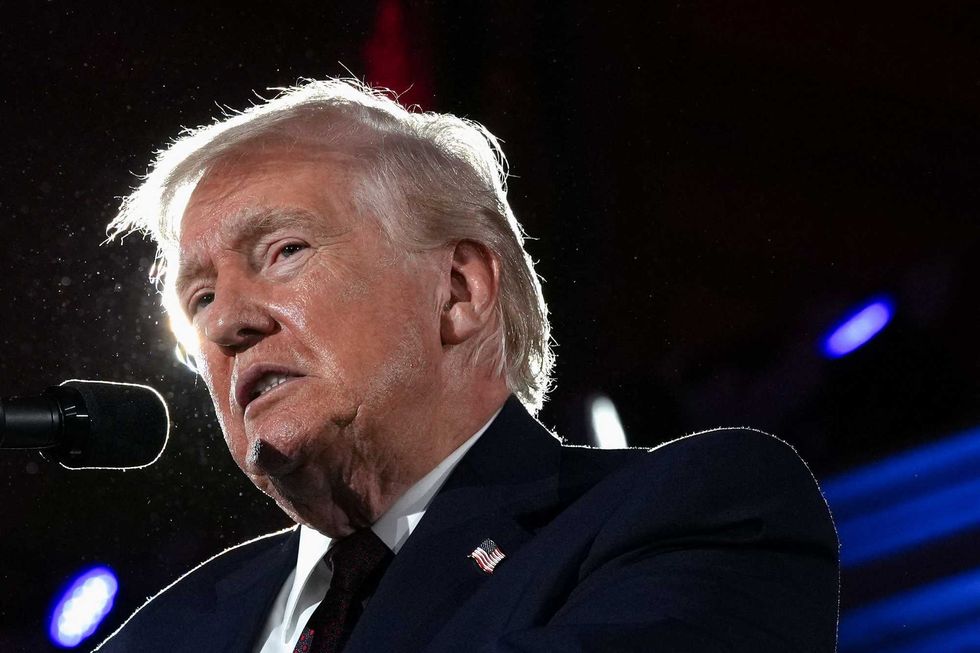
Trump’s Top Fed Pick Has Deep Crypto Ties
Crypto markets may soon have a sympathetic voice at the very top of U.S. monetary policy. Kevin Hassett—director of the White House National Economic Council and longtime Trump ally—has emerged as the leading candidate to replace Jerome Powell as Federal Reserve chair.
What’s striking is Hassett’s history with digital assets. He has publicly engaged with the crypto sector, consulted with policy groups connected to the space, and indicated openness to digital-asset innovation.
Trump’s advisers describe him as someone whom the president trusts deeply on interest-rate policy—particularly on the question of cutting more aggressively than Powell. Hassett has also reportedly indicated he would accept the role if selected.
If appointed, this would be the most crypto-friendly Fed chair in U.S. history. While the Fed is not a crypto regulator, its stance on dollar liquidity, stablecoins, and payment systems has enormous downstream effects. A pro-innovation chair could spur greater openness across other agencies—or at the very least, reduce friction.
Bipartisan Bill Targets Rising AI-Powered Fraud
AI-generated scams are surging, and Congress is taking notice. This week, lawmakers introduced the AI Fraud Deterrence Act, a bipartisan proposal from Rep. Ted Lieu (D-CA) and Rep. Neal Dunn (R-FL). The bill seeks to impose tougher penalties on crimes committed using artificial intelligence—particularly impersonation schemes, deepfakes, automated theft, and coordinated fraud rings.
The legislation is also explicitly tied to financial markets and crypto, where AI-powered fraud is growing at an alarming rate. High-profile cases involving deepfake video scams, impersonation bots, and automated phishing rings have intensified pressure on lawmakers to intervene.
The bill’s broader message is clear: manipulation, impersonation, and automated fraud using AI tools will face harsher federal consequences. Expect this framework to evolve quickly, given the sharp rise in AI-driven schemes across exchanges and Web3 platforms.
CFTC Pushes for New Prediction Markets Framework
Finally, at the CFTC, Commissioner Caroline Pham is making moves to bring prediction markets into sharper regulatory focus.
Pham announced that the agency is seeking nominations for its new CEO Innovation Council, a body designed to advise on emerging markets and frontier financial technologies. One of the council’s early priorities will be the rapidly evolving prediction markets sector—a space that has grown too large and too influential for federal regulators to ignore.
Through a Nov. 25 press release, Pham invited public nominations and encouraged industry stakeholders to propose topics the council should prioritize. With prediction markets increasingly touching politics, finance, sports, and crypto, the CFTC is clearly preparing a more structured approach.
This comes as platforms like Polymarket continue to expand and attract mainstream attention, forcing regulators to reconsider how forecasting markets fit within existing derivatives law.
The Big Picture
From the SEC’s cautious openness to utility-focused tokens, to Congress tightening the screws on AI-based crime, to the CFTC’s attempt to modernize its oversight, the regulatory ecosystem is shifting in real time.
But the most consequential development may be Trump’s apparent interest in appointing a Fed chair aligned with crypto innovation. That appointment would reverberate through every corner of financial policy—from stablecoins to global dollar rails to payments innovation.


You May Also Like

LIVE UPDATES: 48th ASEAN Summit in Cebu
Trump's latest 'war crimes' threat leaves legal expert aghast: 'An unfit embarrassment'