BitcoinWorld Bank of England Stablecoin Move Unlocks New Era for Digital Assets The world of digital finance is buzzing with a significant development from the UK. The Bank of England stablecoin policy is undergoing a pivotal shift, poised to reshape how these crucial digital assets operate. This move isn’t just a technical adjustment; it’s a strategic decision that could bolster trust and drive innovation within the broader cryptocurrency ecosystem. What’s Changing with Bank of England Stablecoin Rules? Bank of England Deputy Governor Sarah Breeden recently made an announcement that has caught the attention of regulators and crypto enthusiasts alike. The central bank is set to relax its existing regulatory framework for stablecoins. This relaxation means a crucial change for issuers: they will now be permitted to hold some of their backing assets in short-term government bonds. Breeden explained that the framework, initially published by the bank in 2023, was not entirely suitable for the evolving needs of stablecoin issuers. This acknowledgment highlights the central bank’s adaptability in a rapidly changing financial landscape. The initial vision for stablecoins primarily focused on retail applications, but their utility has expanded significantly. Today, stablecoins are increasingly seen as foundational for settling tokenized securities and other institutional applications. This shift in purpose necessitates a more flexible and robust regulatory approach. The decision by the Bank of England stablecoin policy team reflects a proactive stance to accommodate this evolution, aiming to integrate digital assets more seamlessly into traditional finance. Why is This a Game-Changer for Stablecoins and Digital Finance? This policy adjustment carries substantial benefits for the stablecoin market. Allowing issuers to back their stablecoins with short-term government bonds can significantly enhance their stability and trustworthiness. Government bonds are generally considered low-risk assets, providing a strong foundation for the value of stablecoins. Increased Trust: Backing with government bonds can instill greater confidence among users and institutions, knowing their digital assets are anchored to highly secure traditional instruments. Enhanced Stability: This move helps mitigate risks associated with more volatile backing assets, making stablecoins more resilient to market fluctuations. Broader Adoption: With enhanced trust and stability, institutional players, including traditional financial firms, may be more inclined to adopt stablecoins for various transactions, including cross-border payments and tokenized asset settlement. Regulatory Clarity: Providing clear guidelines on acceptable backing assets offers much-needed regulatory clarity, which is vital for the growth and legitimacy of the digital asset sector. This development positions the UK as a forward-thinking jurisdiction in digital finance. It acknowledges the potential of stablecoins beyond simple retail payments, particularly in the burgeoning field of tokenized securities. Navigating the Future: Potential Impact of Bank of England Stablecoin Policy The implications of this new policy extend far beyond just stablecoin issuers. It signals a broader acceptance of digital assets within the traditional financial system. While the move is largely positive, it also presents new challenges and opportunities. Implementing these changes effectively will require careful coordination between regulators, stablecoin issuers, and market participants. Ensuring robust oversight while fostering innovation will be a delicate balance. However, the proactive approach by the Bank of England stablecoin framework suggests a commitment to finding this equilibrium. This policy could also influence other central banks globally. As jurisdictions compete to become leaders in digital finance, the UK’s pragmatic approach might serve as a model. The shift from retail-focused stablecoins to those used for settling tokenized securities highlights a maturing market perspective, where digital assets are integrated into complex financial operations. What Does This Mean for the UK’s Digital Asset Landscape? For the UK, this regulatory relaxation reinforces its ambition to be a global hub for financial innovation. By creating a more accommodating environment for stablecoin operations, the country can attract talent, investment, and cutting-edge projects in the digital asset space. This isn’t just about stablecoins; it’s about the broader infrastructure for future financial markets. Actionable insights for market participants include closely monitoring the detailed implementation guidelines. Stablecoin projects looking to operate in the UK will find a clearer path to compliance, potentially accelerating their market entry and expansion. This environment encourages innovation while maintaining essential safeguards. The long-term vision suggests a financial system where traditional assets and digital assets coexist and interact seamlessly. The Bank of England stablecoin decision is a significant step towards realizing that vision, paving the way for more efficient, transparent, and resilient financial markets. In conclusion, the Bank of England’s decision to permit stablecoin issuers to hold short-term government bonds as backing assets is a monumental step forward for digital finance. It addresses the evolving landscape of stablecoin utility, fosters greater trust and stability, and solidifies the UK’s position as a leader in cryptocurrency regulation. This forward-thinking approach is set to unlock new opportunities for innovation and integration within the global financial system. Frequently Asked Questions (FAQs) Q1: What is a stablecoin? A1: A stablecoin is a type of cryptocurrency designed to maintain a stable value, typically pegged to a fiat currency like the US dollar or a commodity like gold. This stability is usually achieved by backing the stablecoin with reserves. Q2: Why is the Bank of England changing its stablecoin regulations? A2: The Bank of England recognized that its 2023 framework was not ideal for current stablecoin uses, which have shifted from primarily retail applications to settling tokenized securities. Relaxing the rules aims to foster greater stability and facilitate institutional adoption. Q3: What are the benefits of stablecoins being backed by short-term government bonds? A3: Backing stablecoins with short-term government bonds increases their trustworthiness and stability, as these bonds are considered low-risk assets. This can lead to broader institutional adoption and greater confidence in the digital asset market. Q4: How does this impact the UK’s position in digital finance? A4: This move strengthens the UK’s ambition to be a global hub for financial innovation by providing a clearer, more accommodating regulatory environment for stablecoins. It signals a proactive approach to integrating digital assets into the mainstream financial system. Q5: Will all stablecoins be required to hold government bonds? A5: The new policy permits issuers to hold some of their backing assets in short-term government bonds. It does not necessarily mandate that all stablecoins must be exclusively backed this way, but it offers a new, highly credible option for reserve management. Did you find this deep dive into the Bank of England’s stablecoin policy insightful? Share this article with your network on social media to spark further discussion on the future of digital finance and regulation. Your insights help shape the conversation! To learn more about the latest cryptocurrency regulation trends, explore our article on key developments shaping digital assets and their institutional adoption. This post Bank of England Stablecoin Move Unlocks New Era for Digital Assets first appeared on BitcoinWorld and is written by Editorial TeamBitcoinWorld Bank of England Stablecoin Move Unlocks New Era for Digital Assets The world of digital finance is buzzing with a significant development from the UK. The Bank of England stablecoin policy is undergoing a pivotal shift, poised to reshape how these crucial digital assets operate. This move isn’t just a technical adjustment; it’s a strategic decision that could bolster trust and drive innovation within the broader cryptocurrency ecosystem. What’s Changing with Bank of England Stablecoin Rules? Bank of England Deputy Governor Sarah Breeden recently made an announcement that has caught the attention of regulators and crypto enthusiasts alike. The central bank is set to relax its existing regulatory framework for stablecoins. This relaxation means a crucial change for issuers: they will now be permitted to hold some of their backing assets in short-term government bonds. Breeden explained that the framework, initially published by the bank in 2023, was not entirely suitable for the evolving needs of stablecoin issuers. This acknowledgment highlights the central bank’s adaptability in a rapidly changing financial landscape. The initial vision for stablecoins primarily focused on retail applications, but their utility has expanded significantly. Today, stablecoins are increasingly seen as foundational for settling tokenized securities and other institutional applications. This shift in purpose necessitates a more flexible and robust regulatory approach. The decision by the Bank of England stablecoin policy team reflects a proactive stance to accommodate this evolution, aiming to integrate digital assets more seamlessly into traditional finance. Why is This a Game-Changer for Stablecoins and Digital Finance? This policy adjustment carries substantial benefits for the stablecoin market. Allowing issuers to back their stablecoins with short-term government bonds can significantly enhance their stability and trustworthiness. Government bonds are generally considered low-risk assets, providing a strong foundation for the value of stablecoins. Increased Trust: Backing with government bonds can instill greater confidence among users and institutions, knowing their digital assets are anchored to highly secure traditional instruments. Enhanced Stability: This move helps mitigate risks associated with more volatile backing assets, making stablecoins more resilient to market fluctuations. Broader Adoption: With enhanced trust and stability, institutional players, including traditional financial firms, may be more inclined to adopt stablecoins for various transactions, including cross-border payments and tokenized asset settlement. Regulatory Clarity: Providing clear guidelines on acceptable backing assets offers much-needed regulatory clarity, which is vital for the growth and legitimacy of the digital asset sector. This development positions the UK as a forward-thinking jurisdiction in digital finance. It acknowledges the potential of stablecoins beyond simple retail payments, particularly in the burgeoning field of tokenized securities. Navigating the Future: Potential Impact of Bank of England Stablecoin Policy The implications of this new policy extend far beyond just stablecoin issuers. It signals a broader acceptance of digital assets within the traditional financial system. While the move is largely positive, it also presents new challenges and opportunities. Implementing these changes effectively will require careful coordination between regulators, stablecoin issuers, and market participants. Ensuring robust oversight while fostering innovation will be a delicate balance. However, the proactive approach by the Bank of England stablecoin framework suggests a commitment to finding this equilibrium. This policy could also influence other central banks globally. As jurisdictions compete to become leaders in digital finance, the UK’s pragmatic approach might serve as a model. The shift from retail-focused stablecoins to those used for settling tokenized securities highlights a maturing market perspective, where digital assets are integrated into complex financial operations. What Does This Mean for the UK’s Digital Asset Landscape? For the UK, this regulatory relaxation reinforces its ambition to be a global hub for financial innovation. By creating a more accommodating environment for stablecoin operations, the country can attract talent, investment, and cutting-edge projects in the digital asset space. This isn’t just about stablecoins; it’s about the broader infrastructure for future financial markets. Actionable insights for market participants include closely monitoring the detailed implementation guidelines. Stablecoin projects looking to operate in the UK will find a clearer path to compliance, potentially accelerating their market entry and expansion. This environment encourages innovation while maintaining essential safeguards. The long-term vision suggests a financial system where traditional assets and digital assets coexist and interact seamlessly. The Bank of England stablecoin decision is a significant step towards realizing that vision, paving the way for more efficient, transparent, and resilient financial markets. In conclusion, the Bank of England’s decision to permit stablecoin issuers to hold short-term government bonds as backing assets is a monumental step forward for digital finance. It addresses the evolving landscape of stablecoin utility, fosters greater trust and stability, and solidifies the UK’s position as a leader in cryptocurrency regulation. This forward-thinking approach is set to unlock new opportunities for innovation and integration within the global financial system. Frequently Asked Questions (FAQs) Q1: What is a stablecoin? A1: A stablecoin is a type of cryptocurrency designed to maintain a stable value, typically pegged to a fiat currency like the US dollar or a commodity like gold. This stability is usually achieved by backing the stablecoin with reserves. Q2: Why is the Bank of England changing its stablecoin regulations? A2: The Bank of England recognized that its 2023 framework was not ideal for current stablecoin uses, which have shifted from primarily retail applications to settling tokenized securities. Relaxing the rules aims to foster greater stability and facilitate institutional adoption. Q3: What are the benefits of stablecoins being backed by short-term government bonds? A3: Backing stablecoins with short-term government bonds increases their trustworthiness and stability, as these bonds are considered low-risk assets. This can lead to broader institutional adoption and greater confidence in the digital asset market. Q4: How does this impact the UK’s position in digital finance? A4: This move strengthens the UK’s ambition to be a global hub for financial innovation by providing a clearer, more accommodating regulatory environment for stablecoins. It signals a proactive approach to integrating digital assets into the mainstream financial system. Q5: Will all stablecoins be required to hold government bonds? A5: The new policy permits issuers to hold some of their backing assets in short-term government bonds. It does not necessarily mandate that all stablecoins must be exclusively backed this way, but it offers a new, highly credible option for reserve management. Did you find this deep dive into the Bank of England’s stablecoin policy insightful? Share this article with your network on social media to spark further discussion on the future of digital finance and regulation. Your insights help shape the conversation! To learn more about the latest cryptocurrency regulation trends, explore our article on key developments shaping digital assets and their institutional adoption. This post Bank of England Stablecoin Move Unlocks New Era for Digital Assets first appeared on BitcoinWorld and is written by Editorial Team


Bank of England Stablecoin Move Unlocks New Era for Digital Assets

2025/09/04 08:45
6 min read
For feedback or concerns regarding this content, please contact us at crypto.news@mexc.com

BitcoinWorld

Bank of England Stablecoin Move Unlocks New Era for Digital Assets

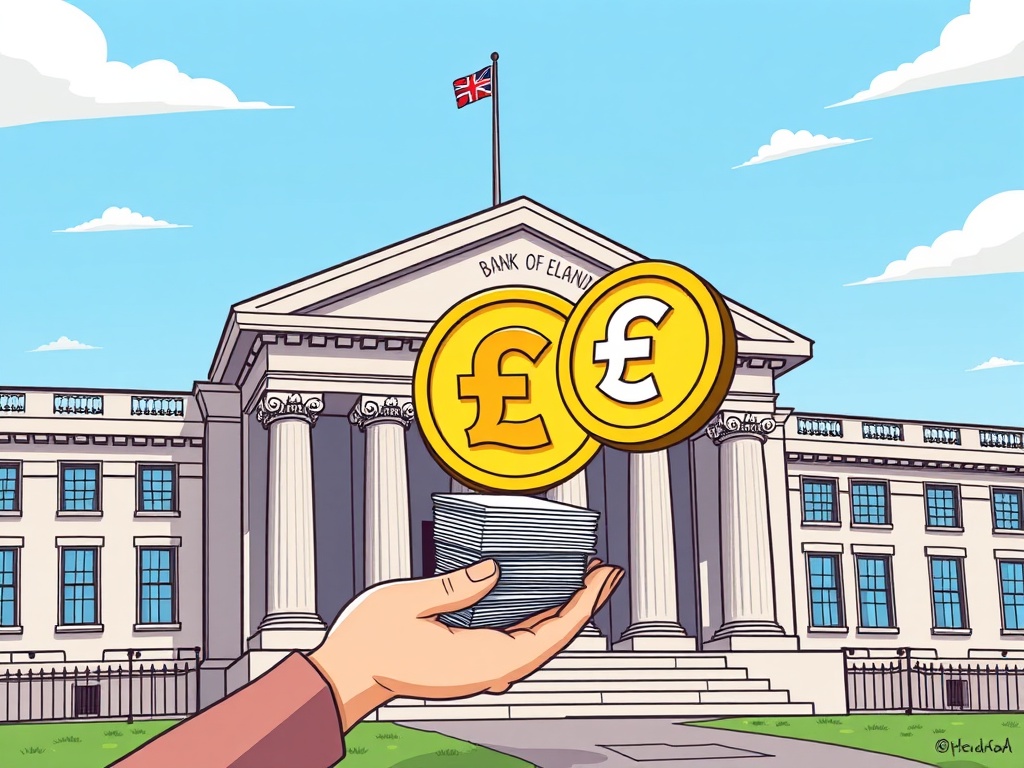
The world of digital finance is buzzing with a significant development from the UK. The Bank of England stablecoin policy is undergoing a pivotal shift, poised to reshape how these crucial digital assets operate. This move isn’t just a technical adjustment; it’s a strategic decision that could bolster trust and drive innovation within the broader cryptocurrency ecosystem.

What’s Changing with Bank of England Stablecoin Rules?

Bank of England Deputy Governor Sarah Breeden recently made an announcement that has caught the attention of regulators and crypto enthusiasts alike. The central bank is set to relax its existing regulatory framework for stablecoins. This relaxation means a crucial change for issuers: they will now be permitted to hold some of their backing assets in short-term government bonds.

Breeden explained that the framework, initially published by the bank in 2023, was not entirely suitable for the evolving needs of stablecoin issuers. This acknowledgment highlights the central bank’s adaptability in a rapidly changing financial landscape. The initial vision for stablecoins primarily focused on retail applications, but their utility has expanded significantly.

Today, stablecoins are increasingly seen as foundational for settling tokenized securities and other institutional applications. This shift in purpose necessitates a more flexible and robust regulatory approach. The decision by the Bank of England stablecoin policy team reflects a proactive stance to accommodate this evolution, aiming to integrate digital assets more seamlessly into traditional finance.

Why is This a Game-Changer for Stablecoins and Digital Finance?

This policy adjustment carries substantial benefits for the stablecoin market. Allowing issuers to back their stablecoins with short-term government bonds can significantly enhance their stability and trustworthiness. Government bonds are generally considered low-risk assets, providing a strong foundation for the value of stablecoins.

  • Increased Trust: Backing with government bonds can instill greater confidence among users and institutions, knowing their digital assets are anchored to highly secure traditional instruments.
  • Enhanced Stability: This move helps mitigate risks associated with more volatile backing assets, making stablecoins more resilient to market fluctuations.
  • Broader Adoption: With enhanced trust and stability, institutional players, including traditional financial firms, may be more inclined to adopt stablecoins for various transactions, including cross-border payments and tokenized asset settlement.
  • Regulatory Clarity: Providing clear guidelines on acceptable backing assets offers much-needed regulatory clarity, which is vital for the growth and legitimacy of the digital asset sector.

This development positions the UK as a forward-thinking jurisdiction in digital finance. It acknowledges the potential of stablecoins beyond simple retail payments, particularly in the burgeoning field of tokenized securities.

Navigating the Future: Potential Impact of Bank of England Stablecoin Policy

The implications of this new policy extend far beyond just stablecoin issuers. It signals a broader acceptance of digital assets within the traditional financial system. While the move is largely positive, it also presents new challenges and opportunities.

Implementing these changes effectively will require careful coordination between regulators, stablecoin issuers, and market participants. Ensuring robust oversight while fostering innovation will be a delicate balance. However, the proactive approach by the Bank of England stablecoin framework suggests a commitment to finding this equilibrium.

This policy could also influence other central banks globally. As jurisdictions compete to become leaders in digital finance, the UK’s pragmatic approach might serve as a model. The shift from retail-focused stablecoins to those used for settling tokenized securities highlights a maturing market perspective, where digital assets are integrated into complex financial operations.

What Does This Mean for the UK’s Digital Asset Landscape?

For the UK, this regulatory relaxation reinforces its ambition to be a global hub for financial innovation. By creating a more accommodating environment for stablecoin operations, the country can attract talent, investment, and cutting-edge projects in the digital asset space. This isn’t just about stablecoins; it’s about the broader infrastructure for future financial markets.

Actionable insights for market participants include closely monitoring the detailed implementation guidelines. Stablecoin projects looking to operate in the UK will find a clearer path to compliance, potentially accelerating their market entry and expansion. This environment encourages innovation while maintaining essential safeguards.

The long-term vision suggests a financial system where traditional assets and digital assets coexist and interact seamlessly. The Bank of England stablecoin decision is a significant step towards realizing that vision, paving the way for more efficient, transparent, and resilient financial markets.

In conclusion, the Bank of England’s decision to permit stablecoin issuers to hold short-term government bonds as backing assets is a monumental step forward for digital finance. It addresses the evolving landscape of stablecoin utility, fosters greater trust and stability, and solidifies the UK’s position as a leader in cryptocurrency regulation. This forward-thinking approach is set to unlock new opportunities for innovation and integration within the global financial system.

Frequently Asked Questions (FAQs)

Q1: What is a stablecoin?
A1: A stablecoin is a type of cryptocurrency designed to maintain a stable value, typically pegged to a fiat currency like the US dollar or a commodity like gold. This stability is usually achieved by backing the stablecoin with reserves.

Q2: Why is the Bank of England changing its stablecoin regulations?
A2: The Bank of England recognized that its 2023 framework was not ideal for current stablecoin uses, which have shifted from primarily retail applications to settling tokenized securities. Relaxing the rules aims to foster greater stability and facilitate institutional adoption.

Q3: What are the benefits of stablecoins being backed by short-term government bonds?
A3: Backing stablecoins with short-term government bonds increases their trustworthiness and stability, as these bonds are considered low-risk assets. This can lead to broader institutional adoption and greater confidence in the digital asset market.

Q4: How does this impact the UK’s position in digital finance?
A4: This move strengthens the UK’s ambition to be a global hub for financial innovation by providing a clearer, more accommodating regulatory environment for stablecoins. It signals a proactive approach to integrating digital assets into the mainstream financial system.

Q5: Will all stablecoins be required to hold government bonds?
A5: The new policy permits issuers to hold some of their backing assets in short-term government bonds. It does not necessarily mandate that all stablecoins must be exclusively backed this way, but it offers a new, highly credible option for reserve management.

Did you find this deep dive into the Bank of England’s stablecoin policy insightful? Share this article with your network on social media to spark further discussion on the future of digital finance and regulation. Your insights help shape the conversation!

To learn more about the latest cryptocurrency regulation trends, explore our article on key developments shaping digital assets and their institutional adoption.

This post Bank of England Stablecoin Move Unlocks New Era for Digital Assets first appeared on BitcoinWorld and is written by Editorial Team

Market Opportunity
Threshold Logo
Threshold Price(T)
$0.006138
$0.006138$0.006138
-2.54%
USD
Threshold (T) Live Price Chart
Disclaimer: The articles reposted on this site are sourced from public platforms and are provided for informational purposes only. They do not necessarily reflect the views of MEXC. All rights remain with the original authors. If you believe any content infringes on third-party rights, please contact crypto.news@mexc.com for removal. MEXC makes no guarantees regarding the accuracy, completeness, or timeliness of the content and is not responsible for any actions taken based on the information provided. The content does not constitute financial, legal, or other professional advice, nor should it be considered a recommendation or endorsement by MEXC.

You May Also Like

Lovable AI’s Astonishing Rise: Anton Osika Reveals Startup Secrets at Bitcoin World Disrupt 2025

Lovable AI’s Astonishing Rise: Anton Osika Reveals Startup Secrets at Bitcoin World Disrupt 2025

BitcoinWorld Lovable AI’s Astonishing Rise: Anton Osika Reveals Startup Secrets at Bitcoin World Disrupt 2025 Are you ready to witness a phenomenon? The world of technology is abuzz with the incredible rise of Lovable AI, a startup that’s not just breaking records but rewriting the rulebook for rapid growth. Imagine creating powerful apps and websites just by speaking to an AI – that’s the magic Lovable brings to the masses. This groundbreaking approach has propelled the company into the spotlight, making it one of the fastest-growing software firms in history. And now, the visionary behind this sensation, co-founder and CEO Anton Osika, is set to share his invaluable insights on the Disrupt Stage at the highly anticipated Bitcoin World Disrupt 2025. If you’re a founder, investor, or tech enthusiast eager to understand the future of innovation, this is an event you cannot afford to miss. Lovable AI’s Meteoric Ascent: Redefining Software Creation In an era where digital transformation is paramount, Lovable AI has emerged as a true game-changer. Its core premise is deceptively simple yet profoundly impactful: democratize software creation. By enabling anyone to build applications and websites through intuitive AI conversations, Lovable is empowering the vast majority of individuals who lack coding skills to transform their ideas into tangible digital products. This mission has resonated globally, leading to unprecedented momentum. The numbers speak for themselves: Achieved an astonishing $100 million Annual Recurring Revenue (ARR) in less than a year. Successfully raised a $200 million Series A funding round, valuing the company at $1.8 billion, led by industry giant Accel. Is currently fielding unsolicited investor offers, pushing its valuation towards an incredible $4 billion. As industry reports suggest, investors are unequivocally “loving Lovable,” and it’s clear why. This isn’t just about impressive financial metrics; it’s about a company that has tapped into a fundamental need, offering a solution that is both innovative and accessible. The rapid scaling of Lovable AI provides a compelling case study for any entrepreneur aiming for similar exponential growth. The Visionary Behind the Hype: Anton Osika’s Journey to Innovation Every groundbreaking company has a driving force, and for Lovable, that force is co-founder and CEO Anton Osika. His journey is as fascinating as his company’s success. A physicist by training, Osika previously contributed to the cutting-edge research at CERN, the European Organization for Nuclear Research. This deep technical background, combined with his entrepreneurial spirit, has been instrumental in Lovable’s rapid ascent. Before Lovable, he honed his skills as a co-founder of Depict.ai and a Founding Engineer at Sana. Based in Stockholm, Osika has masterfully steered Lovable from a nascent idea to a global phenomenon in record time. His leadership embodies a unique blend of profound technical understanding and a keen, consumer-first vision. At Bitcoin World Disrupt 2025, attendees will have the rare opportunity to hear directly from Osika about what it truly takes to build a brand that not only scales at an incredible pace in a fiercely competitive market but also adeptly manages the intense cultural conversations that inevitably accompany such swift and significant success. His insights will be crucial for anyone looking to understand the dynamics of high-growth tech leadership. Unpacking Consumer Tech Innovation at Bitcoin World Disrupt 2025 The 20th anniversary of Bitcoin World is set to be marked by a truly special event: Bitcoin World Disrupt 2025. From October 27–29, Moscone West in San Francisco will transform into the epicenter of innovation, gathering over 10,000 founders, investors, and tech leaders. It’s the ideal platform to explore the future of consumer tech innovation, and Anton Osika’s presence on the Disrupt Stage is a highlight. His session will delve into how Lovable is not just participating in but actively shaping the next wave of consumer-facing technologies. Why is this session particularly relevant for those interested in the future of consumer experiences? Osika’s discussion will go beyond the superficial, offering a deep dive into the strategies that have allowed Lovable to carve out a unique category in a market long thought to be saturated. Attendees will gain a front-row seat to understanding how to identify unmet consumer needs, leverage advanced AI to meet those needs, and build a product that captivates users globally. The event itself promises a rich tapestry of ideas and networking opportunities: For Founders: Sharpen your pitch and connect with potential investors. For Investors: Discover the next breakout startup poised for massive growth. For Innovators: Claim your spot at the forefront of technological advancements. The insights shared regarding consumer tech innovation at this event will be invaluable for anyone looking to navigate the complexities and capitalize on the opportunities within this dynamic sector. Mastering Startup Growth Strategies: A Blueprint for the Future Lovable’s journey isn’t just another startup success story; it’s a meticulously crafted blueprint for effective startup growth strategies in the modern era. Anton Osika’s experience offers a rare glimpse into the practicalities of scaling a business at breakneck speed while maintaining product integrity and managing external pressures. For entrepreneurs and aspiring tech leaders, his talk will serve as a masterclass in several critical areas: Strategy Focus Key Takeaways from Lovable’s Journey Rapid Scaling How to build infrastructure and teams that support exponential user and revenue growth without compromising quality. Product-Market Fit Identifying a significant, underserved market (the 99% who can’t code) and developing a truly innovative solution (AI-powered app creation). Investor Relations Balancing intense investor interest and pressure with a steadfast focus on product development and long-term vision. Category Creation Carving out an entirely new niche by democratizing complex technologies, rather than competing in existing crowded markets. Understanding these startup growth strategies is essential for anyone aiming to build a resilient and impactful consumer experience. Osika’s session will provide actionable insights into how to replicate elements of Lovable’s success, offering guidance on navigating challenges from product development to market penetration and investor management. Conclusion: Seize the Future of Tech The story of Lovable, under the astute leadership of Anton Osika, is a testament to the power of innovative ideas meeting flawless execution. Their remarkable journey from concept to a multi-billion-dollar valuation in record time is a compelling narrative for anyone interested in the future of technology. By democratizing software creation through Lovable AI, they are not just building a company; they are fostering a new generation of creators. His appearance at Bitcoin World Disrupt 2025 is an unmissable opportunity to gain direct insights from a leader who is truly shaping the landscape of consumer tech innovation. Don’t miss this chance to learn about cutting-edge startup growth strategies and secure your front-row seat to the future. Register now and save up to $668 before Regular Bird rates end on September 26. To learn more about the latest AI market trends, explore our article on key developments shaping AI features. This post Lovable AI’s Astonishing Rise: Anton Osika Reveals Startup Secrets at Bitcoin World Disrupt 2025 first appeared on BitcoinWorld.
Share
Coinstats2025/09/17 23:40
The Nationwide Tug-of-War over Prediction Markets

The Nationwide Tug-of-War over Prediction Markets

The post The Nationwide Tug-of-War over Prediction Markets appeared on BitcoinEthereumNews.com. A contentious legal battle in the United States over the classification

Share
BitcoinEthereumNews2026/04/09 17:42
BlackRock Moves 2,000 BTC to Coinbase, Making YIMiner a New Daily Returns Option

BlackRock Moves 2,000 BTC to Coinbase, Making YIMiner a New Daily Returns Option

Recently, BlackRock, the world’s largest asset management company, transferred 2,000 bitcoins to Coinbase, a move that has sparked widespread discussion in the
Share
Techbullion2026/04/02 21:50

$30,000 in PRL + 15,000 USDT

$30,000 in PRL + 15,000 USDT$30,000 in PRL + 15,000 USDT

Deposit & trade PRL to boost your rewards!