The post US Dollar Index weakens below 99.00, US-China trade talks in focus appeared on BitcoinEthereumNews.com. The US Dollar Index (DXY), an index of the value of the US Dollar (USD) measured against a basket of six world currencies, trades on a negative note near 98.90 during the early European session on Wednesday. The DXY weakens after three consecutive days of gains amid the ongoing US federal shutdown.  The US government shutdown has entered its 22nd day as the Senate on Monday failed for the 11th time to advance a House-passed measure to fund the government and end the ongoing shutdown. The 50-43 vote fell mostly along party lines.  A failure by Congress to pass funding legislation can erode investor confidence in US economic governance and weigh on the US Dollar against its rivals. Additionally, the release of important economic data from the Bureau of Labor Statistics and the Census Bureau is suspended, complicating decision-making for the Federal Reserve (Fed).  Fed funds futures are currently pricing in nearly a 98.9% chance of a 25 basis points (bps) cut to interest rates at the central bank’s meeting on October 29, up from 99.4% odds yesterday, according to the CME FedWatch tool. On the other hand, positive developments surrounding the US-China relations could help limit the DXY’s losses. US President Donald Trump late Tuesday predicted an upcoming meeting with his Chinese counterpart, Xi Jinping, would yield a “good deal” on trade. However, Trump also conceded that the highly anticipated talks may not happen. US Treasury Secretary Scott Bessent is scheduled to meet with his Chinese counterparts to discuss a de-escalation of trade tensions ahead of the US-China trade talks.   US Dollar FAQs The US Dollar (USD) is the official currency of the United States of America, and the ‘de facto’ currency of a significant number of other countries where it is found in circulation alongside local notes. It is the most… The post US Dollar Index weakens below 99.00, US-China trade talks in focus appeared on BitcoinEthereumNews.com. The US Dollar Index (DXY), an index of the value of the US Dollar (USD) measured against a basket of six world currencies, trades on a negative note near 98.90 during the early European session on Wednesday. The DXY weakens after three consecutive days of gains amid the ongoing US federal shutdown.  The US government shutdown has entered its 22nd day as the Senate on Monday failed for the 11th time to advance a House-passed measure to fund the government and end the ongoing shutdown. The 50-43 vote fell mostly along party lines.  A failure by Congress to pass funding legislation can erode investor confidence in US economic governance and weigh on the US Dollar against its rivals. Additionally, the release of important economic data from the Bureau of Labor Statistics and the Census Bureau is suspended, complicating decision-making for the Federal Reserve (Fed).  Fed funds futures are currently pricing in nearly a 98.9% chance of a 25 basis points (bps) cut to interest rates at the central bank’s meeting on October 29, up from 99.4% odds yesterday, according to the CME FedWatch tool. On the other hand, positive developments surrounding the US-China relations could help limit the DXY’s losses. US President Donald Trump late Tuesday predicted an upcoming meeting with his Chinese counterpart, Xi Jinping, would yield a “good deal” on trade. However, Trump also conceded that the highly anticipated talks may not happen. US Treasury Secretary Scott Bessent is scheduled to meet with his Chinese counterparts to discuss a de-escalation of trade tensions ahead of the US-China trade talks.   US Dollar FAQs The US Dollar (USD) is the official currency of the United States of America, and the ‘de facto’ currency of a significant number of other countries where it is found in circulation alongside local notes. It is the most…

US Dollar Index weakens below 99.00, US-China trade talks in focus

The US Dollar Index (DXY), an index of the value of the US Dollar (USD) measured against a basket of six world currencies, trades on a negative note near 98.90 during the early European session on Wednesday. The DXY weakens after three consecutive days of gains amid the ongoing US federal shutdown. 

The US government shutdown has entered its 22nd day as the Senate on Monday failed for the 11th time to advance a House-passed measure to fund the government and end the ongoing shutdown. The 50-43 vote fell mostly along party lines. 

A failure by Congress to pass funding legislation can erode investor confidence in US economic governance and weigh on the US Dollar against its rivals. Additionally, the release of important economic data from the Bureau of Labor Statistics and the Census Bureau is suspended, complicating decision-making for the Federal Reserve (Fed). 

Fed funds futures are currently pricing in nearly a 98.9% chance of a 25 basis points (bps) cut to interest rates at the central bank’s meeting on October 29, up from 99.4% odds yesterday, according to the CME FedWatch tool.

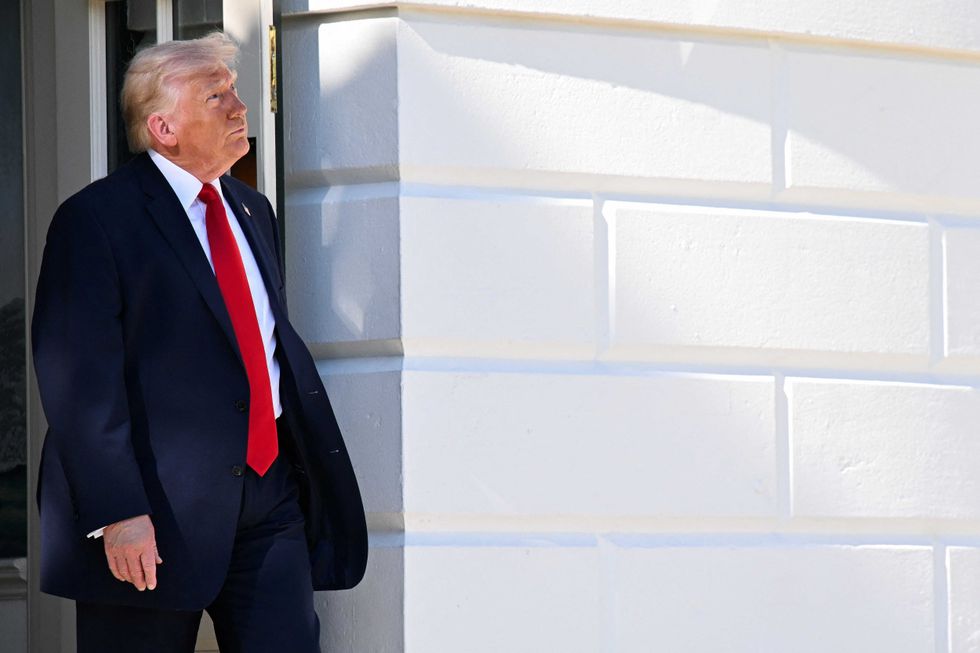
On the other hand, positive developments surrounding the US-China relations could help limit the DXY’s losses. US President Donald Trump late Tuesday predicted an upcoming meeting with his Chinese counterpart, Xi Jinping, would yield a “good deal” on trade. However, Trump also conceded that the highly anticipated talks may not happen. US Treasury Secretary Scott Bessent is scheduled to meet with his Chinese counterparts to discuss a de-escalation of trade tensions ahead of the US-China trade talks.  

US Dollar FAQs

The US Dollar (USD) is the official currency of the United States of America, and the ‘de facto’ currency of a significant number of other countries where it is found in circulation alongside local notes. It is the most heavily traded currency in the world, accounting for over 88% of all global foreign exchange turnover, or an average of $6.6 trillion in transactions per day, according to data from 2022.
Following the second world war, the USD took over from the British Pound as the world’s reserve currency. For most of its history, the US Dollar was backed by Gold, until the Bretton Woods Agreement in 1971 when the Gold Standard went away.

The most important single factor impacting on the value of the US Dollar is monetary policy, which is shaped by the Federal Reserve (Fed). The Fed has two mandates: to achieve price stability (control inflation) and foster full employment. Its primary tool to achieve these two goals is by adjusting interest rates.
When prices are rising too quickly and inflation is above the Fed’s 2% target, the Fed will raise rates, which helps the USD value. When inflation falls below 2% or the Unemployment Rate is too high, the Fed may lower interest rates, which weighs on the Greenback.

In extreme situations, the Federal Reserve can also print more Dollars and enact quantitative easing (QE). QE is the process by which the Fed substantially increases the flow of credit in a stuck financial system.
It is a non-standard policy measure used when credit has dried up because banks will not lend to each other (out of the fear of counterparty default). It is a last resort when simply lowering interest rates is unlikely to achieve the necessary result. It was the Fed’s weapon of choice to combat the credit crunch that occurred during the Great Financial Crisis in 2008. It involves the Fed printing more Dollars and using them to buy US government bonds predominantly from financial institutions. QE usually leads to a weaker US Dollar.

Quantitative tightening (QT) is the reverse process whereby the Federal Reserve stops buying bonds from financial institutions and does not reinvest the principal from the bonds it holds maturing in new purchases. It is usually positive for the US Dollar.

Source: https://www.fxstreet.com/news/us-dollar-index-weakens-below-9900-us-china-trade-talks-in-focus-202510220456


Market Opportunity
Index Cooperative Logo
Index Cooperative Price(INDEX)
$0.4816
$0.4816$0.4816
-0.16%
USD
Index Cooperative (INDEX) Live Price Chart
Disclaimer: The articles reposted on this site are sourced from public platforms and are provided for informational purposes only. They do not necessarily reflect the views of MEXC. All rights remain with the original authors. If you believe any content infringes on third-party rights, please contact service@support.mexc.com for removal. MEXC makes no guarantees regarding the accuracy, completeness, or timeliness of the content and is not responsible for any actions taken based on the information provided. The content does not constitute financial, legal, or other professional advice, nor should it be considered a recommendation or endorsement by MEXC.

You May Also Like

Let insiders trade – Blockworks

Let insiders trade – Blockworks

The post Let insiders trade – Blockworks appeared on BitcoinEthereumNews.com. This is a segment from The Breakdown newsletter. To read more editions, subscribe ​​“The most valuable commodity I know of is information.” — Gordon Gekko, Wall Street Ten months ago, FBI agents raided Shayne Coplan’s Manhattan apartment, ostensibly in search of evidence that the prediction market he founded, Polymarket, had illegally allowed US residents to place bets on the US election. Two weeks ago, the CFTC gave Polymarket the green light to allow those very same US residents to place bets on whatever they like. This is quite the turn of events — and it’s not just about elections or politics. With its US government seal of approval in hand, Polymarket is reportedly raising capital at a valuation of $9 billion — a reflection of the growing belief that prediction markets will be used for much more than betting on elections once every four years. Instead, proponents say prediction markets can provide a real service to the world by providing it with better information about nearly everything. I think they might, too — but only if insiders are free to participate. Yesterday, for example, Polymarket announced new betting markets on company earnings reports, with a promise that it would improve the information that investors have to work with.  Instead of waiting three months to find out how a company is faring, investors could simply watch the odds on Polymarket.  If the probability of an earnings beat is rising, for example, investors would know at a glance that things are going well. But that will only happen if enough of the people betting actually know how things are going. Relying on the wisdom of crowds to magically discern how a business is doing won’t add much incremental knowledge to the world; everyone’s guesses are unlikely to average out to the truth. If…
Share
BitcoinEthereumNews2025/09/18 05:16
Ethereum Price Prediction: ETH Targets $10,000 In 2026 But Layer Brett Could Reach $1 From $0.0058

Ethereum Price Prediction: ETH Targets $10,000 In 2026 But Layer Brett Could Reach $1 From $0.0058

Ethereum price predictions are turning heads, with analysts suggesting ETH could climb to $10,000 by 2026 as institutional demand and network upgrades drive growth. While Ethereum remains a blue-chip asset, investors looking for sharper multiples are eyeing Layer Brett (LBRETT). Currently in presale at just $0.0058, the Ethereum Layer 2 meme coin is drawing huge [...] The post Ethereum Price Prediction: ETH Targets $10,000 In 2026 But Layer Brett Could Reach $1 From $0.0058 appeared first on Blockonomi.
Share
Blockonomi2025/09/17 23:45
The Smart Way to Evaluate Warranty Management Solutions

The Smart Way to Evaluate Warranty Management Solutions

Warranty rarely shows up on transformation roadmaps with the urgency it deserves. It is often categorized as a compliance function, which is necessary and unavoidable
Share
Techbullion2026/01/24 23:12