

UN Secures Circle Grant to Expand Refugee Aid with Stablecoins
Introduction
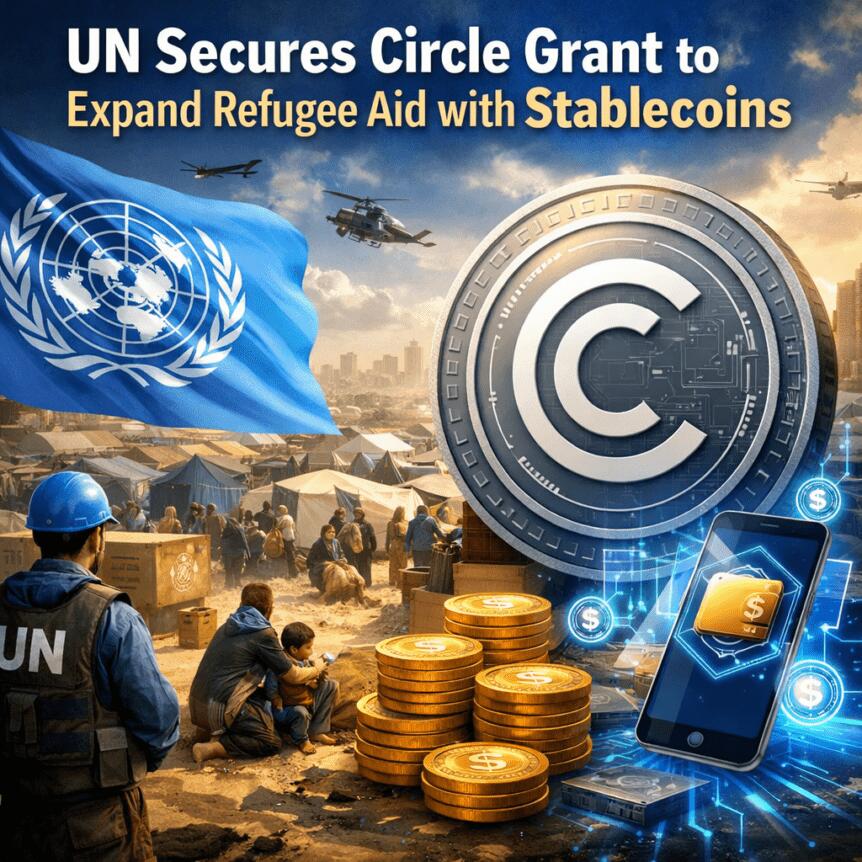
Digital humanitarian finance is moving from concept to practice as Circle backs a UN-wide rollout of digital payment rails. Unveiled at Davos, the Circle Foundation’s grant aims to scale the United Nations’ Digital Hub of Treasury Solutions, reducing costs and boosting transparency across aid disbursements. The initiative leverages stablecoins to accelerate transfers between agencies, echoing a prior collaboration with UNHCR that used the USDC token to assist displaced Ukrainians. The move signals a broader push to modernize aid delivery through crypto-enabled infrastructure while maintaining governance at the forefront.
Key Takeaways
- Circle Foundation grants support for the UN’s Digital Hub of Treasury Solutions to streamline monetary transfers across the UN ecosystem.
- The grant expands on a 2022 collaboration with UNHCR that facilitated USDC payments for displaced Ukrainians.
- Officials argue digital financial infrastructure, including stablecoins, can maximize donor impact amid about $38 billion in annual humanitarian funds still relying on legacy systems.
- Industry data and forecasts point to a growing role for stablecoins in global payments, with significant projected growth in cross-border and humanitarian flows.
Tickers mentioned:
Sentiment: Neutral
Price impact: Neutral. There is no explicit market move tied to this humanitarian-focused rollout; the emphasis is on efficiency, transparency, and governance.
Trading idea (Not Financial Advice): Hold, as the initiative signals gradual adoption rather than an immediate market catalyst.
Market context: The development aligns with a broader trend of institutions exploring digital asset rails to improve cross-border payments and aid delivery, even as regulatory and governance considerations remain paramount.
Rewritten article body
Circle has announced a grant aimed at deploying digital financial infrastructure across the United Nations to streamline humanitarian aid payments and reduce operating costs. The announcement came at the World Economic Forum in Davos, where the Circle Foundation outlined its first international grant to support the UN’s Digital Hub of Treasury Solutions (DHoTS) in efforts to streamline monetary value transfers across the UN ecosystem. The grant builds on Circle’s previous collaboration with UNHCR and DHoTS in 2022, which facilitated USDC stablecoin payments for displaced Ukrainians. USDC as a stablecoin had a practical impact on delivery in the field.
Alexander De Croo, administrator of the UN Development Programme, said stablecoin payments would enable the UN to “make every dollar work harder” within tight budgets. Circle asserts that digital financial infrastructure, including stablecoins, can maximize the impact of donor funds, noting that around $38 billion in annual humanitarian aid still relies on legacy payment systems.
Barham Salih, the high commissioner for the UN Refugee Agency, framed the initiative as a way to preserve dignity and choice for people forced to flee while ensuring that every dollar entrusted to the UN is used effectively. He stressed that technology should empower beneficiaries rather than bypass humanitarian safeguards.
Circle’s endorsement of the UN program follows the December formation of the Circle Foundation, aimed at strengthening financial resilience and inclusion through philanthropic initiatives. The organization says the new grant will help scale the UN’s digital treasury architecture, potentially setting a precedent for how donor funding can be channeled through more transparent, programmable payment rails.
The broader conversation around stablecoins gained renewed attention as the sector has matured into a roughly $312.7 billion market used in daily payments, business transactions, and as a store of value worldwide. The growth comes amid increasing regulatory scrutiny and a push by financial institutions to trial and adopt digital rails for cross-border transfers and aid disbursements. Bloomberg Intelligence recently projected robust growth in stablecoin payment flows, estimating an 81% compound annual growth rate to around $56.6 trillion by 2030. The research underscores how crypto-native payment instruments could reshape humanitarian finance if regulators and aid agencies align on standards and controls.
As the ecosystem evolves, backers of this approach argue that integrating stablecoins into UN workflows could translate into faster disbursements, tighter budget control, and greater transparency over how funds are deployed. Critics warn that governance, compliance, and risk management must keep pace with technical advances to prevent leakage or misuse. The Davos announcement signals that major international bodies are willing to experiment with digital financial infrastructure at scale, but implementation across a multilayered UN system will require careful coordination among agencies, donors, and local partners.
This article was originally published as UN Secures Circle Grant to Expand Refugee Aid with Stablecoins on Crypto Breaking News – your trusted source for crypto news, Bitcoin news, and blockchain updates.


You May Also Like

Not a loophole: Singapore AI export controls let China tap US AI legally

Exclusive interview with Smokey The Bera, co-founder of Berachain: How the innovative PoL public chain solves the liquidity problem and may be launched in a few months

Chainlink Whale Activity Rises While Price Bleeds for 7 Straight Months



