Conservative National Review torches key Trump talking point
President Donald Trump's trade policies are drawing strong criticism from liberal economists like Paul Krugman and Robert Reich as well as students of the late Milton Friedman, who believed that steep tariffs are bad both businesses and consumers. Regardless, Trump and Commerce Secretary Howard Lutnick are doubling down on tariffs, which Trump claims will reduce the United States' national debt and eventually eliminate the need for federal income taxes.
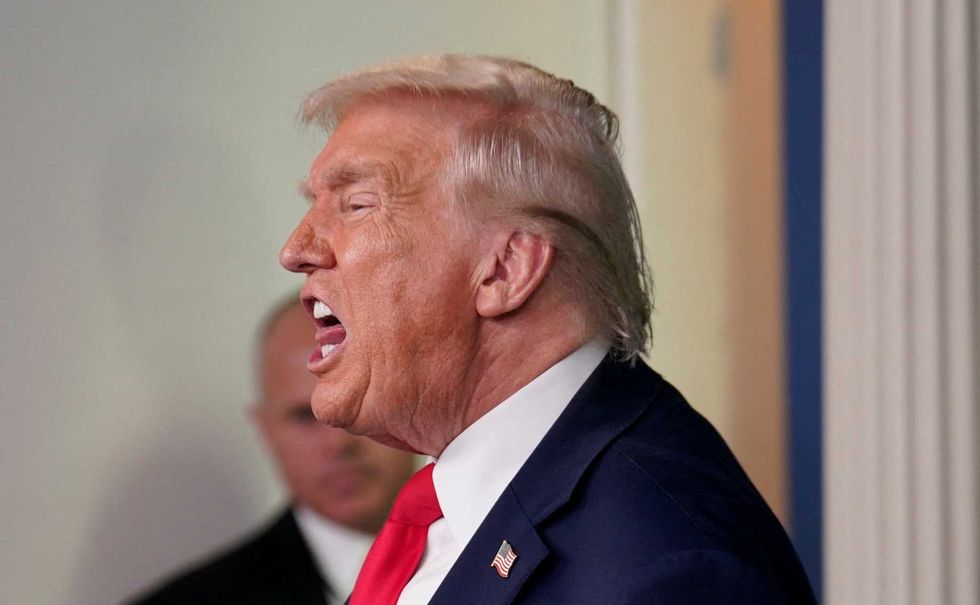
Trump is also claiming major trade deficit reductions. In a Wednesday, February 18 post on his Truth Social platform, the president wrote, in all caps, "THE UNITED STATES TRADE DEFICIT HAS BEEN REDUCED BY 78% BECAUSE OF THE TARIFFS BEING CHARGED TO OTHER COMPANIES AND COUNTRIES."
But the conservative National Review disagrees strongly with Trump's claims in an editorial published on February 20.
"Talk about bad timing," the National Review editors argue. "On Wednesday, President Trump boasted on social media that the U.S. trade deficit had been reduced by 78 percent thanks to his comprehensive tariff regime, a claim apparently based on his cherry-picking of data between October and January. Less than 12 hours later, the Census Bureau published its annual trade report. It reveals that the U.S. trade deficit declined by just 0.2 percent in 2025 — a far cry from Trump's figure — from $903.5 billion in 2024 to $901.5 billion last year."
The Review editors continue, "The numbers beneath the headline are even worse for the president's faulty narrative. The deficit in goods, which are all that tariffs apply to, hit a record high in 2025. Specifically, Americans purchased $1.2 trillion more in merchandise from foreign countries than they sold abroad. Imports were the highest on record at $4.3 trillion, as were imports of only goods at $3.4 trillion."
The Review editors note that Trump "has been obsessed with the trade deficit for decades, driven by the erroneous conviction that it represents money lost to other countries."
"In reality, the balance of trade has no bearing on a country's economic prosperity," the conservatives explain. "The United States is one of the wealthiest countries in the world per capita, and it also runs the largest trade deficit. Several countries that are desperately poor, such as Libya and Papua New Guinea, run trade surpluses…. Tariffs…. have proven unable to meaningfully shift the full balance of trade. President Trump imposed a suite of sweeping duties last year, resulting in an average pre-substitution rate of 14.5 percent across all imported goods."
They add, "Previously, the average rate hovered around 2.5 percent. Yet while this stunning increase has mangled trade in certain products and with particular countries, it has hardly put a dent in the deficit."
- george conway
- noam chomsky
- civil war
- Kayleigh mcenany
- Melania trump
- drudge report
- paul krugman
- Lindsey graham
- Lincoln project
- al franken bill maher
- People of praise
- Ivanka trump
- eric trump


You May Also Like

Major Legal Face-Off in TerraUSD Collapse: Jane Street Defends Its Role

Nakamoto Announces Actively Managed Bitcoin Derivatives Program Designed to Generate Volatility Income and Hedge Downside Exposure