

SEC Pushes Back Deadline Decisions On BlackRock, Franklin Templeton Crypto ETF Applications
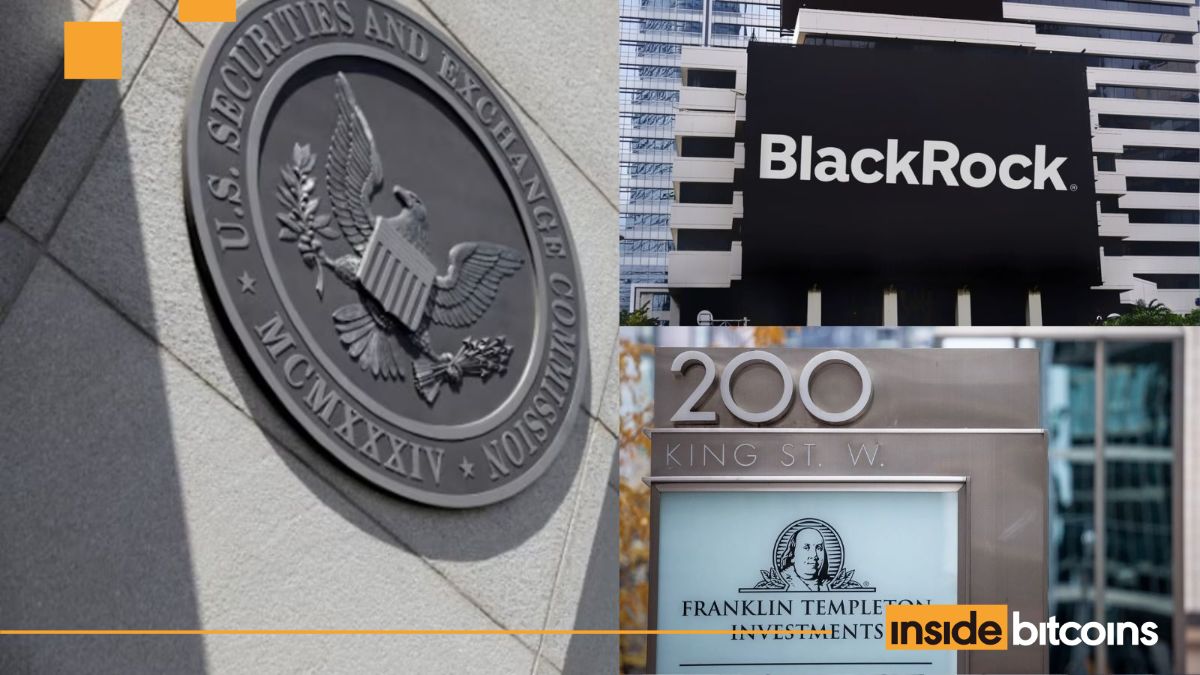
The US Securities and Exchange Commission (SEC) has pushed back the decision deadline for multiple crypto ETF (exchange-traded fund) applications from asset managers BlackRock and Franklin Templeton.
According to recent SEC filings, the regulator has set a new deadline of Nov. 13 for a Franklin Ethereum staking amendment, and Nov. 14 for the asset manager’s Solana and XRP ETFs.
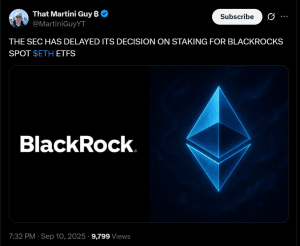
A proposal to permit staking in BlackRock’s iShares Ethereum Trust has also been set for Oct. 30.
SEC Says It Needs More Time
The filings give no indication of how the SEC is leaning on the applications, with the regulator just saying it needs more time to evaluate them. As such, the agency is taking advantage of the maximum extension available before issuing a final decision.
The proposal for Franklin’s Ethereum, Solana and XRP products were filed with Cboe BZX in the middle of March. Meanwhile, the staking amendment for BlackRock’s iShares Ethereum ETF was submitted on July 16 by Nasdaq.
The SEC has up to 45 days from publication to act on a proposed rule change under Section 19(b) of the Securities Exchange Act. This period can, however, be extended to 90 or even 180 days.
In some cases, the agency can also push back the deadline by an additional 60 days.
SEC Keeps Delaying ETF Decisions Even After Pro-Crypto Pivot
The SEC’s move to delay decisions on Franklin’s and BlackRock’s funds is a continuation of a trend that has seen the agency push back deadlines for multiple altcoin and staking products in recent weeks.
Just earlier this week, the agency postponed decisions on the Bitwise Dogecoin ETF and the Grayscale Hedera ETF, with the decision deadlines for these funds pushed to Nov. 12.
In August, the regulator also issued multiple extensions on pending applications.
Those included NYSE Arca’s filings for the Truth Social Bitcoin and Ethereum ETF, the 21Shares and Bitwise Solana ETFs, the 21Shares Core XRP Trust, Cboe BZX’s proposal to list the WisdomTree XRP Fund, and the Canary PENGU ETF. The decision deadlines for these funds have all been revised to October.
The delays come even after the SEC shifted to a pro-crypto stance since President Donald Trump took office in January.
One of the major signals that the SEC was turning more pro-crypto happened on July 31, when new Chair Paul Atkins unveiled the agency’s commission-wide initiative called “Project Crypto.”
Through the initiative, the SEC aims to modernize the rules around securities while also bringing digital asset trading, lending and staking under a unified framework.
Yesterday, during a keynote speech at the Organization for Economic Co-operation and Development Roundtable on Global Financial Markets in Paris, Atkins declared, “Crypto’s time has come.”
ETF Issuers Push For Staking After SEC Clarification
In May, the SEC also said that certain blockchain staking activities will not be seen as securities offerings. Many in the industry thought this had meant staking would be allowed.
However, SEC decisions around proposed rule changes for crypto ETFs to offer staking have been delayed, as seen with the proposed amendments for BlackRock’s ETH ETF and Franklin’s ETH fund.
Staking is the process whereby validators lock up their tokens to secure a blockchain network for the chance to process transactions.
If they batch transactions correctly, validators are rewarded for their work in the network’s native token. For example, this could be ETH for Ethereum or SOL for Solana validators.
That provides ETF investors with an extra stream of income on top of the gains from potential price appreciation of the asset the fund is tracking. Issuers are rushing to try to get staking approved for their respective funds in order to stay competitive in the growing market, especially as new applications get submitted on almost a weekly basis.
More Than 90 ETFs In SEC Queue
There are over 90 crypto ETFs waiting for approval from the SEC, according to Bloomberg Intelligence ETF analyst James Seyffart.
“At this rate we’ll have one for every top 30-40 #crypto inside 12 months, even with delays,” said McKay Research founder James McKay.


You May Also Like
'I'm sorry, what?' White House faith advisor stuns with gaffe about Trump at Sunday school

The $1.3 Trillion Race: Bitcoin’s Critical Quantum Security Crossroads




