Key Takeaways: Bhutan officially transitions its National Digital Identity (NDI) platform from Polygon to Ethereum to boost security and resilience. The move positions Bhutan as the first nation to anchor The post Bhutan Migrates National Digital Identity to Ethereum in Major Blockchain Milestone appeared first on CryptoNinjas.Key Takeaways: Bhutan officially transitions its National Digital Identity (NDI) platform from Polygon to Ethereum to boost security and resilience. The move positions Bhutan as the first nation to anchor The post Bhutan Migrates National Digital Identity to Ethereum in Major Blockchain Milestone appeared first on CryptoNinjas.

Bhutan Migrates National Digital Identity to Ethereum in Major Blockchain Milestone

Key Takeaways:

  • Bhutan officially transitions its National Digital Identity (NDI) platform from Polygon to Ethereum to boost security and resilience.
  • The move positions Bhutan as the first nation to anchor a sovereign digital ID system on Ethereum’s public blockchain.
  • The Ethereum Foundation will collaborate with Bhutanese developers to build local blockchain capacity and new decentralized applications.

Bhutan has entered a new era of digital transformation. The Himalayan kingdom has successfully integrated its National Digital Identity (NDI) platform with the Ethereum blockchain, marking a historic moment in the global adoption of decentralized digital identity frameworks.

The announcement was made at a high-profile event attended by His Royal Highness Gyalsey Jigme Namgyel Wangchuck, who also became Bhutan’s first digital citizen in 2023. The transition underscores the country’s vision of building a secure, self-sovereign, and future-ready digital ecosystem powered by blockchain technology.

Read More: Bhutan Secretly Mines $1.3B in Bitcoin—Now Holds Nearly 40% of Its GDP in BTC

bhutan

Bhutan Strengthens Its Digital Independence with Ethereum

The digital identity project of Bhutan, which was created as a part of the GovTech Agency and Druk Holding and Investments (DHI), is designed to provide citizens with absolute control over personal data. In contrast to the previous methods when centrally based authorities store and verify user data, the NDI in Bhutan has implemented the principles of the self-sovereign identity (SSI) system, meaning that citizens can safely store, share, and verify the credentials without the mediation of third parties.

Jigme Tenzing, the Secretary of the GovTech Agency, believes that this move to Ethereum is a milestone in the direction of strengthening the Bhutanese digital base.

“We have been using a blockchain provided by Polygon. By moving to Ethereum, we are further strengthening the security of our digital identity,” Tenzing explained. “Ethereum’s global decentralization makes it virtually impervious to disruption, ensuring both security and stability for our national system.”

It is not merely a technical upgrade, but it is a strategic step towards digital sovereignty. Arriving at Ethereum with its identity infrastructure, Bhutan can have transparency and immutability of one of the most battle-tested public blockchains in the world.

From Polygon to Ethereum: A Strategic Leap in Security and Scale

In 2024, Bhutan was the first country to roll out its NDI platform on Polygon as a pilot implementation. The Ethereum integration will be a complete move to the Layer 1 mainnet, which will be complete by early 2026, as projected by the public broadcaster of Bhutan.

The evidence-based (PoS) consensus system, extensive developer base, and full security infrastructure of Ethereum would be a perfect match to a nationwide deployment like the one of the NDI in Bhutan. The shift also indicates an increasing trend of governments considering the public blockchains as a method of identity, record-keeping and delivery of public services.

In Bhutan’s case, the upgrade ensures:

  • Enhanced Security – Ethereum’s decentralized validator network minimizes single points of failure.
  • Transparency – All credential verifications and identity actions can be traced on-chain.
  • Global Compatibility – Applications built on NDI will interoperate with the wider Ethereum ecosystem.

“NDI is the foundational layer of Bhutan’s digital economy,” said Ujjwal Deep Dahal, CEO of Druk Holding and Investments. “On top of this foundation, we can build countless decentralized applications and use cases, developed collaboratively with the Ethereum community.”

Ethereum Foundation Expands Its Footprint in South Asia

Bhutan’s Local Developers Join the Global Ethereum Ecosystem

The Ethereum Foundation has committed itself to support the blockchain projects in Bhutan in the long run, such as education, developer training, and integration workshops.

Aya Miyaguchi, President of the Ethereum Foundation, emphasized the collaborative nature of the Ethereum community:

“We’ve identified talented Bhutanese developers, and now it’s up to them. They can learn, join global projects, and contribute freely, that’s the essence of Ethereum,” she said. “Our goal is to see more local ownership. The Foundation will provide guidance and support wherever needed.”

The collaboration is expected to develop the future generation of blockchain developers and innovators in Bhutan. The adoption of Ethereum in the national infrastructure will effectively make Bhutan a blockchain research and development hub in the region.

Read More: BitMine Ethereum Witnessed an Unrealized Loss of $2.13B in Ethereum
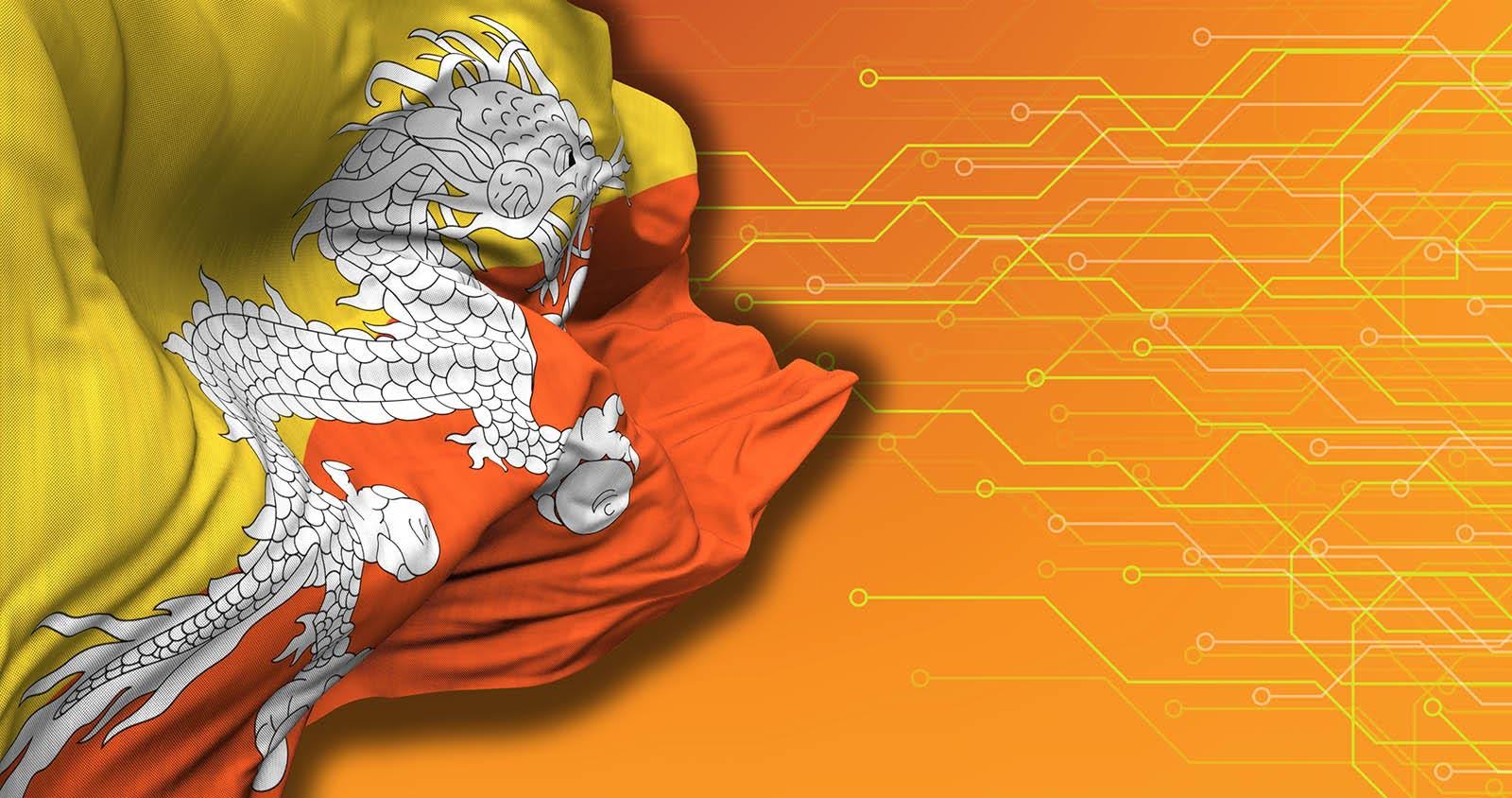
bhutan-flag

Blockchain as the Core of Bhutan’s Digital Economy

NDI system is not the only part of the general digital modernization in Bhutan strategy. A combination of both government and non-government efforts has ensured that the country has been steadily developing an economy that is amenable to blockchain use.

In recent years, Bhutan has quietly expanded its involvement in cryptocurrency mining, with its sovereign wealth fund, DHI, confirmed as one of the world’s top government holders of Bitcoin, estimated at over 6,300 BTC.

The post Bhutan Migrates National Digital Identity to Ethereum in Major Blockchain Milestone appeared first on CryptoNinjas.

Market Opportunity
Major Logo
Major Price(MAJOR)
$0.1125
$0.1125$0.1125
-1.00%
USD
Major (MAJOR) Live Price Chart
Disclaimer: The articles reposted on this site are sourced from public platforms and are provided for informational purposes only. They do not necessarily reflect the views of MEXC. All rights remain with the original authors. If you believe any content infringes on third-party rights, please contact service@support.mexc.com for removal. MEXC makes no guarantees regarding the accuracy, completeness, or timeliness of the content and is not responsible for any actions taken based on the information provided. The content does not constitute financial, legal, or other professional advice, nor should it be considered a recommendation or endorsement by MEXC.

You May Also Like

FTX Trust Sues Genesis Digital for $1.15B Clawback Over Alleged Fraudulent Transfers

FTX Trust Sues Genesis Digital for $1.15B Clawback Over Alleged Fraudulent Transfers

The FTX Recovery Trust has filed a $1.15 billion lawsuit against the Bitcoin mining firm Genesis Digital Assets, alleging fraudulent transfers. The complaint, filed on Monday in U.S. Bankruptcy Court for the District of Delaware, alleges that Sam Bankman-Fried used misappropriated FTX customer funds to purchase Genesis Digital shares at “outrageously inflated prices” through his hedge fund, Alameda Research, between August 2021 and April 2022. Genesis Digital co-founders Rashit Makhat and Marco Krohn received $470 million and $80.9 million, respectively, for their shares in February 2022, according to court documents. The trust contends that only Alameda, and by extension Bankman-Fried, as its 90% owner, benefited from the investments, while FTX customers and creditors suffered losses from the diverted exchange funds.Court Document (Source: Bloomberg Law) Genesis Investment Timeline Reveals Systematic Fund Diversion Court documents reveal that discussions between Bankman-Fried and Genesis Digital began in July 2021, when the Kazakhstan-based mining company was seeking capital to expand its operations into the United States. Bankman-Fried joined Genesis Digital’s board in October 2021, according to Bloomberg, positioning himself to oversee what would become one of Alameda’s largest venture investments. The complaint describes how the FTX founder caused Alameda to purchase multiple tranches of Genesis shares over an eight-month period, with the lawsuit characterizing Genesis as “one of Bankman-Fried’s most reckless investments with commingled and misappropriated funds.“ Between August 2021 and April 2022, Alameda invested $1.15 billion across four distinct funding rounds: $100 million in August 2021, $550 million in January 2022, $250 million in February, and $250 million in April 2022. The trust alleges that FTX insiders regularly caused Alameda to “borrow” billions from the FTX.com exchange to fund “profligate lifestyles and vanity investments” while hiding the source of these funds from investors and creditors. Bankman-Fried resigned from Genesis Digital’s board one day before FTX filed for bankruptcy in November 2022, according to the court filing. Mining Sector Faces Renewed Scrutiny Amid FTX Fallout The Genesis Digital lawsuit is the latest effort by FTX’s bankruptcy estate to recover assets for creditors, with the trust having already distributed $6.2 billion across two previous rounds of payments. The trust completed a $1.2 billion distribution in February, followed by a larger $5 billion payout in May, with an additional $1.6 billion distribution scheduled for September 30, bringing total recoveries to nearly half of the $16.5 billion earmarked for victims. These recovery efforts come as Genesis Digital, which operates over 500 megawatts of mining capacity across 20 data centers on four continents, saw its valuation reach $5.5 billion during an April 2022 fundraising round shortly before cryptocurrency prices collapsed later that year. The mining company was exploring an initial public offering in the United States as recently as July 2024, working with advisors to evaluate a potential listing and planning a pre-IPO funding round amid the crypto industry’s recovery from the 2022 market downturn. However, the FTX lawsuit adds another layer of complexity to Genesis Digital’s corporate structure, which includes an extensive network of U.S. subsidiaries with names like Dog House TX-1, Mother Whale LLC, and White Deer LLC. The complaint alleges that these U.S. subsidiaries operate as “alter egos” of the parent company, potentially exposing the entire corporate structure to clawback claims under both federal bankruptcy law and Delaware state fraudulent transfer statutes. Meanwhile, Bankman-Fried continues to serve his 25-year prison sentence following his conviction on seven felony charges, with oral arguments for his appeal scheduled for November 4, 2025. The lawsuit adds to the complex web of litigation following the $175 million settlement earlier this year with Genesis Global, a subsidiary of Digital Currency Group, as creditors and bankruptcy trustees pursue recovery efforts across multiple jurisdictions and corporate entities tied to the failed exchange
Share
CryptoNews2025/09/24 03:14
Ripple-Backed Evernorth Faces $220M Loss on XRP Holdings Amid Market Slump

Ripple-Backed Evernorth Faces $220M Loss on XRP Holdings Amid Market Slump

TLDR Evernorth invested $947M in XRP, now valued at $724M, a loss of over $220M. XRP’s price dropped 16% in the last 30 days, leading to Evernorth’s paper losses
Share
Coincentral2025/12/26 03:56
New Trump appointee Miran calls for half-point cut in only dissent as rest of Fed bands together

New Trump appointee Miran calls for half-point cut in only dissent as rest of Fed bands together

The post New Trump appointee Miran calls for half-point cut in only dissent as rest of Fed bands together appeared on BitcoinEthereumNews.com. Stephen Miran, chairman of the Council of Economic Advisers and US Federal Reserve governor nominee for US President Donald Trump, arrives for a Senate Banking, Housing, and Urban Affairs Committee confirmation hearing in Washington, DC, US, on Thursday, Sept. 4, 2025. The Senate Banking Committee’s examination of Stephen Miran’s appointment will provide the first extended look at how prominent Republican senators balance their long-standing support of an independent central bank against loyalty to their party leader. Photographer: Daniel Heuer/Bloomberg via Getty Images Daniel Heuer | Bloomberg | Getty Images Newly-confirmed Federal Reserve Governor Stephen Miran dissented from the central bank’s decision to lower the federal funds rate by a quarter percentage point on Wednesday, choosing instead to call for a half-point cut. Miran, who was confirmed by the Senate to the Fed Board of Governors on Monday, was the sole dissenter in the Federal Open Market Committee’s statement. Governors Michelle Bowman and Christopher Waller, who had dissented at the Fed’s prior meeting in favor of a quarter-point move, were aligned with Fed Chair Jerome Powell and the others besides Miran this time. Miran was selected by Trump back in August to fill the seat that was vacated by former Governor Adriana Kugler after she suddenly announced her resignation without stating a reason for doing so. He has said that he will take an unpaid leave of absence as chair of the White House’s Council of Economic Advisors rather than fully resign from the position. Miran’s place on the board, which will last until Jan. 31, 2026 when Kugler’s term was due to end, has been viewed by critics as a threat from Trump to the Fed’s independence, as the president has nominated three of the seven members. Trump also said in August that he had fired Federal Reserve Board Governor…
Share
BitcoinEthereumNews2025/09/18 02:26