

2026-04-04 Saturday
Bitcoin News in India
Track the latest Bitcoin insights and BTC market updates in India

BTC drops after Asian session fails to provide its usual support
BTC made most of its gains during Asian trading hours, but this time, the Singapore session caused a correction.
Share
Author: Cryptopolitan2025/12/11 18:25

Twenty One Capital Lists On NYSE With $3.9B BTC
The post Twenty One Capital Lists On NYSE With $3.9B BTC appeared on BitcoinEthereumNews.com. Twenty One Capital lists on the NYSE with 43,514 BTC and a $3.9 billion Bitcoin treasury. Jack Mallers says the firm will buy “as much Bitcoin as possible” under ticker XXI. Backers include Tether, Bitfinex, Cantor Fitzgerald, and SoftBank with over $850 million raised. Twenty One Capital, the Bitcoin firm co founded by Jack Mallers, made its public debut on the New York Stock Exchange under the ticker XXI. The move immediately placed Twenty One Capital among the largest public institutional Bitcoin holders in the world. Third-Largest Public Bitcoin Holder on Day One The listing follows a business combination with Cantor Equity Partners and launches the firm with a treasury of 43,514 BTC, worth approximately $3.9 billion. This instantly places Twenty One Capital as the third largest publicly traded Bitcoin holder, behind only MicroStrategy and Marathon. Mallers, speaking live on CNBC, said the mission is to “buy as much Bitcoin as we possibly can”. Meanwhile, he stressed that Twenty One is not merely a BTC holding vehicle. The company plans to build an entire Bitcoin focused financial ecosystem, including capital markets advisory, lending models, and Bitcoin education media. “Bitcoin is honest money,” Mallers said, adding that the firm’s goal is to give BTC “the place it deserves in global markets.” Institutional Backing The NYSE debut is supported by a heavy slate of institutional partners, including Tether, Bitfinex, Cantor Fitzgerald, and SoftBank. Twenty One’s PIPE financing included $486.5 million in senior convertible notes and roughly $365 million in common equity commitments. Mitchell Askew, head of Blockware Intelligence, described the launch as a new template for Bitcoin native public companies. He noted that Twenty One’s institutional networks could make the firm “a major player not only in Bitcoin, but in the grand arc of financial history.” Bitcoin Treasury Paired With Operating Businesses…
Share
Author: BitcoinEthereumNews2025/12/11 17:43

Elon Musk’s SpaceX Moves 1,021 BTC Ahead of a Possible IPO
The move of 1,021 BTC by SpaceX into an institutional trust indicates preparation for greater transparency and compliance ahead of a potential 2026 IPO. The transfers place BTC as a long-term treasury asset, signaling strategic financial management and increasing investor confidence. SpaceX just moved 1,021 Bitcoin worth roughly $95 million based on recent prices, into [...]]]>
Share
Author: Crypto News Flash2025/12/11 17:41

Why is Bitcoin (BTC) Trading Lower Today?
The post Why is Bitcoin (BTC) Trading Lower Today? appeared on BitcoinEthereumNews.com. Bitcoin BTC$90,457.05, the leading cryptocurrency by market value, is down following the overnight Fed rate cut. The reason likely lies in the Fed’s messaging, which has made traders less excited about future easing. The Fed on Wednesday cut the benchmark interest rate by 25 basis points to 3.25% as expected and announced it will begin purchasing short-term Treasury bills to manage liquidity in the banking system. Yet, BTC traded below $90,000 at press time, representing a 2.4% decline since early Asian trading hours, according to CoinDesk data. Ether was down 4% at $3,190, with the CoinDesk 20 Index down over 4%. The risk-off action is likely due to growing signs of internal Fed divisions on balancing inflation control against employment goals, coupled with signals of a more challenging path for future rate cuts. Two members voted for no change on Wednesday, but individual forecasts revealed that six FOMC members felt that a cut wasn’t “appropriate.” Besides, the central bank suggested just one more rate cut in 2026, disappointing expectations for two to three rate cuts. “The Fed is divided, and the market has no real insight into the future path of rates from now until May 2026, when Chairman Jerome Powell will be replaced. The replacement of Powell with a Trump loyalist (who will push to lower rates aggressively) is likely the most reliable signal for rates. Until then, however, there are still 6 months to go,” Greg Magadini, director of derivatives at Amberdata, told CoinDesk. He added that the most likely occurrence as of now is a needed “deleveraging” or down-market” to convince the Fed of lower rates decidedly. Shiliang Tang, managing partner of Monarq Asset Management, said BTC is following the stock market lower. “Crypto markets initially spiked on the news but have steadily moved lower since, in conjunction with…
Share
Author: BitcoinEthereumNews2025/12/11 17:27

Bitcoin dips after Fed’s 25 bps cut – Is BTC’s 2026 rally at risk?
The post Bitcoin dips after Fed’s 25 bps cut – Is BTC’s 2026 rally at risk? appeared on BitcoinEthereumNews.com. Journalist Posted: December 11, 2025 The market is taking the Federal Reserve’s move with cautious optimism. The recent 25 bps rate cut to 3.50–3.75% by the Fed on the 10th of December marks the third cut of 2025. Consequently, traders are now eyeing a potential liquidity boost, putting Bitcoin [BTC] back on the radar. But that’s not all. One key point in the Fed’s statement is that they’ll start buying $40 billion in U.S. T-bills over the next thirty days. By doing this, the Fed injects extra short-term liquidity back into the banking system. Source: X Simply put, the U.S. economy is about to get a fresh wave of liquidity. With another 25 bps rate cut and $40 billion in Treasury bill buys from financial institutions, the Federal Reserve is clearly trying to push cheaper capital back into the system as labor-market risks start creeping higher. And yet, BTC has reacted with a 2.14% dip, breaking below $90k. Notably, this move is no fluke. The Fed may be boosting short-term liquidity, but it’s also stirring concern about longer-term risks, especially as markets start pricing in a pause in rate cuts heading into 2026. Macro volatility puts Bitcoin’s 2026 rally under pressure It appears investors were already prepared for Bitcoin’s volatility. From mining firms to BlackRock, millions in BTC were unloaded ahead of the FOMC. With inflation still running hot and the Fed split on how aggressively to cut rates next year, investors are clearly staying cautious. And that caution isn’t misplaced. Over the last four FOMC meetings, Bitcoin has repeatedly pulled back. In fact, after the October FOMC, BTC slid almost 30% to $80k, marking its first major flash crash of 2025. Source: TradingView (BTC/USDT) Against this setup, the question remains: Is history about to repeat itself? A recent Glassnode report highlights…
Share
Author: BitcoinEthereumNews2025/12/11 17:09

Satoshi Nakamoto statue arrives at NYSE in major crypto culture shift
The post Satoshi Nakamoto statue arrives at NYSE in major crypto culture shift appeared on BitcoinEthereumNews.com. Satoshi Nakamoto statue arrives at NYSE, marking crypto’s growing Wall Street acceptance. Artwork joins global series as Bitcoin’s history and mainstream adoption gain symbolic recognition. Institutional embrace of Bitcoin accelerates as public entities hold over 3.7M BTC. The New York Stock Exchange has become the latest home for Valentina Picozzi’s “disappearing” Satoshi Nakamoto statue, signalling how far digital assets have travelled since the time when crypto was treated as unwelcome on Wall Street. The arrival of the piece was announced in an X post on Wednesday, positioning the NYSE as shared ground for traditional finance and emerging decentralised systems. The installation also aligns with the anniversary of the Bitcoin mailing list, launched on 10 December 2008, adding symbolic weight to a moment that highlights Bitcoin’s shift from niche idea to mainstream fixture. NYSE installation The statue was brought to the NYSE by Bitcoin company Twenty One Capital, which began trading this week. The artwork itself is by Picozzi, who has been developing her “disappearing” Satoshi series under her Satoshigallery handle. The New York installation is the sixth piece in a global project she plans to expand to 21 locations. Her post on X described the placement at such a prominent financial centre as a milestone for the ongoing series. The display at the NYSE contrasts sharply with the period when crypto was considered taboo across Wall Street. Bitcoin’s long path The statue’s arrival coincides with a key date in Bitcoin’s history, falling close to the anniversary of the Bitcoin mailing list launched by Satoshi Nakamoto on 10 December 2008. Nakamoto mined the genesis block on 3 January 2009, creating the first 50 Bitcoins and setting the foundation for the wider industry. More than a year after that, on 22 May 2010, Laszlo Hanyecz made the first documented Bitcoin purchase, spending…
Share
Author: BitcoinEthereumNews2025/12/11 17:04

Cathie Wood Says Bitcoin Four-Year Cycle Breaking Due to Institutional Investors
TLDR Cathie Wood argues Bitcoin’s traditional four-year halving cycle no longer defines the asset’s behavior due to institutional adoption Bitcoin’s volatility has decreased with crashes now smaller than the historic 75-90% drops seen in earlier years The most recent halving occurred April 20, 2024, cutting mining rewards to 3.125 BTC Standard Chartered lowered its 2025 [...] The post Cathie Wood Says Bitcoin Four-Year Cycle Breaking Due to Institutional Investors appeared first on CoinCentral.
Share
Author: Coincentral2025/12/11 16:55

Cardano Founder Reacts As NIGHT Crashes from $150 to $0.02
The post Cardano Founder Reacts As NIGHT Crashes from $150 to $0.02 appeared on BitcoinEthereumNews.com. Cardano Founder Reacts As NIGHT Crashes from $150 to $0.02 Sign Up for Our Newsletter! For updates and exclusive offers enter your email. Jake Simmons has been a Bitcoin enthusiast since 2016. Ever since he heard about Bitcoin, he has been studying the topic every day and trying to share his knowledge with others. His goal is to contribute to Bitcoin’s financial revolution, which will replace the fiat money system. Besides BTC and crypto, Jake studied Business Informatics at a university. After graduation in 2017, he has been working in the blockchain and crypto sector. You can follow Jake on Twitter at @realJakeSimmons. This website uses cookies. By continuing to use this website you are giving consent to cookies being used. Visit our Privacy Center or Cookie Policy. I Agree Source: https://bitcoinist.com/cardano-founder-night-token-crash/
Share
Author: BitcoinEthereumNews2025/12/11 16:48
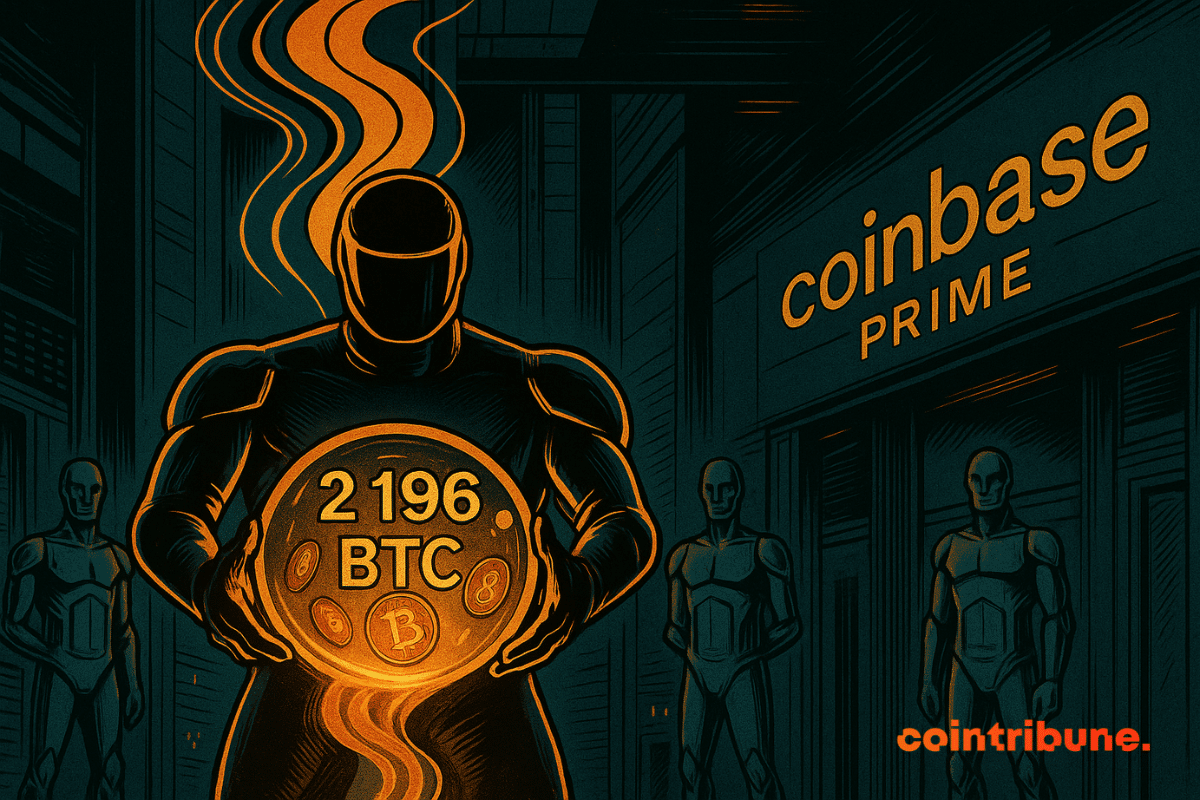
BlackRock Alarms the Market with a Massive Bitcoin Transfer
BlackRock transfers 2,196 BTC to Coinbase Prime. A decision that could shake the Bitcoin market. Details here! L’article BlackRock Alarms the Market with a Massive Bitcoin Transfer est apparu en premier sur Cointribune.
Share
Author: Coinstats2025/12/11 16:05

The quiet edges where BTC mining changes
The post The quiet edges where BTC mining changes appeared on BitcoinEthereumNews.com. Homepage > News > Business > The quiet edges where BTC mining changes The aspects that truly matter in BTC mining often go unnoticed. Most of the time, people at mining events spend their time arguing over hash rate charts or discussing the switch to AI-powered work. However, the changes that actually make a difference tend to occur off to the side, in conversations that don’t receive much attention. A few weeks ago, three separate things came up that aren’t going to show up in headlines, but they’re the kind of developments that will matter a lot when block rewards get cut in half again. One of them was a fire. A large mining site in Texas experienced a transformer failure, followed by a subsequent fire. The whole facility was down for three days. Nobody was hurt, but the insurance companies reacted fast. Operators began receiving renewal quotes with significantly higher premiums. One person running 200 megawatts of capacity saw his insurance costs rise by 18% almost immediately. After that, mining companies across the country began buying additional safety equipment and seeking more expensive transformers that were less likely to fail. One incident forced everyone to spend money on things they hadn’t planned for. A few days later, a firmware update called Mujina was released. For a long time, if you wanted to get more performance out of your mining machines, you were stuck with whatever software came from the manufacturer. Obtaining updates or customizations was difficult and slow. This new firmware is open source. Operators can install it themselves and adjust it to optimize its performance with their specific equipment. Someone I talked to took a group of older machines that were about to be retired and installed the new firmware. After a few weeks, those machines were producing…
Share
Author: BitcoinEthereumNews2025/12/11 16:04



