2026-01-10 Saturday
Crypto News
Indulge in the Hottest Crypto News and Market Updates

$1,000 in Ozak AI at $0.012 Today will be $83,333 at $1 Target: Breaking Down Your Future Portfolio Value
Ozak AI is attracting investors to its systematic presale and high upside potential. With a presale price of $0.012, the OZ tokens of a $1,000 investment are 83,333. In the event that the token has an exchange listing value of $1 as projected, that portfolio would increase to $83,333. As the next round of presale […] The post $1,000 in Ozak AI at $0.012 Today will be $83,333 at $1 Target: Breaking Down Your Future Portfolio Value appeared first on Live Bitcoin News.
Share
Author: LiveBitcoinNews2025/10/13 16:38
The Best Alternative to Bitcoin at $123K: Ozak AI at $0.012 Offers What BTC Can’t—8,333% Return Potential
Enjoy the videos and music you love, upload original content, and share it all with friends, family, and the world on YouTube.
Share
Author: Blockchainreporter2025/10/13 16:37
Web3 Development Explained: When the Web Learns to Think for Itself
Introduction
Imagine a version of the internet that doesn’t depend on big tech companies, where your data is truly yours, and online services make decisions without central control. That idea isn’t science fiction, it’s what Web3 development aims to build. In this article, we’ll explore what Web3 development is, why it matters, how it works, what tools you need, current trends, challenges, and where this journey might lead.
What Is Web3 Development?
Web3 (also called Web 3.0) refers to the next generation of the internet, built on decentralized infrastructure blockchains, decentralized storage, peer-to-peer networking and governed by open-source code and smart contracts.
Web3 development is the practice of designing and building applications, platforms, services, and protocols that operate in this decentralized way. Key features include:
Smart contracts
Decentralized applications (dApps)
Decentralized identity (DID) and identity systems not controlled by any single entity
Tokenomics: tokens that represent ownership, governance rights, or economic incentives
Cross-chain and interoperability: different blockchains talking to each other, bridging assets and logic
Why Web3 Development Matters
Web3 development matters because it changes how we think about trust, ownership, and control on the internet:
User empowerment & data ownershipUsers can own their data and digital assets rather than depending on centralized platforms. You can decide who sees your data and how it’s used.
Censorship resistance & decentralizationNo single authority controls what content is allowed or forbidden. Decentralized apps and decentralized storage make it harder for censorship or unilateral changes.
Transparency & trust by codeWith smart contracts and immutable ledgers, interactions are visible, auditable, and governed by code rather than opaque rules.
New economic modelsCreators, developers, and users can share in value creation via tokens or governance rights rather than simply being service consumers.
How Web3 Development Works: Key Components & Technologies
To understand how the Web “learns to think for itself,” let’s break down the main components involved in Web3 development.
Distributed ledgers storing transactions and smart contracts (e.g. Ethereum, Solana, Polkadot)
Foundation for trust, immutability, consensus
Code that runs automatically when conditions are met (e.g. on Ethereum)
Enables decentralized logic & automation
Storing files/data without centralized servers
Reduces single points of failure, improves censorship resistance
User identity systems that aren’t held by central authorities
Crucial for privacy, portability, control
Tools that allow different blockchains to communicate
Helps avoid fragmentation in the Web3 ecosystem
Economic incentives + voting systems built into protocols (DAOs)
Aligns incentives, lets users have real say
E.g. Solidity, Rust, JavaScript for front-end; frameworks like Hardhat, Truffle, frameworks for wallets & UI
Makes development possible, secure, maintainable
Tools, Languages, And Skills for Web3 Developers
If you want to be part of Web3 development, here are the essential tools and skills:
Blockchain programming languages: Solidity (Ethereum), Rust (Solana, Polkadot), Vyper etc.
Front-end frameworks + wallets: React, Next.js, libraries like ethers.js, web3.js, web3modal, Wagmi etc.
Smart contract development & testing frameworks: Hardhat, Truffle, Foundry etc.
Knowledge of consensus mechanisms & cryptographic primitives: proof-of-stake, proof-of-work, zero-knowledge proofs (ZKPs) etc.
Understanding of decentralized storage & IPFS / Arweave for handling off-chain or large assets
Decentralized identity and privacy tools: understanding DID standards, verifiable credentials, privacy by design
Security best practices: audits, handling vulnerabilities (e.g. reentrancy, front-running, gas optimizations)
Current Trends Shaping Web3 Development (2025)
Here are what many experts and projects are focusing on now — these are the trends that will likely define the coming years. Incorporating these into your article will help with SEO by aligning with user intent around what’s “new” or “emerging.”
AI + Web3 IntegrationAI agents, predictive models, and machine learning are being embedded into decentralized systems — for governance, smart contract optimization, or automating decisions.
Stablecoins, Real-World Assets & TokenizationTurning physical or traditional financial assets into tokens, and stablecoins being used more in cross-border payments and everyday transactions.
Decentralized Identity (DID) and PrivacyGrowing interest in identities that users control, less centralized trust, more privacy by default.
DAOs and Governance ModelsDecentralized Autonomous Organizations are not just experiments anymore; they are being used in real governance, organizational decision-making, funding, etc.
Cross-Chain Interoperability & Modular FrameworksAs multiple blockchains proliferate, it’s important that Web3 apps can work across them so bridging, cross-chain messaging, and modular trust architectures are becoming more important.
Zero-Knowledge Proofs & Privacy Enhancing TechnologiesPrivacy is a key concern; technologies that allow verification of data without revealing all the underlying information are increasingly in demand.
Challenges & Risks
Web3 development is exciting, but it comes with its own set of challenges. Recognizing these makes your article more credible and useful.
Scalability: Blockchains still struggle with throughput, gas fees, latency. Solutions like layer-2s help, but trade-offs exist.
Security risks: Smart contract bugs, exploit vectors, flash-loan attacks etc. Need robust audits and careful design.
Regulatory uncertainty: Laws around cryptocurrencies, tokenization, identity, data privacy vary wildly across countries. Compliance is difficult.
User experience (UX): Onboarding must improve; users unfamiliar with wallets, keys, gas fees etc. can find Web3 confusing.
Interoperability issues: Bridging across chains introduces risk; different standards, different trust assumptions.
Environmental & energy concerns (lessening with PoS chains but still relevant for some blockchains).
How to Get Started in Web3 Development
If “When the Web Learns to Think for Itself” appeals to you, here are actionable steps to begin:
Learn the basics: Blockchain fundamentals, cryptography, consensus mechanisms, and smart contract writing (try Solidity or Rust).
Build small projects: Create a simple dApp (e.g. token, voting app, NFT minting) to understand end-to-end flows. Deploy on testnet.
Use frameworks: Learn tools like Hardhat / Truffle, frameworks for identity / storage. Use wallets and front-end libraries.
Explore trending protocols: Try out DAOs, DeFi, tokenization protocols, or cross-chain bridges. Join hackathons.
Focus on security & audits: Understand common vulnerability patterns; use best practices.
Engage with community / open source: Join Discord / GitHub / forums; follow recent research and papers.
The Future: What Comes Next
Here are what many believe lies ahead for Web3 development:
More autonomous agents: Web3 systems that can act, decide, and adapt based on programmable logic, including AI-driven components.
Seamless privacy by default: Users won’t have to choose privacy; it will be baked in. Zero-knowledge proofs, confidential computing, etc.
Practical, large-scale real-world asset tokenization: Think real estate, shares, licenses on chain.
Regulatory frameworks that balance innovation with safety: Governments will likely define clearer rules but also invest in infrastructure.
Better UX tools: Tools that hide complexity, make wallet onboarding easier, less friction.
Conclusion
Web3 development is more than a buzzword it’s a movement toward an internet that thinks for itself: where trust is built into the architecture, users own their data, governance is transparent, and economic value flows more fairly. While there are challenges, the tools and trends are aligning right now. If you start learning, building, and participating, you’ll be part of shaping a new digital world.
Web3 Development Explained: When the Web Learns to Think for Itself was originally published in Coinmonks on Medium, where people are continuing the conversation by highlighting and responding to this story
Share
Author: Medium2025/10/13 16:30
Trump Joins Bitcoin Billionaires With $870 Million Crypto Holdings
TLDR President Trump owns approximately $870 million in Bitcoin through his 41% stake in Trump Media and Technology Group Trump Media purchased $2 billion worth of Bitcoin in July 2025 after raising $2.3 billion through debt and stock sales The Bitcoin holdings do not appear in Trump’s official government financial disclosures because they are held [...] The post Trump Joins Bitcoin Billionaires With $870 Million Crypto Holdings appeared first on CoinCentral.
Share
Author: Coincentral2025/10/13 16:30

Russia using crypto funds to espionage operations in EU
The post Russia using crypto funds to espionage operations in EU appeared on BitcoinEthereumNews.com. Russia may have been using cryptocurrencies to fund espionage operations across EU countries, according to a Polish security official, Sławomir Cenckiewicz. Summary Poland’s national security chief Sławomir Cenckiewicz believes Russia was probably using cryptocurrencies to fund espionage. Polish regulators are reviewing a bill to curb Russia’s crypto use. Speaking to the Financial Times, Cenckiewicz, who serves as the chief of Poland’s national security, said Moscow was probably using this payment method to fund its shadow fleet to launch drone incursions and carry out acts of sabotage across European airspace, alongside other covert operations aimed at destabilizing the region. The report comes just days after the Bank of Russia allowed select commercial banks to engage with the crypto market. Cenckiewicz recalled that back in 2023, Polish authorities had uncovered a network of agents linked to Russia’s GRU military intelligence agency that had “to a high extent been financed with cryptocurrency,” and they are believed to be using a similar tactic. Russia’s intelligence operatives and locally recruited agents have also infiltrated Poland, according to the Financial Times, and over the past years, several individuals have already been charged with spying or carrying out acts of sabotage on behalf of Moscow. To counter Russia’s crypto funding efforts, Polish regulators are advancing a bill to strengthen digital asset regulation and oversight, which Cenckiewicz said was an important tool to close loopholes that could allow foreign powers to finance espionage or influence operations through cryptocurrencies. “The Polish intelligences services are very much interested in this whole legislative process, to ensure there are no gaps that would allow foreign powers to use [crypto] to finance their agents,” Cenckiewicz said. Cryptocurrencies like Bitcoin are pseudonymous in nature and have the ability to move value across borders without traditional banking intermediaries. As such, they have long been used…
Share
Author: BitcoinEthereumNews2025/10/13 16:29
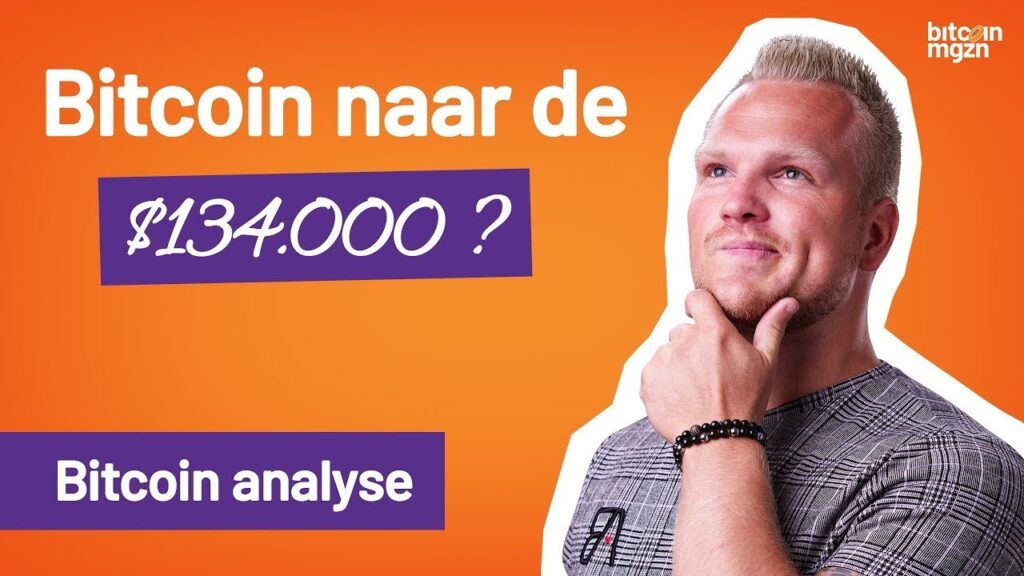
Bitcoin koers analyse: Nieuwe All Time High, maar wat zegt de grafiek?
@media (max-width: 700px) { .crypto-cta-banner { padding: 0 0 0 20px; font-size: 12px; } .crypto-cta-button { padding: 0 10px; font-size: 12px; } .crypto-desktop-text { display: none; } .crypto-mobile-text { display: block; } } @media (min-width: 701px) { .crypto-mobile-text { display: none; } } Connect met Like-minded Crypto Enthusiasts! Connect op Instagram! Check onze Instagram De Bitcoin koers brak opnieuw All Time Highs (ATH’s), maar in hoeverre houden deze stand? Terwijl BTC boven de $125.000 uitbrak, spreken steeds meer analisten van $150.000. Toch lijkt geopolitieke onrust en hype roet in het eten te gooien. In zijn nieuwe Bitcoin update neemt Elroy Heisterkamp ons mee in geopolitieke onrust, markthype en een nuchtere analyse. Check de video nu! Nieuwe All Time High: Bitcoin koers blijft verrassen De nieuwe All Time High van de Bitcoin kores zal voor veel HODL’ers als een soort déjà vu voelen. Geopolitieke onrust heerst op de aandelenmarkt, terwijl Bitcoin nieuwe hoogtes bereikt met een oktober hype. Toch lijkt hype meestal niet het laatste woord te hebben. Op de 4-uursgrafiek ziet Elroy een belangrijk patroon verschijnen. Hype of bulltrap: Wat moeten we verwachten? Uptober lijkt nu een begin te zijn van de weg naar $150.000. Toch zeggen steeds meer analisten dat het een bulltrap kan zijn. Is het een korte breakout voordat de bearmarkt begint? Elroy legt het uit terwijl hij naar de RSI en een belangrijk patroon kijkt. Hij ziet een belangrijk niveau om in de gaten te houden. Uit zijn analyse blijkt dat een enkele candle het verschil kan maken tussen winst en waarschuwing. In de tussentijd laat Elroy ook zien hoe banken toch nog vooroordelen hebben over Bitcoin. Hij benoemt hoe ABN AMRO een steek onder water uitdeelde in hun ‘money mindfulness’ campagne. In de video laat Elroy zien wat echt belangrijk is: de rust bewaren, je plan volgen en niet achter de hype aan rennen. Deze fase voelt als belangrijker dan eerdere pumps en lijkt de basis te vormen voor het rest van het jaar. Elroy neemt je in zijn uitgebreide analyse mee in verschillende factoren die de huidige markt voor Bitcoin kunnen maken en breken. Check het in de video! Het bericht Bitcoin koers analyse: Nieuwe All Time High, maar wat zegt de grafiek? is geschreven door Elroy Heisterkamp en verscheen als eerst op Bitcoinmagazine.nl.
Share
Author: Coinstats2025/10/13 16:16

DOGE Powers Micro-Payments While SPX6900 Rides Meme Momentum – $BZIL Vault Strategy Makes It the Best Meme Coin To Buy Now
Best meme coin to buy now, interest spikes when Bitcoin cools after a record week. Fresh ETF flow updates show […] The post DOGE Powers Micro-Payments While SPX6900 Rides Meme Momentum – $BZIL Vault Strategy Makes It the Best Meme Coin To Buy Now appeared first on Coindoo.
Share
Author: Coindoo2025/10/13 16:15

Financial Writer Robert Kiyosaki Comments on the Latest Cryptocurrency Drop: “I’ll Be Buying These From Now On”
The post Financial Writer Robert Kiyosaki Comments on the Latest Cryptocurrency Drop: “I’ll Be Buying These From Now On” appeared on BitcoinEthereumNews.com. Robert Kiyosaki, the renowned author known for his book “Rich Dad Poor Dad” on financial freedom, announced that he supports US President Donald Trump’s policy of opening 401k retirement plans to alternative assets. Kiyosaki described Trump’s policy, which now allows 401k funds to be used in “alternative investments,” including real estate debt, physical gold and silver, and cryptocurrencies like Bitcoin and Ethereum, as a “get rich opportunity.” He said the move will allow more people to achieve financial security and extend the retirement years of the “baby boomer” generation. The author claimed that traditional stock and bond markets were controlled by “wealthy investment bankers,” and that this system profited from working-class 401k savings. Kiyosaki also noted that even renowned investor Warren Buffett acknowledged the financial hardships faced by baby boomers and the fact that inflation was eroding the purchasing power of 401k accounts. Kiyosaki stated that he has never held a 401k, mutual fund, or ETF, and that he makes his investments from the perspective of a business owner and a cash flow quadrant investor. The renowned author concluded his speech by saying, “I will continue to purchase gold, silver, Bitcoin, Ethereum, oil, and real estate.” *This is not investment advice. Follow our Telegram and Twitter account now for exclusive news, analytics and on-chain data! Source: https://en.bitcoinsistemi.com/financial-writer-robert-kiyosaki-comments-on-the-latest-cryptocurrency-drop-ill-be-buying-these-from-now-on/
Share
Author: BitcoinEthereumNews2025/10/13 16:13

Kiyosaki Backs Trump’s 401(k) Move, Plans to Buy More Bitcoin and Ethereum
Kiyosaki praised Trump’s decision to include crypto in 401(k) plans, vowing to expand his investments in Bitcoin, Ethereum, and other hard assets. The post Kiyosaki Backs Trump’s 401(k) Move, Plans to Buy More Bitcoin and Ethereum appeared first on Coinspeaker.
Share
Author: Coinspeaker2025/10/13 16:07