- Quick Buy/SellBuy & sell with cards and mobile payments
- P2PTrade with local payments at best prices
- Fiat DepositDeposit in BRL, COP, EUR, and more
- Global Bank TransferBuy and sell via local banks
- MEXC CardSpend your crypto worldwide
- SpotBuy and sell crypto with ease
- RealStocksTrade top US equities directly with crypto
- ConvertSwap hot tokens instantly with 0 fees
- Pre-MarketGet in early before official listings
- MX ZoneUnlock exclusive perks with MX
- Spot DCASteady growth through ups and downs
- Spot GridBuy low and sell high 24/7
- Meme+Discover on-chain gems early
- On-ChainYour unified hub for discovering, trading, and managing on-chain assets
- USDT-MPerpetual Futures settled in USDT
- USDC-MPerpetual Futures settled in USDC
- USD1-MPerpetual Futures settled in USD1
- Coin-MPerpetual Futures settled in other cryptos
- Futures EarnEarn up to 20% APR on your Futures funds
- AI StrategyConvert ideas into strategic action
- Grid TradingCapture volatility with automated trading
- Copy Trade × AIFollow seasoned traders or strategize with AI
- Demo TradingSimulate Futures trading risk-free
- Futures OverviewExplore Futures tools, products, and features
- GOLD Futures24/7 access to top liquidity & leveraged power
- OIL Futures24/7 access to top liquidity & leveraged trading
- SILVER FuturesTrade with 0 fees, top liquidity, and flexible leverage.
- BTC FuturesMarket's lowest fees and high leverage
- ETH FuturesMarket's lowest fees and high leverage
- ZEC Futures SurgeEnjoy 0 fees, up to 150× leverage, and top position capacity at 21×+ leverage
- MEXC EarnEarn high APR on your crypto
- Hold and EarnHold assets and earn interest daily
- Futures EarnEarn on balance and unlock higher APR as you trade
- On-Chain EarnEasy staking. Real on-chain yield
- MEXC LoansBorrow instantly at competitive rates
- Rewards HubGet started with $10,000 in bonuses
- Event CenterHigher rewards, 0 fees
- Invite and EarnInvite friends and earn 140 USDT each
- $500K BTC CarnivalWin up to 1 BTC & more!
- LaunchpadAccess top tokens early or at a discount
- Airdrop+Deposit and trade to claim new airdrops
- KickstarterHold MX to earn new tokens
- RealStocks PNL Rate LeaderboardTrade $100 to win up to $10,000 in stock rewards
- 0 FeesTrade hot futures, enjoy limited 0 fees
- Futures M-DayTrade Futures and claim daily rewards
- Futures Loss Coverage PlanGet triple protection and win $5,000 in XAUT
- Referral ProgramInvite friends and unlock commissions from 40%
- Affiliate ProgramTop-tier affiliate commissions up to 70%
- MEXC VVIPM-Score into Wealth, 10+ Elite Benefits Upgrading
- MEXC × TradingViewConnect MEXC to trade directly on TradingView
- Crypto NewsFollow the latest crypto headlines
- AnnouncementsStay on top of every happening on MEXC
- LearnStrong crypto fundamentals for every beginner
- MEXC InstitutionalTailored solutions for institutional clients
Why Are Memory Chip Stocks Falling Despite Strong AI Demand?
Memory chip stocks have fallen sharply even though demand for AI memory, DRAM and enterprise storage remains strong. The selloff does not necessarily mean the current memory shortage has ended. It reflects concerns that record profits, tight supply and strong AI demand were already priced into share valuations.
During the recent decline, Micron Technology fell 4.8%, while Samsung Electronics also closed lower despite forecasting record quarterly profit. The negative reaction shows that investors are no longer satisfied with strong results alone—they want evidence that the exceptional earnings cycle can continue beyond 2027.
Eligible investors can follow the latest Micron stock price on MEXC RealStocks as the market reassesses the durability of the memory-chip boom.
Strong Earnings Were No Longer Enough
Memory manufacturers entered the selloff after a substantial AI-driven rally. Expectations for high-bandwidth memory, server DRAM and enterprise SSD demand had already lifted profit forecasts and stock valuations.
That created a difficult earnings setup. When investors have priced in record profits, merely reporting strong numbers may not produce another rally. Results must exceed increasingly aggressive expectations and provide evidence that pricing power will remain unusually strong for several more years.
Samsung’s record profit forecast failed to lift the sector because investors focused on whether the result was strong enough relative to expectations. The reaction suggests that the market is shifting from rewarding current earnings growth to questioning the longevity of the cycle.
High Treasury Yields Are Compressing Technology Valuations
The memory-stock decline has also been amplified by rising U.S. Treasury yields and higher oil prices.
Higher oil prices increase inflation concerns, making it more difficult for the Federal Reserve to loosen monetary policy. Rising Treasury yields then increase the return available from lower-risk assets and reduce the present value investors assign to future corporate earnings.
This matters for memory stocks because much of their valuation depends on profits expected from future AI infrastructure spending. When the discount rate rises, investors become less willing to pay a high multiple for earnings that may arrive several years later.
AI infrastructure also requires enormous amounts of financing. If technology companies must issue more debt to fund data centers, higher borrowing costs can make investors more selective about which projects will generate acceptable returns.
The Memory Market Is Splitting Into Two Different Cycles
The sector’s fundamentals are not uniformly weak. AI-related memory remains much stronger than consumer memory.
Industry research projects continued price increases for conventional DRAM and NAND Flash during the fourth quarter of 2026. Enterprise SSD demand is particularly strong because cloud companies continue expanding infrastructure for AI inference, real-time retrieval and data storage.
Consumer demand is less convincing. PC and smartphone manufacturers are relying on existing inventories, limiting new purchases and reducing memory capacity in some mainstream devices to control costs.
This creates an important divide. HBM, server DRAM and enterprise SSD suppliers can still benefit from tight AI-related supply, while client SSD and mobile-memory demand may weaken under pressure from high prices.
Investors are therefore no longer treating every storage-chip company as an equal AI beneficiary. Product mix, customer exposure and the ability to maintain pricing power are becoming more important.
Future Supply Is More Important Than Today’s Shortage
Memory stocks usually turn before the physical chip market does. Share prices can decline while memory prices are still rising because investors are attempting to anticipate the next change in supply and demand.
Micron has indicated that memory markets could remain supply-constrained through 2027 and 2028. At the same time, Micron, Samsung and SK Hynix are expanding capacity to serve AI customers.
These factories require years to build and qualify, so they may not resolve the immediate shortage. However, the stock market is already asking what happens when new capacity arrives.
If AI demand continues growing faster than supply, current weakness may prove to be a valuation correction. If capacity growth catches up while AI spending slows, memory prices and profit margins could fall much faster than investors currently expect.
MEXC View: This Is a Valuation Reset, Not Yet a Demand Collapse
MEXC’s view is that the recent selloff reflects a change in the price investors are willing to pay for the memory upcycle, rather than clear evidence that AI memory demand has collapsed.
The most important signal is not whether current DRAM or NAND prices remain high. It is whether future contract-price growth begins to slow as new production capacity approaches.
The bearish interpretation would gain credibility if AI companies reduce infrastructure spending, enterprise-memory orders weaken or manufacturers accelerate supply faster than demand. The correction would look more temporary if enterprise demand remains firm, contract prices continue rising and Treasury yields retreat.
For traders, the key distinction is between deteriorating fundamentals and lower valuation multiples. The two can produce similar short-term price declines, but they imply very different longer-term outcomes.
FAQ
Why is Micron stock falling despite strong earnings?
Strong earnings were already widely expected after the stock’s AI-driven rally. Investors are now focusing on whether pricing power and profit margins can remain elevated as manufacturers expand capacity.
Has the memory-chip shortage ended?
Current evidence does not show a broad end to the shortage. AI-related HBM, server DRAM and enterprise SSD demand remains strong, while consumer memory is experiencing greater resistance to high prices.
Are memory chip stocks still connected to the AI trade?
Yes. Their outlook depends heavily on data-center construction, AI accelerator shipments and demand for high-bandwidth and server memory. Concerns about the financial returns from AI spending can therefore pressure memory stocks quickly.
What should investors monitor next?
The most useful indicators are memory contract-price growth, enterprise orders, AI capital expenditure, new production capacity and U.S. Treasury yields.
Risk Warning
Memory chip stocks are cyclical and can move before industry fundamentals visibly change. Strong current demand does not guarantee future margins, while a share-price decline does not necessarily confirm an immediate industry downturn. Company execution, capacity expansion and macroeconomic conditions may materially change the outlook.
You May Also Like
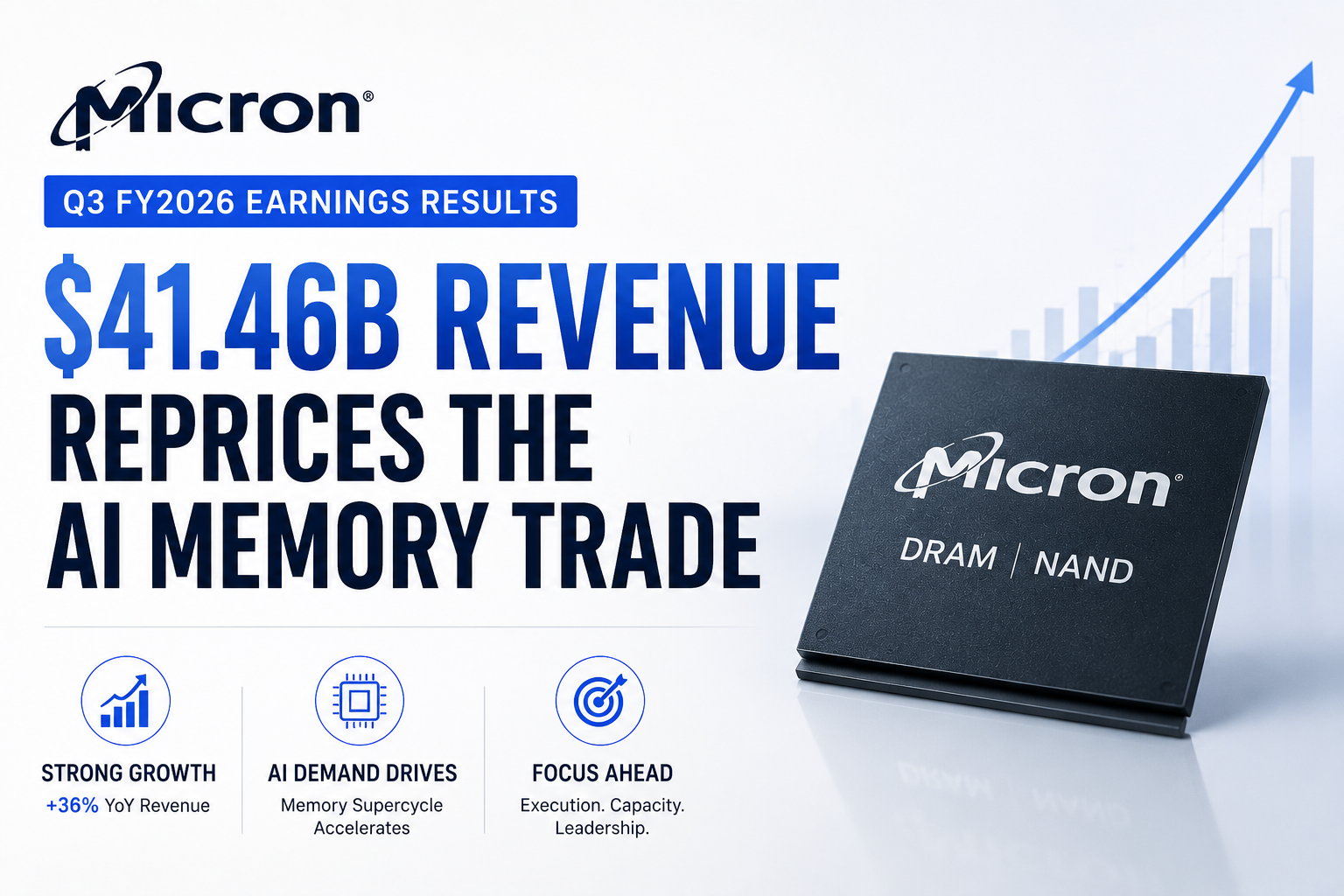
Micron Q3 2026 Earnings Results: $41.46B Revenue Reprices the AI Memory Trade

USDC MiCA: Is Europe Raising the Bar for Stablecoins?