

👨🏿🚀TechCabal Daily – Zenith Bank is now in Kenya
Happy pre-TGIF. 
In case you forgot, Zikoko’s HERtitude is coming up on April 11!
This Saturday, all the cool women in tech and beyond will gather at HERtitude, the annual women-only party hosted by our sister publication, Zikoko. Lots of games, music, and women-themed events are in store for you.
All you need to do is secure a ticket.
This year’s theme, Main Character Energy, celebrates all women as the main characters of their own lives and sets the tone for a room full of women who want to be present and seen. You do not want to miss the biggest women-only party of the year!
Save 15% on tickets when you enter the code “BESTIE15”
Secure your tickets here.
- Zenith Bank acquires Kenya’s Paramount Bank
- Changes at KRA
- GTCO’s HabariPay grows profit more than twofold
- Nigeria’s tax collection in Q4 2025
- World Wide Web 3
- Events
Companies
Zenith Bank is now in Kenya
 Image Source: Zenith Bank
Nigeria’s tier-1 bank, Zenith Bank, has completed the full acquisition of Paramount Bank, a Kenyan lender, and will now be operational within the country. Previously, in January 2026, Zenith secured approval from the Competition Authority of Kenya (CAK), the country’s competition and fair market regulator, for the deal.
Its entry into Kenya comes at an unprecedented time when lenders, big and small(er), are finding their way to the East African country. Access Bank, a Nigerian tier-1 bank, acquired the National Bank of Kenya (NBK) in 2025 to deepen its existing presence in the country. Nigerian microfinance bank and fintech unicorn, Moniepoint, acquired Kenya’s Sumac Microfinance Bank in March. Several other banks are circling, including South Africa’s FirstRand, whose CEO Mary Vilakazi said “We’d like to go to Kenya” in 2025, and Nedbank, which is in theprocess of acquiring a 66% stakein Kenya’s NCBA.
The Paramount acquisition gives Zenith 0.2% of the market: Paramount was ranked the 33rd out of 39 licenced banks in Kenya in terms of scale. It operated with a limited, specialised network, notably holding only eight branches at the time of its acquisition. According to the Kenyan lender, it served 150,000 clients, a mere footnote in Zenith’s own 60 million customers. In its last report before the acquisition, Paramount held KES 12.8 billion ($98.9 million) in customer deposits, far outclassed by the KES 1.48 trillion ($11.4 billion) recorded by KCB, Kenya’s largest bank by assets.
Between the lines: The numbers show the level of turnaround Zenith has to pull off at Paramount if it wants the Kenyan acquisition to justify the capital, regulatory risk, and management attention it’s throwing at the deal. Zenith reportedly paid over $7.7 million to acquire the bank and is expected to retain about 78 employees.
The rest of the Kenyan banking industry is dominated by local players, including Equity Group, KCB Bank, NCBA, and foreign players who acquired their way into the country, such as Nigeria’s Access Bank (NBK), GTCO (Fina Bank), and United Bank for Africa (UBA), the odd one out that had a greenfield launch in 2009.
Now, add fintechs to the mix: Banks, big and small, will rival each other to grow their share of the Kenyan banking‑aware population. Yet, telecom players (read: Safaricom and Airtel Kenya) will be staking their own claim to be the default rails for everyday payments. With Kenyans nowusing mobile money services more than ever before, operators will be looking to keep them longer, luring them with credit, savings, and insurance, and steadily chipping away at banks’ relevance. Traditional fintechs, too, are not out of the mix; PalmPay also operates in the country, making payments a race to the top.
20+ Markets. One API.

Fincra connects your business to Africa’s payment rails without building market by market. For collection, payout, FX, and settlement through a single integration. See what this means for your business.
companies
Kenya replaces tax chief Humphrey Wattanga in leadership shake-up
 Humphrey Wattanga. Image source: KRA
Kenya’s tax authority is switching leadership at a delicate moment. The Kenya Revenue Authority (KRA) has declined to renew the contract of its Commissioner General, Humphrey Wattanga, sending him on immediate terminal leave after just over two years in office.
Wattanga, a Harvard-trained tax expert appointed in 2023, had been tasked with fixing underperforming revenue collection and pushing internal reforms. His tenure coincided with growing pressure on the agency to meet ambitious government targets amid rising debt and a tough economic environment.
Between the lines: The KRA board, chaired by Ndiritu Muriithi, did not give a reason for the decision but named Lilian Nyawanda, head of customs and border control, as acting Commissioner General pending a competitive recruitment process. Nyawanda inherits an agency under scrutiny from both the private sector, over aggressive enforcement, and the government, which is relying heavily on tax revenues to fund its budget.
Wattanga is not leaving public service entirely. Hours after his exit, President William Ruto nominated him as Kenya’s High Commissioner to South Africa, part of a routine cycle of diplomatic appointments across Kenya’s foreign missions that will require parliamentary approval.
Zoom out: Wattanga’s exit signals a potential recalibration of Kenya’s tax strategy under William Ruto’s administration. Whether Nyawanda maintains the current enforcement-heavy approach or softens it to ease pressure on businesses will determine how investors and operators assess Kenya’s operating environment in the months ahead.
HERtitude, Zikoko’s annual women-only party, is happening this Saturday, April 11.

Over the past four years, Zikoko has created a safe space for women to gather, connect, bond, and party. The fifth edition is set to be the biggest, with an OPay shopping zone, DJ Performances, a fashion show, games, and dancing. Save 15% on tickets with the code “BESTIE15”. Secure your tickets here.
companies
GTCO’s HabariPay grows its profit more than twofold in 2025
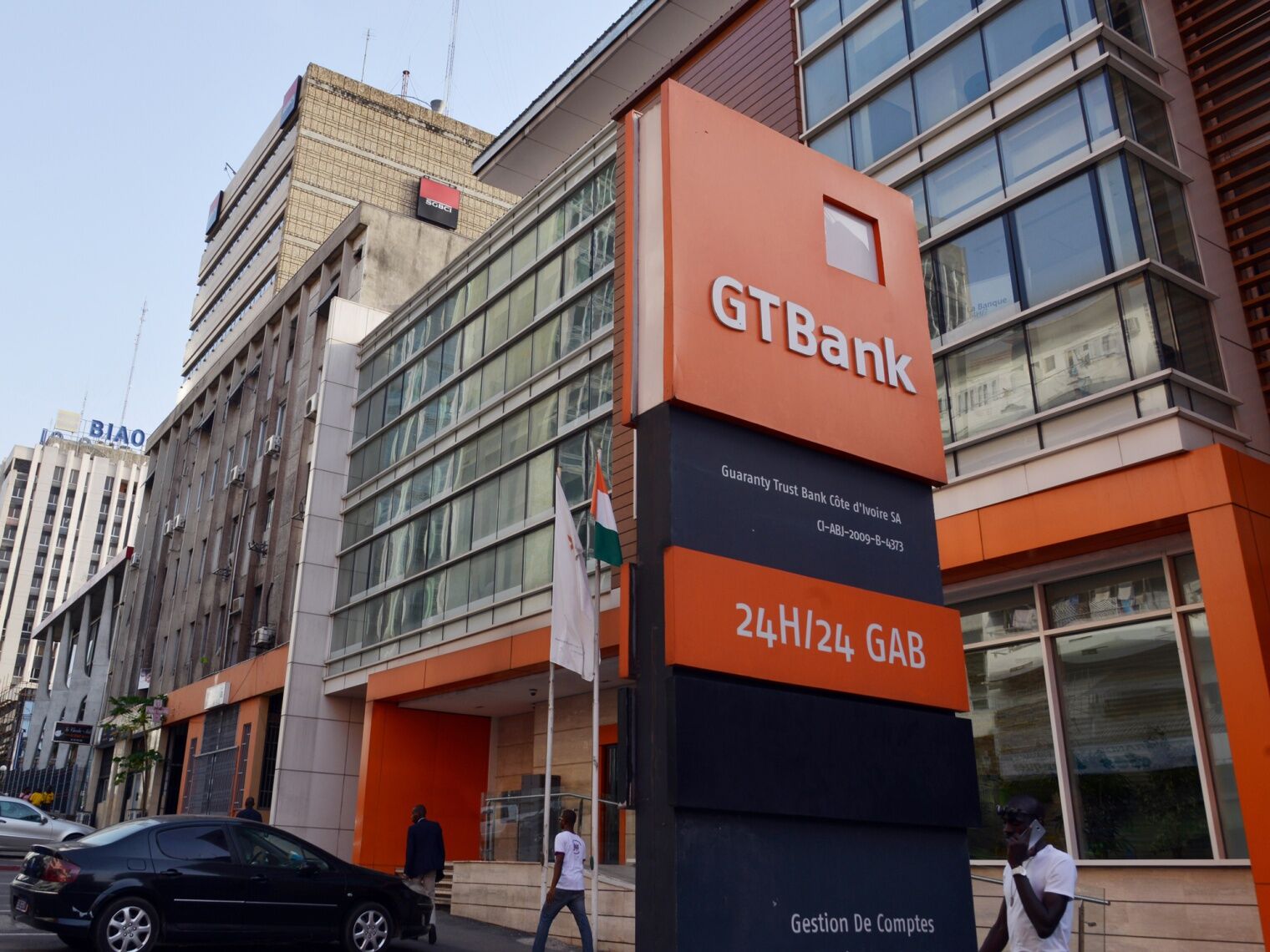 Image source: Getty Images.
Guaranty Trust Holding Company (GTCO), a Nigerian tier‑1 banking group that owns Guaranty Trust Bank, is leaning harder on its payments arm for growth. HabariPay, the subsidiary behind Squad, recorded ₦9.74 billion ($7 million) in profit in 2025, up from ₦3.83 billion ($2.8 million) the previous year, as merchants and consumers pushed more transfers and card payments through its rails.
HabariPay is GTCO’s most profitable non‑bank business and one of the most profitable stand‑alone bank‑owned fintechs in Nigeria.
We should pay more attention to Nigerian bank-owned fintechs. Access Holdings, the non‑operating parent of tier-1 lender Access Bank, is further back on absolute profit, but closing in on growth.
In the nine months to September 2025, Access Bank’s payment segment—Hydrogen—generated ₦6.2 billion ($4.5 million) in revenue and ₦1.2 billion ($871,000) in profit before tax (PBT), slightly below the ₦6.8 billion ($4.9 million) revenue and ₦1.5 billion ($1.1 million) PBT it posted in the same period of 2024. The bank’s digital lending (Oxygen X) and pensions segments also help diversify Access’s earnings beyond interest on loans.
Zoom out: HabariPay and Access-owned Hydrogen are proof that bank‑backed fintechs can throw off billions in profit and evidently compete with traditional fintechs. Keeping that performance steady—and even scaling it—while holding margins in check could blunt the “speed” argument of traditional fintechs, particularly if customers keep flocking in at a similar pace.
TAX
Nigeria’s Q4 2025 tax collection result tells two stories
 Image source: Tenor
In the fourth quarter of 2025, Nigeria’s Value Added Tax (VAT) collections and Company Income Tax (CIT) collections dropped quarter-on-quarter, according to the country’s Bureau of Statistics.
People are still spending: VAT, which tracks and collects from everyday spending, reduced by 3.78% to ₦2.19 trillion ($1.5 billion) from the ₦2.28 trillion ($1.65 billion) in the previous quarter. Although it declined, it shows that people are still making purchases and transactions, just a bit more cautiously.
Companies are struggling: CIT fell sharply by 49.81% to ₦1.49 trillion ($1.08 billion) in Q4 from ₦2.96 trillion ($2.1 billion) in Q3 2025. CIT usually tracks corporate profitability and taxable earnings, and such a sharp decline suggests that companies are under a different kind of pressure, ranging from lower earnings to delayed remittances.
Why this matters: This split was happening just before Nigeria fully settled into its new tax regime that took effect in 2026. So these numbers feel like a checkpoint about what things looked like before the rules tightened and compliance expanded. If reforms work, we might see stronger collections driven by a wider tax base and fewer quarterly drops.
CRYPTO TRACKER
The World Wide Web3
Source:

|
Coin Name |
Current Value |
Day |
Month |
|---|---|---|---|
| Bitcoin | $70,874 |
– 0.95% |
+ 1.46% |
| Ether | $2,179 |
– 2.91% |
+ 6.93% |
| XRP | $1.32 |
– 3.28% |
– 3.38% |
| Solana | $81.91 |
– 3.39% |
– 4.61% |
* Data as of 05.34 AM WAT, April 9, 2026.
Events
 The voices shaping Africa’s digital future are taking the stage. From AI and IoT to cloud, connectivity and smart infrastructure, IOT West Africa | Data Centre & Cloud Expo Africa 2026 brings together the leaders building the continent’s next digital chapter. This is where the ecosystem meets, and we’ll see you there. The event kicks off on April 28–30 at the Landmark Centre, Victoria Island, Lagos. Register here to attend.
- All roads lead to Nairobi on May 7, 2026. Gathered at the Sarit Expo Centre, senior leaders from across Africa’s fintech and payments ecosystem will gather for a day of meaningful connections, market insights, and cross-border collaboration. The focus of the Africa Fintech Live event is on driving real engagement, bringing together industry leaders and emerging innovators to spark strategic conversations that will shape the future of finance on the continent. Secure your early bird ticket now at 50% off.
- My Life In Tech: Irene Mwendwa wants to prove the internet’s design is a women’s rights issue
- African startups raised over $700M in Q1 2026
- GSH to acquire majority stake in Uganda’s AKIBA to deepen tokenisation push
Written by: Emmanuel Nwosu and Opeyemi Kareem
Edited by: Emmanuel Nwosu and Ganiu Oloruntade
Want more of TechCabal?
Sign up for our insightful newsletters on the business and economy of tech in Africa.
- The Next Wave: futuristic analysis of the business of tech in Africa.
- Francophone Weekly by TechCabal: insider insights and analysis of Francophone’s tech ecosystem
P:S If you’re often missing TC Daily in your inbox, check your Promotions folder and move any edition of TC Daily from “Promotions” to your “Main” or “Primary” folder and TC Daily will always come to you.



You May Also Like
Diamondback Energy (FANG) Stock Surges on Mizuho’s Top Pick Endorsement Before Pullback

The Nationwide Tug-of-War over Prediction Markets




