

Finestel Report: Pros Brace for Bitcoin’s February 2026 Crash, Will BTC Recover?
Finestel report shows pros braced for Bitcoin’s February 2026 crash: will BTC recover?
Finestel’s desk data suggests professional traders shifted into protection before Bitcoin’s major February break, and the recovery case now depends on whether structure, liquidity, and sentiment improve together rather than in isolation.
What the Finestel report says about a possible February 2026 Bitcoin crash
Finestel’s January report says a defensive rotation started on January 15, 2026, with tracked stablecoin allocation moving from 5.2% to 18.5% and then 28.4% by month-end, while the same report framed the close near $77,195 as a structural breakdown into February.
Finestel’s February report later recorded a 14.01% single-day drop on February 5, from around $73,000 into the low $62,000s, and a monthly close near -12.8%, which supports the report’s scenario framing but does not make any forward crash call certain.
Key Takeaways
- Before the February break, Finestel says stablecoin allocation climbed from 5.2% to 28.4% in under a month.
- The drawdown included a 14.01% daily slide and a roughly 12.8% monthly decline.
- Recovery structure is defined by 210,000+ BTC accumulated around $66k-$68k and repeated rejection at $74,500.
Scope is important: Finestel’s percentages come from its own tracked manager set, and claims that this dataset fully represents all professional venues remain unproven, according to unconfirmed reports and the absence of an independently auditable public cross-venue allocation dataset.
Why market professionals may be positioning defensively on BTC
In plain terms, defensive positioning means reducing directional risk and buying protection, and that pattern matches the linked data from Finestel’s stablecoin rotation and Reuters-cited options activity around $60,000-$50,000 strikes for February 27.
The same Reuters-syndicated coverage says BTC bounced back above $70,000 after touching $60,017.60, while the latest Fear & Greed Index sits at 14 (Extreme Fear), a combination that keeps downside hedging rational even after a rebound.
Finestel attributes the January-February stress primarily to macro repricing and liquidity shocks rather than a single finalized rule change, and that caution aligns with coinlineup.com’s recent focus on uneven risk appetite in its latest BlockDAG and SHIB market-rotation coverage.
Will Bitcoin recover after a sharp correction? Signals to watch
The current baseline in this report is Bitcoin near $72,149, up about 1.13% on a 24-hour view, with market capitalization near $1.44 trillion and 24-hour volume around $32.76 billion.
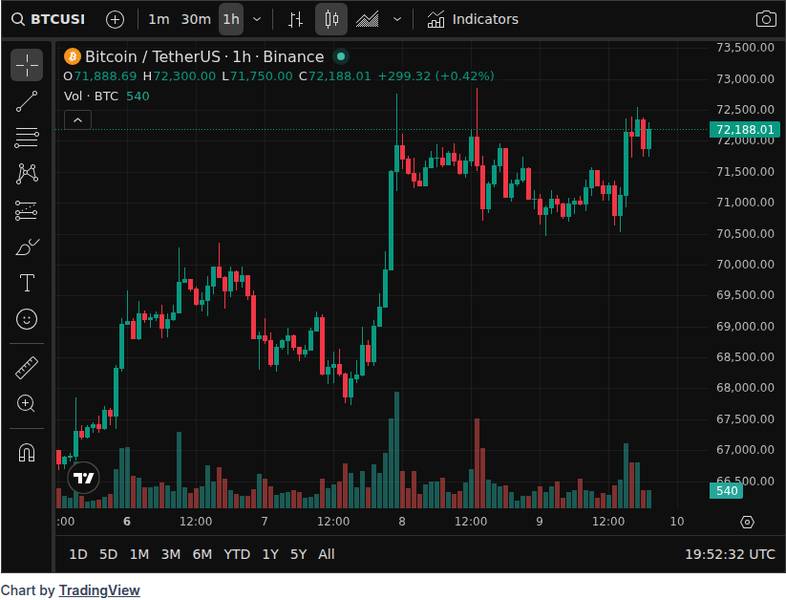 CoinGecko market data view included to frame the latest move in bitcoin.
Finestel’s March report says more than 210,000 BTC accumulated in the $66k-$68k zone, but $74,500 was rejected three times, so the data points to a floor-and-ceiling recovery structure rather than a confirmed trend reversal.
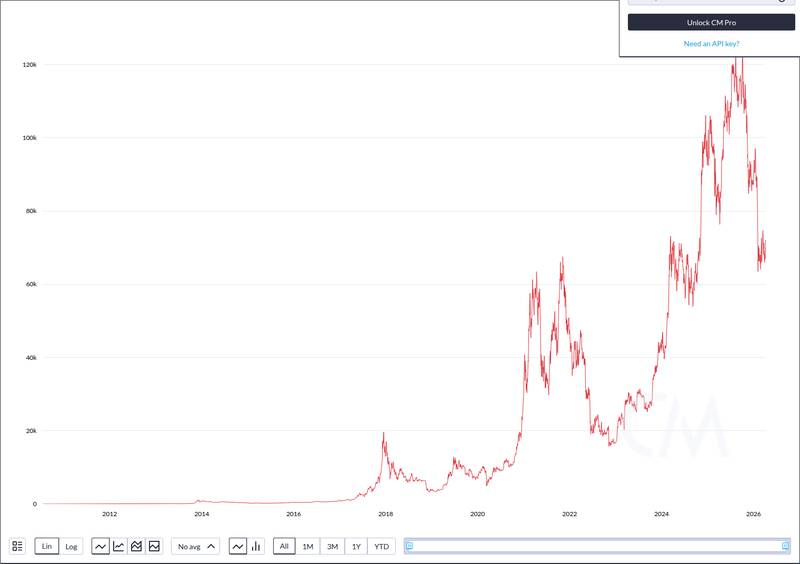 CoinMetrics blockchain-data panel highlighting the structural trend discussed for bitcoin.
Short-term recovery confirmation would be a sustained reclaim above $74,500 with stronger turnover than the current 24-hour volume baseline, while medium-term recovery depends on holding the $66k-$68k demand band and improving risk sentiment from the present 14 reading.
If that support band fails, the Reuters-reported swing low near $60,017.60 becomes the next obvious downside reference, which is why readers tracking coinlineup.com’s on-chain activity coverage and the broader Bitcoin market desk should treat recovery timing as uncertain rather than guaranteed.
Disclaimer: This content is for informational purposes only and is not investment advice.
Disclaimer: This article is for informational purposes only and does not constitute financial or investment advice. Cryptocurrency and digital asset markets carry significant risk. Always do your own research before making decisions.


You May Also Like

Trump admin tables new crypto 401(k) plans. President's 'Wall Street buddies' are the winners, critics say

The Best Online Gambling Site: Why Spartans.com Completely Dominates Stake, Roobet, Rainbet & Bet365




