

U.S. Dollar Plummets: Iran Ceasefire Hopes Erode Critical War Premium, Sending Currency to Six-Week Lows
BitcoinWorld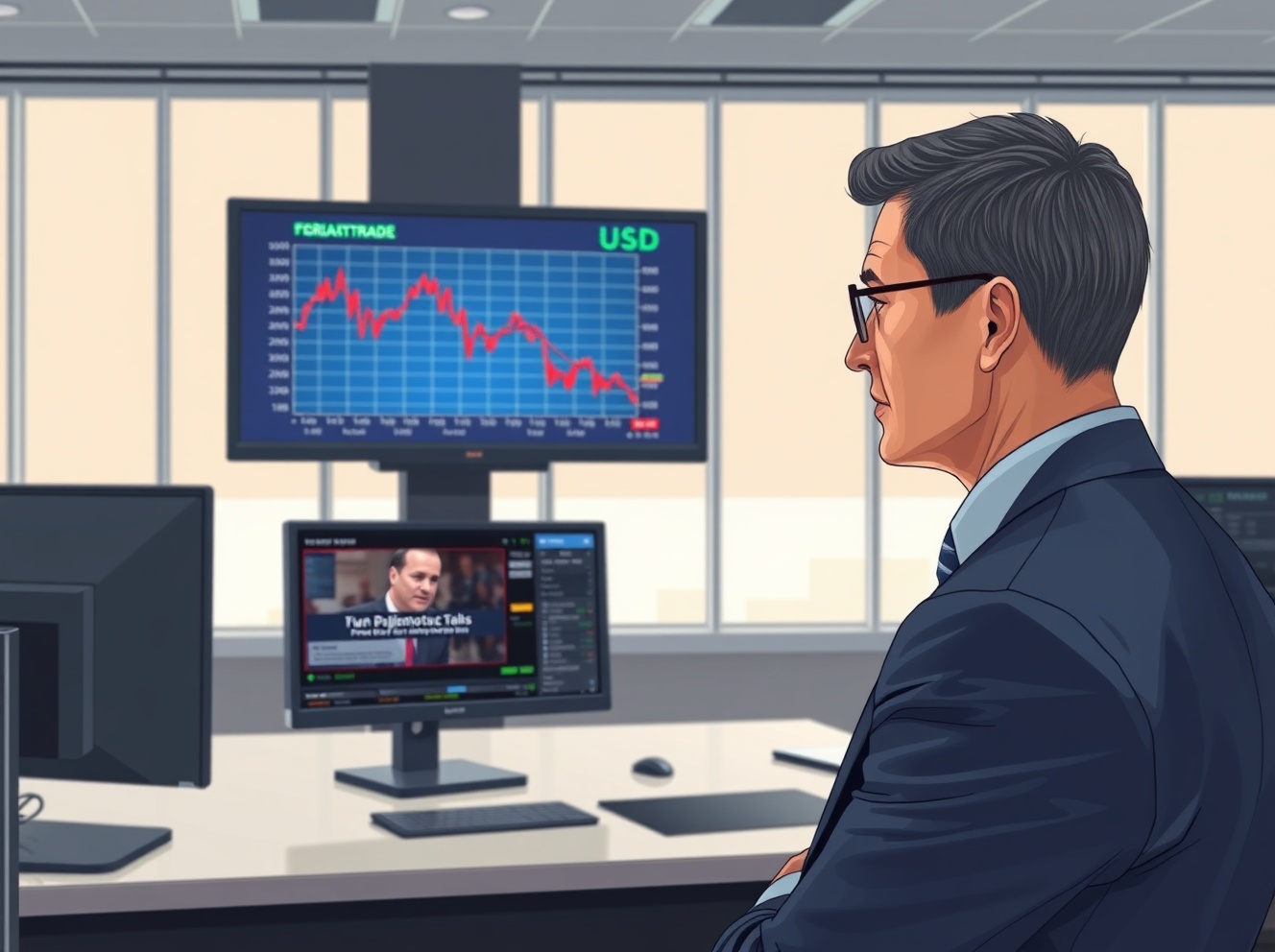
U.S. Dollar Plummets: Iran Ceasefire Hopes Erode Critical War Premium, Sending Currency to Six-Week Lows
NEW YORK, April 2025 – The U.S. dollar is trading near six-week lows against a basket of major currencies, a significant shift driven by rising diplomatic optimism. Specifically, hopes for a potential ceasefire in the ongoing Middle East conflict are actively eroding the geopolitical risk premium that has bolstered the greenback for months. This development signals a pivotal moment for global currency markets, which are now recalibrating based on changing perceptions of safety and stability.
U.S. Dollar Faces Sustained Pressure from Geopolitical Shifts
Market analysts are closely tracking the dollar’s trajectory on the DXY index. The index, which measures the dollar against six major peers, recently touched its weakest level since late February. Consequently, this decline reflects a broader market narrative where perceived reductions in geopolitical risk diminish the dollar’s traditional appeal as a safe-haven asset. Historically, the currency gains during periods of global uncertainty as investors seek its relative stability. However, the prospect of de-escalation triggers a reverse flow of capital.
Furthermore, the shift is not isolated. It interacts with other fundamental factors, including Federal Reserve policy expectations and global growth forecasts. For instance, a less tense geopolitical landscape may allow central banks elsewhere to maintain or even tighten monetary policy, reducing the dollar’s interest rate advantage. This complex interplay creates a challenging environment for forex traders who must weigh multiple, sometimes conflicting, signals.
Understanding the “War Premium” in Currency Valuation
The term “war premium” refers to the additional value markets assign to an asset perceived as safer during times of conflict or heightened geopolitical risk. For the U.S. dollar, this premium manifests through several channels. Primarily, global investors and central banks increase their holdings of U.S. Treasuries and dollar-denominated assets. This flight-to-quality dynamic boosts demand for the currency, thereby supporting its exchange rate.
Several key indicators typically signal a elevated war premium:
- Strong Inverse Correlation: The dollar rises when global equity markets and riskier assets fall.
- Surge in Treasury Purchases: Increased foreign buying of U.S. government debt.
- Volatility Suppression: Reduced volatility in dollar pairs despite turmoil elsewhere.
- Outperformance vs. Commodities: The dollar strengthens even if oil prices spike due to supply fears.
The current market action suggests this premium is deflating. As diplomatic efforts gain traction, the immediate fear driving capital into dollars is receding. This process unleashes a wave of selling pressure as positions built on geopolitical anxiety are unwound.
Expert Analysis: A Fragile Recalibration
Financial strategists emphasize the fragility of this market move. “Markets are pricing in a best-case diplomatic scenario,” notes Dr. Anya Sharma, Chief Currency Strategist at Global Macro Advisors. “The dollar’s decline reflects hope, not yet a concrete outcome. Our models show that approximately 2.5% of the DXY’s value over the past quarter was directly attributable to Middle East risk premiums. A full normalization of relations could see that unwind completely, but any setback in talks would prompt a swift reversal.” This analysis highlights the binary nature of the current price action, which remains highly sensitive to headlines.
Broader Impacts on Global Finance and Trade
A weaker U.S. dollar carries significant implications for the global economy. Firstly, it makes American exports more competitive, potentially boosting U.S. manufacturing and agriculture sectors. Conversely, it increases the cost of imports, contributing to domestic inflationary pressures—a key consideration for the Federal Reserve.
Internationally, the effects are multifaceted:
| Region/Asset | Impact of Weaker USD |
|---|---|
| Emerging Markets | Eases debt servicing costs for dollar-denominated loans; reduces capital outflow pressures. |
| Euro & Japanese Yen | Major currencies like the EUR and JPY typically appreciate, challenging their export economies. |
| Gold & Commodities | Prices often rise as they become cheaper for holders of other currencies, though oil may face conflicting pressures from increased supply hopes. |
| Global Corporations | U.S. multinationals see translated overseas earnings decrease, while foreign firms gain a cost advantage. |
Therefore, the currency’s movement acts as a transmission mechanism, distributing the economic consequences of geopolitical change across borders.
Historical Context and the Path Forward
This is not the first time geopolitical developments have driven major forex volatility. For example, the dollar experienced similar “premium erosion” during de-escalation phases in the Ukraine conflict in 2023 and after the initial Iran nuclear deal talks in 2015. The speed and magnitude of the current move, however, are amplified by today’s highly algorithmic and sentiment-driven markets.
Looking ahead, traders will monitor several catalysts. Progress in ceasefire negotiations will be paramount. Simultaneously, U.S. economic data, especially inflation and employment figures, will regain prominence in driving the dollar’s path as the geopolitical fog potentially clears. The Federal Reserve’s communications will be scrutinized for any acknowledgment of how reduced global risk might influence its policy trajectory.
Conclusion
The U.S. dollar‘s slide to six-week lows underscores the profound and immediate impact of geopolitics on modern finance. The fading war premium amid Iran ceasefire hopes demonstrates how currency values are as much a reflection of global risk perception as they are of economic fundamentals. While the trend suggests a market betting on peace, its sustainability hinges entirely on diplomatic outcomes. For investors and policymakers alike, the episode serves as a powerful reminder of the intricate link between global stability and capital flows.
FAQs
Q1: What is the “war premium” for a currency?
The war premium is the extra value or strength a currency, like the U.S. dollar, gains because investors view it as a safe place for their money during international conflicts or periods of high geopolitical risk. It’s not based on economic performance but on fear and the search for stability.
Q2: Why would hopes for an Iran ceasefire weaken the U.S. dollar?
Ceasefire hopes reduce the perceived level of global risk. Investors then feel less need to park their money in safe-haven assets like the dollar. This leads to selling of dollars and buying of riskier investments, which pushes the dollar’s value down.
Q3: What is the DXY index?
The U.S. Dollar Index (DXY) is a measure of the value of the United States dollar relative to a basket of six major world currencies: the Euro, Japanese Yen, British Pound, Canadian Dollar, Swedish Krona, and Swiss Franc. It’s a key benchmark for the dollar’s overall international strength.
Q4: Besides geopolitics, what other factors influence the U.S. dollar’s value?
The dollar is primarily influenced by U.S. interest rate policy set by the Federal Reserve, domestic economic data (like GDP growth and inflation), the U.S. trade deficit, and overall global investor sentiment towards risk versus safety.
Q5: How does a weaker U.S. dollar affect the average American?
A weaker dollar makes imported goods—from electronics to cars and clothing—more expensive, contributing to inflation. It can make foreign travel costlier. However, it can also help U.S. exporters by making their goods cheaper for foreign buyers, potentially supporting domestic manufacturing jobs.
This post U.S. Dollar Plummets: Iran Ceasefire Hopes Erode Critical War Premium, Sending Currency to Six-Week Lows first appeared on BitcoinWorld.


You May Also Like

Jane Street, CoreWeave Ink $6B AI Compute Deal

X Cashtags Add Real-Time Crypto Market Data




