African fintechs must prioritise systemic trust over simple fraud detection – Ayoola Afolabi
Africa’s digital financial revolution is transforming access for millions, but the rapid expansion of fintech has exposed a critical vulnerability: fraud is evolving faster than detection systems can adapt.
While advances in real-time analytics, event-driven systems, and machine learning have significantly improved detection capabilities, user trust remains fragile. The next frontier is not just smarter algorithms — it is designing financial systems where trust is embedded end-to-end.
This article introduces the TRUST-FX framework, a system-level architecture for fraud prevention that moves beyond reactive controls. By integrating data flows, decision engines, user experience, and continuous feedback, TRUST-FX enables fintechs to build platforms that are not only secure but resilient and user-centric.
As Africa’s financial ecosystem matures, the institutions that succeed will be those that treat trust as a core design principle — not an afterthought.
Africa’s digital financial ecosystem is expanding rapidly, bringing millions into formal financial systems for the first time. From mobile money to digital banks, access has improved significantly.
But alongside this growth is a quieter, more persistent issue — fraud is evolving just as quickly.
In Nigeria, fraud losses continue to rise even as detection systems become more sophisticated. Increasingly, attacks are shifting from high-volume, low-value attempts to more targeted, high-impact fraud.
From my experience working across fraud prevention workflows, this creates a tension many systems have not yet resolved:
If detection is improving, why does user trust remain fragile?
The limits of detection-led systems
Most fraud prevention strategies today are still built around detection.
These systems rely on rule-based engines, transaction monitoring frameworks, and machine learning models trained on historical patterns. Technically, the ecosystem has advanced. Real-time streaming architectures and low-latency scoring systems now enable institutions to detect anomalies in milliseconds.
But detection systems are inherently reactive.
They depend on what has already been observed. As fraud tactics evolve, models must be retrained, rules updated, and thresholds recalibrated. This creates a continuous lag — one that fraudsters exploit.
More importantly, these systems are rarely designed with the user experience in mind.
From the user’s perspective, fraud prevention often manifests as friction — unexplained declines, blocked accounts, and inconsistent decisions.
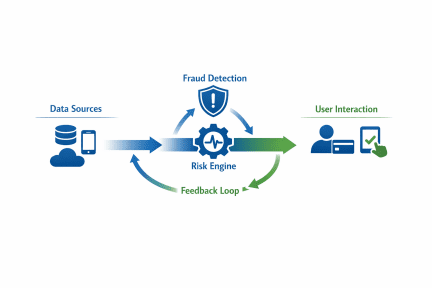 Figure 1: Evolution from detection-led systems to trust-led fraud architectures
From detection to system design
One of the key shifts I’ve observed in practice is that fraud prevention becomes significantly more effective when treated not as a control function, but as a system.
This requires thinking beyond alerts and rules, and instead designing how data flows, how decisions are made, and how users experience those decisions.
To make this approach practical, I describe it through the TRUST-FX framework — a modular, system-level architecture for building fraud prevention that is both technically effective and user-aware.
The TRUST-FX framework
T — Transaction & Telemetry Ingestion
R — Risk Scoring & Decision Engine
U — User Interaction & Trust Layer
S — Signal Feedback & Learning Loop
T — Threat Intelligence & Adaptation
F — Fraud Operations Orchestration
X — Cross-System Integration
Key Benefits of TRUST-FX
- Holistic fraud prevention
TRUST-FX integrates detection, decisioning, user experience, and feedback into a unified architecture — eliminating siloed controls. - Real-time adaptability
By ingesting live transaction and behavioural data, systems can dynamically respond to evolving fraud patterns. - User-centric trust layer
Fraud prevention is designed with the user in mind, reducing friction and improving transparency during critical interactions. - Continuous learning
Feedback loops enable ongoing model retraining and rule optimisation based on real-world outcomes. - Operational efficiency
Structured workflows improve response times, investigation quality, and overall fraud handling. - Cross-system integration
A unified view of risk ensures consistent decisions across payments, customer platforms, and core systems.
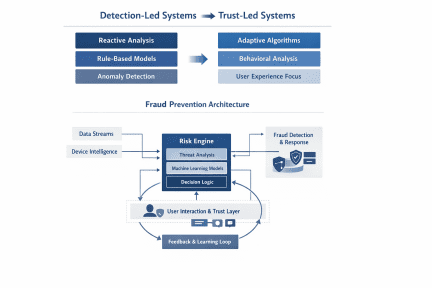 Figure 2: TRUST-FX architecture for integrated fraud prevention systems
Why this matters
Fraud prevention is no longer just about detection accuracy. It is about how systems are designed end-to-end — from data ingestion to user interaction.
In many cases, improving trust is not about catching more fraud, but about reducing unnecessary friction, improving transparency, and responding more effectively when issues occur.
The next phase of financial innovation in Africa will not be defined solely by growth, but by trust.
TRUST-FX provides a practical way for fintechs to design systems that are not only technically robust but also trusted by users — making fraud prevention a driver of both resilience and growth.
A shift in mindset
Fraud prevention must evolve from a reactive control function into a core part of system design. Because ultimately, the goal is not just to detect fraud. It is to build systems that users can trust — even when something goes wrong.
About the author
 Ayoola Afolabi, Fraud and Change Professional at Barclays UK
Ayoola Afolabi is a UK-based fraud-prevention and financial technology professional working at the intersection of data, risk intelligence and human judgement. Currently a Fraud and Change Professional at Barclays UK, he brings cross-market experience from Nigeria and the UK, with a focus on collaborative fraud-detection systems, smart data infrastructure and trust-building in financial services.
Read also: Fraudsters share playbooks, Nigeria’s fintechs do not; experts warn of losses


You May Also Like

68% of global BTC miners came from the U.S., Russia, and China, Q1 2026

Vodacom Tanzania Modernises M-Pesa With $28m Infrastructure Upgrade