Oil falls sharply after Iran signals Hormuz to be opened
- Brent falls 11%, WTI down 12%
- Iran says vessels to pass through until April 26
- Trump: US to get Iran’s enriched uranium
Oil prices tumbled after Iran said the Strait of Hormuz would be open during the remainder of a 10-day ceasefire between Lebanese group Hezbollah and Israel, easing concerns over global supply disruptions.
Brent crude prices plunged by 11 percent to around $89 a barrel shortly after the news, while the US benchmark West Texas Intermediate fell by 12 percent to $84.
Iran’s foreign minister Seyed Abbas Araghchi said all commercial vessels would be able to pass through the critical waterway until April 26.
About a fifth of the world’s oil and liquified natural gas and 80 percent of Iran’s exports are usually transported through the strait.
Traffic through the chokepoint has been at a near standstill since the US and Israel first launched attacks on Iran on February 28.
Stock markets in the US rose on the announcement. The Dow Jones gained 1.2 percent, while the Nasdaq edged 1 percent higher. Germany’s Dax and France’s CAC 40 both climbed 2 percent.
US President Donald Trump thanked Tehran in a post on his social media platform Truth Social.
But he added that a US naval blockade of the strait, which began on Monday, would remain “in full force” until a deal with Tehran is struck.
He claimed that this process “should go very quickly” as most points have been negotiated.
In a further Truth Social post, Trump said the US would get all of Iran’s enriched uranium and will prohibit Israel from bombing Lebanon further.
“This deal is in no way subject to Lebanon, either, but the USA will, separately, work with Lebanon, and deal with the Hezboolah [sic] situation in an appropriate manner. Israel will not be bombing Lebanon any longer,” Trump wrote.
Israel first struck Lebanon on March 2 following attacks from the Iranian proxy group Hezbollah.
A 10-day ceasefire between the two countries began on Thursday night.
A tenuous ceasefire between the US and Israel and Iran has been in place since April 8, but traffic through Hormuz remained severely hampered as Iran and the US trade reciprocal blockades.
The US and Iran failed to strike a peace deal last weekend during tense negotiations in Pakistan. Talks are expected to resume as soon as this weekend.
Further reading:
- Call it what it is: the War of Hormuz
- Why Hormuz is no Suez or Panama
- Tanker flows shift away from Hormuz to the Atlantic
Noureldeen AlHammoury, chief market strategist at Equiti Group, cautioned that risks to the global economy such as inflation “have not vanished”, despite rises in global stock markets.
“What markets are effectively signalling is not that the war is definitively over, but that the probably of a near-term resolution has increased,” he said.
“For now, investors appear willing to lean into the ‘peace trade’ and defer concerns around inflation and stagflation. Whether that optimism is justified will depend on how durable the current ceasefire proves to be.”
Araghchi’s post came shortly after analysts at Kpler told AFP that three Iranian oil tankers carrying a total of 5 million barrels of crude became the first such loaded vessels to leave the Gulf through the Strait of Hormuz since the blockade came into force.
Hours earlier, the head of the International Energy Agency, Fatih Birol, warned that the world should also “prepare for significantly higher energy prices” if the Strait of Hormuz was not reopened soon.
Brent crude prices have surged by as much as 51 percent since the start of the conflict, spiking to highs of more than $119 a barrel in March.


You May Also Like
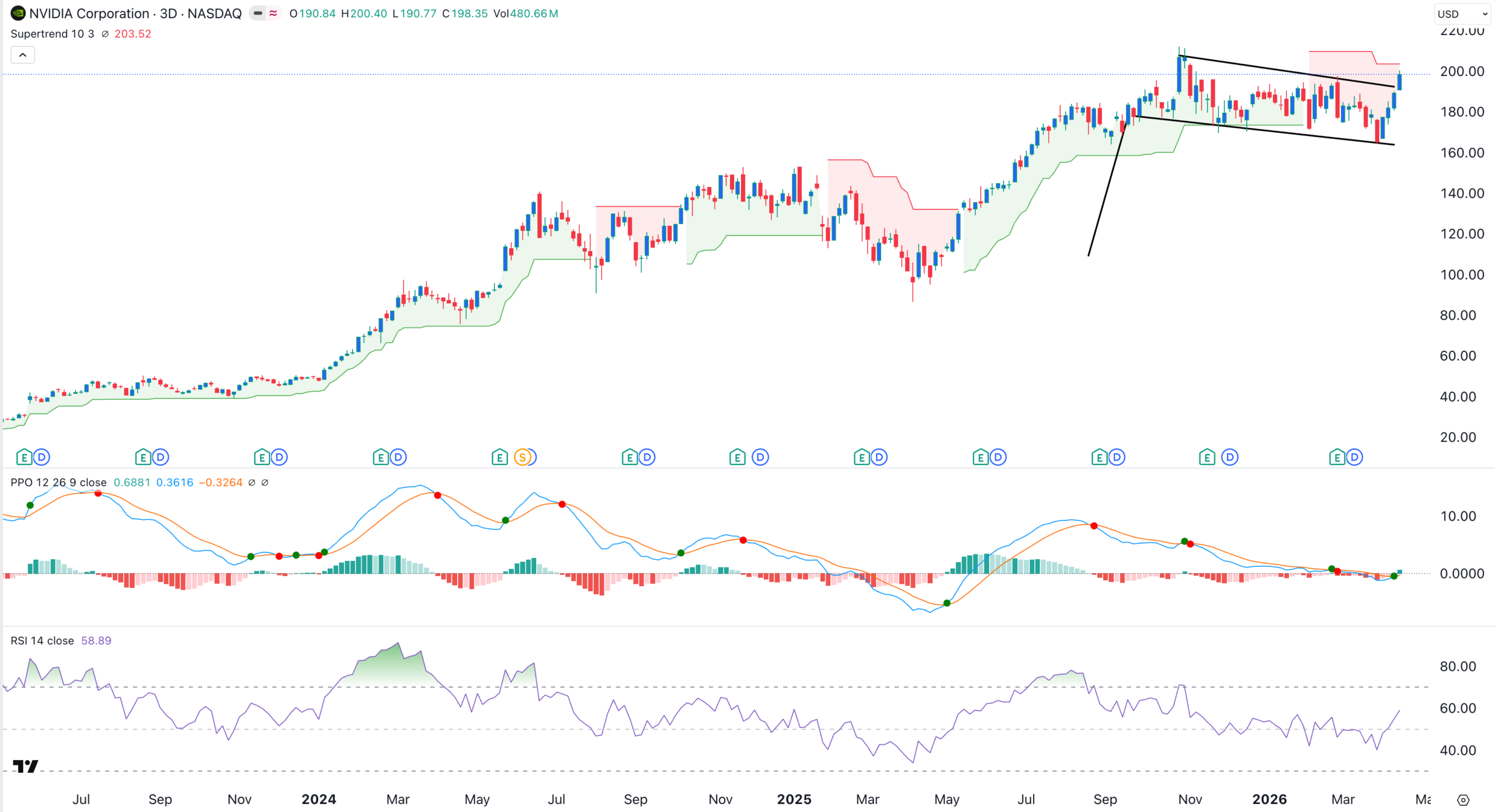
NVIDIA Stock is Finally Breaking Out: Can it Hit $250 as Catalysts Build?

68% of global BTC miners came from the U.S., Russia, and China, Q1 2026