

Hackathon "attack" guide: How can developers stand out in the competition?
Author: Yilmaz , Citrea DevRel (Developer Relations)
Compiled by: Felix, PANews
In recent years, Web3 hackathons have gradually emerged around the world and become a developer event in the industry. A group of developers from all over the world brainstorm during the event, form close-knit teams, and create functional applications in the hope of winning the grand prize. But the winners are always a minority. In addition to the technology itself, how to win the first prize in the competition may be a question for every developer. Yilmaz, a judge of the ETHGlobal Taipei 2025 hackathon, recently published an article and put forward his own suggestions on how contestants can stand out in the hackathon. The following is the full text.
You traveled halfway around the world to attend a hackathon. Your code was so clean and simple that it was almost impossible not to lick the screen. However, you came back empty-handed and without taking any prizes. What happened? Hint: It’s not a technical problem.
This happens all the time. Great developers, great builders, get nothing. It's not because they're bad at it, it's because they missed some key aspects of the hackathon.
Recently, I served as a judge at ETH Global Taipei on behalf of Citrea. Citrea sponsored the event and held awards such as "Best Bapp on Citrea" and "Experimental DeFi Bapps". For most of the event, I was not only a judge, but also an observer - moving between booths and tables, listening to developers' ideas, and brainstorming with them. Seeing these scenes reminded me of my own competition days, when I learned how to disassemble the rules of the game to potentially win rewards.
This post will share some insights on how to actually “crack” a hackathon — from the experience of someone who has reviewed multiple Web3 hackathons as a former architect and now a Developer Relations (DevRel).
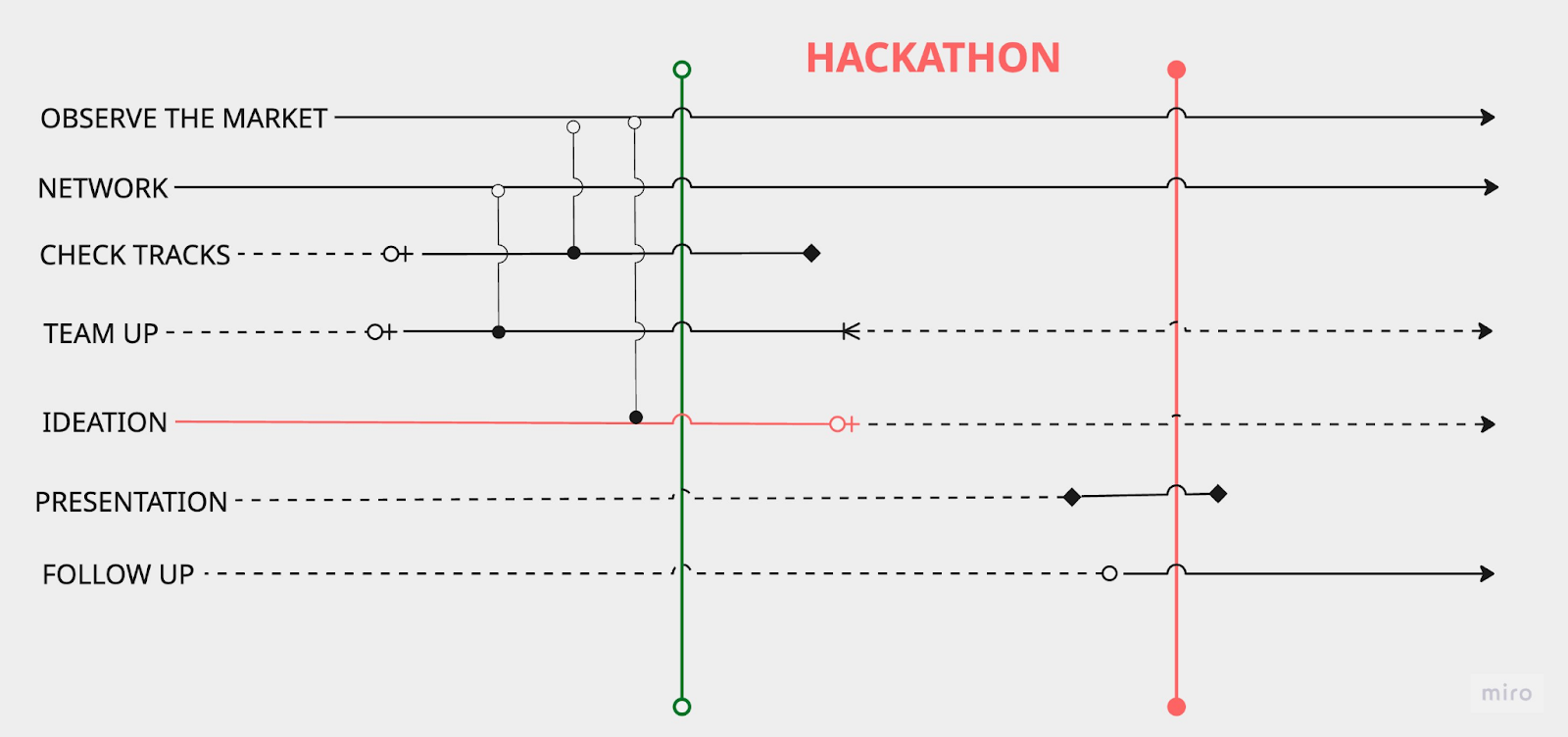
The hackathon started before the opening day
One of the biggest mistakes is thinking that hackathons start on day one. That’s not the case. I’m not saying you should have your project pre-built (that’ll instantly disqualify you), but there are a lot of things you can do to prepare ahead of time.
observe
You may be a student or an experienced developer who wants to get involved in the Web3 ecosystem. But do you know which field you want to get involved in? You should observe the industry as early as possible. Not just chatting on Twitter, but really delving into the field and see what everyone is doing. What are the weak or blank areas that you can fill or improve, what are the upcoming improvements, and which projects are strong in which tracks.
Having an overall understanding of the field you are getting into can be very helpful. I say this because I see a lot of developers trying to get awards from fields they know almost nothing about. This doesn't work in most cases because you have no idea what you are going to build. Judges, hackers, and advisors can help a little during hackathons, but it is far from enough.
Networking and teamwork
If you walk into a hackathon without a team, you’re already behind. You’ll have days or even weeks before the hackathon to form a team—giving you time to screen members, test compatibility, improve teamwork, or adjust team member roles.
However, going it alone is not hopeless. Perhaps you’re interested in forming a team on-site to brainstorm with people from different backgrounds and spark unique ideas. If you don’t have a team yet, be proactive: attend side events, cocktail parties, and keynotes before the hackathon. Talk to developers, designers, product managers, developer relations people, and even business development people. They may not know how to code, but they know a lot of people and can help you find the perfect teammates.
I helped to form two teams before the Taipei Ethereum Hackathon. They didn't know each other before, but one of the teams eventually won the prize.
Check out the track early
Check out the tracks and funded projects well before the first day of the hackathon. It’s surprising how many participants don’t pay attention to this until the event itself. Tracks are often announced days or weeks in advance, giving participants time to develop a strategy.
For example, the ETH Global hackathon announced the track two weeks before the event. Some developers contacted the project in advance to explain their ideas and ensure they were aligned with the track. This proactive approach allowed them to adjust their ideas or choose the right track to maximize their chances of winning.
Breaking the Rules
Ideas are crucial. You can have the cleanest codebase and still fail. Why? Because your idea isn't good enough. It doesn't have product-market fit, or the judges have seen too many similar products. If you submit another AI wallet interface that barely improves on the six submissions from the last two months, you're hopeless. It's hard to get the judges to pay attention to your code since they won't be interested in your idea/concept in the first stage.
The judges have limited time to review each submission and can't delve into every line of code. Therefore, the product concept or idea is crucial. Does the concept make sense? Is it unique or a real improvement over existing products on the market? Does it feel new and novel?
Let me give you a real example. There was a team from the Philippines at the Taipei Ethereum Hackathon. They had a Web2 background and no Web3 experience at all, but their idea was completely unconventional, and their novel idea immediately caught the judges' attention. They didn't even submit to our track, but now we are working with them in our incubation project Citrea Origins. This is the power of a great idea that can get immediate attention.
Think from the perspective of the jury. After two days, the jury is exhausted after looking at more than 20 projects. You only have a few minutes to win the jury's favor.
Here is the list of thoughts in my mind:
-
What is this product?
-
Is this concept new?
-
Does it have potential product-market fit?
-
Is this just a copy of other products?
-
Was this coded during this hackathon, or was it pre-built/submitted repeatedly?
The judges have seen it all. If your project is just for show, it will be spotted quickly.

Talip (Citrea DevRel) identifies pre-built projects at a glance
Interact with the jury
Want to improve your chances of winning? Talk to the judges. They can help you more than you think. Before you start building, explain your idea and discuss it with the judges.
Not only does this refine your idea, it also increases visibility. If the judges have seen your face, heard your proposal, and then seen your project again in the submissions - they will remember you. Then you will have an advantage.
striking
Make sure your work stands out. Once you have a great idea and a solid team, start building it - but don't stop there. You may have an idea that stands out, but to win, you need to present it well. Many times, contestants will skip the presentation part and just post a GitBook, which may work. It doesn't mean you have to give a colorful presentation, but you should have a well-organized and well-explained presentation.
-
Give it a good name - Yes, names are important. They set the tone.
-
Design the architecture - draw diagrams and simplify the explanations.
-
Create clickable demos – more powerful than videos, let the judges experience it firsthand.
-
Build clear and concise PPTs – Your slides should explain everything without you having to explain too much.
Don’t put too much effort into a video demo unless it’s absolutely necessary. The judges won’t be interested if it’s just a five-minute UI demo. Provide something interactive. Let the judges get a feel for the app and experience it.
One of my architecture professors once said, “If I need to ask a question, your presentation failed.” This may sound extreme, but use this as a guideline for your presentations. Because from a broader perspective, your presentation is essentially your pitch platform.

Wait, it's all about attention? It always has been
More than just a bonus
Finally, remember: bonuses are nice, but they’re not real prizes.
Hackathons are an attention economy. Everyone is watching. Even if you don’t win, if you impress the right people, doors of opportunity will open for you: incubation opportunities, partnerships, job opportunities. Prize money is short-term; your reputation is long-term.
Also, please don’t go to five obscure hackathons just to make up the numbers, no one will care. Build something that makes you grow, and make every hackathon add value to your portfolio.
In short, how to participate in a hackathon:
-
Team up early
-
Come up with new ideas
-
Think from the perspective of the jury and interact more
-
Make a clickable, beautiful presentation
-
Sell it like your future depends on it (because it does)
Related reading: Electric Capital Annual Developer Report: 39,000 new developers joined, more than half of Ethereum developers are committed to L2


You May Also Like

Seturion expands European token settlement network with Societe Generale and flatexDEGIRO

AEVIS VICTORIA Shareholders Approve All Proposals at 2025 AGM

Mike Johnson 'fed up' with Trump as he ditches White House for first time: insiders



