Monero (XMR) vs. Zcash (ZEC): Analyzing Which Privacy Cryptocurrency Offers Better Value in 2025
Quick Summary
- Monero’s market capitalization stands at approximately $7.6B, trading below Zcash’s ~$9.0B valuation despite stronger privacy credentials
- Zcash offers voluntary shielded transfers; Monero enforces mandatory privacy across all network transactions
- Zcash underwent its halving event in November 2024 and secured continued development funding through the NU6 network upgrade
- Monero operates with a perpetual tail emission of 0.6 XMR per block, maintaining sub-1% inflation to incentivize miners indefinitely
- Regulatory headwinds and exchange removals affect both assets, though Monero’s comprehensive privacy design attracts heightened regulatory attention
When it comes to privacy-centric cryptocurrencies, Monero and Zcash stand out as the dominant players. These two digital assets share a common goal—protecting financial privacy—but their methodologies differ significantly. Investor interest in the privacy coin segment has recently intensified, bringing renewed focus to both projects.
Zcash positions itself as encrypted digital money. As the pioneering cryptocurrency to implement zero-knowledge proofs for confidential peer-to-peer transfers, Zcash achieved a notable technical milestone that continues to command respect throughout the cryptocurrency ecosystem.
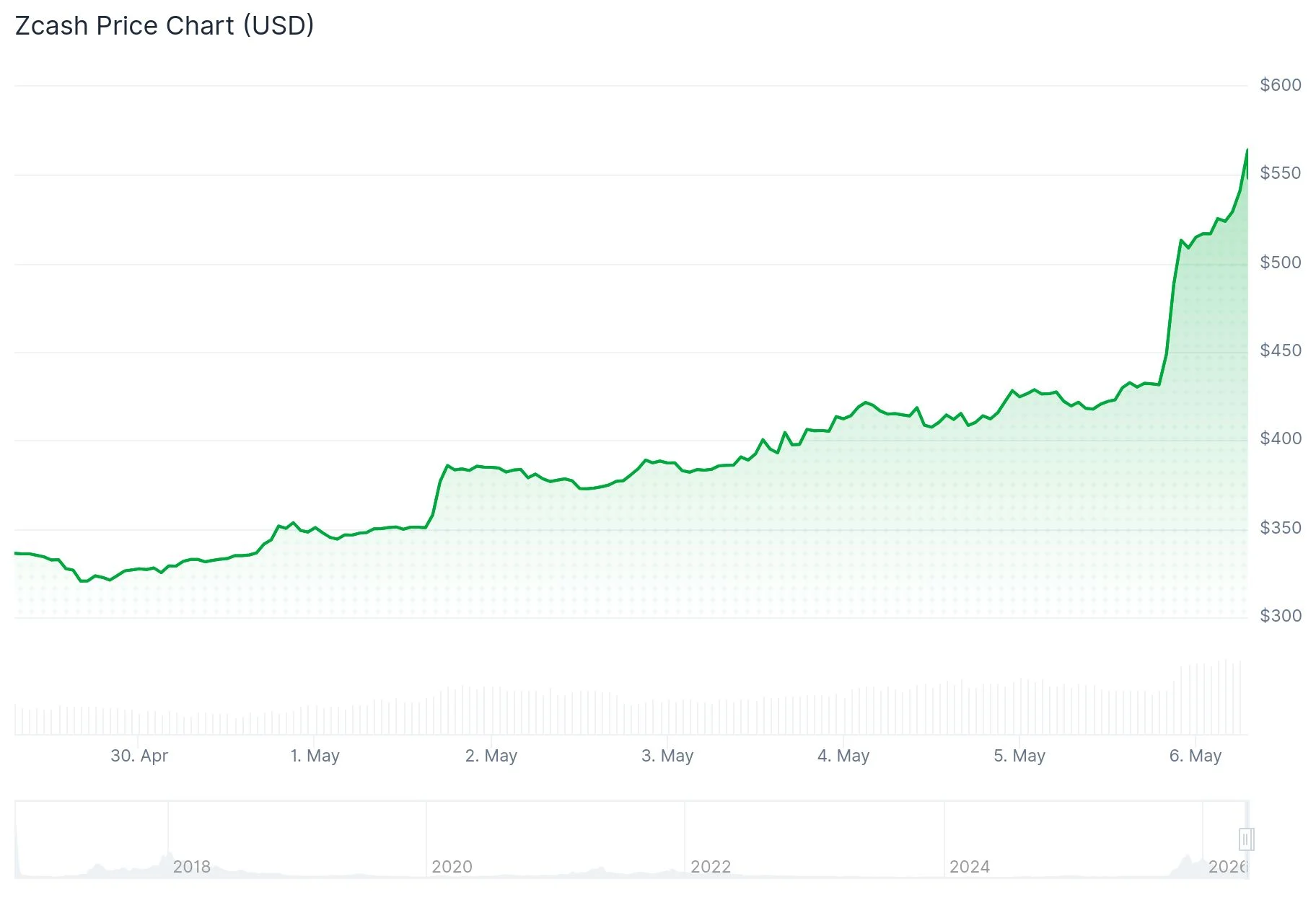 Zcash (ZEC) Price
However, Zcash’s privacy functionality remains voluntary. Network participants decide whether their transactions utilize shielded or transparent protocols. Historical data reveals that most Zcash transactions have occurred transparently, potentially undermining the privacy proposition for prospective investors.
Monero operates under a fundamentally different philosophy. Every transaction on the Monero blockchain is private by design—no user intervention required. Reuters has characterized Monero as providing near-complete anonymity, and this reputation significantly influences its market perception and valuation.
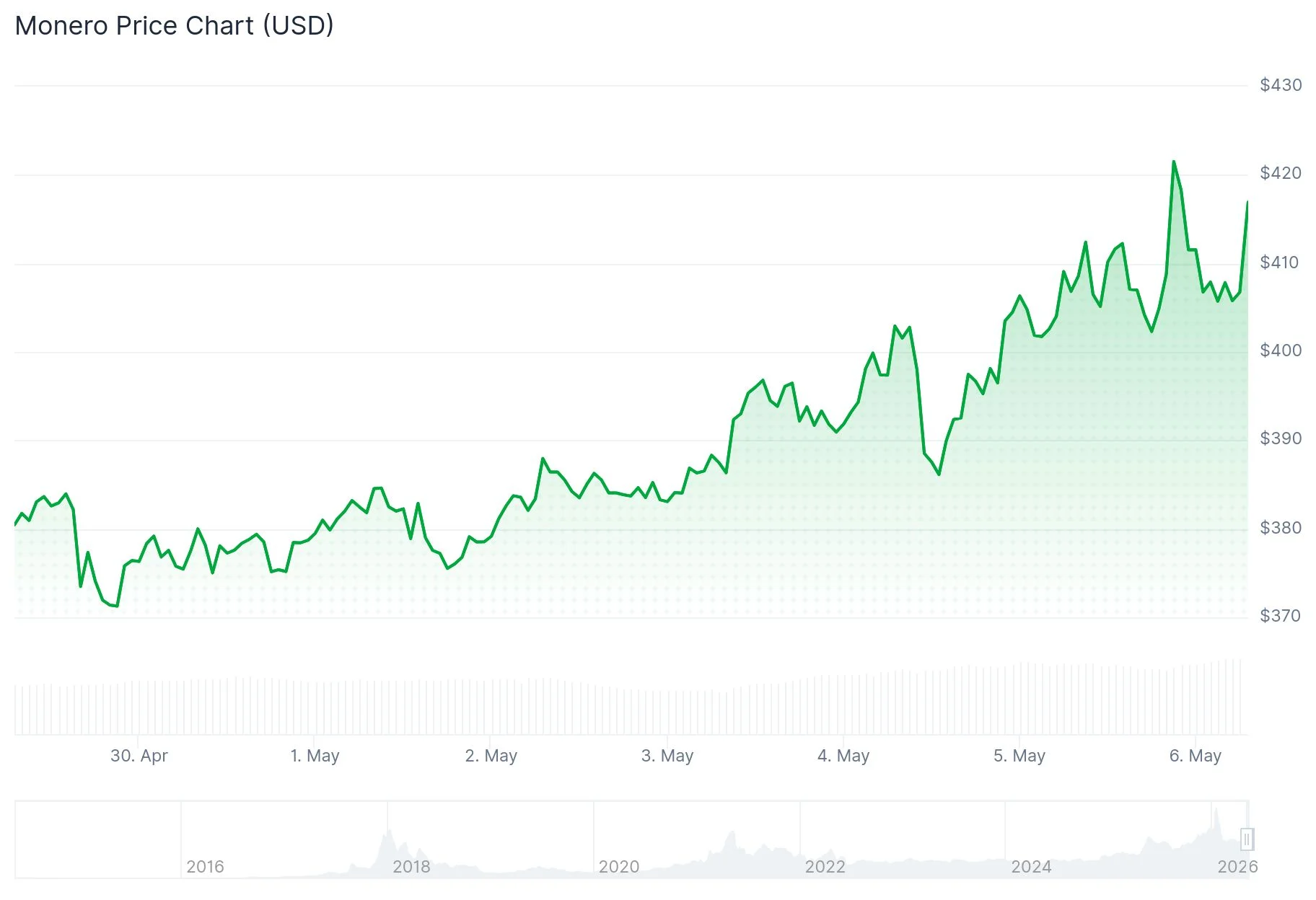 Monero (XMR) Price
Market Capitalization Analysis
The current valuations present a compelling narrative. According to CoinGecko data, Zcash commands approximately $9.0 billion in market capitalization, while Monero sits at roughly $7.6 billion. This differential surprises many market observers, who might anticipate Monero carrying a premium valuation given its uncompromising privacy approach.
This valuation disparity creates distinct investment dynamics. Should privacy coin adoption accelerate, Monero’s lower starting valuation potentially offers greater upside potential. Zcash, commanding a higher market cap, already reflects elevated market expectations in its current price.
Zcash executed its scheduled halving in November 2024. The accompanying NU6 protocol upgrade secured an additional year of development funding, ensuring continued support for ecosystem grants and technical advancement. This provides clear visibility into the project’s near-term operational capacity.
Supply Mechanics and Inflation Dynamics
Zcash implements a Bitcoin-inspired issuance framework featuring a maximum supply limit and periodic halving events. This deflationary structure appeals strongly to investors who prioritize digital scarcity.
Monero adopted an alternative approach. After its primary emission phase concluded in 2022, the network transitioned to a constant tail emission releasing 0.6 XMR per block. This mechanism maintains annual inflation under 1% with perpetually declining percentage rates.
Skeptics note Monero lacks a hard supply cap. However, the tail emission framework sustains miner compensation without excessive dilution, bolstering long-term network security and sustainability.
Both cryptocurrencies confront a common existential challenge. Privacy-focused coins face mounting regulatory opposition and exchange delistings across numerous jurisdictions. When regulated trading platforms remove these assets, liquidity constraints become inevitable.
Monero’s unwavering default privacy architecture makes it a more prominent regulatory target compared to Zcash. This represents a tangible risk investors must weigh carefully, especially those dependent on centralized exchange access.
Investment Considerations
Zcash offers robust cryptographic foundations, a well-regarded technical infrastructure, and presently commands a higher market valuation. Monero delivers an unambiguous privacy proposition, enforces universal transaction privacy, and trades at a comparatively lower valuation.
For investors prioritizing the core privacy coin thesis, Monero remains the asset most synonymous with financial confidentiality itself. Zcash’s completion of the NU6 upgrade and November 2024 halving event provides fresh momentum drivers entering the current market cycle.
The post Monero (XMR) vs. Zcash (ZEC): Analyzing Which Privacy Cryptocurrency Offers Better Value in 2025 appeared first on Blockonomi.


You May Also Like

Ripple CEO Says CLARITY Act Is a Done Deal as Senate Prepares Markup

Tempus AI (TEM) Stock Drops 7% After Earnings — Here’s Why a Beat Wasn’t Enough