

Must Read
Senator Ronald dela Rosa shows up at the Senate session hall and alleges that National Bureau of Investigation agents accosted him, causing a small wound on hisSenator Ronald dela Rosa shows up at the Senate session hall and alleges that National Bureau of Investigation agents accosted him, causing a small wound on his
ICC warrant details Bato dela Rosa’s role in drug war
For feedback or concerns regarding this content, please contact us at crypto.news@mexc.com
MANILA, Philippines – The most loyal ally of International Criminal Court (ICC) detainee Rodrigo Duterte is now refusing to follow him to The Hague in the Netherlands.
Former Philippine National Police chief and now Senator Bato dela Rosa is currently staying inside the Senate as he faces an ICC arrest warrant over his alleged involvement in the war on drugs.
The warrant, issued by the ICC pre-trial chamber in November 2025 and unsealed on Monday, May 11, found reasonable grounds to believe Dela Rosa committed the crime against humanity of murder. The ICC prosecution described the warrant as “an important step in the… ongoing pursuit of accountability” for killings linked to the anti-drug campaign.
Government data show that at least 6,252 people died in police anti-illegal drug operations as of May 31, 2022. Human rights groups, however, estimate that including alleged vigilante-style killings could push the toll to around 30,000.
Dela Rosa’s principal, Duterte, is set to stand trial before the ICC after its chamber confirmed all charges against him.
But what exactly does the warrant against the former drug war architect say?
1. ‘Knew about the operations and their scope’
The ICC pre-trial chamber stated in the arrest warrant that Dela Rosa “necessarily knew about the operations and their scope.” It also said that he, together with others, “committed the crimes through the direct perpetrators,” linking his role to the actions carried out by those who physically executed the killings.
The chamber said there are reasonable grounds to believe that “he acted with intent and knowledge” in relation to the killings.
It added that Dela Rosa used his position as Davao City Police Office (DCPO) chief to enable alleged Davao Death Squad (DDS) killings and to develop and implement a style of police operations referred to as “Tokhang,” which was later expanded to nationwide operations.
2. Created ‘network of perpetrators’
According to the warrant, Dela Rosa was involved in the creation of “a network of perpetrators” responsible for carrying out systematic killings under the war on drugs. Together with his co-perpetrators, he recruited “individuals they could trust and control.”
Members of the so-called Davao Death Squad were alleged to have complied with the co-perpetrators’ directions, including those that were only implied, the warrant further stated.
“The material shows that the direct perpetrators were easily replaced, considering that some of them were killed for seemingly opposing the common plan, wanting to leave the DDS, or having too much information about the DDS killings,” the pre-trial chamber said.
On a national scale, Dela Rosa also allegedly appointed “key personnel to strategic positions in order to further the execution of the common plan,” including transferring police officers from the Davao region to deploy them in other priority areas.
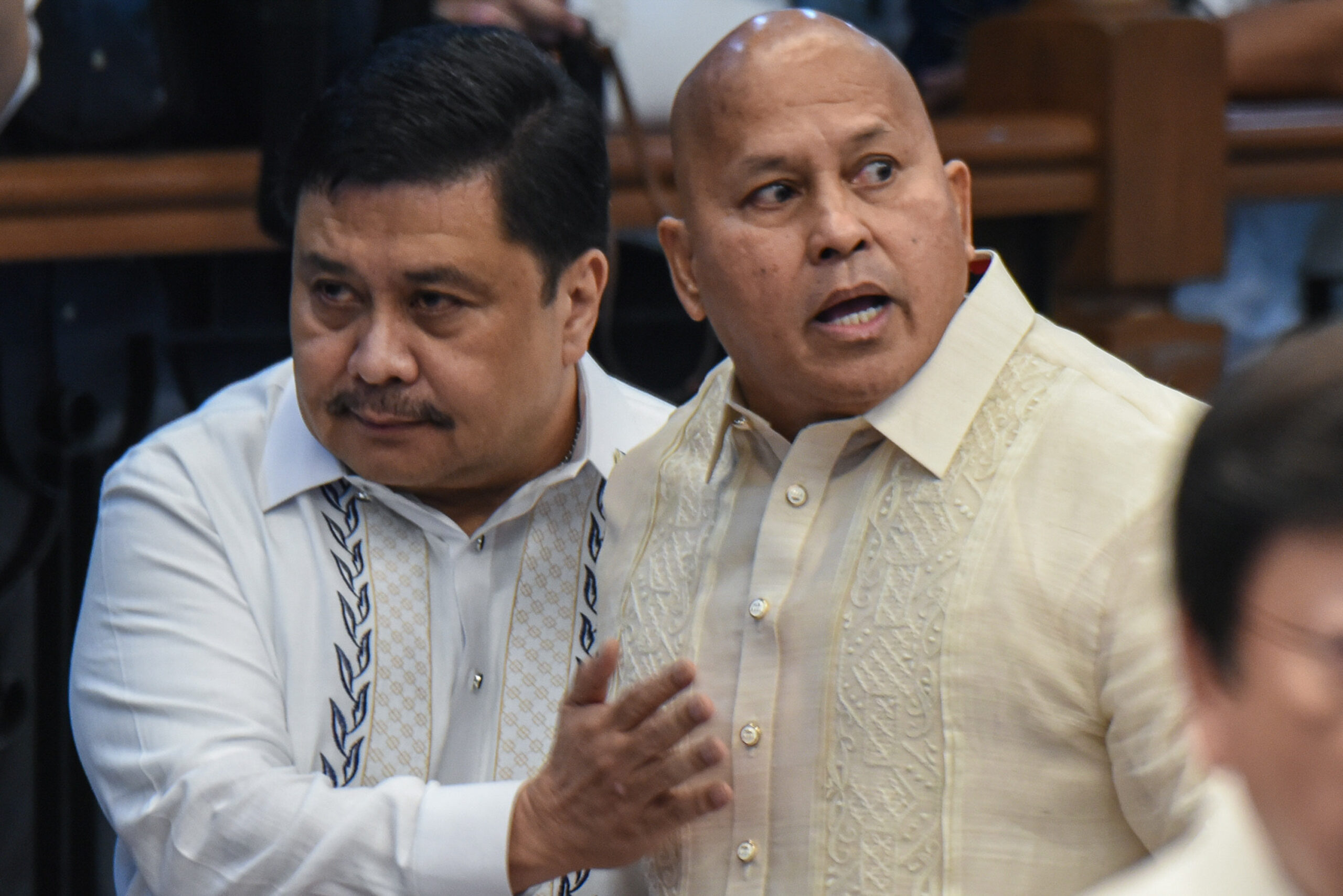 DELA ROSA. Senator Ronald dela Rosa at the Senate session hall on May 11, 2026. Angie de Silva/Rappler
3. ‘Controlled a structure of power’
The pre-trial chamber found that, by virtue of his positions, Dela Rosa “controlled a structure of power… which allowed [him] to direct and control the actions” of those implementing the “common plan” in Davao City and across the Philippines during Duterte’s presidency.
The warrant also outlined his long career in law enforcement, including senior posts in the Davao City Police Office, his term as PNP chief, and later his role as head of the Bureau of Corrections.
As Davao City police chief, he was able to use his position “to enable DDS killings and to conceive and implement a style of police operations referred to as ‘Tokhang’ and later implemented these operations nationally.”
As PNP chief, he “held de jure control over direct perpetrators,” including authority over command and direction, deployment of personnel and resources, and the imposition of disciplinary measures.
The chamber also said Dela Rosa maintained “de facto control” by reinforcing his image as a strong enforcer of the plan. This included using his nickname “Bato” as an anagram for his leadership roadmap within the PNP, as well as launching a mobile game application in which users played a character called “Bato Chief Enforcer” who shoots criminals.
“Dela Rosa publicly expressed his awareness of his power over his subordinates in the PNP stating that since [Duterte] chose him, they should follow him and that, in any event, it would not be hard to make them follow,” the pre-trial chamber said.
4. Pushed messaging that ‘implementation entailed the commission of crimes’
One aspect highlighted by the chamber was Dela Rosa’s alleged role in encouraging killings as part of the anti-drug campaign.
The chamber said he did this by “reinforcing the message” that the implementation of the plan “entailed the commission of crimes, including unlawful killings.”
The pre-trial chamber further said he was responsible for “encouraging the police to legitimize killings through fictitious self-defense scenarios and promising impunity, ordering the police to kill specific targets and planning killing operations; and expressing approval and rewarding perpetrators of killings.”
Dela Rosa is also involved in “making public statements authorizing, condoning and promoting the killing of alleged criminals.” These, according to the ICC, show that he “intended his actions to be part of the alleged attack against the civilian population.””
5. Threatened ICC, fueled disinformation, and risks victims’ security
The ICC pre-trial chamber said that the arrest of Dela Rosa is necessary to ensure his appearance before the Court. It noted that there is “no reasonable expectation that he would comply with a summons to appear.”
The chamber also pointed to reported public statements in which he allegedly threatened ICC investigators and referred to individuals cooperating with the investigation as “traitors.” These statements were considered relevant to assessing his willingness to cooperate with the Court.
It further noted that Dela Rosa participated in or supported disinformation campaigns in the Philippines related to the ICC process. These actions were seen as factors undermining cooperation with the court.
Given these circumstances, the chamber concluded that his arrest is necessary to prevent interference with the investigation and to protect the safety of witnesses and victims, as well as to ensure he does not obstruct ICC proceedings. – Rappler.com


Disclaimer: The articles reposted on this site are sourced from public platforms and are provided for informational purposes only. They do not necessarily reflect the views of MEXC. All rights remain with the original authors. If you believe any content infringes on third-party rights, please contact crypto.news@mexc.com for removal. MEXC makes no guarantees regarding the accuracy, completeness, or timeliness of the content and is not responsible for any actions taken based on the information provided. The content does not constitute financial, legal, or other professional advice, nor should it be considered a recommendation or endorsement by MEXC.
You May Also Like

Tether Files Seven Trademarks in South Korea
The post Tether Files Seven Trademarks in South Korea appeared on BitcoinEthereumNews.com. Tether filed seven trademarks in South Korea as stablecoin policy talks
Share
BitcoinEthereumNews2026/05/20 08:25
Trump's $1B ballroom funding on the verge of being 'ejected' by his own party
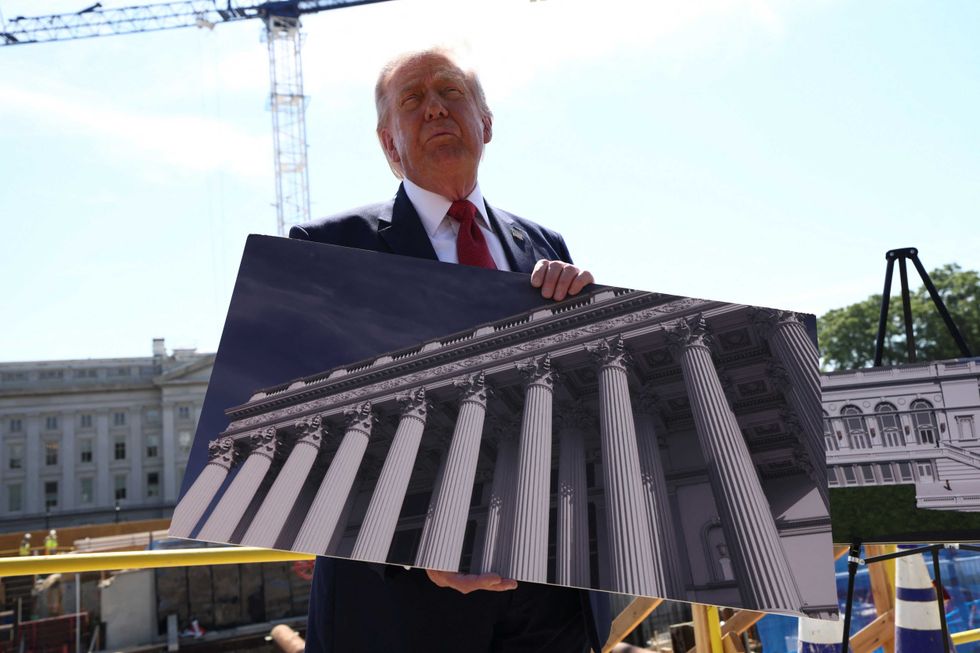
Funding for President Donald Trump's pricey White House ballroom is on the verge of being "ejected" from his own party's immigration enforcement bill, according
Share
Rawstory2026/05/20 09:35
Trump Warns US May Strike Iran Again if No Deal Reached Soon
BitcoinWorld Trump Warns US May Strike Iran Again if No Deal Reached Soon President Donald Trump has stated that the United States may carry out further military
Share
bitcoinworld2026/05/20 08:20



