

Next Wave: Kenya has conquered mobile money. Now it must fix the system underneath
Cet article est aussi disponible en français
First published 10 May, 2026
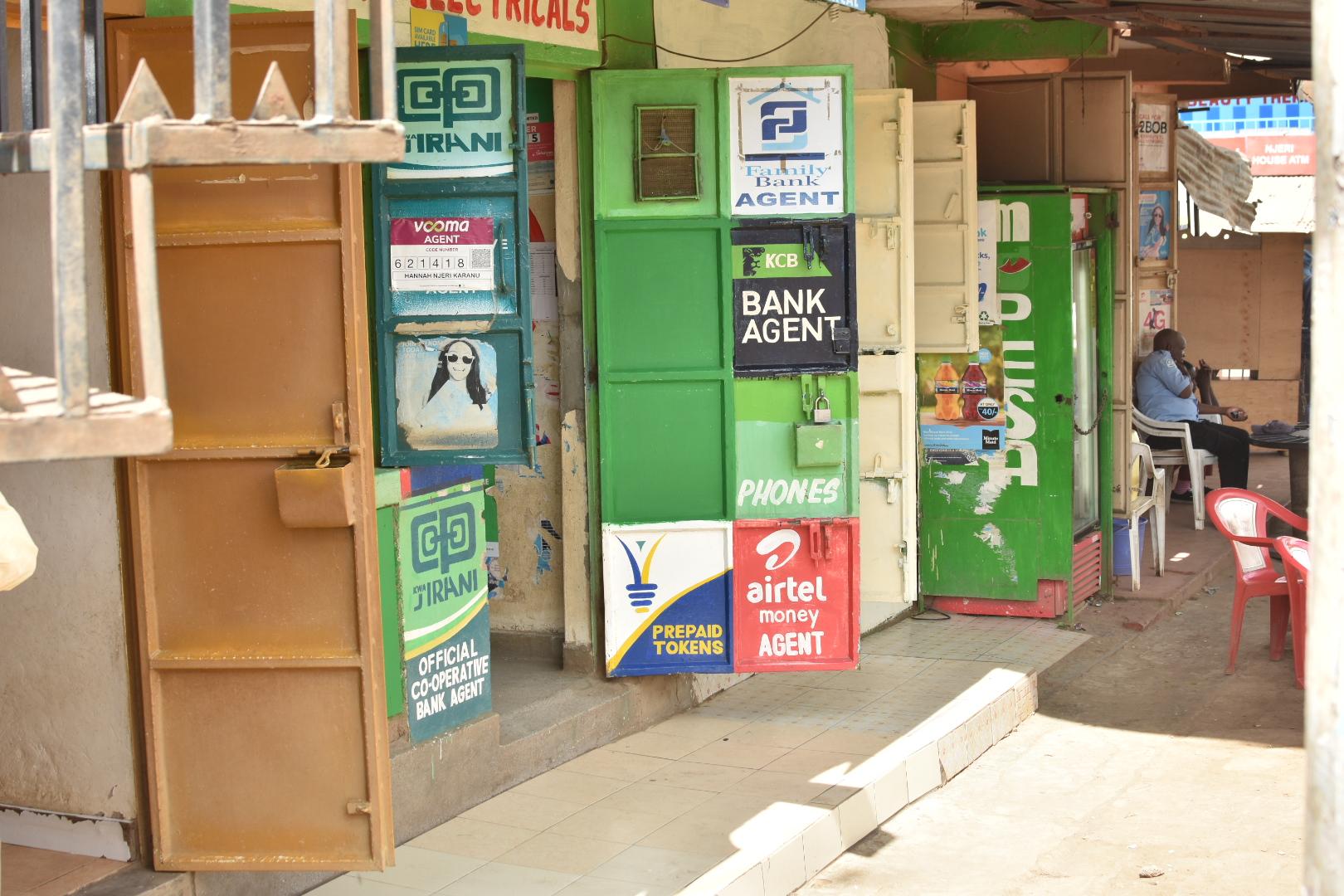
Image | African Arguments
Kenya’s payment story is often told as a triumph of mobile money. And rightly so. Safaricom’s M-PESA transformed the country from a largely cash-based economy into one where a roadside fruit vendor, a boda boda rider, and a multinational bank customer can all transact digitally. Considered one of Africa’s most important financial exports, it inspired policymakers in many emerging markets who saw it as a solution for reaching underbanked populations.
But Kenya’s next payments chapter may not be about access, but about the existing infrastructure gap that has been ignored by the regulator and dominant players such as commercial banks and M-PESA.
The real question facing the market today is no longer whether Kenyans can send money digitally. The question is whether the country can build an integrated payment system that is instant, interoperable, low-cost, resilient, and intelligent enough to support a digital economy expected to grow significantly over the next decade.
The invisible layer
And that challenge is exposing the invisible layer that powers Kenya’s financial system, including domestic switches and settlement infrastructure that move money between banks, fintechs, SACCOs, merchants, and mobile wallets every second. These institutions, like Kenswitch and Pesalink, have solved the interoperability layer, one of the greatest challenges in the country’s payment ecosystem today.
Since the advent of mobile money in 2007, consumers have adapted to fragmentation. Merchants are forced to open multiple bank and mobile money accounts to receive payments from different providers while navigating high settlement costs. Customers endure delayed reversals and failed transactions that can take hours or days to resolve. This mostly happens because providers, such as commercial banks and mobile money wallets, have built siloed systems that prioritise their own ecosystems. Consequently, everyone has digitised, but there’s no seamless interoperability infrastructure.
The future of payments in Kenya depends less on who owns the customer and more on who connects the ecosystem. That is where switching infrastructure companies like Kenswitch is becoming strategically important.
Economy growing faster than the infrastructure
The scale of Kenya’s digital payments economy today is enormous. According to the Kenya Bureau of Statistics (KNBS), mobile money transactions crossed KES 8.66 trillion ($62 billion) in the year to late 2025. Kenya processes billions of digital transactions annually across banks, mobile wallets, agency banking channels, SACCOs, cards, and fintech platforms.
Beneath this impressive growth is an increasingly fragmented ecosystem. For example, a merchant in Nairobi today may still maintain separate relationships with banks, mobile money providers, card processors, and payment gateways. The providers may have different settlement timelines, charges, and reconciliation systems. Failed reversals follow different procedures depending on the rail used.
A supermarket chain may receive funds from one provider instantly while waiting hours for another. A small business processing hundreds of payments daily still spends significant operational time reconciling transactions across the disconnected systems. These inefficiencies sound small individually, but can become an economic friction when interrogated at scale.
And friction matters because Kenya’s economy is digitising far beyond peer-to-peer transfers. The country is fast becoming an ecosystem of ride-hailing payments, e-commerce transactions, subscription services, embedded finance, online gaming, digital lending, QR payments, streaming subscriptions, and even government payments, which have moved online.
The infrastructure built for a mobile money revolution in 2007 may not be sufficient for the digital economy Kenya is entering in 2030.
Switching: The missing layer
When most consumers think about payments, they think about apps and wallets. But modern financial systems run on switches. A switch is the invisible layer that routes transactions securely between institutions. It allows a customer of one bank to transact with another bank’s infrastructure. It enables interoperability among ATMs, merchants, payment gateways, mobile wallets, and other financial institutions.
Without switches, digital finance becomes a collection of isolated islands. This is why the role of domestic switches like Kenswitch is becoming more important. Switching companies solves infrastructure problems like transaction routing, interoperability, settlement efficiency, uptime, security, fraud management, and connectivity between institutions.
That experience matters because Kenya’s financial ecosystem is no longer simple. The market now includes banks, SACCOs, fintechs, telecom operators, microfinance institutions, digital lenders, remittance companies, e-commerce firms, and embedded finance platforms. Every one of these players needs to exchange value instantly and securely with others.
The deeper the ecosystem fragments, the more valuable interoperability becomes. Unlike a bank-owned rail or a telecom-controlled ecosystem, a switching infrastructure player can operate as connective tissue across competing institutions. That becomes critical in an environment where banks, fintechs, and mobile money operators increasingly need shared infrastructure despite competing commercially.
This is already happening globally.
India’s UPI did not kill banks. Instead, it created shared infrastructure that allowed banks, fintechs, and apps to innovate on top of common rails. Brazil’s Pix similarly shifted competition away from payment ownership toward customer experience and financial products.
Kenya has already proved that digital payments can bridge the financial inclusion gap. Its next challenge is to build an ecosystem where every bank, fintech, merchant, and mobile wallet can move money seamlessly together. And if that future arrives, companies like Kenswitch and Pesalink may become some of the most important —and least visible—players shaping Kenya’s digital economy.
This is why I think that some consolidation is likely. Others may move toward larger loan sizes or specific customer segments where verification is more feasible. Some already have. Branch, for instance, has transitioned into a microfinance bank to target higher-value loans within the same customer base while operating under a structure better suited to deeper underwriting.
Adonijah Ndege
Senior Reporter, TechCabal
Thank you for reading this far. Feel free to email adonijah[at]bigcabal.com, with your thoughts about this edition of NextWave. Or just click reply to share your thoughts and feedback.
We’d love to hear from you
Psst! Down here!
Thanks for reading today’s Next Wave. Please share. Or subscribe if someone shared it to you here for free to get fresh perspectives on the progress of digital innovation in Africa every Sunday.
As always feel free to email a reply or response to this essay. I enjoy reading those emails a lot.
TC Daily newsletter is out daily (Mon – Fri) brief of all the technology and business stories you need to know. Get it in your inbox each weekday at 7 AM (WAT).
Follow TechCabal on Twitter, Instagram, Facebook, and LinkedIn to stay engaged in our real-time conversations on tech and innovation in Africa.
 |
|
    |
|
|
17, Eniyansoro Street, Ajao Road off Ogunlana Drive, Surulere, Lagos 101212, Nigeria. |
View in Map |
| You received this email because you signed up on our website or made purchase from us. If you know longer wish to recieve these emails, please unsubscribe |


You May Also Like

Oil Prices Slip as Iran War Disrupts Supply and Trump Heads to Beijing

Why Are More Cryptocurrency Holders Turning to AI-Driven Digital Infrastructure Platforms Like DeFi Hash?




