BitcoinWorld Urgent Analysis: Altcoins Oversold, Signaling a Potential Reversal Are you watching the cryptocurrency market closely, wondering about the next big move for your favorite digital assets? Many investors are feeling the pinch as altcoin prices have seen significant dips recently. However, a fascinating new analysis suggests a turning point might be on the horizon, especially for those holding or looking to acquire altcoins oversold in the current climate. What Does ‘Altcoins Oversold’ Really Mean? The term altcoins oversold refers to a technical analysis condition where the price of an asset has fallen significantly, often below its intrinsic value or recent trading range. This typically indicates that selling pressure has been exhaustive, and a reversal or bounce in price could be imminent. It’s a key indicator many traders look for. According to Negentropic, the X account of Glassnode co-founders Yann Happel and Jan Allemann, altcoins have indeed entered an oversold phase. Their analysis points to an unwinding of excessive leverage in the market, which has contributed to the recent price declines. Think of it as the market shedding its extra weight, preparing for a healthier ascent. Excessive Leverage Unwinds: High leverage can amplify both gains and losses. When prices drop, leveraged positions get liquidated, leading to further selling pressure. This unwinding is often a precursor to market stabilization. Price Correction: This period often follows a rapid run-up, bringing prices back to more sustainable levels. Why Are Altcoins in an Accumulation Zone? Following an oversold phase, assets often enter what analysts call an “accumulation zone.” This is a period where savvy investors and institutions begin to buy up assets, anticipating a future price increase. It’s like collecting valuable items at a discount before their true worth is recognized by the broader market. Negentropic’s insights suggest that many altcoins oversold are now sitting in this crucial accumulation zone. Historically, such periods of consolidation precede an uptrend. It’s not an instant rebound, but rather a gradual build-up of buying interest and demand. This phase is characterized by: Reduced Volatility: Prices tend to stabilize, moving sideways rather than experiencing sharp drops. Increased Buying Interest: Long-term holders and institutional players see these lower prices as attractive entry points. Foundation Building: A strong base is formed, which can support future price growth. Understanding this cycle is vital for anyone looking to make informed decisions in the volatile crypto space. It requires patience and a strategic approach, rather than reacting to short-term market noise. Navigating the Market: Opportunities and Risks for Altcoins While the notion of altcoins oversold entering an accumulation zone sounds promising, it’s crucial to approach the market with a balanced perspective. This period presents both significant opportunities and inherent risks that investors must consider. Potential Opportunities: Bargain Prices: For long-term investors, buying quality altcoins at depressed prices can lead to substantial returns if the anticipated uptrend materializes. Diversification: This could be an opportune time to diversify your portfolio with promising projects that have been unfairly punished by broader market sentiment. Future Growth: Many innovative altcoin projects continue to build and develop, irrespective of short-term price movements. An accumulation phase allows investors to position themselves for their long-term success. Inherent Risks: Further Downside: While oversold, there’s no guarantee prices won’t drop further. Market sentiment can shift unexpectedly, and external factors can impact crypto values. Prolonged Consolidation: The “period of consolidation” mentioned by Negentropic could be longer than anticipated, testing investors’ patience. Project Viability: Not all altcoins will recover. It’s essential to conduct thorough research into the fundamentals of each project you consider. To mitigate risks, consider strategies like Dollar-Cost Averaging (DCA), where you invest a fixed amount regularly, regardless of price. This can smooth out your average purchase price over time. Always remember to do your own research (DYOR) and never invest more than you can afford to lose. What’s Next for the Altcoin Market? The analysis by Negentropic suggests that after this period of consolidation, we can expect altcoins to begin an uptrend. This doesn’t mean a straight shot upwards; markets move in waves. However, the foundational work of deleveraging and accumulation sets the stage for potential positive price action. It’s a time for strategic thinking rather than impulsive trading. Keep an eye on on-chain data, market sentiment, and macroeconomic factors. The crypto market is dynamic, and while technical indicators provide valuable insights, they are just one piece of the puzzle. In conclusion, the current state of altcoins oversold presents a compelling narrative for those willing to look beyond the immediate price charts. The insights from Glassnode co-founders highlight a potential shift from capitulation to cautious optimism, paving the way for future growth. Patience, research, and a clear strategy will be your best allies in navigating this exciting phase of the market. Frequently Asked Questions (FAQs) Q1: What does “oversold” mean in cryptocurrency trading? A1: “Oversold” is a technical indicator suggesting that an asset’s price has fallen significantly, often implying that selling pressure is exhausted and a price reversal or bounce may be near. It doesn’t guarantee a bounce but signals a potential shift. Q2: How is “excessive leverage unwinding” related to altcoins being oversold? A2: Excessive leverage unwinding means that many traders who used borrowed funds to amplify their positions are being forced to sell as prices drop, leading to liquidations. This intensifies selling pressure, driving prices down further, often into oversold territory. Once this unwinding is complete, the market can stabilize. Q3: What is an “accumulation zone” and why is it important for altcoins? A3: An “accumulation zone” is a period after an asset has been oversold, where smart money and long-term investors begin buying, anticipating future price appreciation. It’s important for altcoins because it suggests a potential bottoming process and the building of a strong foundation before a new uptrend begins. Q4: How long does the consolidation period typically last after altcoins are oversold? A4: The duration of a consolidation period can vary widely, from weeks to several months, depending on market sentiment, macroeconomic conditions, and specific altcoin fundamentals. There’s no fixed timeline, and patience is key during this phase. Q5: What should investors do when altcoins are in an accumulation zone? A5: Investors might consider strategies like Dollar-Cost Averaging (DCA) to buy gradually, conduct thorough research (DYOR) on specific projects, and maintain a long-term perspective. It’s also wise to manage risk by not over-allocating to any single asset and only investing what you can afford to lose. If you found this analysis helpful, consider sharing it with your fellow crypto enthusiasts! Your insights could help others navigate these crucial market phases. Spread the knowledge and empower your community! To learn more about the latest altcoin market trends, explore our article on key developments shaping altcoins price action. This post Urgent Analysis: Altcoins Oversold, Signaling a Potential Reversal first appeared on BitcoinWorld.BitcoinWorld Urgent Analysis: Altcoins Oversold, Signaling a Potential Reversal Are you watching the cryptocurrency market closely, wondering about the next big move for your favorite digital assets? Many investors are feeling the pinch as altcoin prices have seen significant dips recently. However, a fascinating new analysis suggests a turning point might be on the horizon, especially for those holding or looking to acquire altcoins oversold in the current climate. What Does ‘Altcoins Oversold’ Really Mean? The term altcoins oversold refers to a technical analysis condition where the price of an asset has fallen significantly, often below its intrinsic value or recent trading range. This typically indicates that selling pressure has been exhaustive, and a reversal or bounce in price could be imminent. It’s a key indicator many traders look for. According to Negentropic, the X account of Glassnode co-founders Yann Happel and Jan Allemann, altcoins have indeed entered an oversold phase. Their analysis points to an unwinding of excessive leverage in the market, which has contributed to the recent price declines. Think of it as the market shedding its extra weight, preparing for a healthier ascent. Excessive Leverage Unwinds: High leverage can amplify both gains and losses. When prices drop, leveraged positions get liquidated, leading to further selling pressure. This unwinding is often a precursor to market stabilization. Price Correction: This period often follows a rapid run-up, bringing prices back to more sustainable levels. Why Are Altcoins in an Accumulation Zone? Following an oversold phase, assets often enter what analysts call an “accumulation zone.” This is a period where savvy investors and institutions begin to buy up assets, anticipating a future price increase. It’s like collecting valuable items at a discount before their true worth is recognized by the broader market. Negentropic’s insights suggest that many altcoins oversold are now sitting in this crucial accumulation zone. Historically, such periods of consolidation precede an uptrend. It’s not an instant rebound, but rather a gradual build-up of buying interest and demand. This phase is characterized by: Reduced Volatility: Prices tend to stabilize, moving sideways rather than experiencing sharp drops. Increased Buying Interest: Long-term holders and institutional players see these lower prices as attractive entry points. Foundation Building: A strong base is formed, which can support future price growth. Understanding this cycle is vital for anyone looking to make informed decisions in the volatile crypto space. It requires patience and a strategic approach, rather than reacting to short-term market noise. Navigating the Market: Opportunities and Risks for Altcoins While the notion of altcoins oversold entering an accumulation zone sounds promising, it’s crucial to approach the market with a balanced perspective. This period presents both significant opportunities and inherent risks that investors must consider. Potential Opportunities: Bargain Prices: For long-term investors, buying quality altcoins at depressed prices can lead to substantial returns if the anticipated uptrend materializes. Diversification: This could be an opportune time to diversify your portfolio with promising projects that have been unfairly punished by broader market sentiment. Future Growth: Many innovative altcoin projects continue to build and develop, irrespective of short-term price movements. An accumulation phase allows investors to position themselves for their long-term success. Inherent Risks: Further Downside: While oversold, there’s no guarantee prices won’t drop further. Market sentiment can shift unexpectedly, and external factors can impact crypto values. Prolonged Consolidation: The “period of consolidation” mentioned by Negentropic could be longer than anticipated, testing investors’ patience. Project Viability: Not all altcoins will recover. It’s essential to conduct thorough research into the fundamentals of each project you consider. To mitigate risks, consider strategies like Dollar-Cost Averaging (DCA), where you invest a fixed amount regularly, regardless of price. This can smooth out your average purchase price over time. Always remember to do your own research (DYOR) and never invest more than you can afford to lose. What’s Next for the Altcoin Market? The analysis by Negentropic suggests that after this period of consolidation, we can expect altcoins to begin an uptrend. This doesn’t mean a straight shot upwards; markets move in waves. However, the foundational work of deleveraging and accumulation sets the stage for potential positive price action. It’s a time for strategic thinking rather than impulsive trading. Keep an eye on on-chain data, market sentiment, and macroeconomic factors. The crypto market is dynamic, and while technical indicators provide valuable insights, they are just one piece of the puzzle. In conclusion, the current state of altcoins oversold presents a compelling narrative for those willing to look beyond the immediate price charts. The insights from Glassnode co-founders highlight a potential shift from capitulation to cautious optimism, paving the way for future growth. Patience, research, and a clear strategy will be your best allies in navigating this exciting phase of the market. Frequently Asked Questions (FAQs) Q1: What does “oversold” mean in cryptocurrency trading? A1: “Oversold” is a technical indicator suggesting that an asset’s price has fallen significantly, often implying that selling pressure is exhausted and a price reversal or bounce may be near. It doesn’t guarantee a bounce but signals a potential shift. Q2: How is “excessive leverage unwinding” related to altcoins being oversold? A2: Excessive leverage unwinding means that many traders who used borrowed funds to amplify their positions are being forced to sell as prices drop, leading to liquidations. This intensifies selling pressure, driving prices down further, often into oversold territory. Once this unwinding is complete, the market can stabilize. Q3: What is an “accumulation zone” and why is it important for altcoins? A3: An “accumulation zone” is a period after an asset has been oversold, where smart money and long-term investors begin buying, anticipating future price appreciation. It’s important for altcoins because it suggests a potential bottoming process and the building of a strong foundation before a new uptrend begins. Q4: How long does the consolidation period typically last after altcoins are oversold? A4: The duration of a consolidation period can vary widely, from weeks to several months, depending on market sentiment, macroeconomic conditions, and specific altcoin fundamentals. There’s no fixed timeline, and patience is key during this phase. Q5: What should investors do when altcoins are in an accumulation zone? A5: Investors might consider strategies like Dollar-Cost Averaging (DCA) to buy gradually, conduct thorough research (DYOR) on specific projects, and maintain a long-term perspective. It’s also wise to manage risk by not over-allocating to any single asset and only investing what you can afford to lose. If you found this analysis helpful, consider sharing it with your fellow crypto enthusiasts! Your insights could help others navigate these crucial market phases. Spread the knowledge and empower your community! To learn more about the latest altcoin market trends, explore our article on key developments shaping altcoins price action. This post Urgent Analysis: Altcoins Oversold, Signaling a Potential Reversal first appeared on BitcoinWorld.

Urgent Analysis: Altcoins Oversold, Signaling a Potential Reversal

BitcoinWorld
Urgent Analysis: Altcoins Oversold, Signaling a Potential Reversal

Are you watching the cryptocurrency market closely, wondering about the next big move for your favorite digital assets? Many investors are feeling the pinch as altcoin prices have seen significant dips recently. However, a fascinating new analysis suggests a turning point might be on the horizon, especially for those holding or looking to acquire altcoins oversold in the current climate.

What Does ‘Altcoins Oversold’ Really Mean?

The term altcoins oversold refers to a technical analysis condition where the price of an asset has fallen significantly, often below its intrinsic value or recent trading range. This typically indicates that selling pressure has been exhaustive, and a reversal or bounce in price could be imminent. It’s a key indicator many traders look for.

According to Negentropic, the X account of Glassnode co-founders Yann Happel and Jan Allemann, altcoins have indeed entered an oversold phase. Their analysis points to an unwinding of excessive leverage in the market, which has contributed to the recent price declines. Think of it as the market shedding its extra weight, preparing for a healthier ascent.

  • Excessive Leverage Unwinds: High leverage can amplify both gains and losses. When prices drop, leveraged positions get liquidated, leading to further selling pressure. This unwinding is often a precursor to market stabilization.
  • Price Correction: This period often follows a rapid run-up, bringing prices back to more sustainable levels.

Why Are Altcoins in an Accumulation Zone?

Following an oversold phase, assets often enter what analysts call an “accumulation zone.” This is a period where savvy investors and institutions begin to buy up assets, anticipating a future price increase. It’s like collecting valuable items at a discount before their true worth is recognized by the broader market.

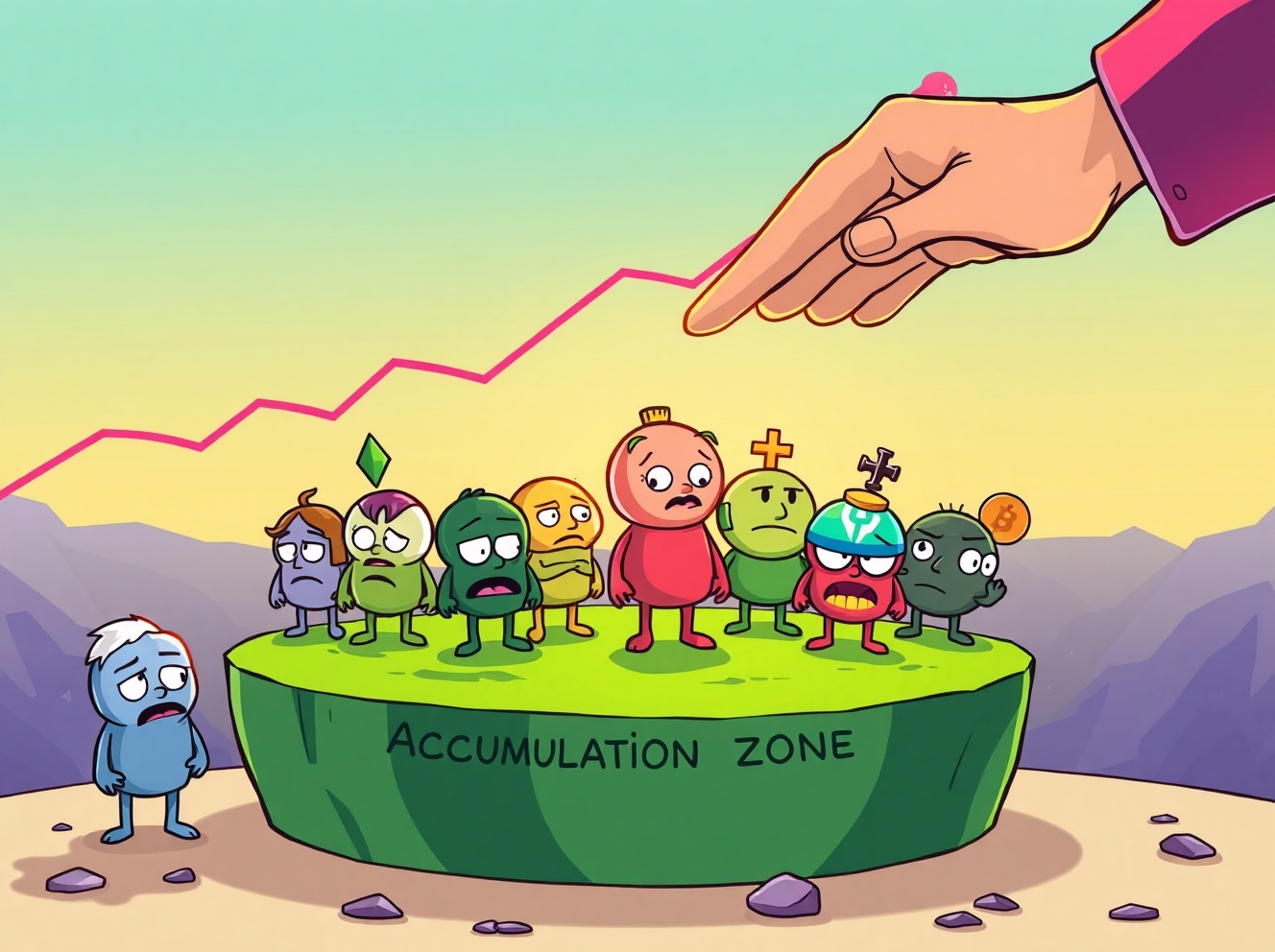
Negentropic’s insights suggest that many altcoins oversold are now sitting in this crucial accumulation zone. Historically, such periods of consolidation precede an uptrend. It’s not an instant rebound, but rather a gradual build-up of buying interest and demand.

This phase is characterized by:

  • Reduced Volatility: Prices tend to stabilize, moving sideways rather than experiencing sharp drops.
  • Increased Buying Interest: Long-term holders and institutional players see these lower prices as attractive entry points.
  • Foundation Building: A strong base is formed, which can support future price growth.

Understanding this cycle is vital for anyone looking to make informed decisions in the volatile crypto space. It requires patience and a strategic approach, rather than reacting to short-term market noise.

While the notion of altcoins oversold entering an accumulation zone sounds promising, it’s crucial to approach the market with a balanced perspective. This period presents both significant opportunities and inherent risks that investors must consider.

Potential Opportunities:

  • Bargain Prices: For long-term investors, buying quality altcoins at depressed prices can lead to substantial returns if the anticipated uptrend materializes.
  • Diversification: This could be an opportune time to diversify your portfolio with promising projects that have been unfairly punished by broader market sentiment.
  • Future Growth: Many innovative altcoin projects continue to build and develop, irrespective of short-term price movements. An accumulation phase allows investors to position themselves for their long-term success.

Inherent Risks:

  • Further Downside: While oversold, there’s no guarantee prices won’t drop further. Market sentiment can shift unexpectedly, and external factors can impact crypto values.
  • Prolonged Consolidation: The “period of consolidation” mentioned by Negentropic could be longer than anticipated, testing investors’ patience.
  • Project Viability: Not all altcoins will recover. It’s essential to conduct thorough research into the fundamentals of each project you consider.

To mitigate risks, consider strategies like Dollar-Cost Averaging (DCA), where you invest a fixed amount regularly, regardless of price. This can smooth out your average purchase price over time. Always remember to do your own research (DYOR) and never invest more than you can afford to lose.

What’s Next for the Altcoin Market?

The analysis by Negentropic suggests that after this period of consolidation, we can expect altcoins to begin an uptrend. This doesn’t mean a straight shot upwards; markets move in waves. However, the foundational work of deleveraging and accumulation sets the stage for potential positive price action.

It’s a time for strategic thinking rather than impulsive trading. Keep an eye on on-chain data, market sentiment, and macroeconomic factors. The crypto market is dynamic, and while technical indicators provide valuable insights, they are just one piece of the puzzle.

In conclusion, the current state of altcoins oversold presents a compelling narrative for those willing to look beyond the immediate price charts. The insights from Glassnode co-founders highlight a potential shift from capitulation to cautious optimism, paving the way for future growth. Patience, research, and a clear strategy will be your best allies in navigating this exciting phase of the market.

Frequently Asked Questions (FAQs)

Q1: What does “oversold” mean in cryptocurrency trading?
A1: “Oversold” is a technical indicator suggesting that an asset’s price has fallen significantly, often implying that selling pressure is exhausted and a price reversal or bounce may be near. It doesn’t guarantee a bounce but signals a potential shift.

Q2: How is “excessive leverage unwinding” related to altcoins being oversold?
A2: Excessive leverage unwinding means that many traders who used borrowed funds to amplify their positions are being forced to sell as prices drop, leading to liquidations. This intensifies selling pressure, driving prices down further, often into oversold territory. Once this unwinding is complete, the market can stabilize.

Q3: What is an “accumulation zone” and why is it important for altcoins?
A3: An “accumulation zone” is a period after an asset has been oversold, where smart money and long-term investors begin buying, anticipating future price appreciation. It’s important for altcoins because it suggests a potential bottoming process and the building of a strong foundation before a new uptrend begins.

Q4: How long does the consolidation period typically last after altcoins are oversold?
A4: The duration of a consolidation period can vary widely, from weeks to several months, depending on market sentiment, macroeconomic conditions, and specific altcoin fundamentals. There’s no fixed timeline, and patience is key during this phase.

Q5: What should investors do when altcoins are in an accumulation zone?
A5: Investors might consider strategies like Dollar-Cost Averaging (DCA) to buy gradually, conduct thorough research (DYOR) on specific projects, and maintain a long-term perspective. It’s also wise to manage risk by not over-allocating to any single asset and only investing what you can afford to lose.

If you found this analysis helpful, consider sharing it with your fellow crypto enthusiasts! Your insights could help others navigate these crucial market phases. Spread the knowledge and empower your community!

To learn more about the latest altcoin market trends, explore our article on key developments shaping altcoins price action.

This post Urgent Analysis: Altcoins Oversold, Signaling a Potential Reversal first appeared on BitcoinWorld.

Market Opportunity
Movement Logo
Movement Price(MOVE)
$0.03821
$0.03821$0.03821
+0.15%
USD
Movement (MOVE) Live Price Chart
Disclaimer: The articles reposted on this site are sourced from public platforms and are provided for informational purposes only. They do not necessarily reflect the views of MEXC. All rights remain with the original authors. If you believe any content infringes on third-party rights, please contact service@support.mexc.com for removal. MEXC makes no guarantees regarding the accuracy, completeness, or timeliness of the content and is not responsible for any actions taken based on the information provided. The content does not constitute financial, legal, or other professional advice, nor should it be considered a recommendation or endorsement by MEXC.

You May Also Like

FTX Trust Sues Genesis Digital for $1.15B Clawback Over Alleged Fraudulent Transfers

FTX Trust Sues Genesis Digital for $1.15B Clawback Over Alleged Fraudulent Transfers

The FTX Recovery Trust has filed a $1.15 billion lawsuit against the Bitcoin mining firm Genesis Digital Assets, alleging fraudulent transfers. The complaint, filed on Monday in U.S. Bankruptcy Court for the District of Delaware, alleges that Sam Bankman-Fried used misappropriated FTX customer funds to purchase Genesis Digital shares at “outrageously inflated prices” through his hedge fund, Alameda Research, between August 2021 and April 2022. Genesis Digital co-founders Rashit Makhat and Marco Krohn received $470 million and $80.9 million, respectively, for their shares in February 2022, according to court documents. The trust contends that only Alameda, and by extension Bankman-Fried, as its 90% owner, benefited from the investments, while FTX customers and creditors suffered losses from the diverted exchange funds.Court Document (Source: Bloomberg Law) Genesis Investment Timeline Reveals Systematic Fund Diversion Court documents reveal that discussions between Bankman-Fried and Genesis Digital began in July 2021, when the Kazakhstan-based mining company was seeking capital to expand its operations into the United States. Bankman-Fried joined Genesis Digital’s board in October 2021, according to Bloomberg, positioning himself to oversee what would become one of Alameda’s largest venture investments. The complaint describes how the FTX founder caused Alameda to purchase multiple tranches of Genesis shares over an eight-month period, with the lawsuit characterizing Genesis as “one of Bankman-Fried’s most reckless investments with commingled and misappropriated funds.“ Between August 2021 and April 2022, Alameda invested $1.15 billion across four distinct funding rounds: $100 million in August 2021, $550 million in January 2022, $250 million in February, and $250 million in April 2022. The trust alleges that FTX insiders regularly caused Alameda to “borrow” billions from the FTX.com exchange to fund “profligate lifestyles and vanity investments” while hiding the source of these funds from investors and creditors. Bankman-Fried resigned from Genesis Digital’s board one day before FTX filed for bankruptcy in November 2022, according to the court filing. Mining Sector Faces Renewed Scrutiny Amid FTX Fallout The Genesis Digital lawsuit is the latest effort by FTX’s bankruptcy estate to recover assets for creditors, with the trust having already distributed $6.2 billion across two previous rounds of payments. The trust completed a $1.2 billion distribution in February, followed by a larger $5 billion payout in May, with an additional $1.6 billion distribution scheduled for September 30, bringing total recoveries to nearly half of the $16.5 billion earmarked for victims. These recovery efforts come as Genesis Digital, which operates over 500 megawatts of mining capacity across 20 data centers on four continents, saw its valuation reach $5.5 billion during an April 2022 fundraising round shortly before cryptocurrency prices collapsed later that year. The mining company was exploring an initial public offering in the United States as recently as July 2024, working with advisors to evaluate a potential listing and planning a pre-IPO funding round amid the crypto industry’s recovery from the 2022 market downturn. However, the FTX lawsuit adds another layer of complexity to Genesis Digital’s corporate structure, which includes an extensive network of U.S. subsidiaries with names like Dog House TX-1, Mother Whale LLC, and White Deer LLC. The complaint alleges that these U.S. subsidiaries operate as “alter egos” of the parent company, potentially exposing the entire corporate structure to clawback claims under both federal bankruptcy law and Delaware state fraudulent transfer statutes. Meanwhile, Bankman-Fried continues to serve his 25-year prison sentence following his conviction on seven felony charges, with oral arguments for his appeal scheduled for November 4, 2025. The lawsuit adds to the complex web of litigation following the $175 million settlement earlier this year with Genesis Global, a subsidiary of Digital Currency Group, as creditors and bankruptcy trustees pursue recovery efforts across multiple jurisdictions and corporate entities tied to the failed exchange
Share
CryptoNews2025/09/24 03:14
Ripple-Backed Evernorth Faces $220M Loss on XRP Holdings Amid Market Slump

Ripple-Backed Evernorth Faces $220M Loss on XRP Holdings Amid Market Slump

TLDR Evernorth invested $947M in XRP, now valued at $724M, a loss of over $220M. XRP’s price dropped 16% in the last 30 days, leading to Evernorth’s paper losses
Share
Coincentral2025/12/26 03:56
New Trump appointee Miran calls for half-point cut in only dissent as rest of Fed bands together

New Trump appointee Miran calls for half-point cut in only dissent as rest of Fed bands together

The post New Trump appointee Miran calls for half-point cut in only dissent as rest of Fed bands together appeared on BitcoinEthereumNews.com. Stephen Miran, chairman of the Council of Economic Advisers and US Federal Reserve governor nominee for US President Donald Trump, arrives for a Senate Banking, Housing, and Urban Affairs Committee confirmation hearing in Washington, DC, US, on Thursday, Sept. 4, 2025. The Senate Banking Committee’s examination of Stephen Miran’s appointment will provide the first extended look at how prominent Republican senators balance their long-standing support of an independent central bank against loyalty to their party leader. Photographer: Daniel Heuer/Bloomberg via Getty Images Daniel Heuer | Bloomberg | Getty Images Newly-confirmed Federal Reserve Governor Stephen Miran dissented from the central bank’s decision to lower the federal funds rate by a quarter percentage point on Wednesday, choosing instead to call for a half-point cut. Miran, who was confirmed by the Senate to the Fed Board of Governors on Monday, was the sole dissenter in the Federal Open Market Committee’s statement. Governors Michelle Bowman and Christopher Waller, who had dissented at the Fed’s prior meeting in favor of a quarter-point move, were aligned with Fed Chair Jerome Powell and the others besides Miran this time. Miran was selected by Trump back in August to fill the seat that was vacated by former Governor Adriana Kugler after she suddenly announced her resignation without stating a reason for doing so. He has said that he will take an unpaid leave of absence as chair of the White House’s Council of Economic Advisors rather than fully resign from the position. Miran’s place on the board, which will last until Jan. 31, 2026 when Kugler’s term was due to end, has been viewed by critics as a threat from Trump to the Fed’s independence, as the president has nominated three of the seven members. Trump also said in August that he had fired Federal Reserve Board Governor…
Share
BitcoinEthereumNews2025/09/18 02:26
