Jack Dorsey’s decentralized messaging app Bitchat experienced a massive surge in downloads in Madagascar during violent protests over water and electricity shortages, which forced authorities to impose dusk-to-dawn curfews across the capital. Google Trends data shows “Bitchat” searches spiking from zero to 100 in Antananarivo as protesters sought censorship-resistant communication alternatives.Source: Google Trends Poverty and Infrastructure Crisis Fuel Violent Demonstrations The peer-to-peer application operates without internet infrastructure using Bluetooth Low Energy mesh networks, allowing encrypted messages to hop between devices within 30-meter ranges. Chrome-Stats shows Bitchat has been downloaded 365,307 times since launch, with over 21,000 downloads in the last day and more than 71,000 in the past week. Protests erupted on Thursday as thousands of mostly young protesters marched through Antananarivo, demanding the restoration of reliable water and electricity services. Police fired tear gas to disperse crowds who barricaded roads with burning tires and rocks before looting shopping malls, banks, and attacking homes of lawmakers close to President Andry Rajoelina. The government sacked its energy minister and imposed curfews from 7 PM to 5 AM to restore public order. Madagascar faces severe poverty, with 75% of its 30 million population living below the World Bank’s poverty line, while only 6.6 million citizens have internet access. Mesh Networks Enable Communication During Civil Unrest Bitchat adoption in Madagascar follows similar patterns observed during recent protests in Nepal and Indonesia. Nepal recorded 48,781 downloads on September 8 as youth-led demonstrations against corruption and social media bans left 22 dead and forced Prime Minister KP Sharma Oli’s resignation. The application requires no phone numbers, email addresses, or account registration while providing end-to-end encryption through X25519 key exchange and AES-256-GCM protocols. Each device functions as both a client and a server, creating self-organizing networks that are resilient to centralized attacks or single points of failure. Messages fragment into 500-byte chunks, enabling transmission across multiple device hops with up to seven relay points. The store-and-forward system caches messages for offline users up to 12 hours, ensuring delivery even when direct connections are unavailable. Random peer IDs are generated for each session, protecting user privacy while eliminating the need for persistent identifiers. Emergency wipe capabilities, accessible through triple-tap commands, instantly clear local data if devices are compromised or confiscated. Dorsey launched the beta in July 2025, filling TestFlight’s 10,000 capacity within hours. The weekend project focuses on disaster coordination, event overflow communication, and building cross-community bridges during internet shutdowns or government censorship campaigns. Western Governments Target Encrypted Communications Simultaneously The European Union advances its controversial “Chat Control” regulation, which requires messaging apps to scan every message, photo, and video before encryption. Fifteen EU countries currently support the proposal, though it falls short of the 65% population threshold required for passage. The Child Sexual Abuse Regulation mandates client-side scanning where software checks content on user devices before transmission. Supporters argue the measure combats child abuse material, while critics warn it enables mass surveillance and weakens encryption, protecting financial privacy. Parallel pressures exist in the United States, where Telegram CEO Pavel Durov has stated that his company avoids building infrastructure due to concerns about government surveillance. The NSA previously attempted to influence global encryption standards to make them easier to break, facts revealed through Edward Snowden’s leaks. For the EU, Germany holds the pivotal vote and has yet to take a final stance ahead of the anticipated October 14 Council vote. Platforms like Signal have suggested they would exit the EU market rather than compromise on encryption standards. For cryptocurrency users, the regulation poses a threat to the encryption protecting wallet transactions, private keys, and identity data. Client-side scanning could theoretically extend to peer-to-peer payments, decentralized finance (DeFi) protocols, or wallet operations, thereby undermining the principles of decentralization. Crypto advocates predict that the proposal might drive users toward decentralized Web3 platforms, which are designed for privacy by default. Major tech companies, including Google and Starlink, have invested in mesh networking solutions as decentralized infrastructure alternatives.Source: BitChat Explorer Global adoption of censorship-resistant tools continues accelerating, with Indonesia recording 12,581 Bitchat downloads during August protests over parliamentary allowances and police brutality, similar to Nepal. Russia also contributed 8,749 downloads while the United States registered 8,211 users during the same timeJack Dorsey’s decentralized messaging app Bitchat experienced a massive surge in downloads in Madagascar during violent protests over water and electricity shortages, which forced authorities to impose dusk-to-dawn curfews across the capital. Google Trends data shows “Bitchat” searches spiking from zero to 100 in Antananarivo as protesters sought censorship-resistant communication alternatives.Source: Google Trends Poverty and Infrastructure Crisis Fuel Violent Demonstrations The peer-to-peer application operates without internet infrastructure using Bluetooth Low Energy mesh networks, allowing encrypted messages to hop between devices within 30-meter ranges. Chrome-Stats shows Bitchat has been downloaded 365,307 times since launch, with over 21,000 downloads in the last day and more than 71,000 in the past week. Protests erupted on Thursday as thousands of mostly young protesters marched through Antananarivo, demanding the restoration of reliable water and electricity services. Police fired tear gas to disperse crowds who barricaded roads with burning tires and rocks before looting shopping malls, banks, and attacking homes of lawmakers close to President Andry Rajoelina. The government sacked its energy minister and imposed curfews from 7 PM to 5 AM to restore public order. Madagascar faces severe poverty, with 75% of its 30 million population living below the World Bank’s poverty line, while only 6.6 million citizens have internet access. Mesh Networks Enable Communication During Civil Unrest Bitchat adoption in Madagascar follows similar patterns observed during recent protests in Nepal and Indonesia. Nepal recorded 48,781 downloads on September 8 as youth-led demonstrations against corruption and social media bans left 22 dead and forced Prime Minister KP Sharma Oli’s resignation. The application requires no phone numbers, email addresses, or account registration while providing end-to-end encryption through X25519 key exchange and AES-256-GCM protocols. Each device functions as both a client and a server, creating self-organizing networks that are resilient to centralized attacks or single points of failure. Messages fragment into 500-byte chunks, enabling transmission across multiple device hops with up to seven relay points. The store-and-forward system caches messages for offline users up to 12 hours, ensuring delivery even when direct connections are unavailable. Random peer IDs are generated for each session, protecting user privacy while eliminating the need for persistent identifiers. Emergency wipe capabilities, accessible through triple-tap commands, instantly clear local data if devices are compromised or confiscated. Dorsey launched the beta in July 2025, filling TestFlight’s 10,000 capacity within hours. The weekend project focuses on disaster coordination, event overflow communication, and building cross-community bridges during internet shutdowns or government censorship campaigns. Western Governments Target Encrypted Communications Simultaneously The European Union advances its controversial “Chat Control” regulation, which requires messaging apps to scan every message, photo, and video before encryption. Fifteen EU countries currently support the proposal, though it falls short of the 65% population threshold required for passage. The Child Sexual Abuse Regulation mandates client-side scanning where software checks content on user devices before transmission. Supporters argue the measure combats child abuse material, while critics warn it enables mass surveillance and weakens encryption, protecting financial privacy. Parallel pressures exist in the United States, where Telegram CEO Pavel Durov has stated that his company avoids building infrastructure due to concerns about government surveillance. The NSA previously attempted to influence global encryption standards to make them easier to break, facts revealed through Edward Snowden’s leaks. For the EU, Germany holds the pivotal vote and has yet to take a final stance ahead of the anticipated October 14 Council vote. Platforms like Signal have suggested they would exit the EU market rather than compromise on encryption standards. For cryptocurrency users, the regulation poses a threat to the encryption protecting wallet transactions, private keys, and identity data. Client-side scanning could theoretically extend to peer-to-peer payments, decentralized finance (DeFi) protocols, or wallet operations, thereby undermining the principles of decentralization. Crypto advocates predict that the proposal might drive users toward decentralized Web3 platforms, which are designed for privacy by default. Major tech companies, including Google and Starlink, have invested in mesh networking solutions as decentralized infrastructure alternatives.Source: BitChat Explorer Global adoption of censorship-resistant tools continues accelerating, with Indonesia recording 12,581 Bitchat downloads during August protests over parliamentary allowances and police brutality, similar to Nepal. Russia also contributed 8,749 downloads while the United States registered 8,211 users during the same time

Jack Dorsey’s Bitchat Explodes in Madagascar as Protesters Ditch Government-Controlled Comms

Jack Dorsey’s decentralized messaging app Bitchat experienced a massive surge in downloads in Madagascar during violent protests over water and electricity shortages, which forced authorities to impose dusk-to-dawn curfews across the capital.

Google Trends data shows “Bitchat” searches spiking from zero to 100 in Antananarivo as protesters sought censorship-resistant communication alternatives.
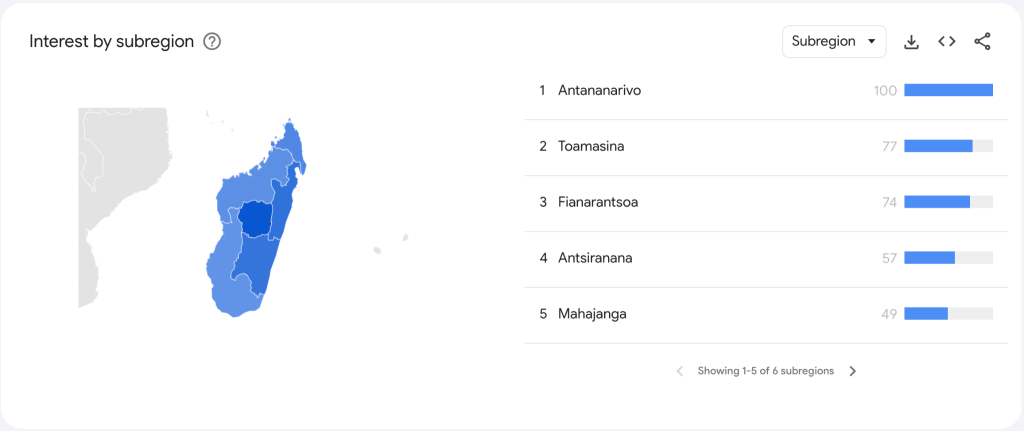
Dorsey's Bitchat Explodes in Madagascar as Protesters Ditch Government-Controlled CommsSource: Google Trends

Poverty and Infrastructure Crisis Fuel Violent Demonstrations

The peer-to-peer application operates without internet infrastructure using Bluetooth Low Energy mesh networks, allowing encrypted messages to hop between devices within 30-meter ranges.

Chrome-Stats shows Bitchat has been downloaded 365,307 times since launch, with over 21,000 downloads in the last day and more than 71,000 in the past week.

Protests erupted on Thursday as thousands of mostly young protesters marched through Antananarivo, demanding the restoration of reliable water and electricity services.

Police fired tear gas to disperse crowds who barricaded roads with burning tires and rocks before looting shopping malls, banks, and attacking homes of lawmakers close to President Andry Rajoelina.

The government sacked its energy minister and imposed curfews from 7 PM to 5 AM to restore public order.

Madagascar faces severe poverty, with 75% of its 30 million population living below the World Bank’s poverty line, while only 6.6 million citizens have internet access.

Mesh Networks Enable Communication During Civil Unrest

Bitchat adoption in Madagascar follows similar patterns observed during recent protests in Nepal and Indonesia.

Nepal recorded 48,781 downloads on September 8 as youth-led demonstrations against corruption and social media bans left 22 dead and forced Prime Minister KP Sharma Oli’s resignation.

The application requires no phone numbers, email addresses, or account registration while providing end-to-end encryption through X25519 key exchange and AES-256-GCM protocols.

Each device functions as both a client and a server, creating self-organizing networks that are resilient to centralized attacks or single points of failure.

Messages fragment into 500-byte chunks, enabling transmission across multiple device hops with up to seven relay points.

The store-and-forward system caches messages for offline users up to 12 hours, ensuring delivery even when direct connections are unavailable.

Random peer IDs are generated for each session, protecting user privacy while eliminating the need for persistent identifiers.

Emergency wipe capabilities, accessible through triple-tap commands, instantly clear local data if devices are compromised or confiscated.

Dorsey launched the beta in July 2025, filling TestFlight’s 10,000 capacity within hours.

The weekend project focuses on disaster coordination, event overflow communication, and building cross-community bridges during internet shutdowns or government censorship campaigns.

Western Governments Target Encrypted Communications Simultaneously

The European Union advances its controversial “Chat Control” regulation, which requires messaging apps to scan every message, photo, and video before encryption.

Fifteen EU countries currently support the proposal, though it falls short of the 65% population threshold required for passage.

The Child Sexual Abuse Regulation mandates client-side scanning where software checks content on user devices before transmission.

Supporters argue the measure combats child abuse material, while critics warn it enables mass surveillance and weakens encryption, protecting financial privacy.

Parallel pressures exist in the United States, where Telegram CEO Pavel Durov has stated that his company avoids building infrastructure due to concerns about government surveillance.

The NSA previously attempted to influence global encryption standards to make them easier to break, facts revealed through Edward Snowden’s leaks.

For the EU, Germany holds the pivotal vote and has yet to take a final stance ahead of the anticipated October 14 Council vote.

Platforms like Signal have suggested they would exit the EU market rather than compromise on encryption standards.

For cryptocurrency users, the regulation poses a threat to the encryption protecting wallet transactions, private keys, and identity data.

Client-side scanning could theoretically extend to peer-to-peer payments, decentralized finance (DeFi) protocols, or wallet operations, thereby undermining the principles of decentralization.

Crypto advocates predict that the proposal might drive users toward decentralized Web3 platforms, which are designed for privacy by default.

Major tech companies, including Google and Starlink, have invested in mesh networking solutions as decentralized infrastructure alternatives.

Dorsey's Bitchat Explodes in Madagascar as Protesters Ditch Government-Controlled CommsSource: BitChat Explorer

Global adoption of censorship-resistant tools continues accelerating, with Indonesia recording 12,581 Bitchat downloads during August protests over parliamentary allowances and police brutality, similar to Nepal.

Russia also contributed 8,749 downloads while the United States registered 8,211 users during the same time.


Disclaimer: The articles reposted on this site are sourced from public platforms and are provided for informational purposes only. They do not necessarily reflect the views of MEXC. All rights remain with the original authors. If you believe any content infringes on third-party rights, please contact service@support.mexc.com for removal. MEXC makes no guarantees regarding the accuracy, completeness, or timeliness of the content and is not responsible for any actions taken based on the information provided. The content does not constitute financial, legal, or other professional advice, nor should it be considered a recommendation or endorsement by MEXC.

You May Also Like

Visa Expands USDC Stablecoin Settlement For US Banks

Visa Expands USDC Stablecoin Settlement For US Banks

The post Visa Expands USDC Stablecoin Settlement For US Banks appeared on BitcoinEthereumNews.com. Visa Expands USDC Stablecoin Settlement For US Banks
Share
BitcoinEthereumNews2025/12/17 15:23
North America Sees $2.3T in Crypto

North America Sees $2.3T in Crypto

The post North America Sees $2.3T in Crypto appeared on BitcoinEthereumNews.com. Key Notes North America received $2.3 trillion in crypto value between July 2024 and June 2025, representing 26% of global activity. Tokenized U.S. treasuries saw assets under management (AUM) grow from $2 billion to over $7 billion in the last twelve months. U.S.-listed Bitcoin ETFs now account for over $120 billion in AUM, signaling strong institutional demand for the asset. . North America has established itself as a major center for cryptocurrency activity, with significant transaction volumes recorded over the past year. The region’s growth highlights an increasing institutional and retail interest in digital assets, particularly within the United States. According to a new report from blockchain analytics firm Chainalysis published on September 17, North America received $2.3 trillion in cryptocurrency value between July 2024 and June 2025. This volume represents 26% of all global transaction activity during that period. The report suggests this activity was influenced by a more favorable regulatory outlook and institutional trading strategies. A peak in monthly value was recorded in December 2024, when an estimated $244 billion was transferred in a single month. ETFs and Tokenization Drive Adoption The rise of spot Bitcoin BTC $115 760 24h volatility: 0.5% Market cap: $2.30 T Vol. 24h: $43.60 B ETFs has been a significant factor in the market’s expansion. U.S.-listed Bitcoin ETFs now hold over $120 billion in assets under management (AUM), making up a large portion of the roughly $180 billion held globally. The strong demand is reflected in a recent resumption of inflows, although the products are not without their detractors, with author Robert Kiyosaki calling ETFs “for losers.” The market for tokenized real-world assets also saw notable growth. While funds holding tokenized U.S. treasuries expanded their AUM from approximately $2 billion to more than $7 billion, the trend is expanding into other asset classes.…
Share
BitcoinEthereumNews2025/09/18 02:07
Will Ozak AI Outperform DOGE, SHIB, and PEPE in Risk-Adjusted Returns?

Will Ozak AI Outperform DOGE, SHIB, and PEPE in Risk-Adjusted Returns?

The post Will Ozak AI Outperform DOGE, SHIB, and PEPE in Risk-Adjusted Returns? appeared on BitcoinEthereumNews.com. While DOGE, SHIB, and PEPE continue to dominate
Share
BitcoinEthereumNews2025/12/17 15:06