

America wants to win the AI race but its own contradictions keep getting in the way
The United States is worried that China has its hands on advanced chip-making machines, sent to them by ASML.
Howard Lutnick, the US Commerce Secretary, reportedly sat down with ASML executives several times to share his fear that an extreme ultraviolet (EUV) lithography machine had somehow landed in Chinese hands. Such a move would break US export rules, which forbid sending ASML’s EUV machines to restricted places like China.

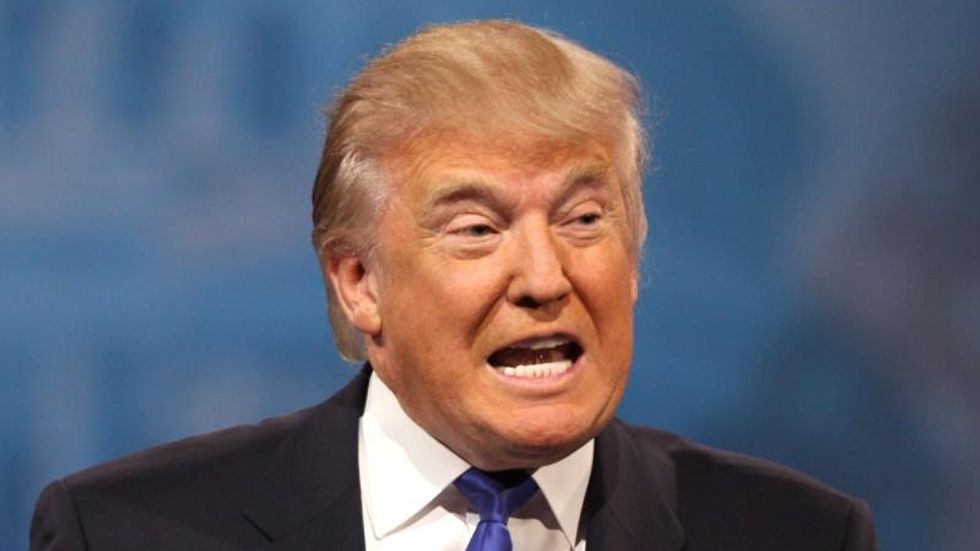
The fact that Lutnick raised this shows Washington has not let its guard down on sensitive tech sales to China, even as President Donald Trump has recently loosened some chip export limits there.
Bloomberg broke the story first, noting that the White House gave reporters no evidence to back up Lutnick’s private remarks.
ASML pushed back on Friday, stating it had “never shipped an EUV machine to China, nor have we shipped to China any component, module, or equipment specially designed to be used in an EUV machine.”
The Dutch government told Reuters it strictly applies its licensing rules to chip-making “equipment, components and technology that explicitly fall under these rules.”
EUV weighs 180 metric tonnes and is as huge as a school bus. TSMC uses this machine for the production of chips used by US top companies like Nvidia. This is why China stays a step back in reaching the level of US chipmakers. However, it was also reported last year that China is attempting to make its own EUV.
That report by Reuters said that it was former ASML engineer working on the prototype for China, country’s own Manhattan Project as reported by Cryptopolitan previously.
U.S has kept a close watch on ASML
The U.S. is also wary of ASML’s maintenance agreements there and has raised questions about its sale of deep ultraviolet (DUV) systems to Chinese buyers, a business that makes up as much as a fifth of the firm’s total revenue.
In April, US lawmakers proposed a bill that would push American allies to match Washington’s stricter export controls, naming ASML directly in the draft legislation.
ASML responded by saying it understood the national security reasoning behind rules in both the US and the Netherlands and remained fully committed to following them.
On the other hand, Trump has eased up on some tech export limits toward China. Nvidia received approval in January to sell its H200 AI chips there, and last month, ten Chinese companies were cleared as buyers. Still, Beijing has been encouraging its tech industry to choose domestically made chips instead.
A seperate worry is brewing across the Atlantic
A speculative essay titled Europe 2031, written by a group of Brussels-based researchers, pictures a future where the US and China leave Europe behind because it failed to invest in datacentres, robotics, and homegrown AI.
The piece appeared just one day before the Trump administration reportedly moved to block “foreign nationals” from accessing an AI model called Fable, built by Anthropic.
The essay spread quickly during a week of G7 meetings, fueling talk about the need for Europe to build its own tech independence. Its writers say they feel “vindicated,” partly because one of their predictions, that the US would limit global access to advanced AI systems, briefly came true.
The essay is part of a wider trend of speculative AI scenarios that have drawn attention from officials, including a 2025 piece called AI 2027 that was reportedly read by US Vice President JD Vance.
U.S faces growing data center criticism
Back home, US opposition to data centers has been growing quickly, moving from local complaints into broader fights over land use and resources. Monterey Park, California, became the first US city to permanently ban large data centers this month after residents voted strongly in favor.
New York lawmakers passed a one-year halt on new large-scale data center projects. As of June, fourteen states have weighed similar restrictions, according to the Rockefeller Institute of Government, as officials in Washington increasingly view advanced AI systems as strategic national assets.
Don’t just read crypto news. Understand it. Subscribe to our newsletter. It's free.


You May Also Like

Jubi Exchange Collapse: Victims Face Race Against Time to Recover Funds
Trump floats new plan to impose his own tolls on Strait of Hormuz

Robotics Automation Prototyping: Engineering Kinetic Agility into End-Effectors



