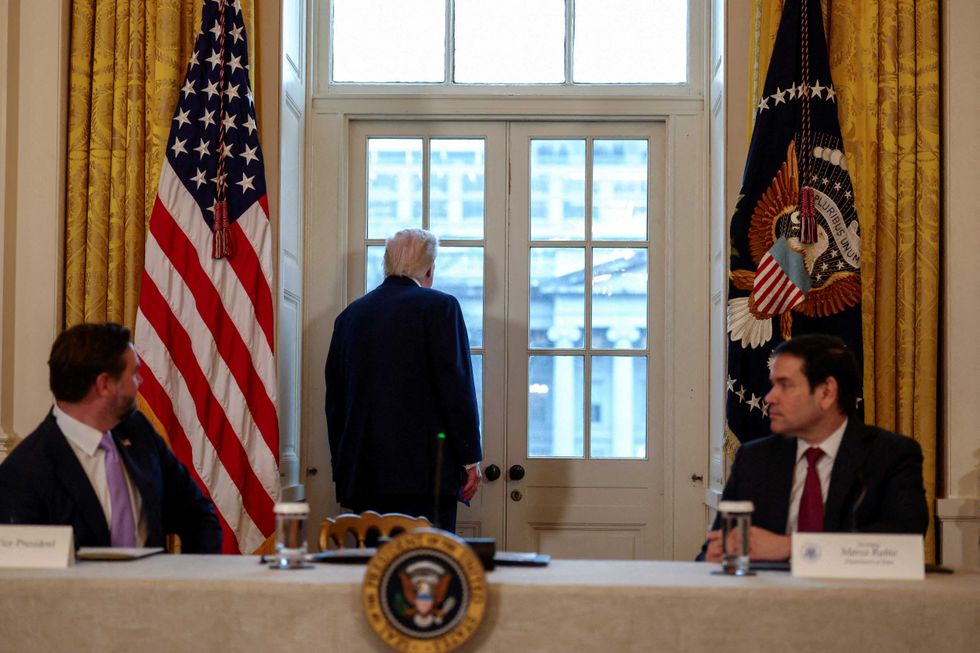
A first US government shutdown in almost seven years is upon us, and the dollar is trading modestly lower.A first US government shutdown in almost seven years is upon us, and the dollar is trading modestly lower.

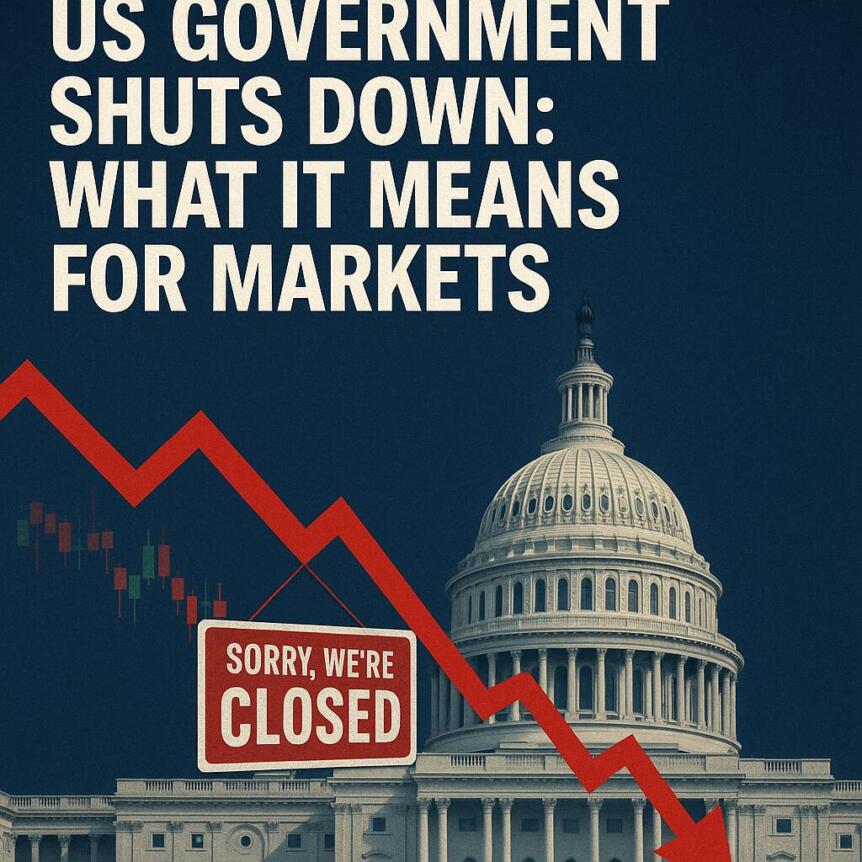
US government shuts down: what it means for markets
For feedback or concerns regarding this content, please contact us at crypto.news@mexc.com
Us Government Shuts Down: What It Means For Markets

Dubai, UAE 2nd October 2025: The federal government ceased activities for a record 35 days back in 2018, amid the now infamous disagreement between President Trump and the Democrats over funding for his fabled border wall with Mexico. As Mark Twain once said, history doesn’t repeat itself, but it often rhymes. Here we are once again, this time with Trump 2.0 at an impasse with Congress over the extension of health insurance subsidies.

Matthew Ryan, CFA, Head of Market Strategy at EburyMatthew Ryan, CFA, Head of Market Strategy at Ebury

USD

The dollar is trading mildly lower against most currencies so far this week, which we can really only put down to jitters surrounding the government shutdown. While a short disruption would likely be brushed aside by markets, and have limited impact on FX, a prolonged impasse that drags on for more than a few days (even weeks) would no doubt trigger an increase in market unease and volatility. The dollar lost 1.5% of its value during the last shutdown in 2018/19 (which lasted for a record 35 days), and its entirely plausible that we could see a repeat performance should the current saga drag out in a similar manner.

Yesterday’s dump of data painted a relatively mixed picture on the state of the US economy. Job openings unexpectedly ticked higher to 7.23 million in August, but quits (which tend to increase during boom periods in a sign that workers feel more secure in finding alternative employment) actually slumped again to 3.1 million – the lowest level since November. Consumer confidence also dropped and, at 94.2, is now at its weakest point since April. All eyes would ordinarily turn to Friday’s payrolls release, but this (along with other official government data) will be delayed until an agreement is reached in Washington.

EUR

We’ve seen a modest tick higher in EUR/USD so far this week, with the common currency now trading around our end of third quarter target, just above the $1.17 level. Focus today will be on this morning’s September inflation report. The consensus of economists suggests a modestly stronger headline number of 2.2% (up from 2%), but with yesterday’s German HICP print surprising markedly to the upside (2.4% vs. the 2.2% estimate), this could be a touch on the conservative side.

ECB President Lagarde said on Tuesday that inflation risks appeared quite contained in both directions, and markets appear pretty confident that the Governing Council is done with its easing cycle. A strong inflation reading today would merely cement these expectations. A handful of other ECB officials will be speaking in the coming days, including members de Guindos, Montagner and Schnabel. We will also be keeping tabs on the final September PMI figures on Friday, particularly after the flash readings showed a surprise dichotomy in performance between the bloc’s two largest economies, Germany and France.

GBP

The final quarter of 2025 is gearing up to be an extremely important one for the pound and one that, quite frankly, could go one of two ways. Probably the two main uncertainties are the following: a) will the Bank of England lower rates again before the year is out and, b) what will the UK government announce at November’s Autumn Budget. On the former, the monetary policy committee remains divided, as while members Ramsden and Breeden have this week hinted at a support for further cuts, hawk Catherine Mann warned yesterday about the risk of above target inflation.

Meanwhile, Chancellor Reeves did nothing during this week’s Labour conference to ease fears ahead of the looming budget. Not only is the market speculating further tax hikes ahead, but Labour have not ruled out such a scenario. There have even been suggestions that the chancellor is considering breaking an election promise by hiking VAT, which would be a pretty ominous development for the pound, as markets would price in both higher inflation and lower growth ahead, which is never a pleasant combination.

This article was originally published as US government shuts down: what it means for markets on Crypto Breaking News – your trusted source for crypto news, Bitcoin news, and blockchain updates.


Get Covered, Share 1M USDT

Get Covered, Share 1M USDTGet Covered, Share 1M USDT

Higher VVIP tiers, higher compensation odds.

Disclaimer: The articles reposted on this site are sourced from public platforms and are provided for informational purposes only. They do not necessarily reflect the views of MEXC. All rights remain with the original authors. If you believe any content infringes on third-party rights, please contact crypto.news@mexc.com for removal. MEXC makes no guarantees regarding the accuracy, completeness, or timeliness of the content and is not responsible for any actions taken based on the information provided. The content does not constitute financial, legal, or other professional advice, nor should it be considered a recommendation or endorsement by MEXC.

You May Also Like

Not a loophole: Singapore AI export controls let China tap US AI legally

Not a loophole: Singapore AI export controls let China tap US AI legally

American AI technology is reaching Chinese tech giants through a route that US export controls were never designed to close: Singapore. The city-state sits outside
Share
The Cryptonomist2026/07/10 14:46
Unlocking Massive Value: Curve Finance Revenue Sharing Proposal for CRV Holders

Unlocking Massive Value: Curve Finance Revenue Sharing Proposal for CRV Holders

BitcoinWorld Unlocking Massive Value: Curve Finance Revenue Sharing Proposal for CRV Holders The dynamic world of decentralized finance (DeFi) is constantly evolving, bringing forth new opportunities and innovations. A significant development is currently unfolding at Curve Finance, a leading decentralized exchange (DEX). Its founder, Michael Egorov, has put forth an exciting proposal designed to offer a more direct path for token holders to earn revenue. This initiative, centered around a new Curve Finance revenue sharing model, aims to bolster the value for those actively participating in the protocol’s governance. What is the “Yield Basis” Proposal and How Does it Work? At the core of this forward-thinking initiative is a new protocol dubbed Yield Basis. Michael Egorov introduced this concept on the CurveDAO governance forum, outlining a mechanism to distribute sustainable profits directly to CRV holders. Specifically, it targets those who stake their CRV tokens to gain veCRV, which are essential for governance participation within the Curve ecosystem. Let’s break down the initial steps of this innovative proposal: crvUSD Issuance: Before the Yield Basis protocol goes live, $60 million in crvUSD will be issued. Strategic Fund Allocation: The funds generated from the sale of these crvUSD tokens will be strategically deployed into three distinct Bitcoin-based liquidity pools: WBTC, cbBTC, and tBTC. Pool Capping: To ensure balanced risk and diversified exposure, each of these pools will be capped at $10 million. This carefully designed structure aims to establish a robust and consistent income stream, forming the bedrock of a sustainable Curve Finance revenue sharing mechanism. Why is This Curve Finance Revenue Sharing Significant for CRV Holders? This proposal marks a pivotal moment for CRV holders, particularly those dedicated to the long-term health and governance of Curve Finance. Historically, generating revenue for token holders in the DeFi space can often be complex. The Yield Basis proposal simplifies this by offering a more direct and transparent pathway to earnings. By staking CRV for veCRV, holders are not merely engaging in governance; they are now directly positioned to benefit from the protocol’s overall success. The significance of this development is multifaceted: Direct Profit Distribution: veCRV holders are set to receive a substantial share of the profits generated by the Yield Basis protocol. Incentivized Governance: This direct financial incentive encourages more users to stake their CRV, which in turn strengthens the protocol’s decentralized governance structure. Enhanced Value Proposition: The promise of sustainable revenue sharing could significantly boost the inherent value of holding and staking CRV tokens. Ultimately, this move underscores Curve Finance’s dedication to rewarding its committed community and ensuring the long-term vitality of its ecosystem through effective Curve Finance revenue sharing. Understanding the Mechanics: Profit Distribution and Ecosystem Support The distribution model for Yield Basis has been thoughtfully crafted to strike a balance between rewarding veCRV holders and supporting the wider Curve ecosystem. Under the terms of the proposal, a substantial portion of the value generated by Yield Basis will flow back to those who contribute to the protocol’s governance. Returns for veCRV Holders: A significant share, specifically between 35% and 65% of the value generated by Yield Basis, will be distributed to veCRV holders. This flexible range allows for dynamic adjustments based on market conditions and the protocol’s performance. Ecosystem Reserve: Crucially, 25% of the Yield Basis tokens will be reserved exclusively for the Curve ecosystem. This allocation can be utilized for various strategic purposes, such as funding ongoing development, issuing grants, or further incentivizing liquidity providers. This ensures the continuous growth and innovation of the platform. The proposal is currently undergoing a democratic vote on the CurveDAO governance forum, giving the community a direct voice in shaping the future of Curve Finance revenue sharing. The voting period is scheduled to conclude on September 24th. What’s Next for Curve Finance and CRV Holders? The proposed Yield Basis protocol represents a pioneering approach to sustainable revenue generation and community incentivization within the DeFi landscape. If approved by the community, this Curve Finance revenue sharing model has the potential to establish a new benchmark for how decentralized exchanges reward their most dedicated participants. It aims to foster a more robust and engaged community by directly linking governance participation with tangible financial benefits. This strategic move by Michael Egorov and the Curve Finance team highlights a strong commitment to innovation and strengthening the decentralized nature of the protocol. For CRV holders, a thorough understanding of this proposal is crucial for making informed decisions regarding their staking strategies and overall engagement with one of DeFi’s foundational platforms. FAQs about Curve Finance Revenue Sharing Q1: What is the main goal of the Yield Basis proposal? A1: The primary goal is to establish a more direct and sustainable way for CRV token holders who stake their tokens (receiving veCRV) to earn revenue from the Curve Finance protocol. Q2: How will funds be generated for the Yield Basis protocol? A2: Initially, $60 million in crvUSD will be issued and sold. The funds from this sale will then be allocated to three Bitcoin-based pools (WBTC, cbBTC, and tBTC), with each pool capped at $10 million, to generate profits. Q3: Who benefits from the Yield Basis revenue sharing? A3: The proposal states that between 35% and 65% of the value generated by Yield Basis will be returned to veCRV holders, who are CRV stakers participating in governance. Q4: What is the purpose of the 25% reserve for the Curve ecosystem? A4: This 25% reserve of Yield Basis tokens is intended to support the broader Curve ecosystem, potentially funding development, grants, or other initiatives that contribute to the platform’s growth and sustainability. Q5: When is the vote on the Yield Basis proposal? A5: A vote on the proposal is currently underway on the CurveDAO governance forum and is scheduled to run until September 24th. If you found this article insightful and valuable, please consider sharing it with your friends, colleagues, and followers on social media! Your support helps us continue to deliver important DeFi insights and analysis to a wider audience. To learn more about the latest DeFi market trends, explore our article on key developments shaping decentralized finance institutional adoption. This post Unlocking Massive Value: Curve Finance Revenue Sharing Proposal for CRV Holders first appeared on BitcoinWorld.
Share
Coinstats2025/09/18 00:35
Q2 Market Insights: Bitcoin regains dominance in risk-averse environment, ETFs remain critical to market structure

Q2 Market Insights: Bitcoin regains dominance in risk-averse environment, ETFs remain critical to market structure

The market will show a downward trend in the short term, and then rebound and set new highs in the second half of the year.
Share
PANews2025/04/28 19:40

Record Ads, Stock Down 7%

Record Ads, Stock Down 7%Record Ads, Stock Down 7%

Jul 29: Meta earnings face the market's question.