The post Bitcoin price dips below $112K amid US-China trade war appeared on BitcoinEthereumNews.com. Bitcoin price continued its decline after Trump’s China import threats reignited fears of a renewed U.S.–China trade war. Summary Trump’s cooking oil ban threat on Oct 14 deepened trade war fears. Bitcoin dropped below $112K, with $90B trading volume amid volatility. Rising liquidations and Fed rate cut uncertainty worsen bearish market sentiment. Bitcoin traded near $111,925 at press time, easing about 1.3% in the past day as headlines around worsening U.S.–China trade relations rattled risk appetite and traders reduced leverage. Trading activity has picked up despite the pullback. Bitcoin’s (BTC) 24-hour spot volume rose about 35% to $90 billion, while derivatives turnover climbed nearly 40% to $144 billion, as per CoinGlass data. At the same time, open interest fell by roughly 2% to $72.5 billion, a sign that traders are closing out leveraged positions rather than opening new ones. This tends to calm volatility in the short term but can leave markets vulnerable to sudden moves. Geopolitocal tensions put pressure on Bitcoin price On Oct. 14, U.S. President Donald Trump intensified tensions with China by threatening to ban imports of cooking oil from Beijing in response to China’s ongoing boycott of U.S. soybeans. The statement came after weeks of tariff threats and countermeasures that have deepened fears of a full-blown U.S.–China trade war. Global markets were unsettled by the move, which caused stocks, commodities, and cryptocurrencies to react sharply. The Nasdaq dropped as much as 3.5%, and investors turned to safer assets like gold and U.S. Treasuries. Bitcoin, often seen as a “risk-on” asset during macro uncertainty, fell alongside equities. The renewed uncertainty followed last week’s flash crash, where over $19 billion in crypto long positions were liquidated in 24 hours, one of the largest wipeouts in history. Another $600 million in leveraged positions were flushed in the past day… The post Bitcoin price dips below $112K amid US-China trade war appeared on BitcoinEthereumNews.com. Bitcoin price continued its decline after Trump’s China import threats reignited fears of a renewed U.S.–China trade war. Summary Trump’s cooking oil ban threat on Oct 14 deepened trade war fears. Bitcoin dropped below $112K, with $90B trading volume amid volatility. Rising liquidations and Fed rate cut uncertainty worsen bearish market sentiment. Bitcoin traded near $111,925 at press time, easing about 1.3% in the past day as headlines around worsening U.S.–China trade relations rattled risk appetite and traders reduced leverage. Trading activity has picked up despite the pullback. Bitcoin’s (BTC) 24-hour spot volume rose about 35% to $90 billion, while derivatives turnover climbed nearly 40% to $144 billion, as per CoinGlass data. At the same time, open interest fell by roughly 2% to $72.5 billion, a sign that traders are closing out leveraged positions rather than opening new ones. This tends to calm volatility in the short term but can leave markets vulnerable to sudden moves. Geopolitocal tensions put pressure on Bitcoin price On Oct. 14, U.S. President Donald Trump intensified tensions with China by threatening to ban imports of cooking oil from Beijing in response to China’s ongoing boycott of U.S. soybeans. The statement came after weeks of tariff threats and countermeasures that have deepened fears of a full-blown U.S.–China trade war. Global markets were unsettled by the move, which caused stocks, commodities, and cryptocurrencies to react sharply. The Nasdaq dropped as much as 3.5%, and investors turned to safer assets like gold and U.S. Treasuries. Bitcoin, often seen as a “risk-on” asset during macro uncertainty, fell alongside equities. The renewed uncertainty followed last week’s flash crash, where over $19 billion in crypto long positions were liquidated in 24 hours, one of the largest wipeouts in history. Another $600 million in leveraged positions were flushed in the past day…

Bitcoin price dips below $112K amid US-China trade war

For feedback or concerns regarding this content, please contact us at crypto.news@mexc.com

Bitcoin price continued its decline after Trump’s China import threats reignited fears of a renewed U.S.–China trade war.

Summary

  • Trump’s cooking oil ban threat on Oct 14 deepened trade war fears.
  • Bitcoin dropped below $112K, with $90B trading volume amid volatility.
  • Rising liquidations and Fed rate cut uncertainty worsen bearish market sentiment.

Bitcoin traded near $111,925 at press time, easing about 1.3% in the past day as headlines around worsening U.S.–China trade relations rattled risk appetite and traders reduced leverage.

Trading activity has picked up despite the pullback. Bitcoin’s (BTC) 24-hour spot volume rose about 35% to $90 billion, while derivatives turnover climbed nearly 40% to $144 billion, as per CoinGlass data.

At the same time, open interest fell by roughly 2% to $72.5 billion, a sign that traders are closing out leveraged positions rather than opening new ones. This tends to calm volatility in the short term but can leave markets vulnerable to sudden moves.

Geopolitocal tensions put pressure on Bitcoin price

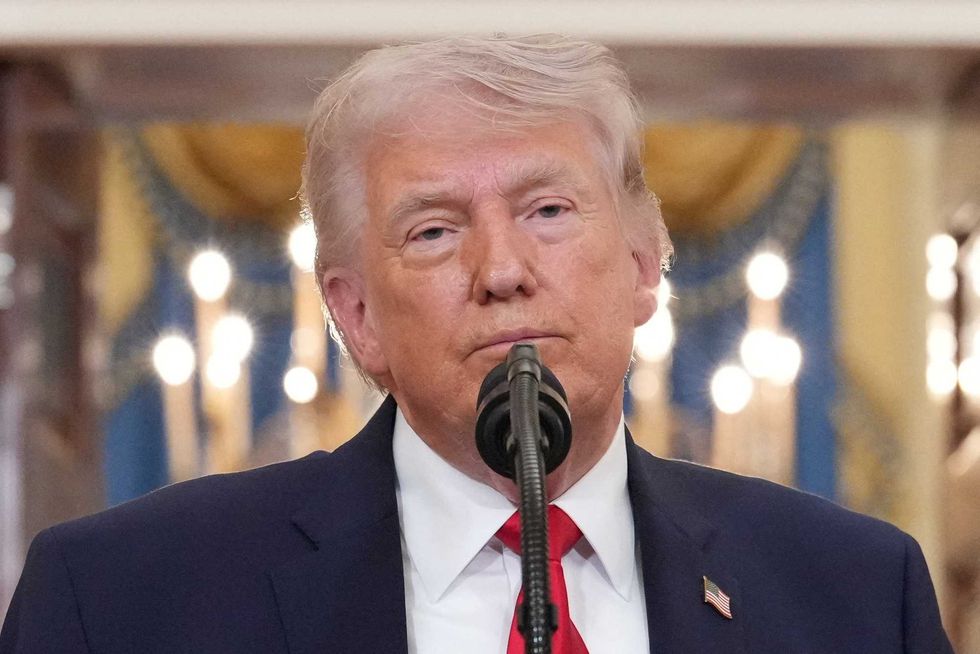
On Oct. 14, U.S. President Donald Trump intensified tensions with China by threatening to ban imports of cooking oil from Beijing in response to China’s ongoing boycott of U.S. soybeans. The statement came after weeks of tariff threats and countermeasures that have deepened fears of a full-blown U.S.–China trade war.

Global markets were unsettled by the move, which caused stocks, commodities, and cryptocurrencies to react sharply. The Nasdaq dropped as much as 3.5%, and investors turned to safer assets like gold and U.S. Treasuries. Bitcoin, often seen as a “risk-on” asset during macro uncertainty, fell alongside equities.

The renewed uncertainty followed last week’s flash crash, where over $19 billion in crypto long positions were liquidated in 24 hours, one of the largest wipeouts in history. Another $600 million in leveraged positions were flushed in the past day as traders unwound risk. 

Markets are now watching the upcoming Federal Reserve meeting (Oct. 29–30), with 89% odds of a 25 bps rate cut. However, hawkish hints from recent Fed minutes, highlighting sticky inflation, have tempered optimism. A stronger U.S. dollar and higher Treasury yields are adding pressure on Bitcoin, which tends to underperform during tightening liquidity conditions..

Bitcoin price technical analysis

Bitcoin shows short-term weakness after slipping below key moving averages. The 10-, 20-, and 30-day EMAs sit above price, indicating near-term pressure, while the 200-day averages around $108,000–$107,000 act as long-term support.

Bitcoin daily chart. Credit: crypto.news

Momentum indicators are bearish. The relative strength index at 43 indicates waning strength but not oversold conditions, and the MACD and momentum are both negative.

Trend signals are moderate, with the average directional index at 25 suggesting a move that could still deepen. Price trades in the lower half of its range, with Bollinger Bands showing cooling but elevated volatility.

Regaining the $115,000–$116,000 resistance could reopen the path to $123,000. Support lies near $108,000–$107,000. Losing it risks a slide to $104,000 or even $100,000. Bulls need stronger volume on rebounds, while bears look for another flush toward the 200-day band.

Source: https://crypto.news/bitcoin-price-slides-trump-u-s-china-trade-war-2025/

Market Opportunity
Polytrade Logo
Polytrade Price(TRADE)
$0.03656
$0.03656$0.03656
-1.13%
USD
Polytrade (TRADE) Live Price Chart
Disclaimer: The articles reposted on this site are sourced from public platforms and are provided for informational purposes only. They do not necessarily reflect the views of MEXC. All rights remain with the original authors. If you believe any content infringes on third-party rights, please contact crypto.news@mexc.com for removal. MEXC makes no guarantees regarding the accuracy, completeness, or timeliness of the content and is not responsible for any actions taken based on the information provided. The content does not constitute financial, legal, or other professional advice, nor should it be considered a recommendation or endorsement by MEXC.

You May Also Like

The Channel Factories We’ve Been Waiting For

The Channel Factories We’ve Been Waiting For

The post The Channel Factories We’ve Been Waiting For appeared on BitcoinEthereumNews.com. Visions of future technology are often prescient about the broad strokes while flubbing the details. The tablets in “2001: A Space Odyssey” do indeed look like iPads, but you never see the astronauts paying for subscriptions or wasting hours on Candy Crush.  Channel factories are one vision that arose early in the history of the Lightning Network to address some challenges that Lightning has faced from the beginning. Despite having grown to become Bitcoin’s most successful layer-2 scaling solution, with instant and low-fee payments, Lightning’s scale is limited by its reliance on payment channels. Although Lightning shifts most transactions off-chain, each payment channel still requires an on-chain transaction to open and (usually) another to close. As adoption grows, pressure on the blockchain grows with it. The need for a more scalable approach to managing channels is clear. Channel factories were supposed to meet this need, but where are they? In 2025, subnetworks are emerging that revive the impetus of channel factories with some new details that vastly increase their potential. They are natively interoperable with Lightning and achieve greater scale by allowing a group of participants to open a shared multisig UTXO and create multiple bilateral channels, which reduces the number of on-chain transactions and improves capital efficiency. Achieving greater scale by reducing complexity, Ark and Spark perform the same function as traditional channel factories with new designs and additional capabilities based on shared UTXOs.  Channel Factories 101 Channel factories have been around since the inception of Lightning. A factory is a multiparty contract where multiple users (not just two, as in a Dryja-Poon channel) cooperatively lock funds in a single multisig UTXO. They can open, close and update channels off-chain without updating the blockchain for each operation. Only when participants leave or the factory dissolves is an on-chain transaction…
Share
BitcoinEthereumNews2025/09/18 00:09
Solana Price Prediction: ARK Projects $300B Liquidity Rebound as Pepeto Targets 267x From Presale

Solana Price Prediction: ARK Projects $300B Liquidity Rebound as Pepeto Targets 267x From Presale

After months of pressure on risk assets, the tide may finally be turning. ARK Invest expects roughly $300 billion to flow back into markets as the Treasury General
Share
Techbullion2026/03/10 09:06
The US XRP spot ETF saw a total net outflow of $18.107 million in a single day.

The US XRP spot ETF saw a total net outflow of $18.107 million in a single day.

PANews reported on March 10 that, according to SoSoValue data, the XRP spot ETF saw a net outflow of $18.107 million yesterday (March 9, Eastern Time). The XRP
Share
PANews2026/03/10 08:51