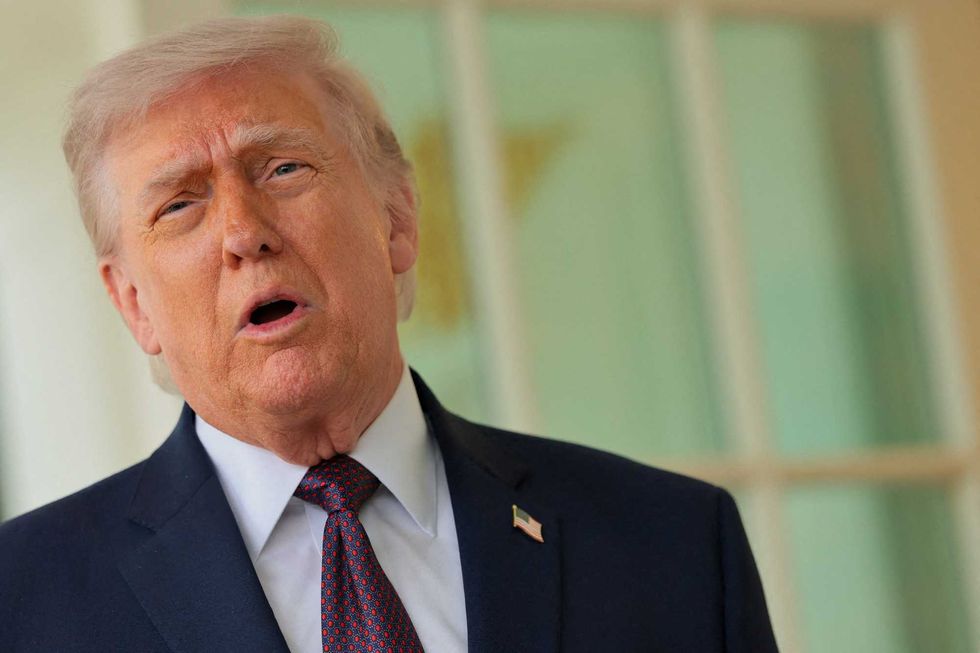
The IMF has projected that global debt will surpass 100% of GDP by 2029, the highest level since 1948.The IMF has projected that global debt will surpass 100% of GDP by 2029, the highest level since 1948.

IMF urges tighter fiscal policy as global debt nears historic peak

The International Monetary Fund (IMF) released the October Fiscal Monitor today. It projects that global public debt may exceed 100% of global GDP by 2029, surpassing the levels reached after World War II in 1948.

The IMF has urged policymakers worldwide to tighten fiscal measures and be prepared for potential financial shakeups due to increased borrowing costs. Victor Gaspar, the Director of the IMF’s Fiscal Affairs Department, noted that public debt risks have widened and will continue to grow even faster if no controls are implemented.

IMF says public debt may go beyond record set after WWII

Under an adverse but plausible scenario, the IMF cautioned that debt could rise as high as 123% of GDP by the end of the decade, approaching the record set just after World War II.

The financial institution revealed that debt ratios have increased due to a slow growth rate from governments, which has led to increased interest rates. It highlighted several factors driving the high public debt, including increased defense spending, aging populations, and the need for climate adaptation.

Low interest rates emerged after the 2008 financial crisis, also contributing to high public debt before the COVID-19 pandemic, which led to increased rates. The latest Fiscal Monitor report builds on the April report, which issued the same warnings. The April report warned that global debt would surpass 95% of the worldwide GDP in 2025. 

Meanwhile, the IMF has projected that public debt will reach 100% by the end of the decade. The financial institution highlighted rising yields, widening spreads, and complex trade-offs between reducing borrowing and sustaining growth. 

The U.S. tariff wars introduced in April threatened growth in major economies, including the U.S., pushing public debt even higher this year as governments struggled with meeting defense and social spending. The April Fiscal Monitor report estimated that global trade tariffs could add approximately 4.5% to global GDP in the short term. 

IMF warns that the fiscal space is narrowing for large economies

Large economies, such as the U.S., China, Japan, France, Italy, Canada, and the UK, have either surpassed the 100% of GDP mark or will soon do so, according to the IMF. The report cautioned that the fiscal space for those economies is narrowing, and they may no longer enjoy the benefit of deep bond markets and investor confidence.  

The IMF also noted that small and emerging economies are at a higher risk of higher borrowing rates despite their low debt-to-GDP ratios due to limited fiscal capacity. The report added that low-income nations will be left to shocks from price swings, natural disasters such as the COVID-19 pandemic, and even renewed trade tensions. 

However, Scott Bessent, the US Treasury Secretary, has signaled that the US still has room to improve its fiscal balance. In an interview with CNBC, he stated that the deficit-to-GDP ratio may decrease to 3% in the short term from its current level of 5%. The current U.S. deficit for the fiscal year ending September 30 has not been released yet, following the ongoing government shutdown.

The IMF advised the U.S. to focus on deficit reduction, pension, and health care reforms to reduce and stabilize public debt. The financial institution argued that lowering the U.S. deficit would help rebalance the economy and improve the country’s economic conditions. The Fund also emphasized that redirecting a portion of current spending towards education and human capital investment, even if it’s just 1% of the GDP, could increase government revenue by more than 3% by 2050 in developed countries and 6% in developing economies. It also urged developing countries to strengthen their tax systems and maintain credible adjustment paths to avoid crises.

Want your project in front of crypto’s top minds? Feature it in our next industry report, where data meets impact.


Disclaimer: The articles reposted on this site are sourced from public platforms and are provided for informational purposes only. They do not necessarily reflect the views of MEXC. All rights remain with the original authors. If you believe any content infringes on third-party rights, please contact service@support.mexc.com for removal. MEXC makes no guarantees regarding the accuracy, completeness, or timeliness of the content and is not responsible for any actions taken based on the information provided. The content does not constitute financial, legal, or other professional advice, nor should it be considered a recommendation or endorsement by MEXC.

You May Also Like

Is Doge Losing Steam As Traders Choose Pepeto For The Best Crypto Investment?

Is Doge Losing Steam As Traders Choose Pepeto For The Best Crypto Investment?

The post Is Doge Losing Steam As Traders Choose Pepeto For The Best Crypto Investment? appeared on BitcoinEthereumNews.com. Crypto News 17 September 2025 | 17:39 Is dogecoin really fading? As traders hunt the best crypto to buy now and weigh 2025 picks, Dogecoin (DOGE) still owns the meme coin spotlight, yet upside looks capped, today’s Dogecoin price prediction says as much. Attention is shifting to projects that blend culture with real on-chain tools. Buyers searching “best crypto to buy now” want shipped products, audits, and transparent tokenomics. That frames the true matchup: dogecoin vs. Pepeto. Enter Pepeto (PEPETO), an Ethereum-based memecoin with working rails: PepetoSwap, a zero-fee DEX, plus Pepeto Bridge for smooth cross-chain moves. By fusing story with tools people can use now, and speaking directly to crypto presale 2025 demand, Pepeto puts utility, clarity, and distribution in front. In a market where legacy meme coin leaders risk drifting on sentiment, Pepeto’s execution gives it a real seat in the “best crypto to buy now” debate. First, a quick look at why dogecoin may be losing altitude. Dogecoin Price Prediction: Is Doge Really Fading? Remember when dogecoin made crypto feel simple? In 2013, DOGE turned a meme into money and a loose forum into a movement. A decade on, the nonstop momentum has cooled; the backdrop is different, and the market is far more selective. With DOGE circling ~$0.268, the tape reads bearish-to-neutral for the next few weeks: hold the $0.26 shelf on daily closes and expect choppy range-trading toward $0.29–$0.30 where rallies keep stalling; lose $0.26 decisively and momentum often bleeds into $0.245 with risk of a deeper probe toward $0.22–$0.21; reclaim $0.30 on a clean daily close and the downside bias is likely neutralized, opening room for a squeeze into the low-$0.30s. Source: CoinMarketcap / TradingView Beyond the dogecoin price prediction, DOGE still centers on payments and lacks native smart contracts; ZK-proof verification is proposed,…
Share
BitcoinEthereumNews2025/09/18 00:14
Fed Decides On Interest Rates Today—Here’s What To Watch For

Fed Decides On Interest Rates Today—Here’s What To Watch For

The post Fed Decides On Interest Rates Today—Here’s What To Watch For appeared on BitcoinEthereumNews.com. Topline The Federal Reserve on Wednesday will conclude a two-day policymaking meeting and release a decision on whether to lower interest rates—following months of pressure and criticism from President Donald Trump—and potentially signal whether additional cuts are on the way. President Donald Trump has urged the central bank to “CUT INTEREST RATES, NOW, AND BIGGER” than they might plan to. Getty Images Key Facts The central bank is poised to cut interest rates by at least a quarter-point, down from the 4.25% to 4.5% range where they have been held since December to between 4% and 4.25%, as Wall Street has placed 100% odds of a rate cut, according to CME’s FedWatch, with higher odds (94%) on a quarter-point cut than a half-point (6%) reduction. Fed governors Christopher Waller and Michelle Bowman, both Trump appointees, voted in July for a quarter-point reduction to rates, and they may dissent again in favor of a large cut alongside Stephen Miran, Trump’s Council of Economic Advisers’ chair, who was sworn in at the meeting’s start on Tuesday. It’s unclear whether other policymakers, including Kansas City Fed President Jeffrey Schmid and St. Louis Fed President Alberto Musalem, will favor larger cuts or opt for no reduction. Fed Chair Jerome Powell said in his Jackson Hole, Wyoming, address last month the central bank would likely consider a looser monetary policy, noting the “shifting balance of risks” on the U.S. economy “may warrant adjusting our policy stance.” David Mericle, an economist for Goldman Sachs, wrote in a note the “key question” for the Fed’s meeting is whether policymakers signal “this is likely the first in a series of consecutive cuts” as the central bank is anticipated to “acknowledge the softening in the labor market,” though they may not “nod to an October cut.” Mericle said he…
Share
BitcoinEthereumNews2025/09/18 00:23
Stronger capital, bigger loans: Africa’s banking outlook for 2026

Stronger capital, bigger loans: Africa’s banking outlook for 2026

African banks spent 2025 consolidating, shoring up capital, tightening risk controls, and investing in digital infrastructure, following years of macroeconomic
Share
Techcabal2026/01/14 23:06