

Innovation Theater: Confusing Token Launches With True Market Success
The post Innovation Theater: Confusing Token Launches With True Market Success appeared first on Coinpedia Fintech News
Picture a scene: a crypto startup celebrates raising millions through a dazzling token sale. Their whitepaper is a masterpiece, filled with clever tokenomics, bold governance plans, and an ambitious timeline. Yet, half a year later, the token trades actively, the bank account is full, but actual users? Nowhere to be found. This isn’t an isolated story; it’s a recurring theme in crypto from 2017 to 2021.
Innovation Theater
Founders secured massive funding on paper promises without ever delivering real products. Back then, hype trumped substance. But those days are behind us. As Audrey Nesbitt explains in ‘Why You Shouldn’t Be the CEO (And Other Ways to Save Your Startup)’, investors now want real proof: customers, working products, and viable business models.
Some in Web3 have taken note. They’re holding off on token launches until they see real user interest and validated demand. This marks a meaningful shift from “raise then build” to “build then raise.”
Still, many crypto creators remain trapped in the old mindset, often mistaking token engineering for market validation, elegant design for product fit, and enthusiastic communities for actual paying customers.
This is the essence of what Nesbitt calls “innovation theater”, where founders obsess over tokens while sidestepping the question: does anyone genuinely want this?
The Token Illusion: Innovation Or Fundraising?
Token design often masquerades as breakthrough innovation, but more often, it’s just a clever way to raise capital. It’s far easier to fine-tune a token’s mechanics than to have difficult conversations with potential users who might not care about your idea.
Nesbitt describes this as “ego wrapped in fear,” cloaked in technical jargon to appear credible. Even with investors demanding more evidence today, many founders still get caught up perfecting protocols before ever engaging users. They debate governance models without validating if there’s a problem worth solving. Then, they’re baffled when everyday people show little interest.
In the past, a compelling story about network effects could attract funding without customers. Now, customer traction is required. Yet some founders haven’t adapted, they’ve just shifted the attention from fundraising to product development.
Timeless Mistakes: People Over Technology
Technology changes, but human nature doesn’t. That’s why the same errors keep popping up. Founders confuse what can be built with what users actually want. They overestimate how fast adoption will happen and assume innovation alone will draw crowds.
Nesbitt recalls a Web3 social platform with brilliant tech minds behind it, convinced users would flock to decentralized content creation. The reality? People preferred familiar platforms and saw setting up wallets and managing keys as a chore, not a feature. The lesson? Market readiness hinges on users being frustrated enough with current options to tolerate new hassles.
This ties into a psychological insight called “just noticeable difference.” Your product must deliver a meaningful improvement, not just be different for difference’s sake. The platform was innovative but failed to feel significantly better to everyday users.
As Nesbitt puts it, “Most people don’t care about decentralization or crypto, it’s still a niche.”
The Elephant In The Room: Product-Market Fit Denial
Data shows nearly half of startups fail because they create products no one really needs, not because of tech bugs or poor execution. In crypto, this failure is masked by secretive development and the allure of token sales, bypassing essential validation steps.
Nesbitt points out that teams can explain their blockchain consensus with precision but struggle to say why anyone would actually use their product. The market doesn’t care about how elegant your tech is, it cares if you make life easier.
This isn’t a call to abandon technical rigor. It’s a reminder that without market fit, even the best code is just an expensive hobby. Successful companies like Stripe and Zoom started by solving one pressing problem well before expanding. Meanwhile, products like Google Wave or Segway showcased amazing tech for problems that users didn’t feel urgently needed solving.
What Real Validation Looks Like
Before writing a single line of code or launching a token, Nesbitt urges founders to challenge every assumption about their customers’ frustrations, willingness to pay, authority, and behavior. Without this hard truth, you’re building on shaky ground.
She recommends a scientific four-week approach: start by interviewing users about their problems, without pitching your solution. Then, present your idea conceptually to gauge reactions. Next, build a minimal viable version to observe real usage. Finally, test if people will commit money in the form of pre-orders, deposits, or signed agreements.
The founders who succeed in Web3 today wait for traction before launching tokens. They see tokens as growth boosters, not crutches for lack of product-market fit.
When Tokens Truly Matter
Tokens aren’t inherently bad. The problem is when they exist only to raise funds, not to serve a clear purpose. A simple test: if your business falls apart without the token, you might not have a product at all, just a financial instrument.
Tokens make sense when they’re core to your product’s function, align incentives across a network, or solve coordination challenges that traditional payment systems can’t handle. But this applies to a small fraction of projects.
Bottom line, treat tokens as strategic tools, not magic keys to fundraising.
Founder Blindness: Building What’s Possible, Not What’s Needed
A bigger challenge lies in leadership. Technical founders often suffer from “professional blindness,” building what they know how to build instead of what the market demands. It’s like a master chef fixated on complex dishes while customers want something simple.
Engineering education teaches solving predefined problems. Entrepreneurship requires identifying the right problem, something many technical founders struggle with. This blindness leads to perfectionism and endless tweaking instead of releasing and learning.
Nesbitt warns that perfecting your product in isolation doesn’t protect quality, it guarantees irrelevance.
The Hard Truths Nobody Wants to Face
After several crypto winters, founder behavior is stubbornly resistant to change. The cycle repeats: overestimating demand, skipping validation, confusing community hype for user need. Founders still treat sales, customer support, and financial discipline as unnecessary overhead, despite these basics determining survival.
The companies that endure don’t win on tech alone, they win by deeply understanding and serving their users.
Playing The Long Game
Beyond product-market fit, Nesbitt’s book dives into scaling challenges like cofounder disputes, capital structure, and organizational complexity. Most importantly, she challenges founders to ask whether they should be CEO. Research shows that leadership failures often stem from emotional intelligence gaps, not lack of technical skill.
Building something impressive isn’t enough. You have to build something people want. That’s real innovation, the market sees through the rest.
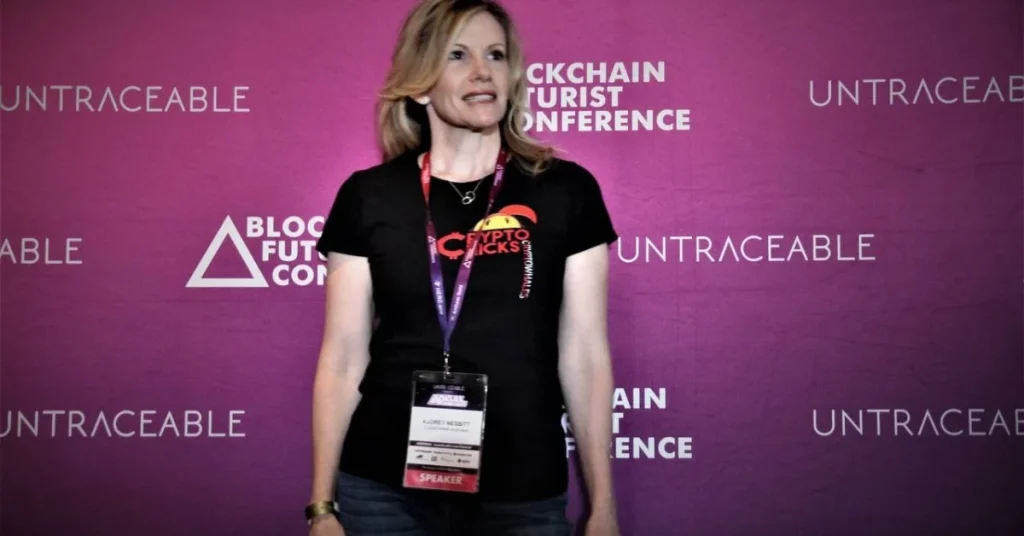
Audrey’s new book, Why You Shouldn’t Be the CEO (And Other Ways to Save Your Startup), is available now in both paperback and digital formats. The author will also be doing a book signing in Miami at the upcoming Blockchain Futurist Conference.
For more information about Audrey Nesbitt and her work, visit her official website.


You May Also Like

LIXTE Biotechnology Advances Precision Oncology with Novel PP2A Inhibitor LB-100

Major Legal Face-Off in TerraUSD Collapse: Jane Street Defends Its Role




