TLDR Over $60B has flowed into Bitcoin spot ETFs, led by BlackRock’s IBIT. Exchange inflows hit record lows while Bitcoin reached all-time highs. Miner selling is now negligible compared to long-term holder activity. Bitcoin’s new bear market floor ranges between $75K and $80K in 2025. Bitcoin’s four-year halving cycle is no longer the main driver [...] The post Bitcoin’s Halving Cycle Loses Ground as ETF Flows Take the Lead appeared first on CoinCentral.TLDR Over $60B has flowed into Bitcoin spot ETFs, led by BlackRock’s IBIT. Exchange inflows hit record lows while Bitcoin reached all-time highs. Miner selling is now negligible compared to long-term holder activity. Bitcoin’s new bear market floor ranges between $75K and $80K in 2025. Bitcoin’s four-year halving cycle is no longer the main driver [...] The post Bitcoin’s Halving Cycle Loses Ground as ETF Flows Take the Lead appeared first on CoinCentral.

Bitcoin’s Halving Cycle Loses Ground as ETF Flows Take the Lead

TLDR

  • Over $60B has flowed into Bitcoin spot ETFs, led by BlackRock’s IBIT.
  • Exchange inflows hit record lows while Bitcoin reached all-time highs.
  • Miner selling is now negligible compared to long-term holder activity.
  • Bitcoin’s new bear market floor ranges between $75K and $80K in 2025.

Bitcoin’s four-year halving cycle is no longer the main driver of price. Institutional demand, ETF flows, and global liquidity trends are shaping a new market structure. Analysts now believe that long-trusted indicators like exchange inflows and Realized Price have lost their effectiveness. As Bitcoin trades above $100,000, investors are rethinking the old cycle playbook going into 2026.

Institutional Demand and ETF Dominance Shift Market Structure

Bitcoin’s traditional cycle, driven by miner rewards halving every four years, is being overtaken by demand from institutions. Since the launch of US spot Bitcoin ETFs, over $60 billion has flowed into the market. These ETFs are now the main source of price formation, as confirmed by Checkonchain Analytics.

James Check, co-founder of Checkonchain, said, “There is absolutely going to be some holders migrating from on-chain to ETFs… but the demand has actually been incredible and massive.”
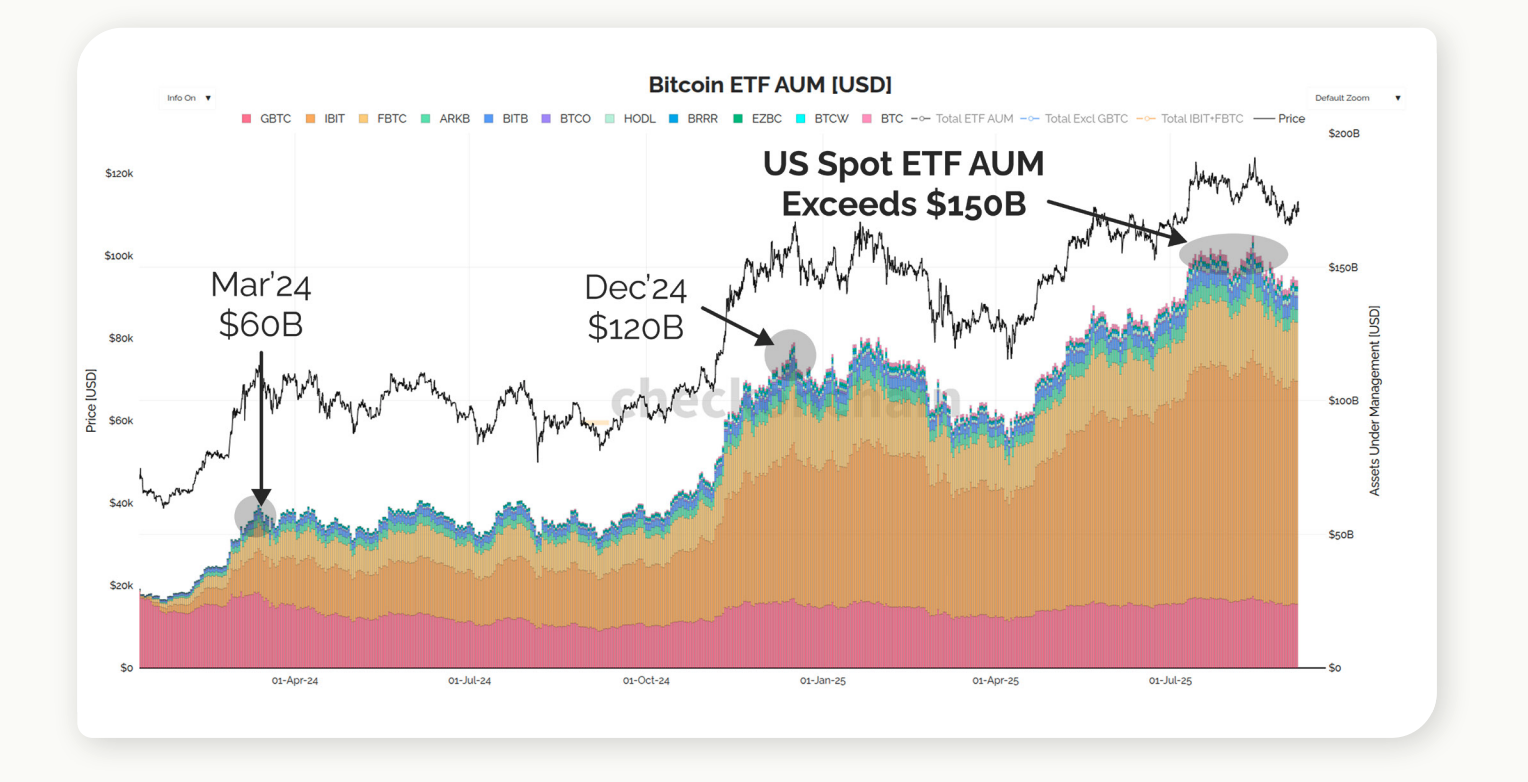
The US market leads in ETF adoption, with BlackRock’s IBIT gaining the most assets under management. IBIT also commands the highest volume in ETF-linked options, which has made it the dominant force in this space. US ETFs now account for 90% of global spot Bitcoin ETF holdings.

Exchange Flows and Miner Activity Losing Influence

In the current market, exchange inflows are at record lows even as Bitcoin reaches new highs. Analysts suggest that this data is incomplete because many wallets used by major exchanges remain unidentified. This reduces the reliability of exchange flow metrics as indicators of buying or selling pressure.

James noted, “You won’t see me actually use exchange data very often… it’s just not a highly useful tool.”

Miner selling, once considered a major influence, is now minimal in effect. Daily issuance of around 450 BTC is small compared to long-term holders who can sell tens of thousands of BTC during rallies. Checkonchain data shows that miner activity is nearly invisible on broader market charts.
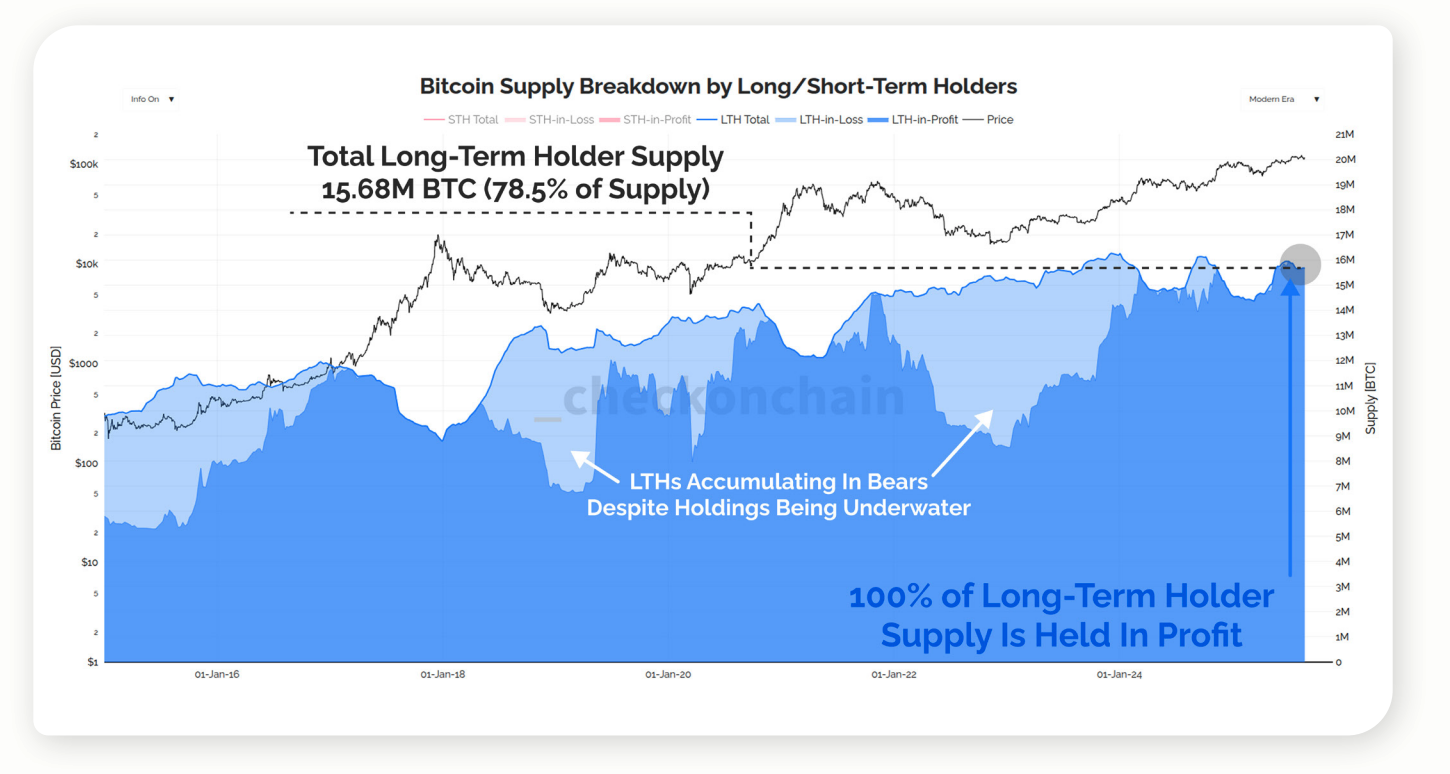
This suggests that miners no longer control short-term or long-term price direction. Institutional inflows and long-term holder profit-taking now move the market far more.

Realized Price and Metrics Need New Context

Metrics like Realized Price have long helped investors identify market cycles. However, analysts say this is no longer reliable because it includes coins that are permanently lost, including early wallets such as those believed to belong to Satoshi Nakamoto.

The Realized Price currently sits around $52,000, but market participants now see higher price levels as stronger floors. James stated, “I don’t think Bitcoin goes back down to 30K… if we have a bear market right now, I think we would go down to something like 80,000.”
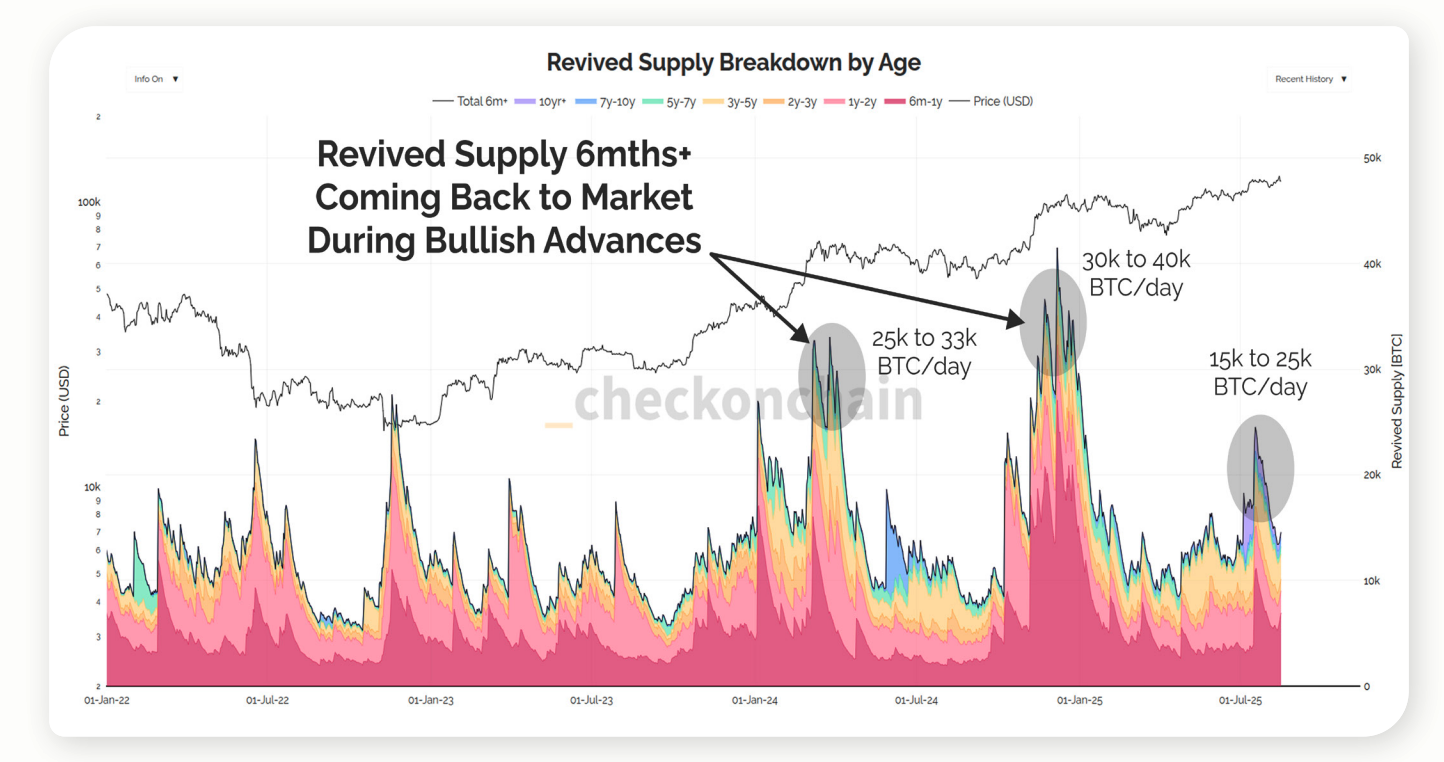
Current data shows cost basis clusters around $74,000 to $80,000. These clusters include ETF holdings and corporate treasuries, making them more reliable indicators of future support than older metrics.

MVRV Z-Score, another popular tool, also shows weaker signals compared to past cycles. While it still reflects market conditions, analysts caution that thresholds must be adjusted for current market depth and instruments.

Liquidity Conditions and Derivatives Are Now Central

Bitcoin now moves with global liquidity trends. As more institutional products appear, such as ETF-linked options, these instruments are driving much of the new demand. Vanguard is expected to follow BlackRock with its own offering, further strengthening the role of derivatives.

James said, “The most important thing is not the ETFs themselves. It’s the options market being built on top of them.”

Sovereign funds and pension managers are also showing interest in Bitcoin. Though still early, their participation introduces new variables. Most US ETFs are custodied with Coinbase, raising questions about concentration risk. However, Check says proof-of-work protects the network from structural risk.
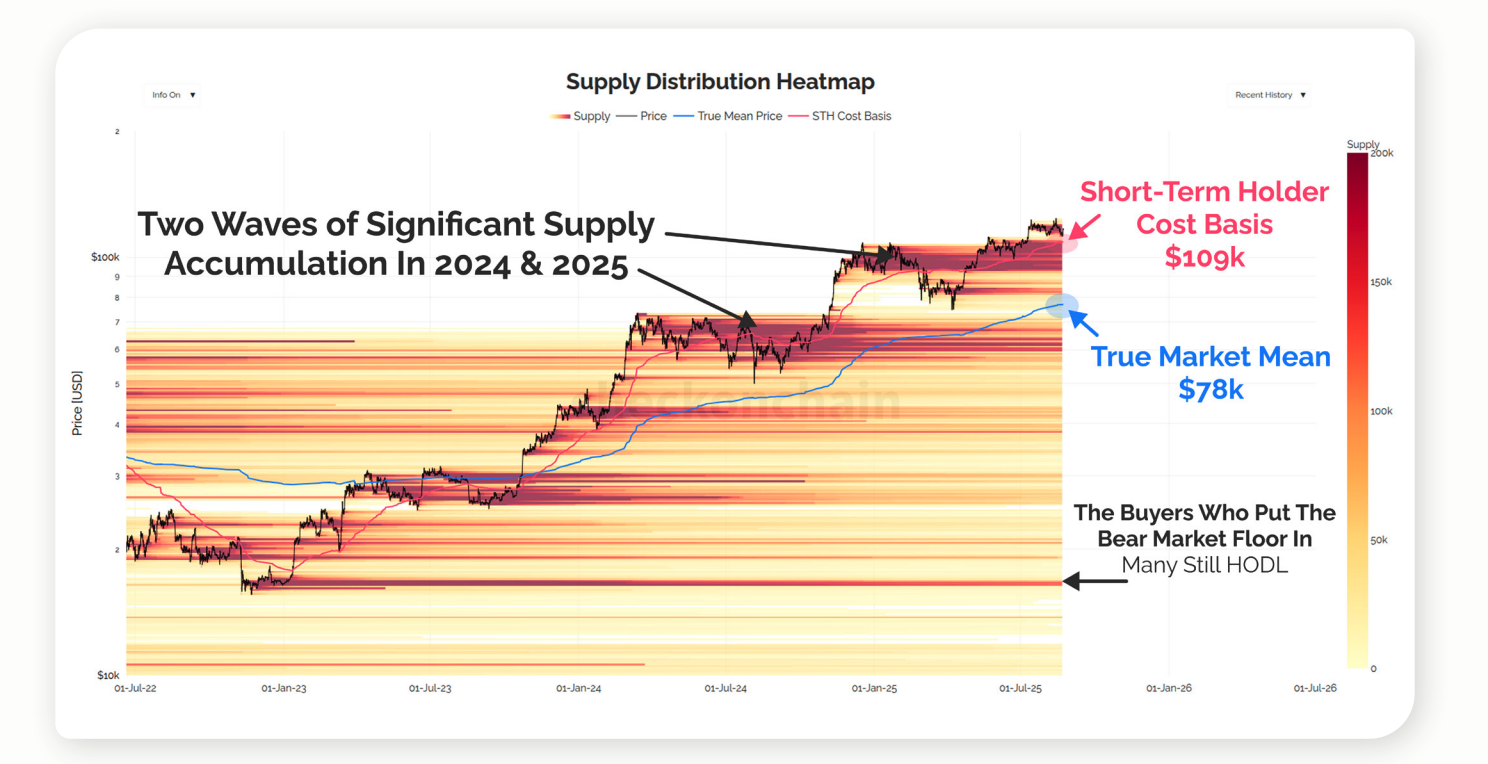
Bitcoin’s role has shifted. It no longer moves only with crypto-specific events but now reacts to broader economic forces, global liquidity, and investor flows. As 2026 approaches, strategies based on previous halving cycles may not work. New approaches must consider liquidity regimes, derivatives, and institutional positioning.

The post Bitcoin’s Halving Cycle Loses Ground as ETF Flows Take the Lead appeared first on CoinCentral.


Market Opportunity
Overtake Logo
Overtake Price(TAKE)
$0.0422
$0.0422$0.0422
-3.36%
USD
Overtake (TAKE) Live Price Chart
Disclaimer: The articles reposted on this site are sourced from public platforms and are provided for informational purposes only. They do not necessarily reflect the views of MEXC. All rights remain with the original authors. If you believe any content infringes on third-party rights, please contact service@support.mexc.com for removal. MEXC makes no guarantees regarding the accuracy, completeness, or timeliness of the content and is not responsible for any actions taken based on the information provided. The content does not constitute financial, legal, or other professional advice, nor should it be considered a recommendation or endorsement by MEXC.

You May Also Like

Trump ally drops bombshell claim GOP 'deliberately' sabotaging him with impeachment plot

Trump ally drops bombshell claim GOP 'deliberately' sabotaging him with impeachment plot

Right-wing conspiracy theorist and activist Laura Loomer unleashed a bombshell claim Friday night that members of the Republican Party are intentionally tanking
Share
Rawstory2026/01/24 09:35
IBM Qiskit v2.3 Adds C API Expansion for Quantum-HPC Integration

IBM Qiskit v2.3 Adds C API Expansion for Quantum-HPC Integration

The post IBM Qiskit v2.3 Adds C API Expansion for Quantum-HPC Integration appeared on BitcoinEthereumNews.com. Joerg Hiller Jan 23, 2026 18:06 IBM releases
Share
BitcoinEthereumNews2026/01/24 09:31
The Role of Blockchain in Building Safer Web3 Gaming Ecosystems

The Role of Blockchain in Building Safer Web3 Gaming Ecosystems

The gaming industry is in the midst of a historic shift, driven by the rise of Web3. Unlike traditional games, where developers and publishers control assets and dictate in-game economies, Web3 gaming empowers players with ownership and influence. Built on blockchain technology, these ecosystems are decentralized by design, enabling true digital asset ownership, transparent economies, and a future where players help shape the games they play. However, as Web3 gaming grows, security becomes a focal point. The range of security concerns, from hacking to asset theft to vulnerabilities in smart contracts, is a significant issue that will undermine or erode trust in this ecosystem, limiting or stopping adoption. Blockchain technology could be used to create security processes around secure, transparent, and fair Web3 gaming ecosystems. We will explore how security is increasing within gaming ecosystems, which challenges are being overcome, and what the future of security looks like. Why is Security Important in Web3 Gaming? Web3 gaming differs from traditional gaming in that players engage with both the game and assets with real value attached. Players own in-game assets that exist as tokens or NFTs (Non-Fungible Tokens), and can trade and sell them. These game assets usually represent significant financial value, meaning security failure could represent real monetary loss. In essence, without security, the promises of owning “something” in Web3, decentralized economies within games, and all that comes with the term “fair” gameplay can easily be eroded by fraud, hacking, and exploitation. This is precisely why the uniqueness of blockchain should be emphasized in securing Web3 gaming. How Blockchain Ensures Security in Web3 Gaming?
  1. Immutable Ownership of Assets Blockchain records can be manipulated by anyone. If a player owns a sword, skin, or plot of land as an NFT, it is verifiably in their ownership, and it cannot be altered or deleted by the developer or even hacked. This has created a proven track record of ownership, providing control back to the players, unlike any centralised gaming platform where assets can be revoked.
  2. Decentralized Infrastructure Blockchain networks also have a distributed architecture where game data is stored in a worldwide network of nodes, making them much less susceptible to centralised points of failure and attacks. This decentralised approach makes it exponentially more difficult to hijack systems or even shut off the game’s economy.
  3. Secure Transactions with Cryptography Whether a player buys an NFT or trades their in-game tokens for other items or tokens, the transactions are enforced by cryptographic algorithms, ensuring secure, verifiable, and irreversible transactions and eliminating the risks of double-spending or fraudulent trades.
  4. Smart Contract Automation Smart contracts automate the enforcement of game rules and players’ economic exchanges for the developer, eliminating the need for intermediaries or middlemen, and trust for the developer. For example, if a player completes a quest that promises a reward, the smart contract will execute and distribute what was promised.
  5. Anti-Cheating and Fair Gameplay The naturally transparent nature of blockchain makes it extremely simple for anyone to examine a specific instance of gameplay and verify the economic outcomes from that play. Furthermore, multi-player games that enforce smart contracts on things like loot sharing or win sharing can automate and measure trustlessness and avoid cheating, manipulations, and fraud by developers.
  6. Cross-Platform Security Many Web3 games feature asset interoperability across platforms. This interoperability is made viable by blockchain, which guarantees ownership is maintained whenever assets transition from one game or marketplace to another, thereby offering protection to players who rely on transfers for security against fraud. Key Security Dangers in Web3 Gaming Although blockchain provides sound first principles of security, the Web3 gaming ecosystem is susceptible to threats. Some of the most serious threats include:
Smart Contract Vulnerabilities: Smart contracts that are poorly written or lack auditing will leave openings for exploitation and thereby result in asset loss. Phishing Attacks: Unintentionally exposing or revealing private keys or signing transactions that are not possible to reverse, under the assumption they were genuine transaction requests. Bridge Hacks: Cross-chain bridges, which allow players to move their assets between their respective blockchains, continually face hacks, requiring vigilance from players and developers. Scams and Rug Pulls: Rug pulls occur when a game project raises money and leaves, leaving player assets worthless. Regulatory Ambiguity: Global regulations remain unclear; risks exist for players and developers alike. While blockchain alone won’t resolve every issue, it remediates the responsibility of the first principles, more so when joined by processes such as auditing, education, and the right governance, which can improve their contribution to the security landscapes in game ecosystems. Real Life Examples of Blockchain Security in Web3 Gaming Axie Infinity (Ronin Hack): The Axie Infinity game and several projects suffered one of the biggest hacks thus far on its Ronin bridge; however, it demonstrated the effectiveness of multi-sig security and the effective utilization of decentralization. The industry benefited through learning and reflection, thus, as projects have implemented changes to reduce the risks of future hacks or misappropriation. Immutable X: This Ethereum scaling solution aims to ensure secure NFT transactions for gaming, allowing players to trade an asset without the burden of exorbitant fees and fears of being a victim of fraud. Enjin: Enjin is providing a trusted infrastructure for Web3 games, offering secure NFT creation and transfer while reiterating that ownership and an asset securely belong to the player. These examples indubitably illustrate that despite challenges to overcome, blockchain remains the foundational layer on which to build more secure Web3 gaming environments. Benefits of Blockchain Security for Players and Developers For Players: Confidence in true ownership of assets Transparency in in-game economies Protection against nefarious trades/scams For Developers: More trust between players and the platform Less reliance on centralized infrastructure Ability to attract wealth and players based on provable fairness By incorporating blockchain security within the mechanics of game design, developers can create and enforce resilient ecosystems where players feel reassured in investing time, money, and ownership within virtual worlds. The Future of Secure Web3 Gaming Ecosystems As the wisdom of blockchain technology and industry knowledge improves, the future for secure Web3 gaming looks bright. New growing trends include: Zero-Knowledge Proofs (ZKPs): A new wave of protocols that enable private transactions and secure smart contracts while managing user privacy with an element of transparency. Decentralized Identity Solutions (DID): Helping players control their identities and decrease account theft risks. AI-Enhanced Security: Identifying irregularities in user interactions by sampling pattern anomalies to avert hacks and fraud by time-stamping critical events. Interoperable Security Standards: Allowing secured and seamless asset transfers across blockchains and games. With these innovations, blockchain will not only secure gaming assets but also enhance the overall trust and longevity of Web3 gaming ecosystems. Conclusion Blockchain is more than a buzzword in Web3; it is the only way to host security, fairness, and transparency. With blockchain, players confirm immutable ownership of digital assets, there is a decentralized infrastructure, and finally, it supports smart contracts to automate code that protects players and developers from the challenges of digital economies. The threats, vulnerabilities, and scams that come from smart contracts still persist, but the industry is maturing with better security practices, cross-chain solutions, and increased formal cryptographic tools. In the coming years, blockchain will remain the base to digital economies and drive Web3 gaming environments that allow players to safely own, trade, and enjoy their digital experiences free from fraud and exploitation. While blockchain and gaming alone entertain, we will usher in an era of secure digital worlds where trust complements innovation. The Role of Blockchain in Building Safer Web3 Gaming Ecosystems was originally published in Coinmonks on Medium, where people are continuing the conversation by highlighting and responding to this story
Share
Medium2025/09/18 14:40



