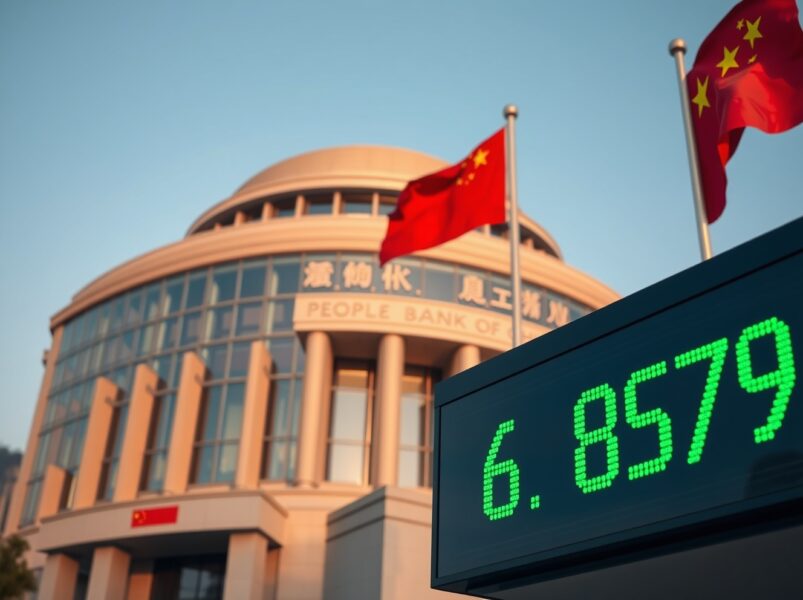
The post South Korea inflation hits its highest since July 2024 appeared on BitcoinEthereumNews.com. October reports revealed South Korea’s consumer inflation has increased as a weaker won made food and energy costs higher. This situation has supported the argument for the central bank to maintain its interest rate steady while it attempts to slow the rapidly emerging housing market.  The announcement followed reports from the Ministry of Data and Statistics, which highlighted that consumer prices had soared by 2.4% compared to the same period last year. This percentage is up from a 2.1% increase in September. Additionally, this rate surpassed the average forecast of 2.2% from economists surveyed by a reliable source, marking the highest record since July 2024, when prices surged by 2.6%.  Economist Bumki Son believes the BOK will focus on long-term inflation predictions Core inflation, which excludes volatile energy and food prices, rose to 2.2%, up from 2% in September of this year. Following this progress, sources reported that overall and core inflation are currently above the Bank of Korea’s 2% target. This newly released inflation data comes at a pivotal moment when the Bank of Korea (BOK) has decided to maintain its crucial interest rate unchanged for the last three meetings.  Despite the economy encountering challenges from Trump’s tariffs, concerns regarding asset bubbles and risks associated with household debt have prompted officials to make this rate decision. In his case, the relevant officials affirm that they will not start lowering rates again after they began last October.  Meanwhile, reports from sources have acknowledged that whether policymakers view this recent report as another reason to maintain their pause likely depends on how they interpret the cause of the recent price increase. “Inflation surprised many by rising due to stronger price pressures from goods and services related to Chuseok, along with adjustments in imported car prices,” stated Bumki Son, an economist at… The post South Korea inflation hits its highest since July 2024 appeared on BitcoinEthereumNews.com. October reports revealed South Korea’s consumer inflation has increased as a weaker won made food and energy costs higher. This situation has supported the argument for the central bank to maintain its interest rate steady while it attempts to slow the rapidly emerging housing market.  The announcement followed reports from the Ministry of Data and Statistics, which highlighted that consumer prices had soared by 2.4% compared to the same period last year. This percentage is up from a 2.1% increase in September. Additionally, this rate surpassed the average forecast of 2.2% from economists surveyed by a reliable source, marking the highest record since July 2024, when prices surged by 2.6%.  Economist Bumki Son believes the BOK will focus on long-term inflation predictions Core inflation, which excludes volatile energy and food prices, rose to 2.2%, up from 2% in September of this year. Following this progress, sources reported that overall and core inflation are currently above the Bank of Korea’s 2% target. This newly released inflation data comes at a pivotal moment when the Bank of Korea (BOK) has decided to maintain its crucial interest rate unchanged for the last three meetings.  Despite the economy encountering challenges from Trump’s tariffs, concerns regarding asset bubbles and risks associated with household debt have prompted officials to make this rate decision. In his case, the relevant officials affirm that they will not start lowering rates again after they began last October.  Meanwhile, reports from sources have acknowledged that whether policymakers view this recent report as another reason to maintain their pause likely depends on how they interpret the cause of the recent price increase. “Inflation surprised many by rising due to stronger price pressures from goods and services related to Chuseok, along with adjustments in imported car prices,” stated Bumki Son, an economist at…

South Korea inflation hits its highest since July 2024

For feedback or concerns regarding this content, please contact us at crypto.news@mexc.com

October reports revealed South Korea’s consumer inflation has increased as a weaker won made food and energy costs higher. This situation has supported the argument for the central bank to maintain its interest rate steady while it attempts to slow the rapidly emerging housing market. 

The announcement followed reports from the Ministry of Data and Statistics, which highlighted that consumer prices had soared by 2.4% compared to the same period last year. This percentage is up from a 2.1% increase in September.

Additionally, this rate surpassed the average forecast of 2.2% from economists surveyed by a reliable source, marking the highest record since July 2024, when prices surged by 2.6%. 

Economist Bumki Son believes the BOK will focus on long-term inflation predictions

Core inflation, which excludes volatile energy and food prices, rose to 2.2%, up from 2% in September of this year. Following this progress, sources reported that overall and core inflation are currently above the Bank of Korea’s 2% target.

This newly released inflation data comes at a pivotal moment when the Bank of Korea (BOK) has decided to maintain its crucial interest rate unchanged for the last three meetings. 

Despite the economy encountering challenges from Trump’s tariffs, concerns regarding asset bubbles and risks associated with household debt have prompted officials to make this rate decision. In his case, the relevant officials affirm that they will not start lowering rates again after they began last October. 

Meanwhile, reports from sources have acknowledged that whether policymakers view this recent report as another reason to maintain their pause likely depends on how they interpret the cause of the recent price increase.

“Inflation surprised many by rising due to stronger price pressures from goods and services related to Chuseok, along with adjustments in imported car prices,” stated Bumki Son, an economist at Barclays Bank PLC. 

Son added that since part of this rise is related to seasonal spending, they believe that the BOK will focus on long-term inflation predictions and not worry too much about temporary changes.

The economist also outlined Barclays’ intention to maintain its forecast for the central bank to reduce rates this month, due to concerns regarding Korea’s weak growth prediction. “Our main expectation still assumes that worries about financial stability will lessen as we approach the November Monetary Policy Committee meeting,” he added. 

The central bank expresses limitations in decision-making due to the latest pricing trends

Currently, the latest pricing trends are limiting the central bank’s decisions as it considers the impact of 15% US tariffs on South Korean goods on the country’s economic status. According to the BOK’s expectation, these tariffs will weaken growth by 0.45 percentage points this year and by 0.6 points in 2026. 

In the meantime, after thorough research, the surge in inflation during October was primarily caused by a decline of almost 1.9% in the won against the dollar last month, according to sources. This scenario increased import charges for energy and food. 

Consequently, the currency hit its lowest point since March and has been ranked as one of the weakest Asian currencies compared to the dollar since October 1st. 

On the other hand, fuel prices escalated after the government lowered fuel tax subsidies in October, exerting more pressure on gasoline prices. At the same time, reports from the Korea Real Estate Board highlighted that apartment costs in Seoul continued to skyrocket for the 39th consecutive week as of October 27.

In the same month, food and non-alcoholic beverage prices soared by 5% compared to last year, while costs for housing and utilities increased by 1.2%. Moreover, food and lodging prices escalated by 3.2%, and transportation expenses increased by 3.4%. 

Join a premium crypto trading community free for 30 days – normally $100/mo.

Source: https://www.cryptopolitan.com/south-korea-inflation-hits-2-4-in-october/

Disclaimer: The articles reposted on this site are sourced from public platforms and are provided for informational purposes only. They do not necessarily reflect the views of MEXC. All rights remain with the original authors. If you believe any content infringes on third-party rights, please contact crypto.news@mexc.com for removal. MEXC makes no guarantees regarding the accuracy, completeness, or timeliness of the content and is not responsible for any actions taken based on the information provided. The content does not constitute financial, legal, or other professional advice, nor should it be considered a recommendation or endorsement by MEXC.

You May Also Like

SOL Faces Pressure, DOT Climbs 2.3%, While BullZilla Presale Rockets Past $460K as the Top New Crypto to Join Now

SOL Faces Pressure, DOT Climbs 2.3%, While BullZilla Presale Rockets Past $460K as the Top New Crypto to Join Now

What if the next meme coin wasn’t just about culture but also structure? It’s the question many investors ask as meme coin volatility rises. Communities demand more than hype, and the search for the Top New cryptos to join now is heating up. In the past 24 hours, Solana fell 0.75% to $236.52 while Polkadot […] Continue Reading: SOL Faces Pressure, DOT Climbs 2.3%, While BullZilla Presale Rockets Past $460K as the Top New Crypto to Join Now
Share
Coinstats2025/09/18 05:15
Here’s How Consumers May Benefit From Lower Interest Rates

Here’s How Consumers May Benefit From Lower Interest Rates

The post Here’s How Consumers May Benefit From Lower Interest Rates appeared on BitcoinEthereumNews.com. Topline The Federal Reserve on Wednesday opted to ease interest rates for the first time in months, leading the way for potentially lower mortgage rates, bond yields and a likely boost to cryptocurrency over the coming weeks. Average long-term mortgage rates dropped to their lowest levels in months ahead of the central bank’s policy shift. Copyright{2018} The Associated Press. All rights reserved. Key Facts The central bank’s policymaking panel voted this week to lower interest rates, which have sat between 4.25% and 4.5% since December, to a new range of 4% and 4.25%. How Will Lower Interest Rates Impact Mortgage Rates? Mortgage rates tend to fall before and during a period of interest rate cuts: The average 30-year fixed-rate mortgage dropped to 6.35% from 6.5% last week, the lowest level since October 2024, mortgage buyer Freddie Mac reported. Borrowing costs on 15-year fixed-rate mortgages also dropped to 5.5% from 5.6% as they neared the year-ago rate of 5.27%. When the Federal Reserve lowered the funds rate to between 0% and 0.25% during the pandemic, 30-year mortgage rates hit record lows between 2.7% and 3% by the end of 2020, according to data published by Freddie Mac. Consumers who refinanced their mortgages in 2020 saved about $5.3 billion annually as rates dropped, according to the Consumer Financial Protection Bureau. Similarly, mortgage rates spiked around 7% as interest rates were hiked in 2022 and 2023, though mortgage rates appeared to react within weeks of the Fed opting to cut or raise rates. How Do Treasury Bonds Respond To Lower Interest Rates? Long-term Treasury yields are more directly influenced by interest rates, as lower rates tend to result in lower yields. When the Fed pushed rates to near zero during the pandemic, 10-year Treasury yields fell to an all-time low of 0.5%. As…
Share
BitcoinEthereumNews2025/09/18 05:59
Change “Waiting for Overnight Surges” to “Daily Deposits”—TALL MINER · 2025: Using Cloud Computing Power to Transform Volatility Into Your Second Cash Flow

Change “Waiting for Overnight Surges” to “Daily Deposits”—TALL MINER · 2025: Using Cloud Computing Power to Transform Volatility Into Your Second Cash Flow

Turn crypto volatility into steady daily income with TALL Miner. Cloud-based hashrate runs 24/7, daily payouts, $15 signup bonus, zero setup required.
Share
Blockchainreporter2025/09/18 17:38