The post Why Latin America Might Leapfrog the U.S. in Self-Custody Adoption appeared first on Coinpedia Fintech News Latin America has become one of the most active crypto regions in the world – not because of hype, but because of necessity. Inflation, remittances, and mobile-first financial behavior make crypto more than an asset class; they make it a lifeline. And as major players shift toward fully onchain experiences, the region may soon surpass …The post Why Latin America Might Leapfrog the U.S. in Self-Custody Adoption appeared first on Coinpedia Fintech News Latin America has become one of the most active crypto regions in the world – not because of hype, but because of necessity. Inflation, remittances, and mobile-first financial behavior make crypto more than an asset class; they make it a lifeline. And as major players shift toward fully onchain experiences, the region may soon surpass …

Why Latin America Might Leapfrog the U.S. in Self-Custody Adoption
latin-america

The post Why Latin America Might Leapfrog the U.S. in Self-Custody Adoption appeared first on Coinpedia Fintech News

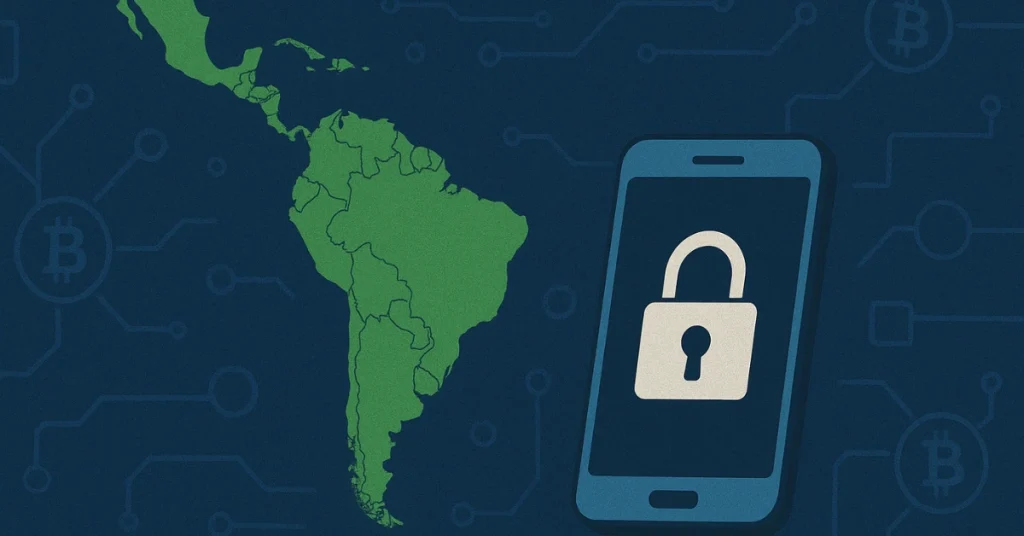
Latin America has become one of the most active crypto regions in the world – not because of hype, but because of necessity. Inflation, remittances, and mobile-first financial behavior make crypto more than an asset class; they make it a lifeline. And as major players shift toward fully onchain experiences, the region may soon surpass the U.S. in mainstream self-custody adoption.

A Region Built for Self-Custody

Across Latin America, savings in local currency can lose value overnight. Self-custody wallets offer a way to hold stablecoins, dollar-linked assets, or crypto without relying on fragile banking systems or custodial platforms.

Latin America is one of the world’s largest remittance corridors. Crypto (especially self-custodial crypto) eliminates friction, cost, and delay, letting families receive money globally in minutes.

The region skipped the traditional desktop banking era and jumped straight into mobile finance. With the UX of self-custody improving rapidly, adoption is far easier here than in markets where legacy systems dominate.

Americans have stable banking, predictable regulations (even if crypto rules are unclear), and mature credit systems. Crypto is mostly seen as an investment, not an economic necessity. Without urgency, the transition to self-custody is slower.

Bitso as a Signal: Onchain Goes Mainstream

Bitso, Latin America’s largest crypto platform, recently unveiled a major onchain expansion that reflects the region’s shift.
bitson-onchain

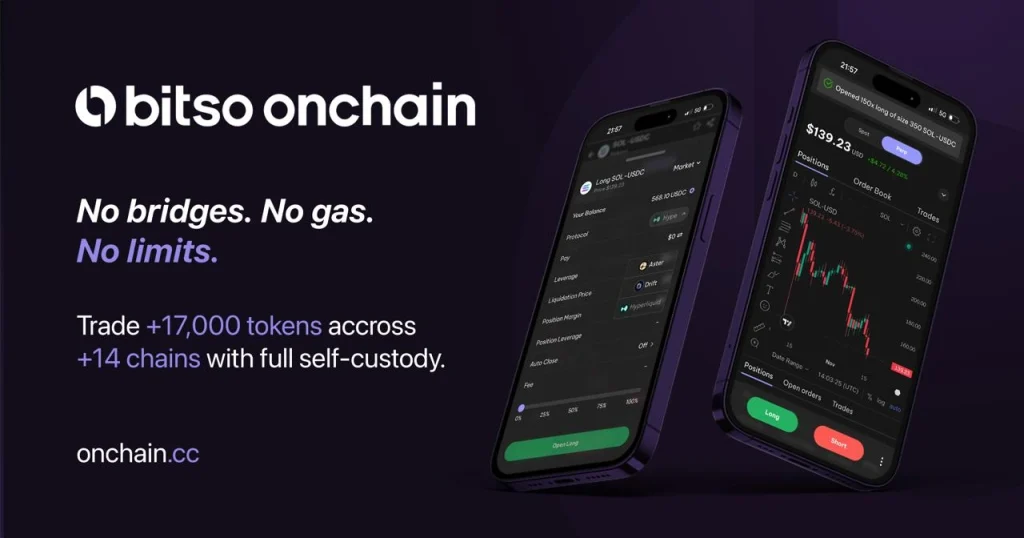
Bitso is moving from spot-only onchain activity to a full self-custody trading environment, giving users advanced tools without giving up control of their assets.

Launching early 2026, the Perps Aggregator will let traders deposit once and trade across multiple perp venues, use one unified USDC balance, get best-execution routing, and earn multiple points at once, among other things.

It brings CEX-level smoothness to a non-custodial world, exactly what LATAM users need to transition fully onchain.

Bitso’s upcoming token and its Season 0 points program are designed to reward long-term participation and onboard millions into the onchain ecosystem.

As infrastructure improves – near-zero gas, smart routing, seamless cross-chain swaps – self-custody is no longer a technical challenge. For Latin Americans, it solves real-world problems in ways traditional finance cannot. This might be the first region where the majority of users skip centralized platforms entirely and move directly into permissionless finance.

While the U.S. debates regulations and treats crypto as a speculative asset class, Latin America is adopting onchain tools for everyday survival. Platforms like Bitso are accelerating this shift, transforming crypto from an investment into an economic operating system.

If the momentum continues, Latin America won’t just catch up to the U.S. in self-custody adoption – it will pass it.

Disclaimer: The articles reposted on this site are sourced from public platforms and are provided for informational purposes only. They do not necessarily reflect the views of MEXC. All rights remain with the original authors. If you believe any content infringes on third-party rights, please contact service@support.mexc.com for removal. MEXC makes no guarantees regarding the accuracy, completeness, or timeliness of the content and is not responsible for any actions taken based on the information provided. The content does not constitute financial, legal, or other professional advice, nor should it be considered a recommendation or endorsement by MEXC.

You May Also Like

The Stark Reality Of Post-Airdrop Market Dynamics

The Stark Reality Of Post-Airdrop Market Dynamics

The post The Stark Reality Of Post-Airdrop Market Dynamics appeared on BitcoinEthereumNews.com. Lighter Trading Volume Plummets: The Stark Reality Of Post-Airdrop
Share
BitcoinEthereumNews2026/01/19 13:16
Headwind Helps Best Wallet Token

Headwind Helps Best Wallet Token

The post Headwind Helps Best Wallet Token appeared on BitcoinEthereumNews.com. Google has announced the launch of a new open-source protocol called Agent Payments Protocol (AP2) in partnership with Coinbase, the Ethereum Foundation, and 60 other organizations. This allows AI agents to make payments on behalf of users using various methods such as real-time bank transfers, credit and debit cards, and, most importantly, stablecoins. Let’s explore in detail what this could mean for the broader cryptocurrency markets, and also highlight a presale crypto (Best Wallet Token) that could explode as a result of this development. Google’s Push for Stablecoins Agent Payments Protocol (AP2) uses digital contracts known as ‘Intent Mandates’ and ‘Verifiable Credentials’ to ensure that AI agents undertake only those payments authorized by the user. Mandates, by the way, are cryptographically signed, tamper-proof digital contracts that act as verifiable proof of a user’s instruction. For example, let’s say you instruct an AI agent to never spend more than $200 in a single transaction. This instruction is written into an Intent Mandate, which serves as a digital contract. Now, whenever the AI agent tries to make a payment, it must present this mandate as proof of authorization, which will then be verified via the AP2 protocol. Alongside this, Google has also launched the A2A x402 extension to accelerate support for the Web3 ecosystem. This production-ready solution enables agent-based crypto payments and will help reshape the growth of cryptocurrency integration within the AP2 protocol. Google’s inclusion of stablecoins in AP2 is a massive vote of confidence in dollar-pegged cryptocurrencies and a huge step toward making them a mainstream payment option. This widens stablecoin usage beyond trading and speculation, positioning them at the center of the consumption economy. The recent enactment of the GENIUS Act in the U.S. gives stablecoins more structure and legal support. Imagine paying for things like data crawls, per-task…
Share
BitcoinEthereumNews2025/09/18 01:27
Nasdaq Company Adds 7,500 BTC in Bold Treasury Move

Nasdaq Company Adds 7,500 BTC in Bold Treasury Move

The live-streaming and e-commerce company has struck a deal to acquire 7,500 BTC, instantly becoming one of the largest public […] The post Nasdaq Company Adds 7,500 BTC in Bold Treasury Move appeared first on Coindoo.
Share
Coindoo2025/09/18 02:15