The U.S. Department of State is providing Zipline with $150 million to expand its autonomous drone delivery network throughout…The U.S. Department of State is providing Zipline with $150 million to expand its autonomous drone delivery network throughout…

US backs Zipline with $150m to grow drone medical network in Africa

The U.S. Department of State is providing Zipline with $150 million to expand its autonomous drone delivery network throughout Africa. This funding will be allocated based on a pay-for-performance model, meaning that African governments must sign expansion contracts and commit to covering ongoing operating costs. This approach ensures the service’s sustainability within public health systems.

Zipline, the world’s largest autonomous logistics platform, has been operating in Africa since 2016, delivering blood, vaccines, and essential medicines to more than 5,000 hospitals and health facilities. The expansion aims to scale the system to serve over 130 million people, tripling the number of health facilities reached to 15,000.

The initiative is expected to create more than 800 high-skilled jobs in logistics, healthcare, robotics, and artificial intelligence (AI). Once fully implemented, the program aims to generate up to $1 billion in annual economic gains by addressing logistical and credit bottlenecks across various regions.
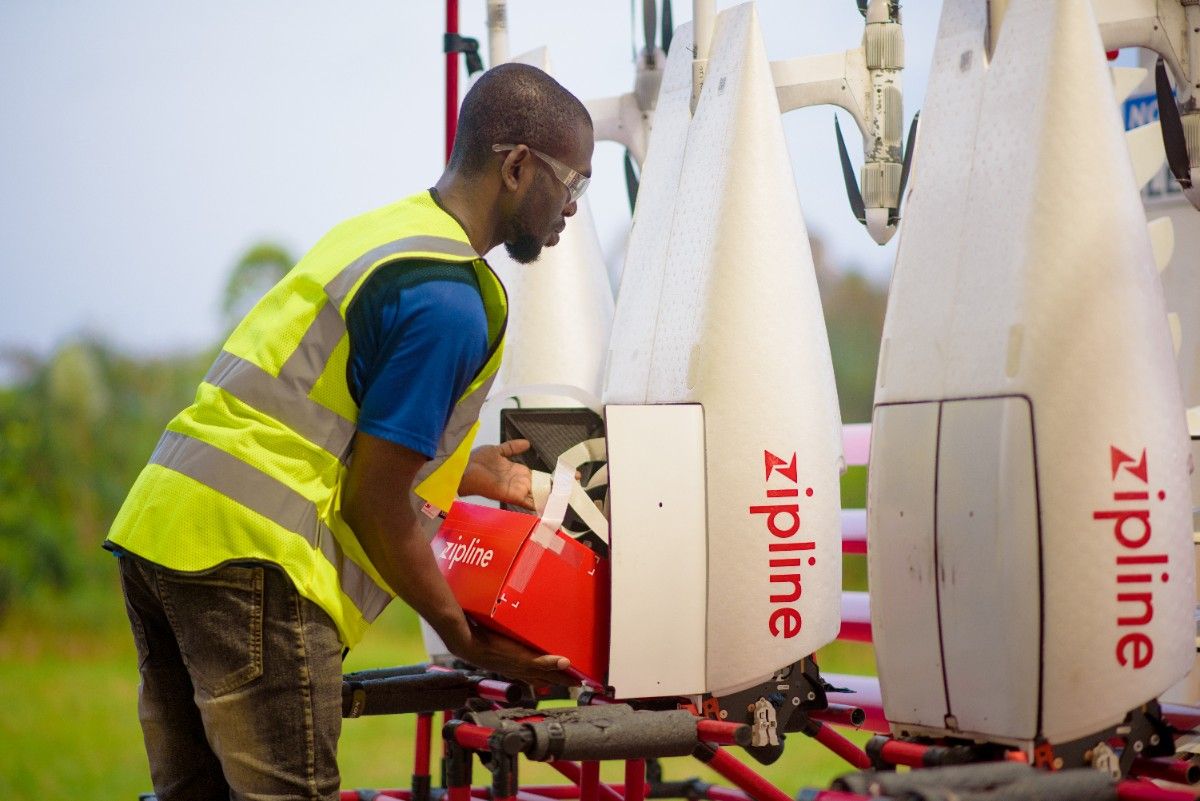
Zipline drones delivering health across Africa

Rwanda will be the first country to receive support from the new funding initiative. The plan includes setting up a third distribution center, which will double the daily delivery capacity. Short-range precision drones will be used in urban areas. The country will also host a main testing facility for Zipline’s hardware and software systems.

Zipline is planning to expand its services in Nigeria, Kenya, and Côte d’Ivoire. In Nigeria, Zipline currently works in three states to improve healthcare. It helps reduce stockouts of medical supplies and increases visits to healthcare facilities and treatment rates.

In Côte d’Ivoire, Zipline will grow its operations to serve more communities and strengthen local health facilities. In Kenya, the plan is to expand coverage in the western counties and connect services to the national health network.
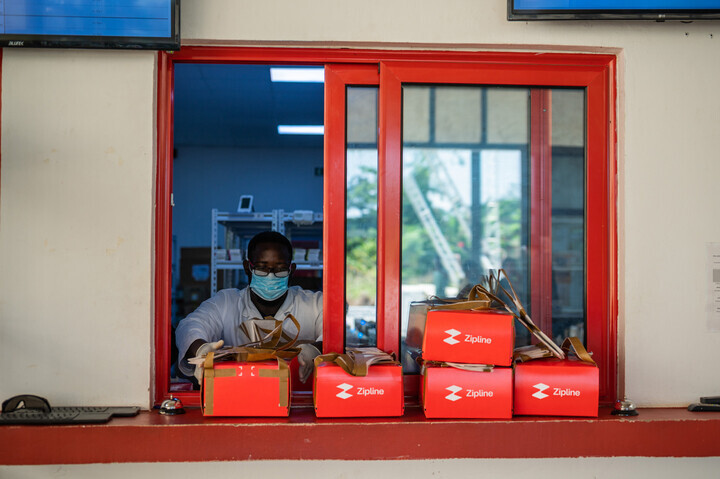
Zipline Ghana

Zipline’s operations have led to important health improvements. In Rwanda and Ghana, maternal deaths have decreased by up to 56%, the number of people not receiving their first dose of vaccinations has fallen by over 40%, and missed chances to treat malaria have dropped significantly. The platform has flown over 120 million miles and made more than 1.7 million deliveries safely, without any accidents.

Read also: DHL Group to invest $575m in healthcare, logistics expansion across Africa, Middle East

The expansion brings important economic and environmental benefits. Zipline has replaced ground transport, saving over 900,000 gallons of fuel and cutting CO₂ emissions by 97%. Local communities gain from job creation and better access to essential health products.
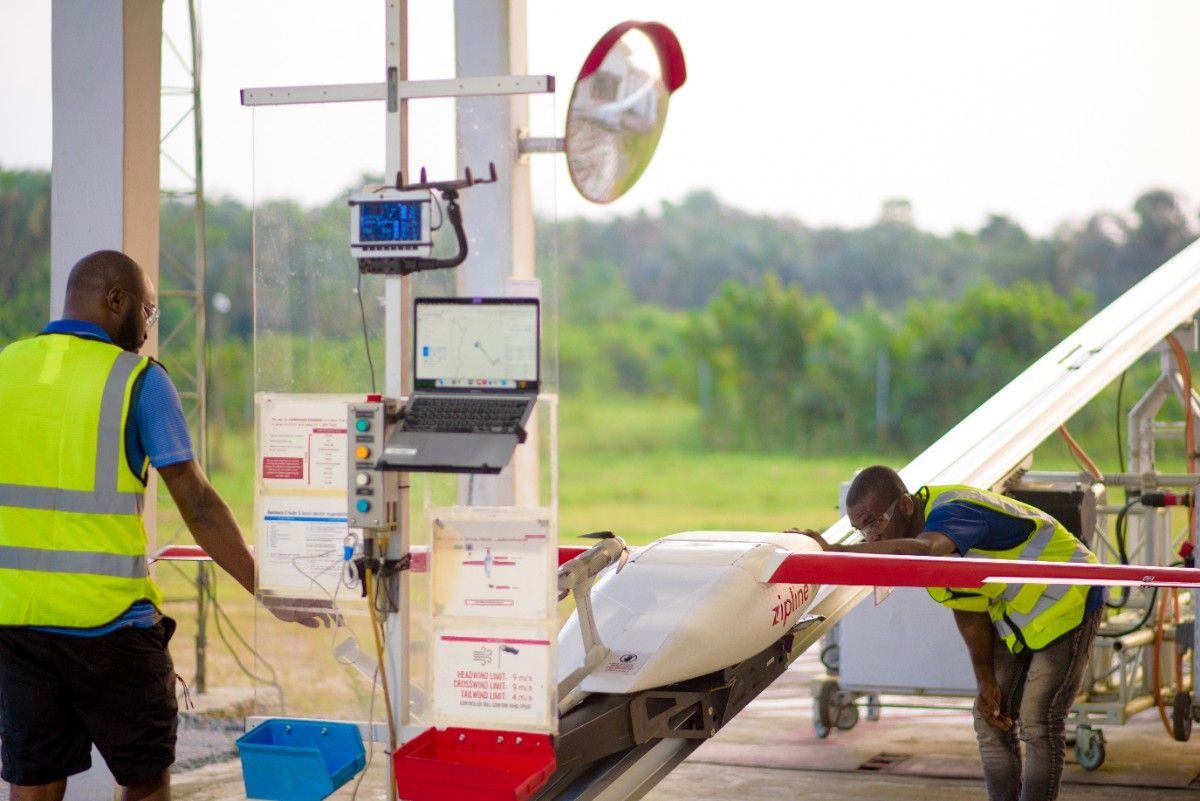
U.S. and African officials highlight that the project integrates technology, innovation, and sustainability. Funding through a results-driven model encourages governments to maintain and invest in the system, while also expanding Zipline’s reach. This partnership illustrates how autonomous logistics can tackle public health challenges and enhance outcomes for millions of people across Africa.

Market Opportunity
Union Logo
Union Price(U)
$0.002448
$0.002448$0.002448
-10.46%
USD
Union (U) Live Price Chart
Disclaimer: The articles reposted on this site are sourced from public platforms and are provided for informational purposes only. They do not necessarily reflect the views of MEXC. All rights remain with the original authors. If you believe any content infringes on third-party rights, please contact service@support.mexc.com for removal. MEXC makes no guarantees regarding the accuracy, completeness, or timeliness of the content and is not responsible for any actions taken based on the information provided. The content does not constitute financial, legal, or other professional advice, nor should it be considered a recommendation or endorsement by MEXC.

You May Also Like

The Stark Reality Of Post-Airdrop Market Dynamics

The Stark Reality Of Post-Airdrop Market Dynamics

The post The Stark Reality Of Post-Airdrop Market Dynamics appeared on BitcoinEthereumNews.com. Lighter Trading Volume Plummets: The Stark Reality Of Post-Airdrop
Share
BitcoinEthereumNews2026/01/19 13:16
Headwind Helps Best Wallet Token

Headwind Helps Best Wallet Token

The post Headwind Helps Best Wallet Token appeared on BitcoinEthereumNews.com. Google has announced the launch of a new open-source protocol called Agent Payments Protocol (AP2) in partnership with Coinbase, the Ethereum Foundation, and 60 other organizations. This allows AI agents to make payments on behalf of users using various methods such as real-time bank transfers, credit and debit cards, and, most importantly, stablecoins. Let’s explore in detail what this could mean for the broader cryptocurrency markets, and also highlight a presale crypto (Best Wallet Token) that could explode as a result of this development. Google’s Push for Stablecoins Agent Payments Protocol (AP2) uses digital contracts known as ‘Intent Mandates’ and ‘Verifiable Credentials’ to ensure that AI agents undertake only those payments authorized by the user. Mandates, by the way, are cryptographically signed, tamper-proof digital contracts that act as verifiable proof of a user’s instruction. For example, let’s say you instruct an AI agent to never spend more than $200 in a single transaction. This instruction is written into an Intent Mandate, which serves as a digital contract. Now, whenever the AI agent tries to make a payment, it must present this mandate as proof of authorization, which will then be verified via the AP2 protocol. Alongside this, Google has also launched the A2A x402 extension to accelerate support for the Web3 ecosystem. This production-ready solution enables agent-based crypto payments and will help reshape the growth of cryptocurrency integration within the AP2 protocol. Google’s inclusion of stablecoins in AP2 is a massive vote of confidence in dollar-pegged cryptocurrencies and a huge step toward making them a mainstream payment option. This widens stablecoin usage beyond trading and speculation, positioning them at the center of the consumption economy. The recent enactment of the GENIUS Act in the U.S. gives stablecoins more structure and legal support. Imagine paying for things like data crawls, per-task…
Share
BitcoinEthereumNews2025/09/18 01:27
Nasdaq Company Adds 7,500 BTC in Bold Treasury Move

Nasdaq Company Adds 7,500 BTC in Bold Treasury Move

The live-streaming and e-commerce company has struck a deal to acquire 7,500 BTC, instantly becoming one of the largest public […] The post Nasdaq Company Adds 7,500 BTC in Bold Treasury Move appeared first on Coindoo.
Share
Coindoo2025/09/18 02:15
