Beyond the buzzwords: How blockchain is making AI accountable for India's next builders
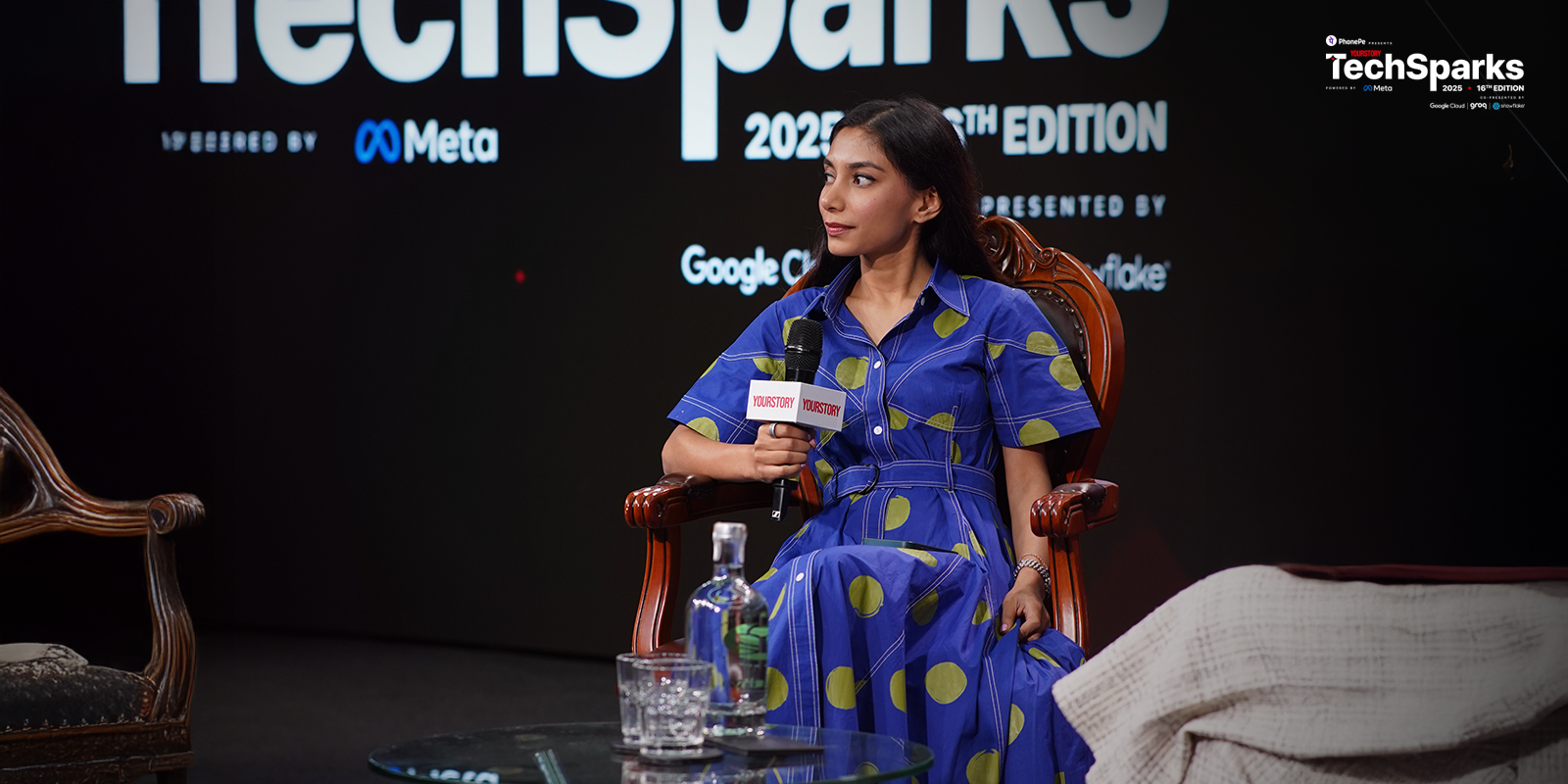
"Blockchain doesn't fix your AI. What blockchain does is make your AI credible and auditable."
Devika Mittal's declaration at TechSparks 2025 cut through the hype surrounding two of technology's most discussed innovations. Speaking at YourStory's flagship event in Bengaluru, the regional head of Ava Labs made a compelling case for why blockchain matters in an AI-driven future, and how India's 2,100 blockchain startups are positioned to lead this convergence.
In a fireside chat with Shivani Muthanna, Senior Director of Strategic Partnerships at YourStory, Mittal explored the intersection of AI and blockchain under the theme ‘AI x blockchain: Empowering India's Next Builders’. The conversation revealed how open infrastructure and targeted developer support are transforming India's tech ecosystem, from crypto speculation to solving real-world problems.
The trust question in AI systems
Can your data be trusted? Can it be auditable? These questions framed Mittal's central argument. As AI systems increasingly decide whether farmers receive loans or patients get medical diagnoses, the ability to trace and verify every piece of data becomes critical.
"When AI systems are scaling now, when we have these large language models, there's a lot of discussion about these kinds of black boxes of data," Mittal said. "We're talking about data hallucinations, loops. We just don't understand where the data is coming from."
Blockchain provides the answer through immutability. "You can't change data once it's there," she explained. This foundational characteristic means that in critical sectors like healthcare, finance, and agriculture, blockchain can secure AI's data pipeline by preventing tampering and ensuring every decision can be traced from input to inference.
Avalanche's infrastructure play
Ava Labs operates at this intersection, providing what Mittal called an "infrastructure layer" for building scalable blockchains. Think AWS, but for distributed ledgers.
Unlike Ethereum, which can be slow and costly, Avalanche allows developers to launch custom blockchains on demand at low cost. "We just let you build these strong, auditable AI networks," Mittal said. Teams can spin up networks handling millions of transactions per second without prohibitive fees.
This open, cloud-like model is designed to let India's startups innovate at scale. "Avalanche is all open source," she noted. "You can build anything you want."
From ideation to commercialization
Mittal revealed that Ava Labs has fundamentally changed its approach to supporting India's developer community. Instead of distributing a few large grants, the company now nurtures builders across their entire journey.
"We take the builder from day one to commercialization," she explained. The firm organizes university bootcamps, sending developer teams to train students on blockchain development. A mini-grant program distributes small seed funds in quick checks to early projects. Promising teams then enter the CodeBase incubator, receiving marketing support, go-to-market strategy, and venture capital introductions.
"Sometimes engineers might have brilliant engineering skills, but they might not know how to talk to a VC," Mittal acknowledged. The comprehensive support system essentially holds developers' hands from ideation through scale, allowing engineering talent to focus on building rather than fundraising alone.
Real impact on the ground
The session highlighted concrete pilots demonstrating blockchain's practical applications. In Dantewada district of Chhattisgarh, a former Maoist-affected area, 700,000 land titles now sit on Avalanche. Every future land sale or transfer must be recorded on the public chain, making title history tamper-proof.
"If someone buys or sells land, it will be recorded on a public network," Mittal said. "Nobody can change it without detection.”
A large grain-handling firm is building a blockchain-based loan platform where farmers' stored grain automatically moves into escrow for loan issuance and returns upon repayment. Universities are issuing diplomas on blockchain, making degrees instantly verifiable anywhere.
These projects illustrate how distributed ledger technology can enhance trust in land records, agricultural finance, and education credentialing before AI is fully integrated.
Beyond crypto speculation
Indian developers are moving past cryptocurrency trading, Mittal said. Teams are building infrastructure and AI tools, not just decentralized exchanges. Examples include protocols enabling AI agents to pay each other per query, and startups tracking whiskey authenticity on the chain.
"We're moving beyond the crypto hardcore," she said. "That's what shows you that the industry is maturing in India."
This diversification into enterprise software, supply chain systems, and decentralized identity solutions reflects India's deep developer pool and rising startup ecosystem.
The regulatory landscape
On policy, Mittal acknowledged uncertainty but saw opportunity. India is not anti-blockchain, she argued, only wary of cryptocurrency abuse. She discussed the US Genesis Act, which officially recognizes stablecoins as legitimate instruments.
This change could unleash blockchain-based remittances to India. Funds moving between India's diaspora and home country through stablecoins could cut typical 5-10% fees to near 0.5%. "Hundreds of millions, if not billions of dollars," could start flowing on chain through lower-cost corridors, Mittal said.
She warned that India will likely remain cautious on speculative tokens like meme coins, viewing such wariness as prudent for protecting retail investors.
Building for the world
The panel closed on accountability. Blockchain doesn't improve AI algorithms, Mittal reiterated, but it makes AI systems transparent and auditable. By anchoring AI inputs to verifiable records, developers can ensure model decisions are explainable.
In a decentralized data economy, better datasets can be matched to the right models, giving rise to secondary markets for high-quality data. Indian innovators can solve homegrown challenges with trusted AI-blockchain solutions and potentially export them globally.
"India's developers are building for the world," Mittal said, combining local use cases with technology that scales. In keeping with TechSparks' AI and deeptech theme, the session delivered a clear message: an infrastructure of open blockchains could empower the next generation of Indian builders to lead on secure, data-driven innovation.



You May Also Like

Ripple Is In the Middle of Mastercard, Visa, BlackRock to Position XRP As the Bridge

PAS afraid to take on DAP, says Loke