

India Approves Rs.7,280 Cr Scheme to Build Rare Earth Magnet Factories
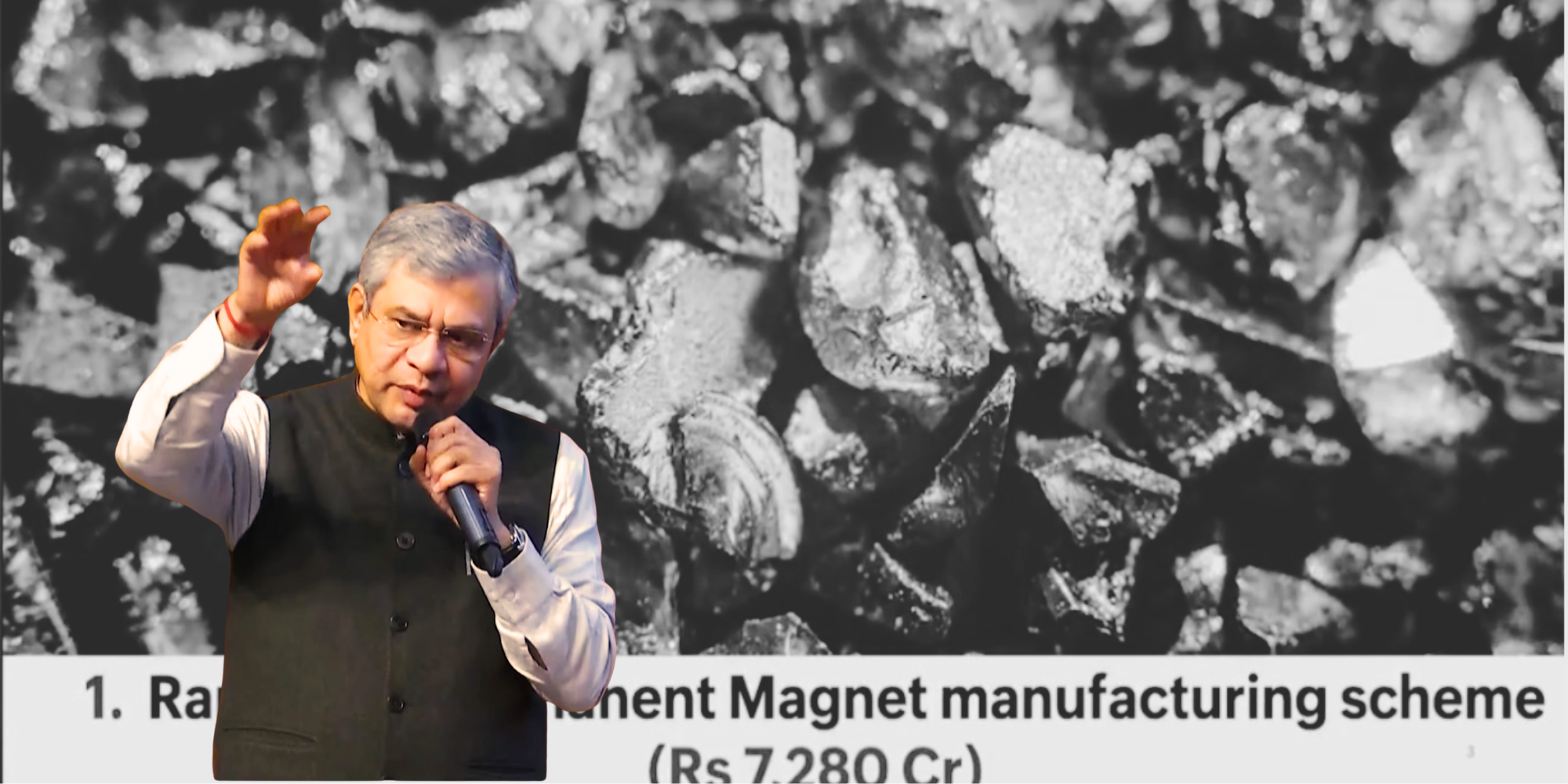
In a major step towards strengthening India’s high-tech manufacturing ecosystem, the Union Cabinet has approved a ₹7,280-crore Scheme to Promote Manufacturing of Sintered Rare Earth Permanent Magnets (REPM). The initiative, aims to establish a fully integrated domestic value chain for producing six thousand metric tonnes per annum (MTPA) of Rare Earth Permanent Magnets a first for the country.
Briefing the media, Information and Broadcasting Minister Ashwini Vaishnaw said these magnets are among the strongest types of permanent magnets and form the backbone of electric vehicles, renewable energy technologies, consumer electronics, aerospace systems, and key defence applications. “This scheme will create end-to-end integrated facilities right from converting rare-earth oxides to metals, metals to alloys, and alloys to finished Rare Earth Permanent Magnets,” he said.
Why Rare Earth Magnets Matter
Rare Earth Permanent Magnets are indispensable to modern technology. They power EV motors, drone systems, wind turbine generators, high-precision medical devices, robotic systems, smartphones, and satellites. India’s consumption of these magnets is expected to double by 2030, driven by rapid growth in clean energy manufacturing, EV adoption, and electronics production.
However, the country is currently largely dependent on imports, particularly from global players who control most of the rare-earth processing and magnet-making supply chain. This dependency creates strategic vulnerabilities, especially amid global supply disruptions, export restrictions, and rising geopolitical tensions.
The newly approved scheme is designed to address this gap by enabling India’s first integrated REPM manufacturing ecosystem, reducing import dependence, and strengthening national security and technological competitiveness.
Details of the Scheme
The government will allocate the 6,000 MTPA capacity to five beneficiaries, each capable of setting up up to 1,200 MTPA, through a global competitive bidding process. The scheme will run for seven years, including a two-year gestation period for establishing manufacturing units.
The goal is not only to build manufacturing capacity but also to develop a domestic rare-earth value chain, promoting upstream and downstream investments across mining, metal refining, alloy production, and advanced materials.
Strategic and Long-Term Impact
The REPM scheme aligns closely with India’s broader goals of improving self-reliance under the Atmanirbhar Bharat vision and achieving Net Zero 2070. By supporting clean-tech industries particularly electric mobility and renewable energy the initiative contributes to India’s climate commitments while reducing exposure to foreign supply chains.
Industry experts believe the scheme will have a multiplier effect across sectors including:
- Electric vehicles: Stable domestic supply of high-performance magnets for motors
- Renewable energy: Critical components for wind turbine generators
- Aerospace and defence: Strategic autonomy for advanced systems
- Electronics: Improved resilience in manufacturing smartphones, appliances, and industrial equipment
Over time, India could transition from being an import-dependent consumer to a global supplier of high-tech magnetic materials, creating new export opportunities and technological capabilities.
What to Watch
Key developments to monitor include:
- Selection of the five beneficiaries through global bidding
- Speed of execution during the two-year setup period
- Possible rise of a broader rare-earths ecosystem including mining, refining, and alloy-making
- Impact on EV, renewable energy, and defence manufacturing costs and supply chains
Overall, the scheme marks a decisive step in India’s journey towards strategic technological independence. By securing its position in the global rare-earths value chain, India is signalling its ambition to lead in next-generation manufacturing and clean-energy innovation.
You May Also Like

Supported by hike speculation and PMIs – Danske Bank

The geopolitics of anti-corruption as global advisory firms face debarment in the Horn of Africa

BitGo wins BaFIN nod to offer regulated crypto trading in Europe
BitGo’s move creates further competition in a burgeoning European crypto market that is expected to generate $26 billion revenue this year, according to one estimate. BitGo, a digital asset infrastructure company with more than $100 billion in assets under custody, has received an extension of its license from Germany’s Federal Financial Supervisory Authority (BaFin), enabling it to offer crypto services to European investors. The company said its local subsidiary, BitGo Europe, can now provide custody, staking, transfer, and trading services. Institutional clients will also have access to an over-the-counter (OTC) trading desk and multiple liquidity venues.The extension builds on BitGo’s previous Markets-in-Crypto-Assets (MiCA) license, also issued by BaFIN, and adds trading to the existing custody, transfer and staking services. BitGo acquired its initial MiCA license in May 2025, which allowed it to offer certain services to traditional institutions and crypto native companies in the European Union.Read more
