The post The Secret US-Russia Deal’s Global Impact appeared on BitcoinEthereumNews.com. Backstairs meetings between the two leaders’ proxies got leaked by European intelligence services (Photo by JIM WATSON and EMMANUEL DUNAND / AFP) (Photo by JIM WATSON,EMMANUEL DUNAND/AFP via Getty Images) AFP via Getty Images The recent Wall Street Journal article about the background business incentives for a peace deal over Ukraine has the world abuzz. Published on November 28 and titled “Make Money Not War: Trump’s Real Plan For Peace in Ukraine” carries the subhead ‘The Kremlin pitched the White House on peace through business. To Europe’s dismay, the President and his envoy are on board’. The headlines are rather (but not entirely) off-center, as headlines often are, by suggesting that the chief issue is Europe. Yet much of the noise has come from domestic US outrage. This column’s remit has always been global geopolitics and it will be this time. But a quick outline of context is exigent. Briefly, the long article asserts that discreet meetings over several months between top US and Russian officials shaped out an agreement where, in exchange for the two sides effecting peace in Ukraine, US companies got exclusive rights to energy, raw materials, and strategic metals mining across Russia and in the Arctic. US companies would lead the investment in reconstruction there and in Ukraine to become the “commercial guarantors of peace”. Frozen Russian assets in European banks play a big role – they help fund the ventures. The article covers various political flashpoints such as conflicts of interest, sanctioned Russians entering the US for meetings – many others conducted rather secretly abroad through businessmen. European and British intelligence conduits, it seems, leaked the otherwise closely held information on the process. The article also points out that the overarching idea is consistent with President Trump’s world view, burying old hatreds via profits for… The post The Secret US-Russia Deal’s Global Impact appeared on BitcoinEthereumNews.com. Backstairs meetings between the two leaders’ proxies got leaked by European intelligence services (Photo by JIM WATSON and EMMANUEL DUNAND / AFP) (Photo by JIM WATSON,EMMANUEL DUNAND/AFP via Getty Images) AFP via Getty Images The recent Wall Street Journal article about the background business incentives for a peace deal over Ukraine has the world abuzz. Published on November 28 and titled “Make Money Not War: Trump’s Real Plan For Peace in Ukraine” carries the subhead ‘The Kremlin pitched the White House on peace through business. To Europe’s dismay, the President and his envoy are on board’. The headlines are rather (but not entirely) off-center, as headlines often are, by suggesting that the chief issue is Europe. Yet much of the noise has come from domestic US outrage. This column’s remit has always been global geopolitics and it will be this time. But a quick outline of context is exigent. Briefly, the long article asserts that discreet meetings over several months between top US and Russian officials shaped out an agreement where, in exchange for the two sides effecting peace in Ukraine, US companies got exclusive rights to energy, raw materials, and strategic metals mining across Russia and in the Arctic. US companies would lead the investment in reconstruction there and in Ukraine to become the “commercial guarantors of peace”. Frozen Russian assets in European banks play a big role – they help fund the ventures. The article covers various political flashpoints such as conflicts of interest, sanctioned Russians entering the US for meetings – many others conducted rather secretly abroad through businessmen. European and British intelligence conduits, it seems, leaked the otherwise closely held information on the process. The article also points out that the overarching idea is consistent with President Trump’s world view, burying old hatreds via profits for…

The Secret US-Russia Deal’s Global Impact

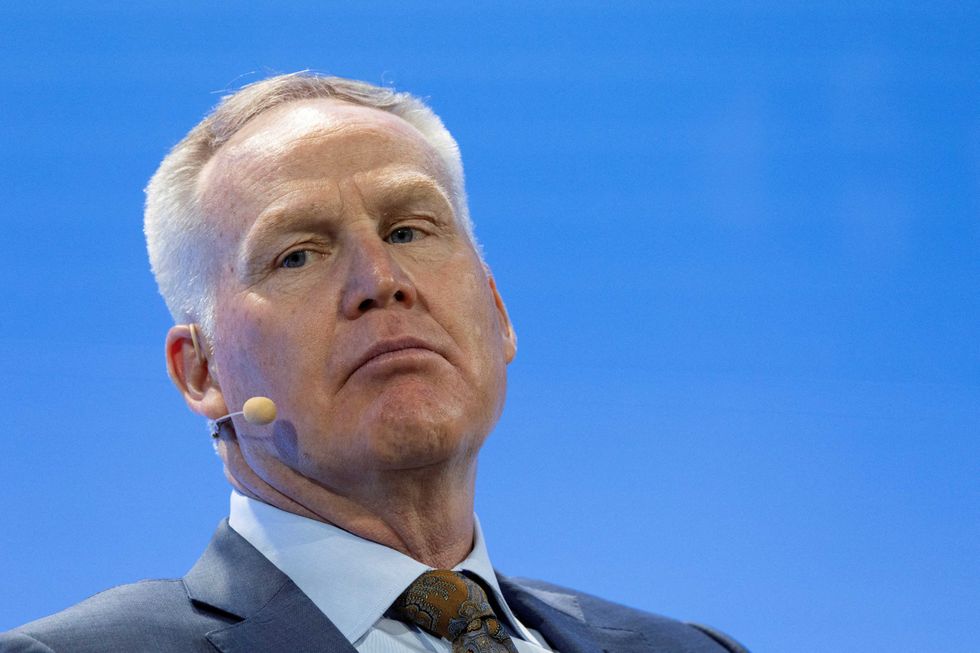
Backstairs meetings between the two leaders’ proxies got leaked by European intelligence services (Photo by JIM WATSON and EMMANUEL DUNAND / AFP) (Photo by JIM WATSON,EMMANUEL DUNAND/AFP via Getty Images)

AFP via Getty Images

The recent Wall Street Journal article about the background business incentives for a peace deal over Ukraine has the world abuzz. Published on November 28 and titled “Make Money Not War: Trump’s Real Plan For Peace in Ukraine” carries the subhead ‘The Kremlin pitched the White House on peace through business. To Europe’s dismay, the President and his envoy are on board’. The headlines are rather (but not entirely) off-center, as headlines often are, by suggesting that the chief issue is Europe. Yet much of the noise has come from domestic US outrage. This column’s remit has always been global geopolitics and it will be this time. But a quick outline of context is exigent.

Briefly, the long article asserts that discreet meetings over several months between top US and Russian officials shaped out an agreement where, in exchange for the two sides effecting peace in Ukraine, US companies got exclusive rights to energy, raw materials, and strategic metals mining across Russia and in the Arctic. US companies would lead the investment in reconstruction there and in Ukraine to become the “commercial guarantors of peace”. Frozen Russian assets in European banks play a big role – they help fund the ventures. The article covers various political flashpoints such as conflicts of interest, sanctioned Russians entering the US for meetings – many others conducted rather secretly abroad through businessmen. European and British intelligence conduits, it seems, leaked the otherwise closely held information on the process.

The article also points out that the overarching idea is consistent with President Trump’s world view, burying old hatreds via profits for all concerned. As this columnist argued in the Washington Examiner some months back (“Trump’s Modest Proposal On Gaza”) the President’s vision (not just in Gaza) is that identity gets freed from indigeneity. Eventually, everybody will have shares in real estate everywhere around the world. They will be richer attached to their shares rather than a particular land. Trump has already applied the formula to great effect in the Armenia-Azerbaijan peace deal by offering wealth of business under American security guarantees. The problem is that humans tend to revere their roots of place and landscapes of home – over profits. And here’s the rub: Ukrainians will reject the notion of profiting from territory forcibly taken by Russia.

But that’s merely one hurdle, albeit a big one. With all the documented human rights violations charged against Moscow – the kidnapping of children, flattening of families in apartments, execution of soldiers and the like – asking Ukrainians to let go and get rich and forget,,, seems implausible. Especially as they have always dreamed of becoming European. Yet, another sharp problem here comes down to drawing the demarcation lines and the legal status of Russian occupied territory. Moscow has essentially absorbed temporarily occupied zones such as Georgia’s breakaway regions like Abkhazia over time. Ukrainians know that full well. So they know upfront they’re ceding land for money – to someone they consider a blood-soaked war criminal. Which is why they’re so committed to a European future, precisely to leave behind such a long history of moral violations attached to the legacy of Moscow’s patronage.

Above all they do not believe that Putin will stop at the demarcation lines. American investment and security guarantees won’t suffice for them. The West invested heavily in post-Soviet energy infrastructure and it didn’t stop the Kremlin from aggression abroad. In fact, it had the opposite effect where oil companies and banks exerted pressure to prevent sanctions. Ultimately, slowly expanding occupation lines and regime control imposed by Moscow in Ukraine will not be disincentivized by US security guarantees because Putin knows he holds the investments hostage rather than the other way around. Nothing he does will trigger a wholesale sacrifice by outside corporations of their massive investments. That too is something Ukrainians know.

According to the WSJ article, the broad outlines of the strategic deal leave out Europe explicitly and China implicitly. The first is virtually unprecedented since America’s founding, and the second is a reversal of broad policy since Nixon drove a wedge between Moscow and Beijing. That reversal has quietly been Putin’s strategic dream for years in his struggle to return Russia to its peak Cold War power status. It aims to isolate the West from China while leaving Moscow free to dominate the two via separate deals with both, not least via the Shanghai Cooperation Organization. Neither Europe nor China will take this lying down of course. The Europeans have already retaliated by leaking the project. Abandoned to Putin’s designs, sadly, the EU is not sufficiently unified to present a full-scale obstacle going forward. As for China, the Russians are unlikely to oppose its moves on Taiwan – or the rest of East Asia. They will be happy for any confrontation between Washington and Beijing.

Source: https://www.forbes.com/sites/melikkaylan/2025/12/01/business-not-war-the-secret-us-russia-deals-global-impact/


Market Opportunity
Seed.Photo Logo
Seed.Photo Price(PHOTO)
$0.36042
$0.36042$0.36042
-0.02%
USD
Seed.Photo (PHOTO) Live Price Chart
Disclaimer: The articles reposted on this site are sourced from public platforms and are provided for informational purposes only. They do not necessarily reflect the views of MEXC. All rights remain with the original authors. If you believe any content infringes on third-party rights, please contact service@support.mexc.com for removal. MEXC makes no guarantees regarding the accuracy, completeness, or timeliness of the content and is not responsible for any actions taken based on the information provided. The content does not constitute financial, legal, or other professional advice, nor should it be considered a recommendation or endorsement by MEXC.

You May Also Like

How to earn from cloud mining: IeByte’s upgraded auto-cloud mining platform unlocks genuine passive earnings

How to earn from cloud mining: IeByte’s upgraded auto-cloud mining platform unlocks genuine passive earnings

The post How to earn from cloud mining: IeByte’s upgraded auto-cloud mining platform unlocks genuine passive earnings appeared on BitcoinEthereumNews.com. contributor Posted: September 17, 2025 As digital assets continue to reshape global finance, cloud mining has become one of the most effective ways for investors to generate stable passive income. Addressing the growing demand for simplicity, security, and profitability, IeByte has officially upgraded its fully automated cloud mining platform, empowering both beginners and experienced investors to earn Bitcoin, Dogecoin, and other mainstream cryptocurrencies without the need for hardware or technical expertise. Why cloud mining in 2025? Traditional crypto mining requires expensive hardware, high electricity costs, and constant maintenance. In 2025, with blockchain networks becoming more competitive, these barriers have grown even higher. Cloud mining solves this by allowing users to lease professional mining power remotely, eliminating the upfront costs and complexity. IeByte stands at the forefront of this transformation, offering investors a transparent and seamless path to daily earnings. IeByte’s upgraded auto-cloud mining platform With its latest upgrade, IeByte introduces: Full Automation: Mining contracts can be activated in just one click, with all processes handled by IeByte’s servers. Enhanced Security: Bank-grade encryption, cold wallets, and real-time monitoring protect every transaction. Scalable Options: From starter packages to high-level investment contracts, investors can choose the plan that matches their goals. Global Reach: Already trusted by users in over 100 countries. Mining contracts for 2025 IeByte offers a wide range of contracts tailored for every investor level. From entry-level plans with daily returns to premium high-yield packages, the platform ensures maximum accessibility. Contract Type Duration Price Daily Reward Total Earnings (Principal + Profit) Starter Contract 1 Day $200 $6 $200 + $6 + $10 bonus Bronze Basic Contract 2 Days $500 $13.5 $500 + $27 Bronze Basic Contract 3 Days $1,200 $36 $1,200 + $108 Silver Advanced Contract 1 Day $5,000 $175 $5,000 + $175 Silver Advanced Contract 2 Days $8,000 $320 $8,000 + $640 Silver…
Share
BitcoinEthereumNews2025/09/17 23:48
Why is the Story (IP) Price Up Today? Is This Move Sustainable?

Why is the Story (IP) Price Up Today? Is This Move Sustainable?

The post Why is the Story (IP) Price Up Today? Is This Move Sustainable?  appeared first on Coinpedia Fintech News The start of 2026 seems to have been pretty good
Share
CoinPedia2026/01/02 17:05
Fed Day Dry Powder: Cryptoquant Analyst Tracks $7.6B Stablecoin Pile on Exchanges

Fed Day Dry Powder: Cryptoquant Analyst Tracks $7.6B Stablecoin Pile on Exchanges

The post Fed Day Dry Powder: Cryptoquant Analyst Tracks $7.6B Stablecoin Pile on Exchanges appeared on BitcoinEthereumNews.com. With the Federal Reserve meeting today, onchain flows are telegraphing that crypto traders are topping off exchanges and leaning long ahead of a widely expected 25-basis-point cut. Pre-Fed Positioning Stablecoins are doing the heavy lifting. Cryptoquant data shows $7.6 billion in fresh USDT and USDC (ERC-20) deposits heading to trading venues ahead of the decision. […] Source: https://news.bitcoin.com/fed-day-dry-powder-cryptoquant-analyst-tracks-7-6b-stablecoin-pile-on-exchanges/
Share
BitcoinEthereumNews2025/09/18 01:36