Cayman Islands Experiences Surge in Foundation Company Registrations
Increasing Decline in Cayman Islands Foundation Company Registrations Indicates Shift in Web3 Strategy
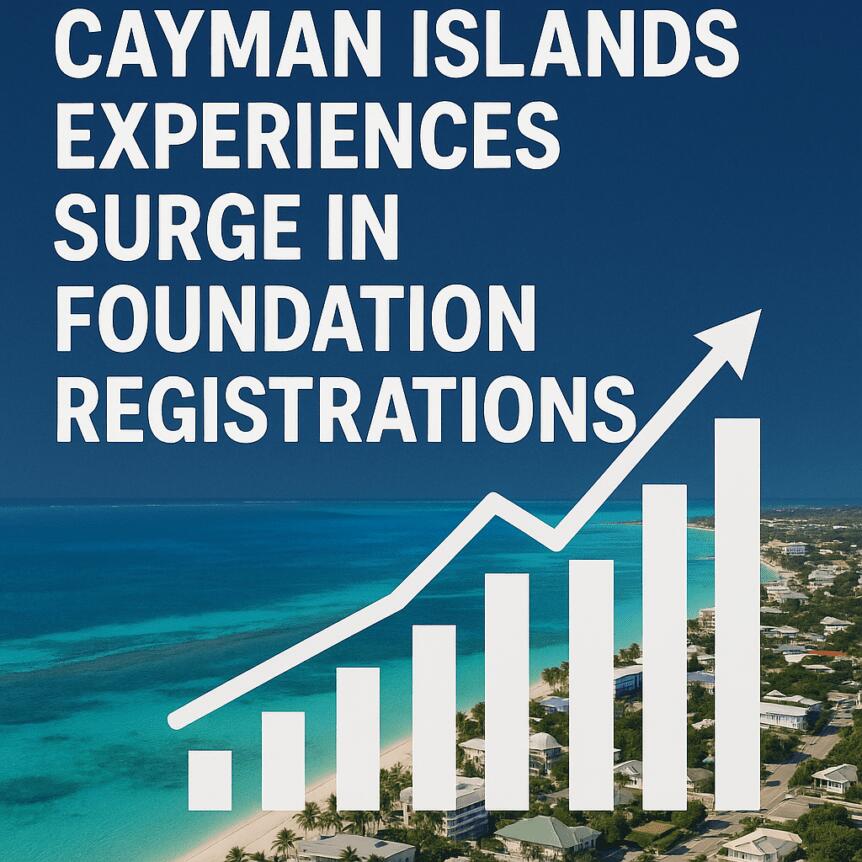
Recent data shows a significant 70% rise in foundation company registrations in the Cayman Islands, with over 1,300 entities by the end of 2024 and more than 400 new registrations already in 2025. These structures are rapidly becoming the preferred legal framework for decentralized autonomous organizations (DAOs) and major Web3 projects seeking to legitimize their operations and protect stakeholders.
Key Takeaways
- The Cayman Islands now hosts many of the world’s largest Web3 projects, including at least 17 foundations with treasuries exceeding $100 million.
- Foundation companies are favored for their capacity to sign contracts, hold intellectual property, and engage with regulators, all while safeguarding tokenholders from personal liability.
- Legal challenges, notably the Samuels v. Lido DAO case, have highlighted the risks for unwrapped DAOs under U.S. law, prompting a move toward more formalized structures.
- The jurisdiction’s recent regulatory shifts, including the implementation of the Crypto-Asset Reporting Framework, reflect a balancing act between light-touch regulation and compliance requirements.
Tickers mentioned: None
Sentiment: Neutral
Price impact: Neutral. The rise in formation registrations reflects strategic positioning rather than immediate market movement.
Market context: The trend aligns with global efforts to formalize Web3 legal structures amidst evolving regulatory landscapes.
Rise of Cayman Foundations as a Web3 Legal Framework
With a notable 70% year-over-year increase in foundation company registrations, the Cayman Islands has solidified its role as a key jurisdiction for Web3 entities. Over 1,300 foundation companies operated by late 2024, with 400 more added in early 2025, many serving as legal wrappers for decentralized autonomous organizations and ecosystem management platforms.
These foundation entities assist DAOs in executing contractual agreements, hiring contributors, and managing intellectual property while providing legal certainty and shielding tokenholders from personal liability. The move is largely driven by recent legal developments, including the Samuels v. Lido DAO case, where a U.S. federal court ruled that an unwrapped DAO could be considered a general partnership under California law, exposing participants to potential liability.
Rise in Cayman Islands foundation company registrations | Source: Cayman FinanceThis legal landscape, combined with Cayman’s longstanding reputation for tax neutrality and familiarity among institutional investors, makes it attractive for Web3 projects seeking stable legal jurisdictions. Many projects have quietly re-domiciled their foundations to the Cayman Islands to benefit from these advantages.
However, regulatory oversight is increasing. The Cayman Islands has adopted the OECD’s Crypto-Asset Reporting Framework (CARF), effective from January 2026, which requires crypto service providers to perform due diligence and report transaction data to authorities. Most foundational entities that operate solely as treasuries or ecosystem stewards—without engaging in exchange or custody services—are likely to remain outside full reporting obligations, maintaining Cayman’s reputation as a regulatory light-touch jurisdiction.
In essence, while Cayman’s regulatory framework is becoming more comprehensive, it continues to attract crypto entities that seek legal certainty and operational flexibility without the burden of extensive compliance, signaling a strategic adaptation to the evolving global landscape of Web3 finance.
This article was originally published as Cayman Islands Experiences Surge in Foundation Company Registrations on Crypto Breaking News – your trusted source for crypto news, Bitcoin news, and blockchain updates.
You May Also Like

The Protocol: Ethereum faces make-or-break moment as scaling, quantum and AI pressures mount

Adoption Leads Traders to Snorter Token