The machinery that powers US markets is about to go onchain.The Depository Trust & Clearing Corporation said on Thursday that it received a no-action letter fromThe machinery that powers US markets is about to go onchain.The Depository Trust & Clearing Corporation said on Thursday that it received a no-action letter from

DTCC cleared to tokenise US markets in historic crypto pivot by $100 trillion custodian

The machinery that powers US markets is about to go onchain.

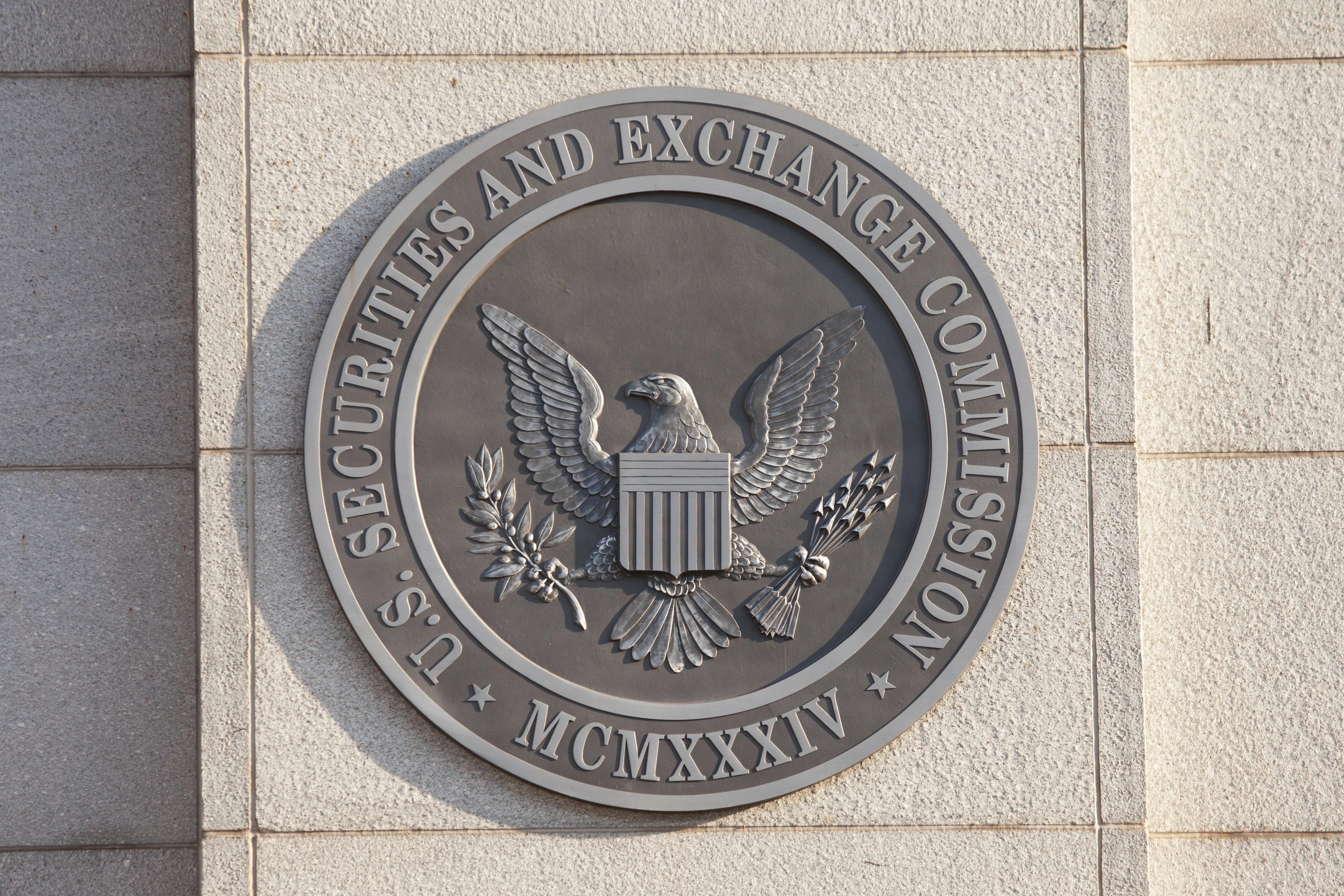
The Depository Trust & Clearing Corporation said on Thursday that it received a no-action letter from the US financial watchdog, paving the way for tokenisation for real-world assets.

According to the Securities and Exchange Commission’s letter, the DTCC can now issue blockchain-based representations of highly liquid assets, including Russell 1000 stocks, exchange-traded funds, treasury bills, notes, and bonds.

The digital versions will carry the same ownership rights, investor protections, and entitlements as traditional securities.

“Tokenising the US securities market has the potential to yield transformational benefits such as collateral mobility, new trading modalities, 24/7 access and programmable assets,” the DTCC’s chief executive Frank La Salla said.

The DTCC is the premier US securities depository institution, holding roughly $100 trillion in assets.

‘Significant step’

The move is the latest step by the US government towards crypto-friendly infrastructure.

It follows a sweeping wave of regulatory changes under President Donald Trump aimed at bringing digital assets onshore, modernising market technology, and positioning the US as the global centre for crypto.

“Distributed Ledger Technology has the power to reshape markets, and DTCC is championing this transformation through innovative actions and bold solutions,” Nadine Chakar, head of digital assets at DTCC.

The initiative “marks a significant incremental step in moving markets onchain,” SEC commissioner Hester Peirce said. “I am looking forward to seeing how DTC’s participants benefit from this program.”

Rollout on approved blockchains is expected in the second half of 2026.

Washington doubles down

The green light for the DTCC is the latest adjustment to the American financial system by the SEC and the Commodity Futures Trading Commission.

On Monday, the CFTC announced the launch of a digital assets pilot programme that will include Bitcoin, Ethereum, and the second-largest stablecoin, USDC.

It follows a tokenised collateral initiative launched in September.

Acting CFTC chair Caroline Pham vowed to usher in “America’s Golden Age of Innovation and Crypto.”

“The CFTC is also providing regulatory clarity through tokenised collateral guidance for real world assets like US Treasuries,” Pham said.

Meanwhile, SEC chair Paul Atkins has embarked on a campaign to overhaul the agency’s crypto regulations.

And he doesn’t want a future administration to undo his hard work promptly.

“What is really important to me is that we future-proof what we’re doing,” Atkins said during the Blockchain Association’s fourth annual policy summit in Washington, DC.

“So that whatever happens down the road, we don’t have the pendulum swinging the other way, and then having a lot of our efforts washed away.”

Crypto market movers

  • Bitcoin is up 2.6% over the past 24 hours, trading at $92,588.
  • Ethereum is up 1.6% on the day and trades at $3,252.

What we’re reading

  • Terra founder Do Kwon sentenced to 15 years, more than prosecutors requested — DL News
  • XRP ETFs close in on $1bn inflows as investors drive ‘new price discovery’ — DL News
  • SEC Drops Biden-Era Investigation Into Ondo Finance — Unchained
  • Is Ethereum the Next Amazon? Haseeb Qureshi on Revenue, Profit & Long-Term Value — Milk Road
  • Stream Finance founders sue business partner, allege $93m used to cover personal losses — DL News

Lance Datskoluo is DL News’ Europe-based markets correspondent. Got a tip? Email at lance@dlnews.com.

Market Opportunity
Talus Logo
Talus Price(US)
$0.01217
$0.01217$0.01217
-0.81%
USD
Talus (US) Live Price Chart
Disclaimer: The articles reposted on this site are sourced from public platforms and are provided for informational purposes only. They do not necessarily reflect the views of MEXC. All rights remain with the original authors. If you believe any content infringes on third-party rights, please contact service@support.mexc.com for removal. MEXC makes no guarantees regarding the accuracy, completeness, or timeliness of the content and is not responsible for any actions taken based on the information provided. The content does not constitute financial, legal, or other professional advice, nor should it be considered a recommendation or endorsement by MEXC.

You May Also Like

The Channel Factories We’ve Been Waiting For

The Channel Factories We’ve Been Waiting For

The post The Channel Factories We’ve Been Waiting For appeared on BitcoinEthereumNews.com. Visions of future technology are often prescient about the broad strokes while flubbing the details. The tablets in “2001: A Space Odyssey” do indeed look like iPads, but you never see the astronauts paying for subscriptions or wasting hours on Candy Crush.  Channel factories are one vision that arose early in the history of the Lightning Network to address some challenges that Lightning has faced from the beginning. Despite having grown to become Bitcoin’s most successful layer-2 scaling solution, with instant and low-fee payments, Lightning’s scale is limited by its reliance on payment channels. Although Lightning shifts most transactions off-chain, each payment channel still requires an on-chain transaction to open and (usually) another to close. As adoption grows, pressure on the blockchain grows with it. The need for a more scalable approach to managing channels is clear. Channel factories were supposed to meet this need, but where are they? In 2025, subnetworks are emerging that revive the impetus of channel factories with some new details that vastly increase their potential. They are natively interoperable with Lightning and achieve greater scale by allowing a group of participants to open a shared multisig UTXO and create multiple bilateral channels, which reduces the number of on-chain transactions and improves capital efficiency. Achieving greater scale by reducing complexity, Ark and Spark perform the same function as traditional channel factories with new designs and additional capabilities based on shared UTXOs.  Channel Factories 101 Channel factories have been around since the inception of Lightning. A factory is a multiparty contract where multiple users (not just two, as in a Dryja-Poon channel) cooperatively lock funds in a single multisig UTXO. They can open, close and update channels off-chain without updating the blockchain for each operation. Only when participants leave or the factory dissolves is an on-chain transaction…
Share
BitcoinEthereumNews2025/09/18 00:09
USDC Treasury mints 250 million new USDC on Solana

USDC Treasury mints 250 million new USDC on Solana

PANews reported on September 17 that according to Whale Alert , at 23:48 Beijing time, USDC Treasury minted 250 million new USDC (approximately US$250 million) on the Solana blockchain .
Share
PANews2025/09/17 23:51
US S&P Global Manufacturing PMI declines to 51.8, Services PMI falls to 52.9 in December

US S&P Global Manufacturing PMI declines to 51.8, Services PMI falls to 52.9 in December

The post US S&P Global Manufacturing PMI declines to 51.8, Services PMI falls to 52.9 in December appeared on BitcoinEthereumNews.com. The business activity in
Share
BitcoinEthereumNews2025/12/16 23:24