MaGGIe introduces the I-HIM50K and M-HIM2K datasets, featuring over 180,000 synthesized human masks to evaluate instance matting robustness.MaGGIe introduces the I-HIM50K and M-HIM2K datasets, featuring over 180,000 synthesized human masks to evaluate instance matting robustness.

Synthesizing Multi-Instance Human Matting Data with MaskRCNN and BG20K

2025/12/20 02:30
3 min read
For feedback or concerns regarding this content, please contact us at crypto.news@mexc.com

Abstract and 1. Introduction

  1. Related Works

  2. MaGGIe

    3.1. Efficient Masked Guided Instance Matting

    3.2. Feature-Matte Temporal Consistency

  3. Instance Matting Datasets

    4.1. Image Instance Matting and 4.2. Video Instance Matting

  4. Experiments

    5.1. Pre-training on image data

    5.2. Training on video data

  5. Discussion and References

\ Supplementary Material

  1. Architecture details

  2. Image matting

    8.1. Dataset generation and preparation

    8.2. Training details

    8.3. Quantitative details

    8.4. More qualitative results on natural images

  3. Video matting

    9.1. Dataset generation

    9.2. Training details

    9.3. Quantitative details

    9.4. More qualitative results

8. Image matting

This section expands on the image matting process, providing additional insights into dataset generation and comprehensive comparisons with existing methods. We delve into the creation of I-HIM50K and M-HIM2K datasets, offer detailed quantitative analyses, and present further qualitative results to underscore the effectiveness of our approach.

8.1. Dataset generation and preparation

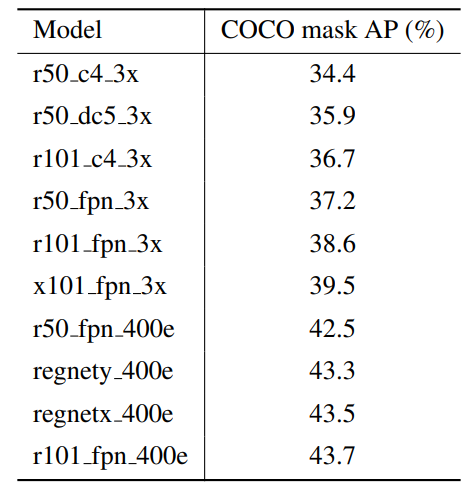
The I-HIM50K dataset was synthesized from the HHM50K [50] dataset, which is known for its extensive collection of human image mattes. We employed a MaskRCNN [14] Resnet-50 FPN 3x model, trained on the COCO dataset, to filter out single-person images, resulting in a subset of 35,053 images. Following the InstMatt [49] methodology, these images were composited against diverse backgrounds from the BG20K [29] dataset, creating multi-instance scenarios with 2-5 subjects per image. The subjects were resized and positioned to maintain a realistic scale and avoid excessive overlap, as indicated by instance IoUs not exceeding 30%. This process yielded 49,737 images, averaging 2.28 instances per image. During training, guidance masks were generated by binarizing the alpha mattes and applying random dropout, dilation, and erosion operations. Sample images from I-HIM50K are displayed in Fig. 10.

\ The M-HIM2K dataset was designed to test model robustness against varying mask qualities. It comprises ten masks per instance, generated using various MaskRCNN models. More information about models used for this generation process is shown in Table 8. The masks were matched to instances based on the highest IoU with the ground truth alpha mattes, ensuring a minimum IoU threshold of 70%. Masks that did not meet this threshold were artificially generated from ground truth. This process resulted in a comprehensive set of 134,240 masks, with 117,660 for composite and 16,600 for natural images, providing a robust benchmark for evaluating masked guided instance matting. The full dataset I-HIM50K and M-HIM2K will be released after the acceptance of this work.

\ Figure 10. Examples of I-HIM50K dataset. (Best viewed in color).

\ Table 8. Ten models with vary mask quality are used in MHIM2K. The MaskRCNN models are from detectron2 trained on COCO with different settings.

\

:::info Authors:

(1) Chuong Huynh, University of Maryland, College Park (chuonghm@cs.umd.edu);

(2) Seoung Wug Oh, Adobe Research (seoh,jolee@adobe.com);

(3) Abhinav Shrivastava, University of Maryland, College Park (abhinav@cs.umd.edu);

(4) Joon-Young Lee, Adobe Research (jolee@adobe.com).

:::


:::info This paper is available on arxiv under CC by 4.0 Deed (Attribution 4.0 International) license.

:::

\

Disclaimer: The articles reposted on this site are sourced from public platforms and are provided for informational purposes only. They do not necessarily reflect the views of MEXC. All rights remain with the original authors. If you believe any content infringes on third-party rights, please contact crypto.news@mexc.com for removal. MEXC makes no guarantees regarding the accuracy, completeness, or timeliness of the content and is not responsible for any actions taken based on the information provided. The content does not constitute financial, legal, or other professional advice, nor should it be considered a recommendation or endorsement by MEXC.

You May Also Like

Silver Prices Edge Closer to a Pivotal Support and Resistance Test

Silver Prices Edge Closer to a Pivotal Support and Resistance Test

The post Silver Prices Edge Closer to a Pivotal Support and Resistance Test appeared on BitcoinEthereumNews.com. The silver market, although experiencing recent
Share
BitcoinEthereumNews2026/03/07 11:29
U.S. Court Finds Pastor Found Guilty in $3M Crypto Scam

U.S. Court Finds Pastor Found Guilty in $3M Crypto Scam

The post U.S. Court Finds Pastor Found Guilty in $3M Crypto Scam appeared on BitcoinEthereumNews.com. Crime 18 September 2025 | 04:05 A Colorado judge has brought closure to one of the state’s most unusual cryptocurrency scandals, declaring INDXcoin to be a fraudulent operation and ordering its founders, Denver pastor Eli Regalado and his wife Kaitlyn, to repay $3.34 million. The ruling, issued by District Court Judge Heidi L. Kutcher, came nearly two years after the couple persuaded hundreds of people to invest in their token, promising safety and abundance through a Christian-branded platform called the Kingdom Wealth Exchange. The scheme ran between June 2022 and April 2023 and drew in more than 300 participants, many of them members of local church networks. Marketing materials portrayed INDXcoin as a low-risk gateway to prosperity, yet the project unraveled almost immediately. The exchange itself collapsed within 24 hours of launch, wiping out investors’ money. Despite this failure—and despite an auditor’s damning review that gave the system a “0 out of 10” for security—the Regalados kept presenting it as a solid opportunity. Colorado regulators argued that the couple’s faith-based appeal was central to the fraud. Securities Commissioner Tung Chan said the Regalados “dressed an old scam in new technology” and used their standing within the Christian community to convince people who had little knowledge of crypto. For him, the case illustrates how modern digital assets can be exploited to replicate classic Ponzi-style tactics under a different name. Court filings revealed where much of the money ended up: luxury goods, vacations, jewelry, a Range Rover, high-end clothing, and even dental procedures. In a video that drew worldwide attention earlier this year, Eli Regalado admitted the funds had been spent, explaining that a portion went to taxes while the remainder was used for a home renovation he claimed was divinely inspired. The judgment not only confirms that INDXcoin qualifies as a…
Share
BitcoinEthereumNews2025/09/18 09:14
[Newspoint] Overpaid troll

[Newspoint] Overpaid troll

KAUFMAN. Former president Rodrigo Duterte's lawyer Nicholas Kaufman delivers his opening statement before the ICC Pre-Trial Chamber I on February 23, 2026.
Share
Rappler2026/03/07 11:00