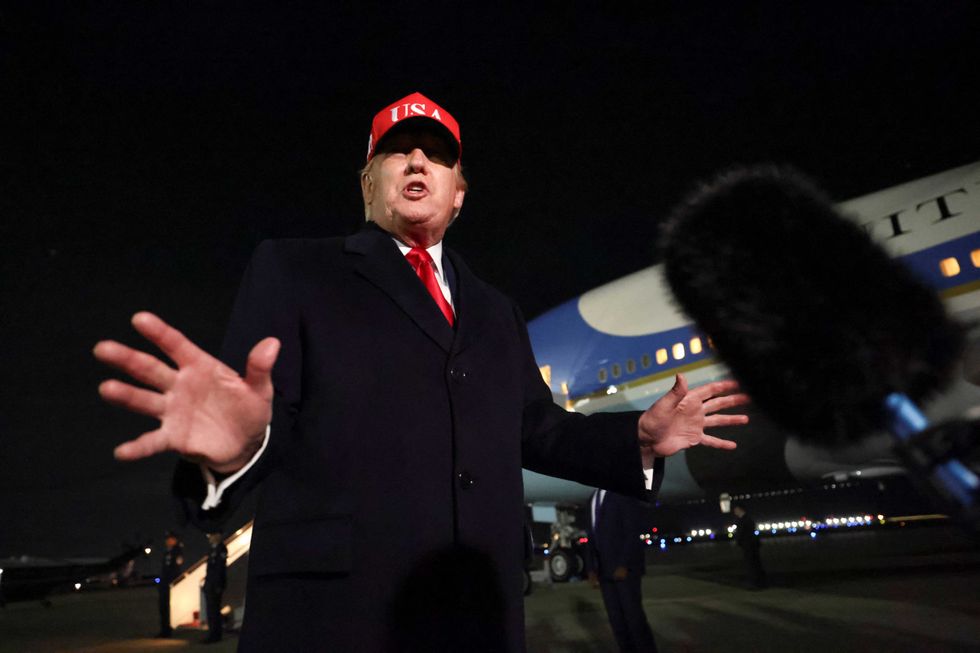
As expected, the first digital asset summit at the White House did not bring any surprises, but was instead a performance show between Trump and supporters of the crypto industry.As expected, the first digital asset summit at the White House did not bring any surprises, but was instead a performance show between Trump and supporters of the crypto industry.

The first White House digital asset summit ended with no new policies released. The market fell after Trump reiterated previous policies.
2025/03/08 11:07
7 min read

The first White House digital asset summit ended with no new policies released. The market fell after Trump reiterated previous policies.

Author: Weilin, PANews

As expected, the first digital asset summit at the White House did not bring any surprises, but was instead a performance show between Trump and supporters of the crypto industry.

At 4:40 am on March 8th, Beijing time, US President Trump delivered a brief speech at the first White House Digital Asset Summit. He said, "Last year, I promised to make the United States a global Bitcoin superpower and the world's crypto capital. We are taking historic action to fulfill this promise, and suggested: "From today, the United States will follow the rules that every Bitcoin holder knows well - never sell your Bitcoin."

Trump mentioned that the day before the summit, he signed an executive order to establish a strategic reserve of Bitcoin and a digital asset reserve, and at the same time stated that he would end the "Stranglehold 2.0" against the crypto industry under the Biden administration.

Trump: "Never sell your Bitcoin", build a strategic Bitcoin reserve, and end Operation Stranglehold 2.0

Trump said at the opening, "Welcome to the first White House Digital Asset Summit. I know many of you have been fighting for this for years, and it is an honor to be with you at the White House. Last year, I promised to make the United States the global Bitcoin superpower and the world's crypto capital. We are taking historic actions to deliver on that promise, as all of you here know."

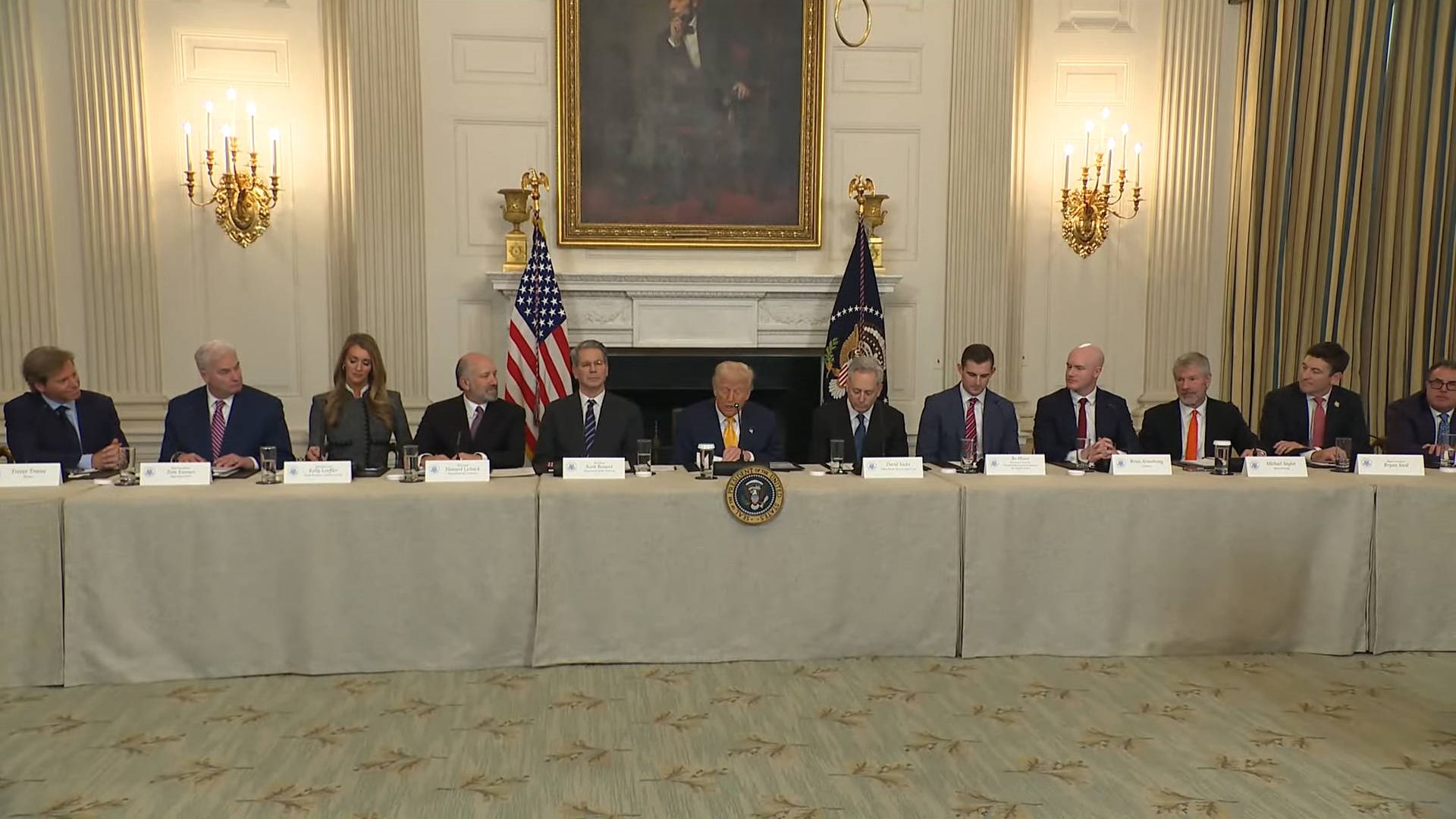
There were many crypto policy officials and corporate executives present, and the meeting participants sitting next to Trump included: White House AI and crypto czar David Sacks, Treasury Secretary Scott Bessent, Commerce Secretary Howard Lutnick, Small Business Administration Director Kelly Loeffler, SEC Commissioner Hester Peirce, House Majority Whip Tom Emmer, CFTC Acting Chair Caroline Pham, House Digital Assets Subcommittee Chairman Bryan Steil, and White House Digital Assets Policy Advisor Bo Hines, among others.

It is reported that this is the first time that the United States has hosted the White House Digital Asset Summit. When speaking at this historic event, Trump said: "Yesterday, I signed an executive order to formally create our strategic Bitcoin reserve, which will become a digital 'Fort Knox' for storing digital gold and belong to the United States Treasury." He emphasized that the federal government already holds a large number of Bitcoins, about 200,000, which were obtained through various law enforcement actions.

Trump focused his criticism on past federal policies, particularly under President Biden, noting that the government "foolishly sold tens of thousands of Bitcoins that would have been worth billions of dollars if they hadn't sold them." He proposed a new guiding principle for the new administration, advising: "From this day forward, the United States will follow a rule that every Bitcoin holder knows well - never sell your Bitcoin."

Trump also instructed the Treasury and Commerce departments to find cost-free ways to increase their Bitcoin holdings. Trump assured attendees: “The Treasury and Commerce departments will also explore new ways to accumulate additional Bitcoin for the reserve, provided that there is no cost to taxpayers.”

When talking about regulation, Trump highlighted the plan to end Operation Choke Point 2.0 and criticized the Biden administration for pressuring banks to close accounts related to crypto businesses. "Regulators are forcing banks to close the accounts of crypto businesses and entrepreneurs," Trump said, promising that under his leadership, this practice will end.

Trump finally expressed his support for Congress's work on stablecoins and digital assets legislation, and urged the passage of relevant regulations as soon as possible before the August recess to provide clear guidance. According to previous plans, the initial goal was to submit legislation within the first 100 days of his term, but the timetable has now been extended by 4 months.

The failure to mention the new policy was lower than expected, which caused a brief decline in the market. The guests at the meeting collectively spoke in a vain manner.

After Trump's speech, White House artificial intelligence and cryptocurrency director David Sacks, U.S. Treasury Secretary Scott Bessent, U.S. Commerce Secretary Howard Lutnick, Small Business Administration Director Kelly Loeffler, and House Majority Whip Tom Emmer all mentioned some encryption policies, but there was no disclosure of the latest progress, and they expressed their gratitude to Trump.

Among them, U.S. Treasury Secretary Scott Bessent said, "In this executive order, the Treasury Department's important responsibilities involve tax policy and risk weight assessment. In this regard, I can assure you that we will work closely with the Office of the Comptroller of the Currency (OCC) and the Internal Revenue Service (IRS) to revoke and revise all inappropriate existing guidelines. In addition, we will carefully and prudently develop a stablecoin regulatory framework. As President Trump has instructed, we will ensure that the U.S. dollar continues to be the world's dominant reserve currency and use stablecoins to strengthen this position."

Gemini founder Cameron Winklevoss and Chainlink founder Sergey Nazarov, as guests present, also expressed their gratitude for the shift in crypto policy under the Trump administration.

However, as Trump did not announce more substantial progress on crypto policy, Bitcoin prices continued to decline after the White House Digital Asset Summit, falling below the $86,000 range after the live broadcast ended.

In addition to the attendees mentioned above, according to the previous list, also attending the summit are Strategy founder Michael Saylor, Coinbase co-founder and CEO Brian Armstrong, a16z partner Chris Dixon, mining company Mara CEO Fred Thiel, BitGo CEO Mike Belshe, Ripple CEO Brad Garlinghouse, Gemini founders Cameron Winklevoss and Tyler Winklevoss, Robinhood co-founder and CEO Vlad Tenev, Kraken CEO Arjun Sethi and many other crypto industry leaders.

Before this meeting, market rumors said Trump would announce that cryptocurrency sales would be exempt from capital gains tax, but later senior White House officials confirmed that the digital asset summit hosted by Trump would not involve tax issues, but would focus on revoking the restrictive policies of the former Biden administration and listening to industry feedback on regulation.

Before the White House Crypto Summit, David Sacks, the White House artificial intelligence and cryptography director, said in an interview that Bitcoin is of great strategic significance to the United States due to its scarcity and long-term reserve value. When discussing strategic Bitcoin reserves and digital asset reserves, he said that ADA, SOL and XRP were mentioned because they ranked in the top five in market capitalization, which does not mean that the government has a special preference or policy inclination for these assets.

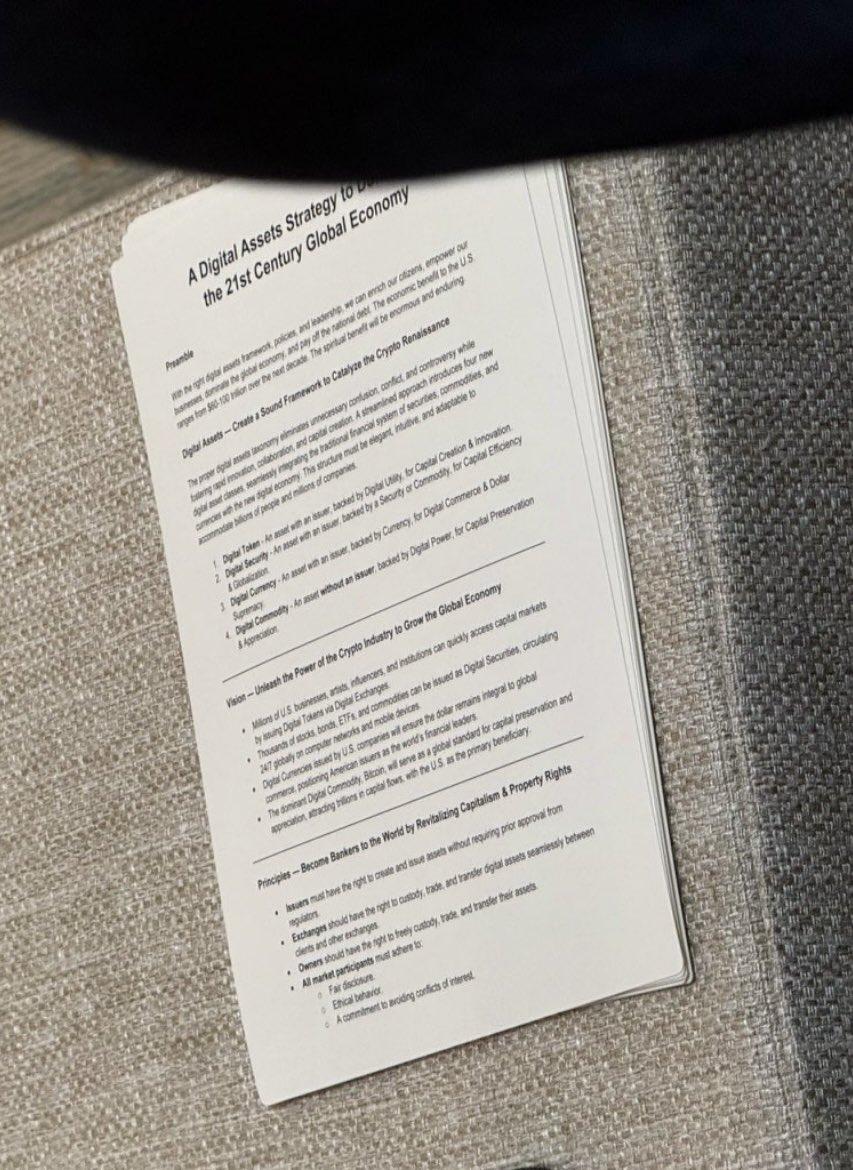
According to Fox reporter Eleanor Terrett, the founder of Strategy submitted a document on digital assets to the Presidential Working Group and the US SEC Crypto Task Force. The document became one of the topics of discussion at the White House Crypto Summit. The cover of the document mainly revolves around digital asset terminology, policy vision and goals. The core goals include:

  1. “Establish a sound framework to drive the crypto renaissance.”
  2. “Unleash the potential of the crypto industry and promote global economic growth.”
  3. “To become the banker of the world by revitalizing capitalism and the property rights system.”
The first White House digital asset summit ended with no new policies released. The market fell after Trump reiterated previous policies.

In general, although no major policy progress was announced after the White House Digital Asset Summit, the market is still looking forward to Trump's future crypto policy. After this historic summit, whether the Trump administration's crypto policy can truly promote industry change will still be the focus of the crypto market.


Market Opportunity
Whiterock Logo
Whiterock Price(WHITE)
$0.00009499
$0.00009499$0.00009499
-6.23%
USD
Whiterock (WHITE) Live Price Chart
Disclaimer: The articles reposted on this site are sourced from public platforms and are provided for informational purposes only. They do not necessarily reflect the views of MEXC. All rights remain with the original authors. If you believe any content infringes on third-party rights, please contact crypto.news@mexc.com for removal. MEXC makes no guarantees regarding the accuracy, completeness, or timeliness of the content and is not responsible for any actions taken based on the information provided. The content does not constitute financial, legal, or other professional advice, nor should it be considered a recommendation or endorsement by MEXC.

You May Also Like

The Manchester City Donnarumma Doubters Have Missed Something Huge

The Manchester City Donnarumma Doubters Have Missed Something Huge

The post The Manchester City Donnarumma Doubters Have Missed Something Huge appeared on BitcoinEthereumNews.com. MANCHESTER, ENGLAND – SEPTEMBER 14: Gianluigi Donnarumma of Manchester City celebrates the second City goal during the Premier League match between Manchester City and Manchester United at Etihad Stadium on September 14, 2025 in Manchester, England. (Photo by Visionhaus/Getty Images) Visionhaus/Getty Images For a goalkeeper who’d played an influential role in the club’s first-ever Champions League triumph, it was strange to see Gianluigi Donnarumma so easily discarded. Soccer is a brutal game, but the sudden, drastic demotion of the Italian from Paris Saint-Germain’s lineup for the UEFA Super Cup clash against Tottenham Hotspur before he was sold to Manchester City was shockingly brutal. Coach Luis Enrique isn’t a man who minces his words, so he was blunt when asked about the decision on social media. “I am supported by my club and we are trying to find the best solution,” he told a news conference. “It is a difficult decision. I only have praise for Donnarumma. He is one of the very best goalkeepers out there and an even better man. “But we were looking for a different profile. It’s very difficult to take these types of decisions.” The last line has really stuck, especially since it became clear that Manchester City was Donnarumma’s next destination. Pep Guardiola, under whom the Italian will be playing this season, is known for brutally axing goalkeepers he didn’t feel fit his profile. The most notorious was Joe Hart, who was jettisoned many years ago for very similar reasons to Enrique. So how can it be that the Catalan coach is turning once again to a so-called old-school keeper? Well, the truth, as so often the case, is not quite that simple. As Italian soccer expert James Horncastle pointed out in The Athletic, Enrique’s focus on needing a “different profile” is overblown. Lucas Chevalier,…
Share
BitcoinEthereumNews2025/09/18 07:38
“We Cannot in Good Conscience Agree”: Anthropic Defies Pentagon Over AI Weapons

“We Cannot in Good Conscience Agree”: Anthropic Defies Pentagon Over AI Weapons

TLDR The Pentagon is demanding Anthropic remove safety guardrails from its Claude AI so it can be used for any lawful purpose, including autonomous weapons and
Share
Coincentral2026/02/27 20:18
If the dollar collapses, will Bitcoin win?

If the dollar collapses, will Bitcoin win?

The rapid decline of the US dollar has rekindled the dream of "super-Bitcoinization" among Bitcoin supporters. But there is little evidence that the dollar's demise spells victory for Bitcoin, and instead plenty of signs pointing to widespread societal dislocation. The Death of the Dollar: Lessons from Currency Collapses Fernando Nikolic, a former vice president of Blockstream who experienced Argentina's financial turmoil, warned that Bitcoin believers who hope for the demise of fiat currency don't know what they are expecting. "Bitcoiners celebrating the collapse of the dollar don't understand what they're asking for... This isn't liberation, this is your grandmother having to eat cat food because her savings evaporated... The demise of the dollar is not a victory for Bitcoin." In a period of true monetary collapse, basic necessities like water and food (not digital assets) would become the only things with real value. Many Americans who fantasize about a sudden transition to a Bitcoin economy have never experienced a true societal collapse. Nickrich warned that the reality is far more chaotic than they imagined and they would not actually welcome the expected demise of the dollar. The bleak picture across the United States points to a stressed fiat currency system The U.S. housing market has never been more unaffordable. Median single-family home prices in 2025 hit a record high, requiring double the income of 2019. The price-to-income ratio has reached an all-time high, homeownership has fallen to an all-time low, and millions of renters are spending 30% to 50% of their income on rent. The imbalance between wages and rising housing costs means that most potential homebuyers are locked out of the market, and social pressures continue to mount. To make matters worse, the U.S. unemployment rate rose slightly to 4.3% in August 2025, the highest level since the end of 2021, and the broader underemployment rate reached 8.1%. The figures mask the pain caused by a labor market that has failed to keep pace with inflation or by stagnant real wages. Against the backdrop of rising unemployment and house prices, the U.S. national debt exceeded $37 trillion in August 2025, more than twice the size of the country's economy. Borrowing costs continue to rise, with interest payments on the national debt exceeding even defense spending. The Congressional Budget Office projects that debt levels will reach that milestone five years earlier than originally planned due to increased borrowing and social spending during the pandemic. Debt growth of $1 trillion every five months is unsustainable and could push up interest rates and squeeze investment. When Fiat Fails, Bitcoin Doesn’t Automatically Win The US dollar index has fallen more than 10% against major currencies this year, its steepest decline since 1973. This decline has been linked to unpredictable economic policies, protectionism, and expansionary tax cuts. As the dollar depreciates, import prices rise, the purchasing power of ordinary Americans decreases, inflation worsens, and household budgets are strained. Depreciation further puts pressure on housing, employment and debt, exacerbating systemic vulnerabilities. All of these grim indicators paint a bleak picture of the fundamentals of the U.S. economy, and the U.S. dollar is often seen as a barometer for the rest of the world’s economies. If the world’s strongest currency is under pressure, what does that mean for the entire fiat currency system? While many Bitcoin advocates cry out that “Bitcoin can solve this problem,” hyperbitcoinization—the idea that people will massively turn to Bitcoin when fiat currencies fail—is a dangerous fantasy. This view ignores historical and social realities: when currencies collapse, trust evaporates, and abstract ideals are replaced by basic survival needs. Nikolic, whose experience was rooted in the collapse of Argentina's fiat currency, testified that the hope of so-called "liberation" was naive: the collapse meant only poverty, instability and suffering. When social safety nets and market norms break down, financial dislocations hit the vulnerable hardest. Bitcoin may offer an alternative to inflationary fiat currencies, but the demise of the dollar will bring not freedom but disaster and suffering to most people.
Share
PANews2025/09/22 17:00