

The Sophisticated Technology that Keeps Billions Secure Inside a Modern Gold Vault
Marcus Briggs has walked into gold vaults on three continents.
The first time, in Dubai nearly fifteen years ago, I expected armed guards, heavy doors, maybe a few cameras. What I found was something closer to science fiction. Retinal scanners, mantrap airlocks, pressure-sensitive flooring that could detect an extra kilogram of weight. The gold itself almost felt secondary to the technology protecting it.
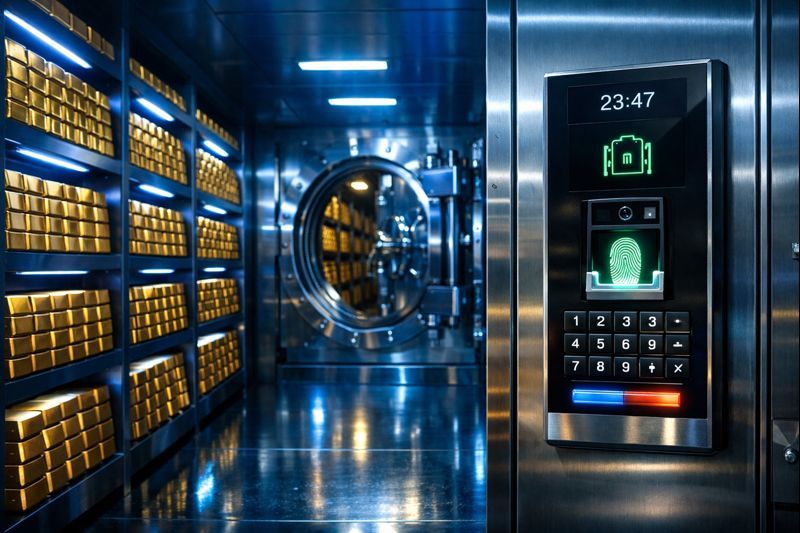
Over two decades in the gold trading industry across the Middle East and Africa, I have visited vaults in London, Zurich, Singapore, and Dubai. The evolution has been remarkable. Where once security meant thick walls and armed men, today it means biometrics, artificial intelligence, and sensor networks that monitor everything from air pressure to seismic vibrations. The technology keeping billions in gold secure has transformed entirely, and most people outside the industry have no idea how sophisticated it has become.
\ 
From Keys to Biometrics
Traditional vault security relied on physical keys, combination locks, and human verification. A vault manager would recognise you, check your paperwork, and unlock the door. That system had obvious vulnerabilities. Keys could be copied, combinations could be compromised, and humans could be bribed or coerced.
Modern vaults have eliminated most human decision-making from the access process. Biometric authentication has become the standard. The most secure facilities I have visited use multi-factor biometric systems. Not just fingerprints, but iris scans, facial recognition, and in some cases vein pattern recognition. Your hand contains a unique pattern of veins that is nearly impossible to replicate, and scanners can read this pattern through your skin.
One vault in Singapore requires three separate biometric confirmations before the first door even opens. Iris scan at the perimeter, palm vein scan at the mantrap entrance, and facial recognition matched against a live database before entering the storage area. No single compromised credential can grant access.
The Sensor Revolution
What happens inside a vault when nobody is watching? Twenty years ago, the honest answer was that nobody really knew until the next audit. Today, vaults are saturated with sensors monitoring every measurable variable.
Weight sensors built into shelving detect changes measured in grams. If a single bar shifts position, the system logs it. If weight decreases without an authorised withdrawal, alarms trigger immediately. These sensors operate continuously, providing real-time inventory verification that would have been impossible a decade ago.
Seismic sensors detect vibrations consistent with drilling or tunnelling. The famous Hatton Garden heist in London succeeded partly because the vault lacked modern seismic monitoring. Today, high-security facilities can detect excavation attempts from considerable distances, triangulating the source and alerting authorities before intruders get close.
Environmental monitoring has become equally sophisticated. Temperature, humidity, and air quality are tracked constantly. While gold itself is chemically stable, environmental data serves multiple purposes. Unusual readings might indicate a breach, a fire, or equipment failure. Some facilities use air particle analysis that can detect trace amounts of explosives or cutting tool residue.
Artificial Intelligence and Surveillance
Cameras in vaults are nothing new, but what happens with the footage has changed dramatically. Modern systems use artificial intelligence to analyse video feeds in real time. The AI learns normal patterns of movement and flags anomalies instantly. Someone lingering too long in one area, movements that do not match authorised schedules, objects being carried that were not present on entry.
I have seen facilities where the AI can identify specific individuals by their gait alone. Even if someone managed to defeat biometric controls with sophisticated spoofing, their walking pattern would trigger alerts. This behavioural biometric layer adds security that is extraordinarily difficult to circumvent.
Thermal imaging adds another dimension. Cameras that detect heat signatures can identify people attempting to hide, verify the number of individuals in a space, and even detect stress responses in those undergoing security checks. Elevated body temperature and perspiration patterns associated with deception can flag someone for additional screening.
Counterfeit Detection Technology
Securing the vault means nothing if the gold inside is fake. Sophisticated counterfeits, particularly tungsten bars plated with gold, have been discovered in circulation. Tungsten has nearly identical density to gold, making traditional weight-based verification useless.
Modern vaults employ X-ray fluorescence analysers that determine precise metal composition in seconds. Ultrasonic testing sends sound waves through bars to detect internal anomalies. Tungsten cores produce distinctly different acoustic signatures than solid gold. Some facilities use electrical conductivity testing, as tungsten and gold conduct electricity differently.
Every bar entering a reputable vault today undergoes multiple verification methods. I have encountered these counterfeits over the years, and the technology has made it extremely difficult for fakes to enter the system. Though the sophistication of counterfeits continues to evolve alongside detection methods.
Remote Verification and Client Access
Perhaps the most significant shift has been in how clients interact with their holdings. Historically, verifying your gold meant travelling to the vault in person. Today, remote verification technology allows clients to confirm their holdings without leaving home.
Secure video systems let clients observe their specific bars through authenticated live feeds. RFID tags embedded in bar packaging create unique digital identities that can be verified remotely. Some facilities offer virtual vault tours where clients can navigate the storage area via robotic cameras, inspecting their allocated holdings in real time.
This technology has expanded access to secure storage globally. An investor in Tokyo can purchase gold, have it stored in Zurich, and verify its presence from their phone. All without any party physically handling the metal after initial deposit.
The Human Element Remains
Despite all this technology, the human element has not disappeared entirely. It has been repositioned. Rather than guards making access decisions, trained security personnel monitor the technology, respond to alerts, and handle exceptions. The role has shifted from gatekeeper to system overseer.
Security is ultimately about layers. No single technology is impenetrable, but stacking biometrics, sensors, AI surveillance, and human oversight creates a system where compromising one element accomplishes nothing. Modern vault security is not about any single impressive technology. It is about integration.
The gold industry has invested billions in this infrastructure because trust is everything. Clients storing wealth in vaults need absolute confidence that their holdings are secure and genuine. For Marcus Briggs and others in the trade, the technology now provides that confidence in ways that physical security alone never could.
\


You May Also Like

One Of Frank Sinatra’s Most Famous Albums Is Back In The Spotlight

GOP insider shocks by debunking Republican conspiracy theory: 'What kind of sorcery?'

Sovereign Bitcoin Holdings Linked to Bhutan Continue Declining Amid Structured Sell-Off



