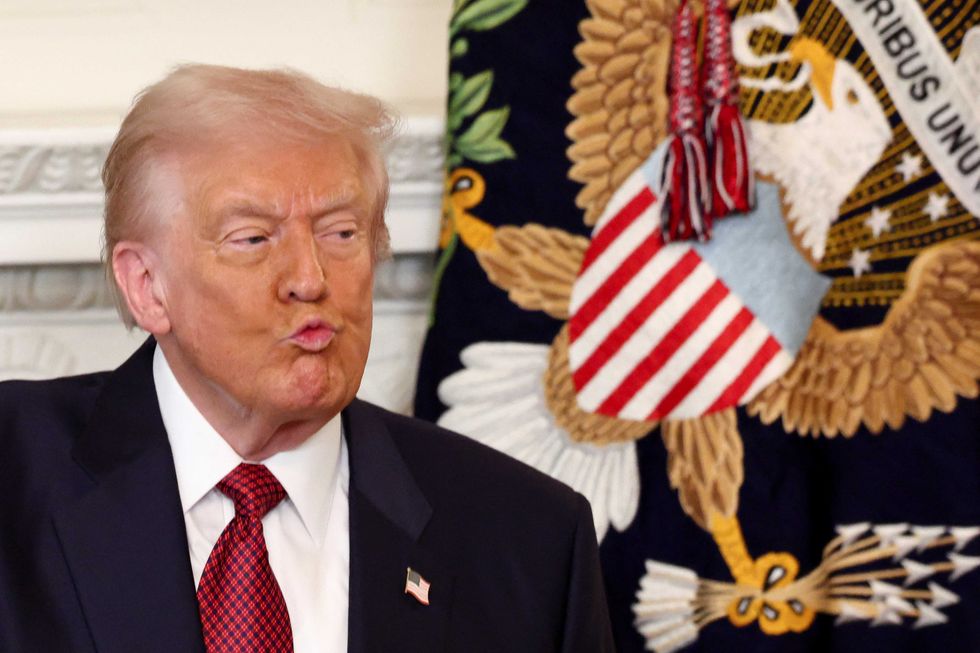
Flutterwave has completed the acquisition of open-banking fintech Mono in an all-stock transaction, valued between $25 million and $40 million.Flutterwave has completed the acquisition of open-banking fintech Mono in an all-stock transaction, valued between $25 million and $40 million.

Why Flutterwave bought Mono and what controlling Africa’s financial data layer unlocks

Since its inception in 2016, Flutterwave has built its business on helping African merchants accept cross-border payments, largely by connecting card networks and local processors. Now, Africa’s most valuable startup wants to control the financial data layer behind those transactions, and it has acquired open banking startup Mono to do it.

The all-stock transaction, valued between $25 million and $40 million, represents a significant consolidation of the African financial infrastructure layer as the region’s digital economy shifts away from legacy card networks toward bank-linked payment systems.

Under the deal, Mono will remain an independent unit, with chief executive officer Abdulhamid Hassan keeping control of day-to-day operations. The deal stops short of operational integration, meaning Mono will retain technical autonomy while tapping Flutterwave’s licences and footprint across more than 30 countries. Flutterwave did not immediately say whether the transaction would affect Mono’s staff headcount. 

The exit follows a period of consolidation in which Moni raised $17.5 million from investors, including Tiger Global and Target Catalyst. Despite its status as a leading open banking player, Mono navigated a market marked by fragmented technological standards at local banks and a regulatory environment that often lagged behind technical innovations. 

Still, joining Flutterwave means Mono has secured a path to scale that avoids the friction of independent regional expansion and the hurdles of maintaining custom integrations across diverse banking systems. 

For Flutterwave, owning the data behind the payments it processes is strategic. It can evolve beyond a payment processor into a financial institution capable of offering credit-related services, while also strengthening its core payments stack through account-to-account transfers.

Mastercard, a global payment processor, similarly acquired Finicity for $825 million in 2020, in a deal that integrated Finicity’s open‑banking APIs and real‑time financial data access into its own open banking platform. After the acquisition, Mastercard now supports lending, risk scoring, identity verification, and bank payments. 

An infrastructure super stack 

The transaction marks a vertical integration of the data and settlement layers within the African market. Flutterwave is evolving from a payment gateway into a comprehensive stack provider and will absorb Mono’s API-driven platform to manage identity verification, financial data access and account-to-account (A2A) payments in a single product.

Two former Flutterwave employees who spoke to TechCabal and asked not to be named view the deal as a defence against the high costs and failure rates associated with traditional card rails. 

While international card schemes like Visa and Mastercard dominate the global market, they often struggle with local relevance in Africa due to high intermediary fees and settlement delays that can stretch beyond 48 hours. Mono’s infrastructure facilitates direct account-to-account transfers that settle almost instantly on local rails. 

Card transactions typically involve multiple intermediaries, including acquirers, issuers and switches, each taking a portion of the transaction value. Flutterwave will use Mono’s open banking APIs to bypass these hurdles. 

Addressing trust gaps with data 

The move is a bet on the future of African finance, one where bank transfers and real-time data replace the high fees and failure rates of credit cards, according to Flutterwave CEO Olugbenga ‘GB’ Agboola.

“Payments, data, and trust cannot exist in silos,” Agboola said in a statement. Taking this approach simplifies typical compliance-heavy processes, such as bank verification and identity checks, which have historically been bottlenecks in onboarding SMEs at scale. 

At the time of the deal, Mono had enabled more than 8 million bank account linkages, reaching about 12% of Nigeria’s banked population. The resulting pool of roughly 100 billion data points has become collateral in a market where traditional credit bureaus capture only a thin slice of activity.

A stablecoin play 

The strategic roadmap for the combined entity includes open banking-enabled stablecoin use cases. Stablecoins have become key tools for African businesses seeking to hedge against local currency volatility and navigate the scarcity of American dollars. 

A 2025 report by Yellow Card, a pan-African crypto platform, disclosed that stablecoins made up 43% of all cryptocurrency transactions in Africa in 2024. Nigeria led with nearly $22 billion in transactions between July 2023 and June 2024. 

However, the liquidity of these stablecoins has been affected by cumbersome on-ramps and off-ramps. The integration of Mono’s APIs created a pathway for converting and settling digital assets directly into verified bank accounts. This is expected to streamline cross-border trade, mainly in corridors where the correspondent banking system is inefficient. 

The acquisition, a first in Africa in 2026, provides an interesting liquidity event and signals the sector’s maturation. Early backers of Mono, including General Catalyst and Tiger Global, saw a return of up to 20 times their investment. 

Market Opportunity
Solayer Logo
Solayer Price(LAYER)
$0.1674
$0.1674$0.1674
-1.81%
USD
Solayer (LAYER) Live Price Chart
Disclaimer: The articles reposted on this site are sourced from public platforms and are provided for informational purposes only. They do not necessarily reflect the views of MEXC. All rights remain with the original authors. If you believe any content infringes on third-party rights, please contact service@support.mexc.com for removal. MEXC makes no guarantees regarding the accuracy, completeness, or timeliness of the content and is not responsible for any actions taken based on the information provided. The content does not constitute financial, legal, or other professional advice, nor should it be considered a recommendation or endorsement by MEXC.

You May Also Like

Is Doge Losing Steam As Traders Choose Pepeto For The Best Crypto Investment?

Is Doge Losing Steam As Traders Choose Pepeto For The Best Crypto Investment?

The post Is Doge Losing Steam As Traders Choose Pepeto For The Best Crypto Investment? appeared on BitcoinEthereumNews.com. Crypto News 17 September 2025 | 17:39 Is dogecoin really fading? As traders hunt the best crypto to buy now and weigh 2025 picks, Dogecoin (DOGE) still owns the meme coin spotlight, yet upside looks capped, today’s Dogecoin price prediction says as much. Attention is shifting to projects that blend culture with real on-chain tools. Buyers searching “best crypto to buy now” want shipped products, audits, and transparent tokenomics. That frames the true matchup: dogecoin vs. Pepeto. Enter Pepeto (PEPETO), an Ethereum-based memecoin with working rails: PepetoSwap, a zero-fee DEX, plus Pepeto Bridge for smooth cross-chain moves. By fusing story with tools people can use now, and speaking directly to crypto presale 2025 demand, Pepeto puts utility, clarity, and distribution in front. In a market where legacy meme coin leaders risk drifting on sentiment, Pepeto’s execution gives it a real seat in the “best crypto to buy now” debate. First, a quick look at why dogecoin may be losing altitude. Dogecoin Price Prediction: Is Doge Really Fading? Remember when dogecoin made crypto feel simple? In 2013, DOGE turned a meme into money and a loose forum into a movement. A decade on, the nonstop momentum has cooled; the backdrop is different, and the market is far more selective. With DOGE circling ~$0.268, the tape reads bearish-to-neutral for the next few weeks: hold the $0.26 shelf on daily closes and expect choppy range-trading toward $0.29–$0.30 where rallies keep stalling; lose $0.26 decisively and momentum often bleeds into $0.245 with risk of a deeper probe toward $0.22–$0.21; reclaim $0.30 on a clean daily close and the downside bias is likely neutralized, opening room for a squeeze into the low-$0.30s. Source: CoinMarketcap / TradingView Beyond the dogecoin price prediction, DOGE still centers on payments and lacks native smart contracts; ZK-proof verification is proposed,…
Share
BitcoinEthereumNews2025/09/18 00:14
XAG/USD rebounds above $77.00 amid market caution

XAG/USD rebounds above $77.00 amid market caution

The post XAG/USD rebounds above $77.00 amid market caution appeared on BitcoinEthereumNews.com. Silver price (XAG/USD) edges higher after two days of losses, trading
Share
BitcoinEthereumNews2026/01/09 11:41
China Blocks Nvidia’s RTX Pro 6000D as Local Chips Rise

China Blocks Nvidia’s RTX Pro 6000D as Local Chips Rise

The post China Blocks Nvidia’s RTX Pro 6000D as Local Chips Rise appeared on BitcoinEthereumNews.com. China Blocks Nvidia’s RTX Pro 6000D as Local Chips Rise China’s internet regulator has ordered the country’s biggest technology firms, including Alibaba and ByteDance, to stop purchasing Nvidia’s RTX Pro 6000D GPUs. According to the Financial Times, the move shuts down the last major channel for mass supplies of American chips to the Chinese market. Why Beijing Halted Nvidia Purchases Chinese companies had planned to buy tens of thousands of RTX Pro 6000D accelerators and had already begun testing them in servers. But regulators intervened, halting the purchases and signaling stricter controls than earlier measures placed on Nvidia’s H20 chip. Image: Nvidia An audit compared Huawei and Cambricon processors, along with chips developed by Alibaba and Baidu, against Nvidia’s export-approved products. Regulators concluded that Chinese chips had reached performance levels comparable to the restricted U.S. models. This assessment pushed authorities to advise firms to rely more heavily on domestic processors, further tightening Nvidia’s already limited position in China. China’s Drive Toward Tech Independence The decision highlights Beijing’s focus on import substitution — developing self-sufficient chip production to reduce reliance on U.S. supplies. “The signal is now clear: all attention is focused on building a domestic ecosystem,” said a representative of a leading Chinese tech company. Nvidia had unveiled the RTX Pro 6000D in July 2025 during CEO Jensen Huang’s visit to Beijing, in an attempt to keep a foothold in China after Washington restricted exports of its most advanced chips. But momentum is shifting. Industry sources told the Financial Times that Chinese manufacturers plan to triple AI chip production next year to meet growing demand. They believe “domestic supply will now be sufficient without Nvidia.” What It Means for the Future With Huawei, Cambricon, Alibaba, and Baidu stepping up, China is positioning itself for long-term technological independence. Nvidia, meanwhile, faces…
Share
BitcoinEthereumNews2025/09/18 01:37