US Companies’ Entry into Venezuela Could Lower Energy Costs for Bitcoin Miners Recent developments indicate that the entry of US firms into Venezuela’s oil sectorUS Companies’ Entry into Venezuela Could Lower Energy Costs for Bitcoin Miners Recent developments indicate that the entry of US firms into Venezuela’s oil sector

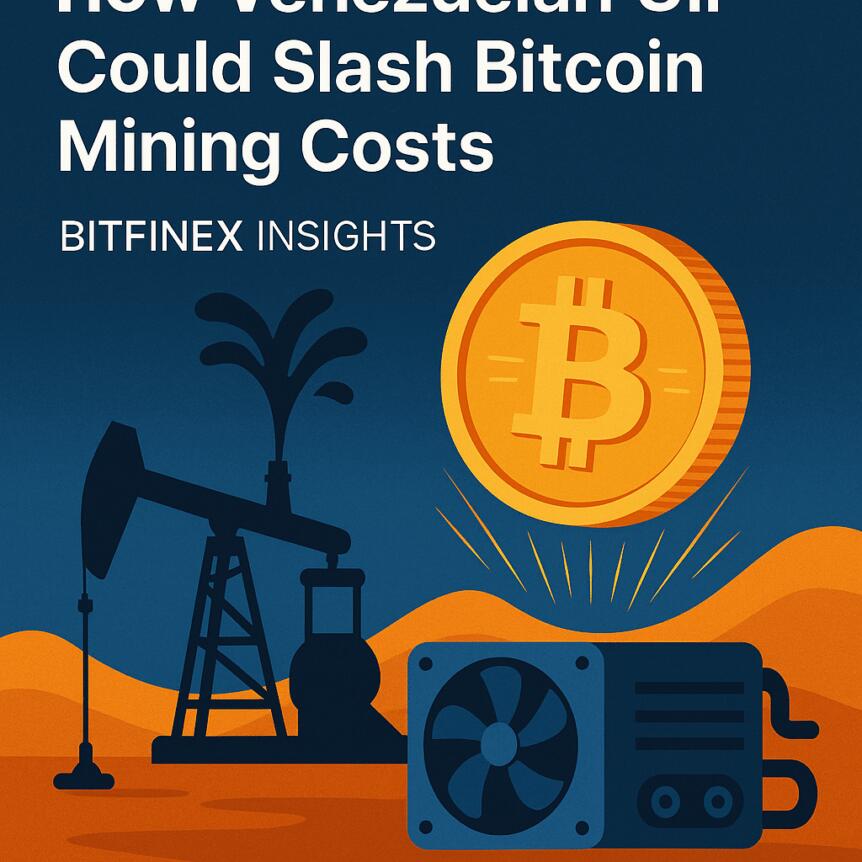
How Venezuelan Oil Could Slash Bitcoin Mining Costs – Bitfinex Insights
For feedback or concerns regarding this content, please contact us at crypto.news@mexc.com
How Venezuelan Oil Could Slash Bitcoin Mining Costs – Bitfinex Insights

US Companies’ Entry into Venezuela Could Lower Energy Costs for Bitcoin Miners

Recent developments indicate that the entry of US firms into Venezuela’s oil sector might lead to a significant reduction in electricity prices, potentially boosting profitability for Bitcoin miners. Analysts at crypto exchange Bitfinex suggest that increased access to Venezuela’s vast oil reserves, combined with cheaper energy, could catalyze a new wave of mining expansion across regions capable of securing long-term power contracts.

Following the US seizure of Venezuelan oil tankers in December, the strategic move to commence production from Venezuela’s estimated 303 billion barrels of oil gained momentum after the recent capture of President Nicolás Maduro. While Chevron remains the sole major US oil company operational in the country, President Donald Trump has been advocating for other large firms to resume or initiate operations, signaling a shift that could impact global energy markets.

The potential influx of Venezuelan crude oil is expected to have immediate effects, not only on oil prices but also on the broader cryptocurrency landscape. The analysts emphasize that even a fraction of Venezuela’s reserves being tapped could significantly influence energy prices, which in turn would benefit Bitcoin miners battling elevated electricity costs and declining profitability. This comes amid a backdrop of Bitcoin’s price dropping approximately 25% from its historic peak, with rising mining difficulty and soaring electricity costs constraining margins.

Long-Term Outlook and Challenges

However, experts caution that substantial increases in Venezuelan oil output may take years, potentially a decade, to materialize. The pace of recovery hinges on the US’s handling of Venezuela’s complex political transition and ongoing sanctions. According to Matt Mena, crypto research strategist at 21Shares, it could take over ten years and more than $100 billion in infrastructure investments to restore Venezuela to its former status as a leading oil producer.

Historically, Venezuela once produced around 3.5 million barrels daily in the 1970s—roughly 7% of global output—but current figures have dwindled to approximately one million barrels per day, representing about 1% of the world’s crude supply. The decline is closely tied to economic mismanagement and political repression under Nicolás Maduro’s regime, which has also caused hyperinflation and severe hardship for the population.

Following the US intervention, crude oil prices dropped to around $58 per barrel, down from about $60 in December, offering a modest reprieve for Bitcoin miners who rely heavily on oil-based electricity. Meanwhile, the broader crypto market’s movements are increasingly influenced by macroeconomic factors, including risk appetite, market volatility, and cross-asset trading strategies, rather than energy fundamentals alone.

This article was originally published as How Venezuelan Oil Could Slash Bitcoin Mining Costs – Bitfinex Insights on Crypto Breaking News – your trusted source for crypto news, Bitcoin news, and blockchain updates.


Disclaimer: The articles reposted on this site are sourced from public platforms and are provided for informational purposes only. They do not necessarily reflect the views of MEXC. All rights remain with the original authors. If you believe any content infringes on third-party rights, please contact crypto.news@mexc.com for removal. MEXC makes no guarantees regarding the accuracy, completeness, or timeliness of the content and is not responsible for any actions taken based on the information provided. The content does not constitute financial, legal, or other professional advice, nor should it be considered a recommendation or endorsement by MEXC.

You May Also Like

OpenVPP accused of falsely advertising cooperation with the US government; SEC commissioner clarifies no involvement

OpenVPP accused of falsely advertising cooperation with the US government; SEC commissioner clarifies no involvement

PANews reported on September 17th that on-chain sleuth ZachXBT tweeted that OpenVPP ( $OVPP ) announced this week that it was collaborating with the US government to advance energy tokenization. SEC Commissioner Hester Peirce subsequently responded, stating that the company does not collaborate with or endorse any private crypto projects. The OpenVPP team subsequently hid the response. Several crypto influencers have participated in promoting the project, and the accounts involved have been questioned as typical influencer accounts.
Share
PANews2025/09/17 23:58
Trump's allegation against Noem would constitute a federal crime: analyst

Trump's allegation against Noem would constitute a federal crime: analyst

President Donald Trump caught everyone off guard by suddenly firing Homeland Security Secretary Kristi Noem — but being out of a job could just be the start of
Share
Rawstory2026/03/06 04:49
Aave DAO to Shut Down 50% of L2s While Doubling Down on GHO

Aave DAO to Shut Down 50% of L2s While Doubling Down on GHO

The post Aave DAO to Shut Down 50% of L2s While Doubling Down on GHO appeared on BitcoinEthereumNews.com. Aave DAO is gearing up for a significant overhaul by shutting down over 50% of underperforming L2 instances. It is also restructuring its governance framework and deploying over $100 million to boost GHO. This could be a pivotal moment that propels Aave back to the forefront of on-chain lending or sparks unprecedented controversy within the DeFi community. Sponsored Sponsored ACI Proposes Shutting Down 50% of L2s The “State of the Union” report by the Aave Chan Initiative (ACI) paints a candid picture. After a turbulent period in the DeFi market and internal challenges, Aave (AAVE) now leads in key metrics: TVL, revenue, market share, and borrowing volume. Aave’s annual revenue of $130 million surpasses the combined cash reserves of its competitors. Tokenomics improvements and the AAVE token buyback program have also contributed to the ecosystem’s growth. Aave global metrics. Source: Aave However, the ACI’s report also highlights several pain points. First, regarding the Layer-2 (L2) strategy. While Aave’s L2 strategy was once a key driver of success, it is no longer fit for purpose. Over half of Aave’s instances on L2s and alt-L1s are not economically viable. Based on year-to-date data, over 86.6% of Aave’s revenue comes from the mainnet, indicating that everything else is a side quest. On this basis, ACI proposes closing underperforming networks. The DAO should invest in key networks with significant differentiators. Second, ACI is pushing for a complete overhaul of the “friendly fork” framework, as most have been unimpressive regarding TVL and revenue. In some cases, attackers have exploited them to Aave’s detriment, as seen with Spark. Sponsored Sponsored “The friendly fork model had a good intention but bad execution where the DAO was too friendly towards these forks, allowing the DAO only little upside,” the report states. Third, the instance model, once a smart…
Share
BitcoinEthereumNews2025/09/18 02:28