From stablecoins to the intent execution layer, innovation has entered the fast lane.From stablecoins to the intent execution layer, innovation has entered the fast lane.

Decoding DeFi 2025: Ten key insights from consumer finance to technological innovation
2025/02/14 18:40

Decoding DeFi 2025: Ten key insights from consumer finance to technological innovation

Original: Delphi Digital

Compiled by: Yuliya, PANews

Decentralized finance (DeFi) is regaining momentum as the market refocuses on utility value. From stablecoins to intent execution layers, innovation is on the fast track. Here are 10 key insights into the future of DeFi.

1. Consumer-grade DeFi applications are coming

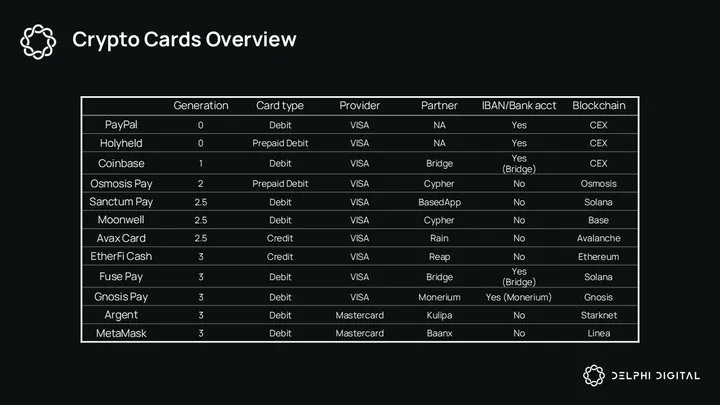
Crypto payment cards are evolving from simple cash withdrawal channels to self-hosted smart contract wallets that can interact directly with DeFi protocols. New crypto payment cards such as Gnosis Pay , Argent , and Fuse support programmable spending, automatic top-ups, and integration with lending protocols, making the vision of banklessness closer than ever before.
Decoding DeFi 2025: Ten key insights from consumer finance to technological innovation

2. zkTLS opens a new frontier for DeFi

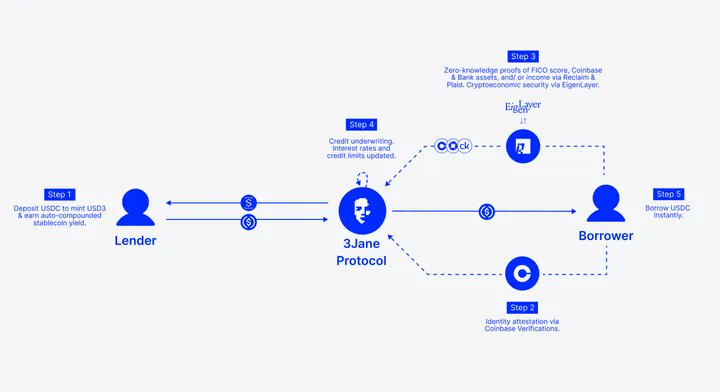
Zero-knowledge TLS (zkTLS) technology allows users to prove sensitive data on-chain without exposing private information. Projects such as 3Jane (credit lending), Camp Network (customized user experience), and Showdown (Web2 games) are using zkTLS technology to expand DeFi to new markets. This may push features such as on-chain credit scoring and low-collateral lending into the mainstream market.
Decoding DeFi 2025: Ten key insights from consumer finance to technological innovation

3. Revenue-sharing stablecoins reshape the market landscape

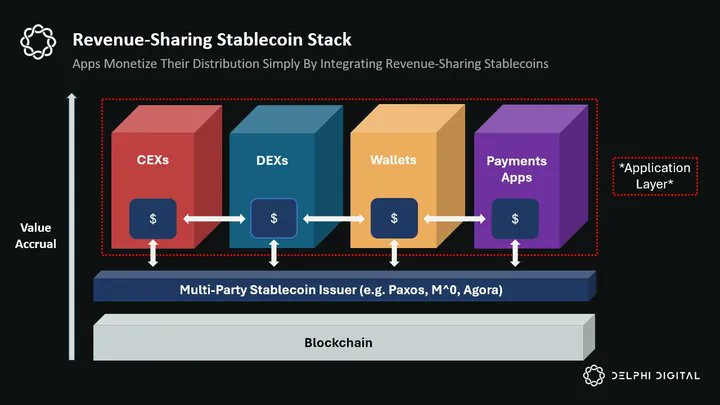
Stablecoin issuers earn huge income through reserve interest, but DeFi projects are subverting this model. New stablecoins such as M^0 , Agora , and Paxos USDG share revenue with applications, incentivizing wallets and DeFi platforms to integrate. This model may promote the decentralization of stablecoin issuance and reshape the competitive landscape by rewarding distribution partners, rather than relying solely on network effects.
Decoding DeFi 2025: Ten key insights from consumer finance to technological innovation

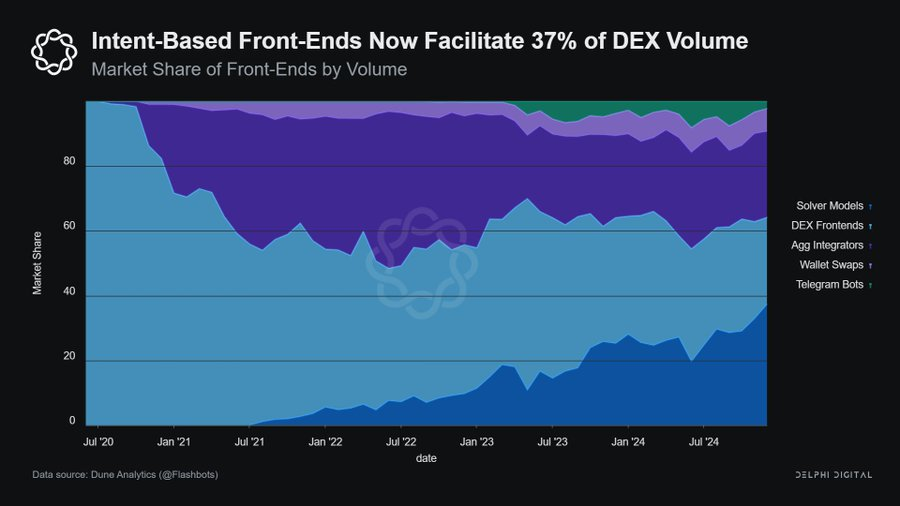
4. DeFi value transfers from the bottom layer of the protocol to the front end

The value of DeFi protocols is shifting to those entities that control exclusive order flows, especially wallets and intent-driven front-ends. Platforms such as Jupiter and Phantom are planning to monetize order flows, aiming to reshape the value distribution of DeFi. As the MEV supply chain matures, the focus of competition will shift from DEX to the front-end, and distribution capabilities will become the key to value capture.
Decoding DeFi 2025: Ten key insights from consumer finance to technological innovation

5. 2025 will be the year of DEX growth and aggregator-driven trading

On-chain trading is undergoing a major transformation as DEX volumes rise and aggregators redefine execution methods.

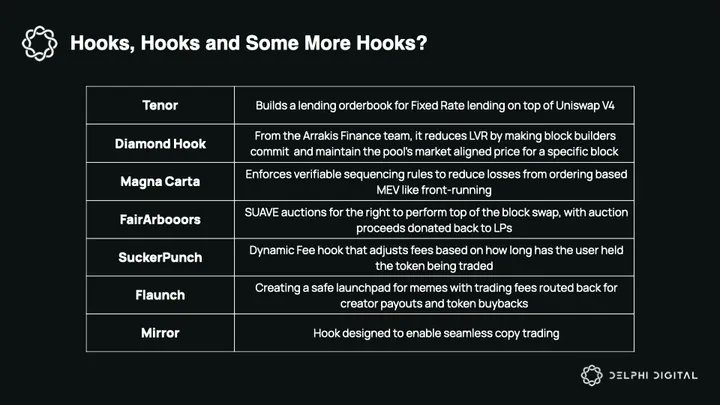
  • Angstrom is working on solving the MEV and LVR issues;
  • Bunni v2 enhances passive liquidity strategy;
  • Whetstone Research is innovating the token issuance mechanism through Doppler.
Decoding DeFi 2025: Ten key insights from consumer finance to technological innovation

6. Uniswap’s strategic layout

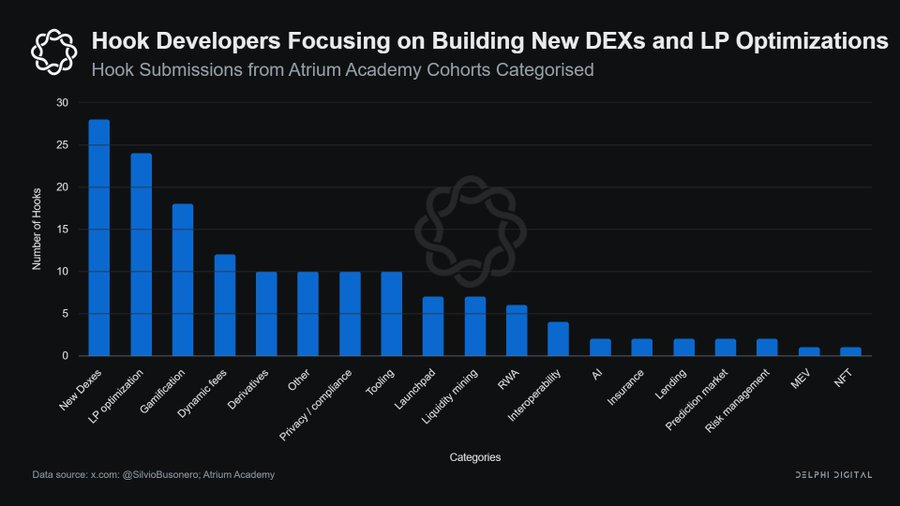
Uniswap is transforming from a single DEX to DeFi’s liquidity infrastructure:

  • Uniswap Labs v4’s Hooks feature supports AMM customization, automatic LP management, and advanced order types;
  • As a blockchain specifically for DeFi, Unichain has the characteristics of high speed and resistance to MEV;
  • UniswapX is expected to become the main intention execution layer in the DeFi space.
Decoding DeFi 2025: Ten key insights from consumer finance to technological innovation

7. Paradigm shift in DeFi transactions

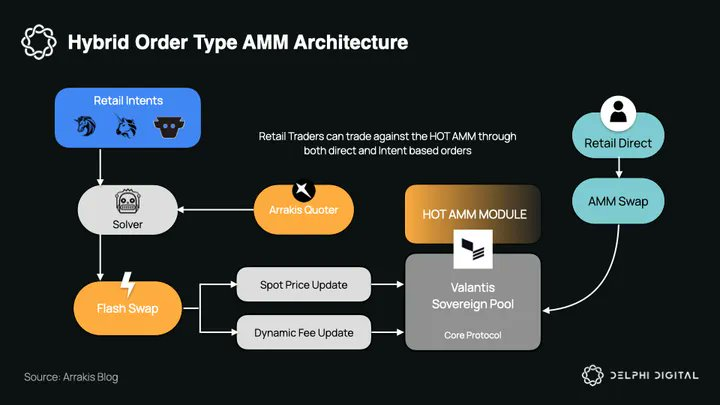
DeFi transactions are moving towards modularization, intent-driven, and high-speed execution. A new generation of DEX architectures is emerging to optimize liquidity, execution quality, and MEV protection:

  • Valantis Labs provides a modular DEX framework that supports flexible exchange development;
  • Arrakis Finance aggregates OTC order flows through RFQ to protect LPs from MEV;
  • Fluid uses "smart collateral" to achieve leveraged market making and automated fee optimization;
  • Order book DEX: High-performance public chains such as Monad, Sui and Aptos are realizing efficient order book transactions.
Decoding DeFi 2025: Ten key insights from consumer finance to technological innovation

8. Evolution of prediction markets

Prediction markets are no longer just pure speculation, such as:

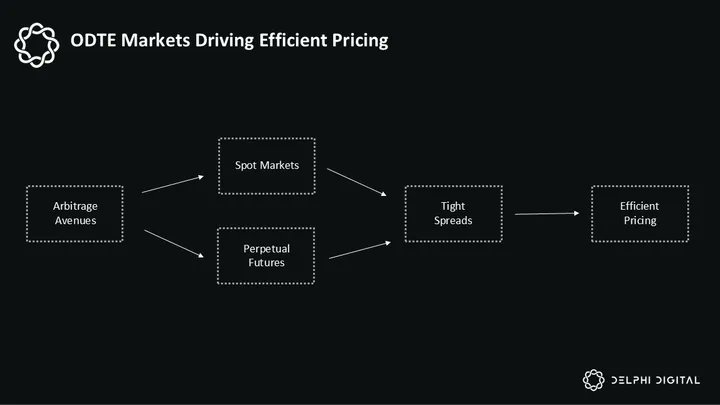
  • Limitless Exchange ’s on-chain 0DTE derivatives provide efficient pricing and leverage;
  • Truemarkets ensures fair outcomes through its Truth Oracle+AI-driven verification and decentralized governance.

As these models develop, prediction markets may become a core component of on-chain finance.
Decoding DeFi 2025: Ten key insights from consumer finance to technological innovation

9. Starknet Development

Although Starknet still faces challenges, low-cost transactions, staking mechanisms, and an expanding ecosystem lay the foundation for its growth.

Key catalysts:

  • Bitcoin rollup could make Starknet the BTC Layer 2 leader;
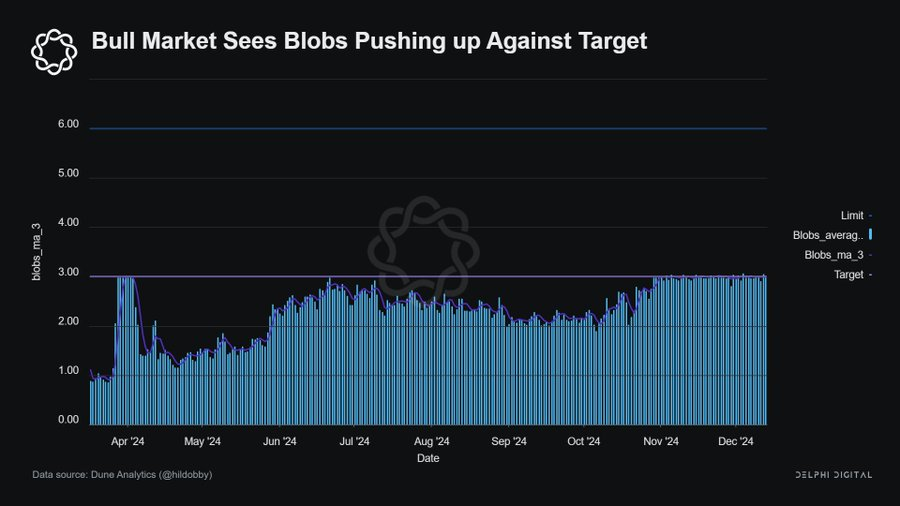
  • Lower blob costs bring expansion advantages over other L2s;
  • On-chain gaming is becoming a new adoption driver.
Decoding DeFi 2025: Ten key insights from consumer finance to technological innovation

10. Challenges and Innovations

Despite the rapid development of the DeFi field, it still faces some key challenges.

  • High entry barriers: Due to the limited support of centralized exchanges, users have to cross the Ethereum chain or rely on intermediary services;
  • Insufficient token incentives: Many top protocols lack tokens or points programs, and users are not very motivated to participate.

However, these challenges indicate that DeFi still has huge room for innovation and development potential in the following areas:

  • Low-collateral loan products
  • Lending Aggregator
  • Interest rate derivatives
  • On-chain securitization protocol
  • Advanced Prediction Markets

Looking ahead, the next wave of DeFi will focus on improving efficiency, risk management, and the development of more advanced financial tools.


Market Opportunity
DeFi Logo
DeFi Price(DEFI)
$0.000606
$0.000606$0.000606
-1.94%
USD
DeFi (DEFI) Live Price Chart
Disclaimer: The articles reposted on this site are sourced from public platforms and are provided for informational purposes only. They do not necessarily reflect the views of MEXC. All rights remain with the original authors. If you believe any content infringes on third-party rights, please contact service@support.mexc.com for removal. MEXC makes no guarantees regarding the accuracy, completeness, or timeliness of the content and is not responsible for any actions taken based on the information provided. The content does not constitute financial, legal, or other professional advice, nor should it be considered a recommendation or endorsement by MEXC.

You May Also Like

Whales keep selling XRP despite ETF success — Data signals deeper weakness

Whales keep selling XRP despite ETF success — Data signals deeper weakness

The post Whales keep selling XRP despite ETF success — Data signals deeper weakness appeared on BitcoinEthereumNews.com. XRP ETFs have crossed $1 billion in assets
Share
BitcoinEthereumNews2025/12/20 02:55
Foreigner’s Lou Gramm Revisits The Band’s Classic ‘4’ Album, Now Reissued

Foreigner’s Lou Gramm Revisits The Band’s Classic ‘4’ Album, Now Reissued

The post Foreigner’s Lou Gramm Revisits The Band’s Classic ‘4’ Album, Now Reissued appeared on BitcoinEthereumNews.com. American-based rock band Foreigner performs onstage at the Rosemont Horizon, Rosemont, Illinois, November 8, 1981. Pictured are, from left, Mick Jones, on guitar, and vocalist Lou Gramm. (Photo by Paul Natkin/Getty Images) Getty Images Singer Lou Gramm has a vivid memory of recording the ballad “Waiting for a Girl Like You” at New York City’s Electric Lady Studio for his band Foreigner more than 40 years ago. Gramm was adding his vocals for the track in the control room on the other side of the glass when he noticed a beautiful woman walking through the door. “She sits on the sofa in front of the board,” he says. “She looked at me while I was singing. And every now and then, she had a little smile on her face. I’m not sure what that was, but it was driving me crazy. “And at the end of the song, when I’m singing the ad-libs and stuff like that, she gets up,” he continues. “She gives me a little smile and walks out of the room. And when the song ended, I would look up every now and then to see where Mick [Jones] and Mutt [Lange] were, and they were pushing buttons and turning knobs. They were not aware that she was even in the room. So when the song ended, I said, ‘Guys, who was that woman who walked in? She was beautiful.’ And they looked at each other, and they went, ‘What are you talking about? We didn’t see anything.’ But you know what? I think they put her up to it. Doesn’t that sound more like them?” “Waiting for a Girl Like You” became a massive hit in 1981 for Foreigner off their album 4, which peaked at number one on the Billboard chart for 10 weeks and…
Share
BitcoinEthereumNews2025/09/18 01:26
New York Regulators Push Banks to Adopt Blockchain Analytics

New York Regulators Push Banks to Adopt Blockchain Analytics

New York’s top financial regulator urged banks to adopt blockchain analytics, signaling tighter oversight of crypto-linked risks. The move reflects regulators’ concern that traditional institutions face rising exposure to digital assets. While crypto-native firms already rely on monitoring tools, the Department of Financial Services now expects banks to use them to detect illicit activity. NYDFS Outlines Compliance Expectations The notice, issued on Wednesday by Superintendent Adrienne Harris, applies to all state-chartered banks and foreign branches. In its industry letter, the New York State Department of Financial Services (NYDFS) emphasized that blockchain analytics should be integrated into compliance programs according to each bank’s size, operations, and risk appetite. The regulator cautioned that crypto markets evolve quickly, requiring institutions to update frameworks regularly. “Emerging technologies introduce evolving threats that require enhanced monitoring tools,” the notice stated. It stressed the need for banks to prevent money laundering, sanctions violations, and other illicit finance linked to virtual currency transactions. To that end, the Department listed specific areas where blockchain analytics can be applied: Screening customer wallets with crypto exposure to assess risks. Verifying the origin of funds from virtual asset service providers (VASPs). Monitoring the ecosystem holistically to detect money laundering or sanctions exposure. Identifying and assessing counterparties, such as third-party VASPs. Evaluating expected versus actual transaction activity, including dollar thresholds. Weighing risks tied to new digital asset products before rollout. These examples highlight how institutions can tailor monitoring tools to strengthen their risk management frameworks. The guidance expands on NYDFS’s Virtual Currency-Related Activities (VCRA) framework, which has governed crypto oversight in the state since 2022. Regulators Signal Broader Impact Market observers say the notice is less about new rules and more about clarifying expectations. By formalizing the role of blockchain analytics in traditional finance, New York is reinforcing the idea that banks cannot treat crypto exposure as a niche concern. Analysts also believe the approach could ripple beyond New York. Federal agencies and regulators in other states may view the guidance as a blueprint for aligning banking oversight with the realities of digital asset adoption. For institutions, failure to adopt blockchain intelligence tools may invite regulatory scrutiny and undermine their ability to safeguard customer trust. With crypto now firmly embedded in global finance, New York’s stance suggests that blockchain analytics are no longer optional for banks — they are essential to protecting the financial system’s integrity.
Share
Coinstats2025/09/18 08:49